
Ingredient pillar · Label structure
Proprietary blends: what they actually hide
A proprietary blend is not a trade secret. It is a legal feature of US supplement labelling that lets a brand show you which ingredients are in the bottle without telling you how much of each. Almost every supplement reviewed on this site uses one. That is the central problem of the category.
- blend
- matrix
- complex
What it is
Under the Dietary Supplement Health and Education Act (DSHEA) of 1994, the Supplement Facts panel must list every dietary ingredient and its weight. There is one carve-out: when ingredients are listed as part of a "proprietary blend," only the total weight of the blend has to be disclosed. Individual ingredient amounts within the blend can be withheld.
On a label this looks like a single line — "Metabolic Support Blend, 1,727 mg" — followed by an indented sub-list of the blend's component ingredients. The component ingredients are listed in descending order by weight, but the actual mg of each is the formulator's private information.
Almost every multi-ingredient supplement in the affiliate channel uses a proprietary blend. That includes most of the products reviewed on this site.
What the marketing claims
The phrasing on a supplement label or sales page tends to recycle a few patterns. Proprietary blends usually shows up wearing one of these:
- "Our proprietary formula is a closely guarded trade secret."
- "Decades of research went into the exact ratios."
- "Synergy that can't be matched by single-ingredient products."
- "Patented blend" — used loosely, often without an actual patent.
What the published evidence actually says
There is no published evidence that any specific proprietary blend in the affiliate supplement channel produces an outcome unobtainable from disclosed-dose individual ingredients. The "synergy" argument is a marketing premise, not a clinical finding.
The structural problem is auditability. When the trial base for an ingredient says 400 mg of EGCG, 200 mg of L-theanine, and 200 mcg of chromium produced an effect, and the blend on the label is 1,727 mg total across five ingredients, you cannot verify whether any individual ingredient hits its studied dose. The math usually says it doesn't.
Trade-secret defences for proprietary blends do not generally hold up to scrutiny. Modern analytical chemistry can reverse-engineer a supplement formulation in a competent contract lab in a few weeks. The blend isn't hiding the recipe from competitors. It's hiding it from buyers.
Patents are public documents. A "patented blend" can be looked up on Google Patents in two minutes. In most affiliate supplements, the patent — when it exists — covers a specific manufacturing process, not the ingredient ratios.
Effective dose vs typical supplement dose
There is no "effective dose" of a proprietary blend per se — the structural fact is that you cannot assess effective dosing of the individual actives.
A useful heuristic: take the total blend weight, divide by the number of listed ingredients, and assume even distribution. If that average is below the studied dose for any active in the blend, you can be confident that ingredient is below threshold.
A 1,500 mg blend across five ingredients gives you 300 mg per ingredient on average. If two of those ingredients have studied doses above 400 mg, at least one is sub-clinical. Usually more than one.
Safety profile
Proprietary blends do not introduce direct safety hazards by themselves. The hazard is that you cannot verify the dose of an ingredient that does have a hazard threshold (EGCG, mucuna, ashwagandha at high doses, etc.).
For drug interactions, the inability to verify the dose of an individual ingredient inside a blend means you cannot reliably assess interaction risk with prescription medication. That is a meaningful clinical issue.
Pregnancy, breastfeeding, paediatrics: a proprietary blend is exactly the wrong format for any population where individual ingredient dose matters for safety.
This is general information, not medical advice. Anyone on prescription medication, pregnant or breastfeeding, or managing a chronic condition should bring an ingredient like Proprietary blends to their clinician before starting it.
Supplements on this site that contain proprietary blends
The following reviewed products list proprietary blends on the label, mention it in the ingredient discussion, or are built around the ingredient category. Verdicts are independent of whether the ingredient is present — a product can include proprietary blends and still be a "Skeptical" or "Avoid."
Exercise & Fitness
Neuro-Balance Therapy VSL - Physical Offer with Therapy Tool
A spiky ball and a DVD for $46, sold on fear of falling. The tool has some merit, but the protocol is repackaged balance exercises you can find for free. Worth a careful try inside the refund window if you're over 50 and worried about falls—otherwise skip.
Exercise & Fitness
Hyperbolic Stretching 4.0
A $28 digital flexibility course that overpromises on speed and 'hyperbolic' magic, but delivers a basic stretching routine that can work if you stick with it. Worth a try inside the 60-day refund window, but you're paying for the framing, not the science.
Dental Health
ProDentim
ProDentim is unusual in this channel because some of its core claims are actually supported by the literature — L. reuteri and L. paracasei have published periodontal RCTs from independent research groups showing reductions in gingival inflammation, pathogen counts, and periodontal pocket depth. The rating is pulled down by undisclosed CFU counts, a teeth-whitening claim with no mechanism, and a sales page that runs the standard online deception pattern over an ingredient list that does not need the embellishment.
Women's Health
Her Somatic Reset | Natural Perimenopause & Menopause Balance Protocol
A low-cost digital protocol that might help if you stick with it, but the marketing overpromises and similar exercises are available free.
Dental Health
DentaVive - New Dental Powerhouse Made to Convert
Real probiotic strains with some clinical backing, but the marketing is pure affiliate hype and the price is high. Worth a trial only if you use the refund window rigorously.
Dietary Supplements
GUT VITA™ #1 Powerhouse Digestion Offer
A $48 gut-health supplement sold on marketing, not transparency. The 60-day refund window is real, but the label likely hides behind a proprietary blend — you're paying for hope, not hard numbers.
Dietary Supplements
Joint N-11 – A Top-Performing Joint Health Supplement!
The 180-day refund window makes it a risk-free test, but the hidden ingredient doses and $132 price tag mean you're paying for affiliate marketing, not a proven formula.
Dietary Supplements
JointVive – Breakthrough Support for Stiff, Achy Joints & Mobility!
The ingredients are real but likely underdosed inside a proprietary blend. $102 is steep for a bottle you can't verify against clinical literature. The 60-day refund makes it testable — but test with caution.
Remedies
Overcoming Onychomycosis - Nail Fungus
A $59 digital guide that repackages common home remedies for nail fungus. The refund window lets you test it risk-free, but the price is steep for what's mostly available free online.
Strength Training
The Ultimate Pull-Up Program
A 166-page pull-up guide that's more thorough than most, but $47 is steep for what's essentially curated YouTube knowledge. Worth a trial inside the refund window, not a must-keep.
Exercise & Fitness
Unlock Your Glutes - Conversion Monster!
A $11 glute-activation PDF with a few useful drills, but the headline statistic is marketing fluff. Worth a cautious read inside the refund window if you're new to glute training; skip it if you already do hip thrusts.
Weight Loss
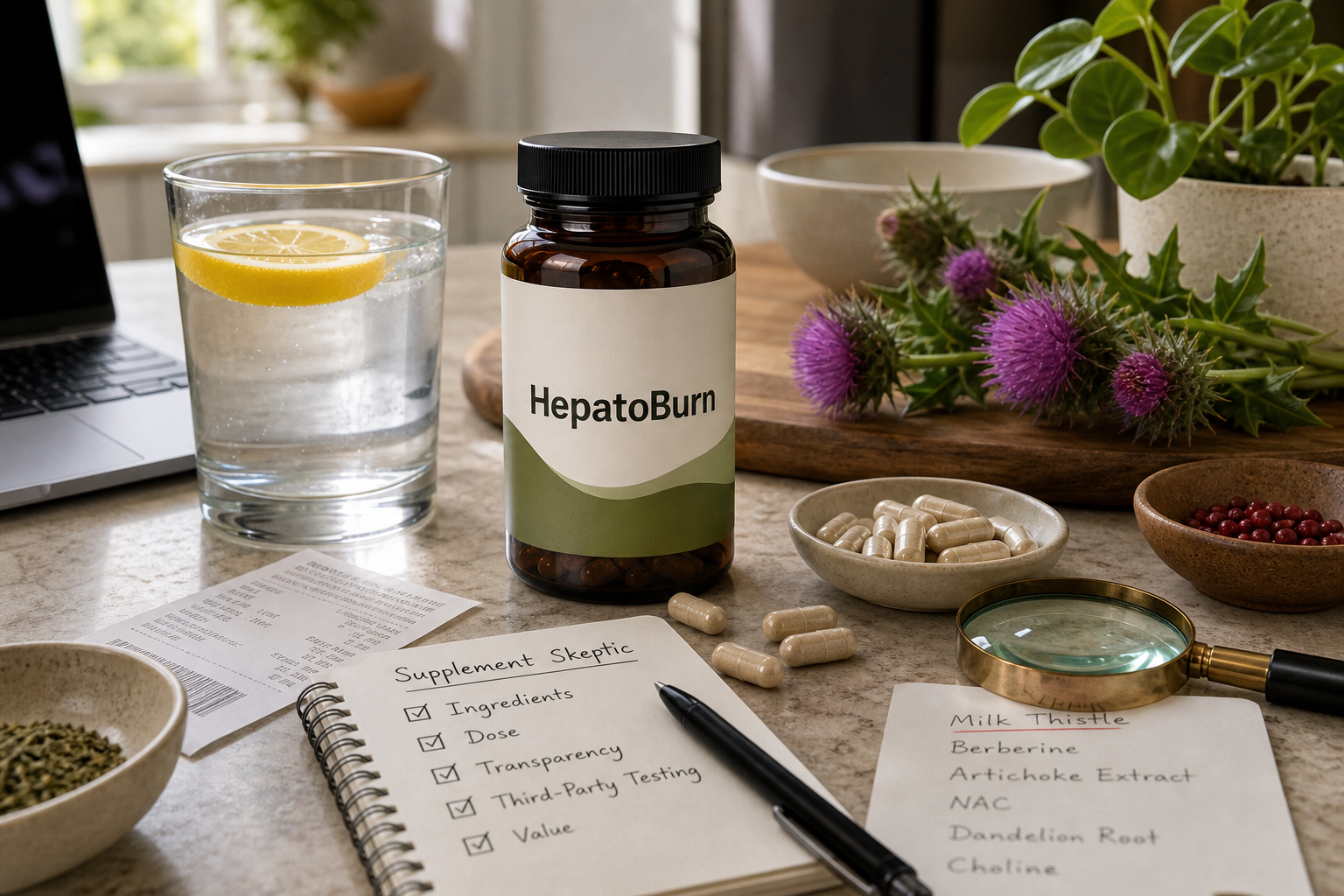
HepatoBurn
HepatoBurn occupies a rare position in this category: two of its five ingredients (berberine and silymarin) have genuine human RCT evidence at the right doses for the claimed mechanisms. The problem is that neither dose is disclosed. A proprietary blend concealing berberine is not a minor inconvenience — berberine's therapeutic window is dose-sensitive and meaningfully different at 500 mg versus 1,500 mg. Until those numbers appear on the label, this earns a Cautious rather than a Conditional.
Exercise & Fitness
Balmorex - Top Back & Joint Pain Cream Product
A $117 cream with common anti-inflammatory herbs, but the actual concentrations are a mystery. The 60-day refund window makes a risk-free trial possible, but without knowing the dose, you're buying hope in a jar.
Dietary Supplements
Echoxen – Explosive New Ear Supplement with Natural Ingredients
A $134 ear health supplement with a 60-day refund window. The ingredient list is plausible, but the marketing oversells and the evidence is thin. Read the label, not the sales page.
Men's Health
Go All Night Formula
A $68 supplement with recurring billing that promises to help you last longer in bed. The ingredients are generic, the marketing is affiliate-driven, and the 60-day refund window is your only real guarantee.
Dental Health
ProvaDent - NEW Doctor Endorsed Dental Offer - $4+ EPC
Probiotic strains with some clinical backing, but the $173 price and undisclosed CFU counts in a proprietary blend make it a risky buy. The 60-day refund window is the only safety net.
Dietary Supplements
RhythmONE – A New Longevity Offer with Strong Early Momentum
Plausible mushroom formula, but no disclosed doses and a recurring subscription you'll need to cancel. Worth a cautious trial only if you're comfortable with the price.
Remedies
The Shingles Solution
A $30 PDF that repackages basic shingles information you can find for free. The 60-day refund window makes it a zero-risk read, but it's not a substitute for medical care.
General
Treat Type 2 Diabetes Naturally - Blue Heron Health News
A $39 digital guide that repackages standard diabetes-lifestyle advice with overhyped 'natural reversal' framing. Worth a careful read inside the 60-day refund window if you're newly diagnosed and want structure, but don't expect a cure.
Weight Loss
Mitolyn Reviews 2026: Scam or Legit? Mitochondrial Claims Analyzed
Mitolyn upgrades Puravive's 'exotic plants' angle to 'purple plants' and its 'brown fat' claim to 'mitochondrial biogenesis.' Same sales page skeleton, better ingredient list. Rhodiola, astaxanthin, and amla have real human evidence — but the undisclosed blend doses are the same structural problem Puravive has.
Men's Health
Bedroom Boss
A $18 digital guide on bedroom dominance that serves mainly as a gateway to recurring supplement upsells. The advice is likely generic, and the real cost is hidden in the subscription.
Men's Health
EndoPeak - Male Health, ED, Testosterone
Hidden doses, aggressive marketing, and a $137 price make this a tough sell. The refund window is your only real protection.
Dietary Supplements
Finessa - High-Converting Digestion & Poop Offer
A $138 herbal detox with big promises and no disclosed ingredient list. The refund window is real, but you're paying for marketing, not proven efficacy.
Dietary Supplements
Ignitra
A $182 weight-loss supplement sold via ClickBank with a 60-day refund window. The marketing promises metabolic magic, but the price is 3–5× what the same ingredients cost as standalone supplements, and the proprietary blend likely hides underdosed actives.
Remedies
Non Alcoholic Fatty Liver Disease Solution NAFLD
A $51 PDF that repackages freely available lifestyle advice for NAFLD. The 60-day refund window is real, but the upsell and generic content make it hard to recommend over a free AASLD handout.
Dietary Supplements
Pineal Guardian X – Brand New 2026 Copy & Lead | Top Brain Offer EPC
A $153 brain supplement with an MD spokesperson and recurring billing. Without a disclosed ingredient panel, there's nothing to bench — and that's the point.
Men's Health
Protoflow - Convert Clicks Into Cash Now!
A $98 prostate supplement with hidden doses and no published clinical trials — the refund window is real, but the value isn't.
Dietary Supplements
Revitagut - NEW Gut Health Supplement - 50% Commission Full Funnel
Label transparency is missing, and the sales page reads like an affiliate recruitment pitch. You can try it inside the refund window, but without knowing what's in it, you're gambling.
General
The Neuro Wave - Digital Nerve Pain Offer
A $29 digital nerve-pain guide with no verifiable credentials and a sales page that speaks to affiliates, not buyers. The 60-day refund window is real, but so is the risk of delaying proper diagnosis.
Remedies
TMJ No More (tm): $45/Sale ~ Top TMJ, Bruxism & Teeth Grinding Offer!
A $32 digital guide of repackaged jaw exercises and diet tips. The 60-day refund is real, but the content is generic enough that you could find it for free. Keep it only if you need the structure and won't delay seeing a dentist.
Remedies
Vertigo and Dizziness Program - Blue Heron Health News
A $34 PDF of repackaged vestibular exercises. The 60-day refund is real, but the marketing overstates what a home guide can do for undiagnosed dizziness.
Dietary Supplements
VidaCalm - NEW Ear Health Offer
An overpriced ear health supplement with underdosed ingredients and no convincing evidence. The 180-day guarantee is the only thing worth considering, and even that comes with strings.
Dietary Supplements
Liv Pure
Liv Pure ships two of the most legitimate liver-support ingredients in the supplement world — silymarin and berberine — and then hides the actual milligram doses inside 'proprietary blends' that total 712 mg and 285 mg respectively. That's the central problem. The bones of the formula are defensible. The dosing is unverifiable. At $69 a bottle ($49 in the bulk pack) you are paying premium-tier pricing for sub-clinical or potentially clinical doses you have no way to confirm. The rating reflects the gap between what the ingredient list suggests is possible and what the label actually proves you're getting.
Diets & Weight Loss
14 Day Rapid Soup Diet
A $23 soup-based meal plan that's essentially a low-calorie template with recipes you could find free online. Worth a skim inside the 60-day refund window if you need structure, but not a breakthrough.
Beauty
AppaNail - Hot Native Indian Antifungal Solution
A $109 oral supplement dressed up as an antifungal solution — underdosed on key nail-health ingredients and priced like a topical treatment without the topical evidence.
Dietary Supplements
ArcticBlast - #1 OTC topical pain relief drops has arrived!!
A menthol-and-camphor topical with a $79 price tag and a marketing engine that conflates affiliate sales with customer satisfaction. The refund window is real, but you're paying for a formula that costs pennies per dose to make.
Dietary Supplements
CelluCare - New Breakthrough In Blood Sugar Science
An overpriced, under-disclosed blood sugar supplement with a subscription trap. The ingredient list is a black box — you can’t verify doses or safety, and the $194 price tag is mostly affiliate commission padding.
Remedies
Cure Arthritis Naturally - Blue Heron Health News
A $41 digital guide that promises a cure but delivers generic lifestyle management tips. The ClickBank refund window is real, but the title alone should make you skeptical.
Diets & Weight Loss
Eat The Fat Off - Most Compelling Sales Copy You have Seen In 2019
A $19 diet PDF whose biggest selling point is the copywriting, not the content. The recurring upsell is the real revenue engine, and the front-end product is mostly a hook.
Men's Health
Ejaculation_Guru - Breakthrough Sales Video For Last Longer Niche
You're paying $14 to access a recurring membership that teaches free techniques; the sales video is the only 'breakthrough' here.
Men's Health
ErecPrime - Top Male Performance and ED
A $106 bottle of herbal extracts with weak evidence for ED and testosterone. The 60-day ClickBank refund is the only thing that makes it not a complete gamble.
Beauty
FoliPrime - $4 EPC On Unique “Egyptian Hair Detox Balm”
A $119 hair serum wrapped in 'Egyptian Detox Balm' lore. The refund window is real, but the ingredient concentrations are hidden behind a proprietary blend — you're paying for a story, not a dose you can verify.
Dietary Supplements
Gluconite - Destroyer Blood Sugar Offer
A $116 nighttime blood sugar supplement with recurring billing, a proprietary blend that hides underdosing, and no independent clinical trials on the finished formula. The refund window is real, but the value isn't.
Dietary Supplements
GlucoBerry - BRAND NEW Blood Sugar Offer!!
A $100 blood sugar supplement with an aggressive upsell funnel. The label likely hides underdosed ingredients behind a proprietary blend, and the 180-day guarantee on the vendor site doesn't match ClickBank's 60-day refund. Read the label before buying — if you can find it.
Remedies
Heartburn No More(tm) - Clickbank's 7 Figure Acid Reflux Offer
A $31 digital guide that repackages standard diet and lifestyle advice for acid reflux. The 60-day refund window is real; the marketing is designed for affiliates, not buyers.
Beauty
Hydrossential - Unique Beauty Serum Offer
An $84 beauty serum sold through ClickBank with no ingredient list disclosed upfront. The refund window exists but is tricky for physical goods. Not a scam, but not a smart buy either.
Dietary Supplements
iGenics - Hot New Vision Offer
A $140 vision supplement with 12 ingredients but no publicly available label. The 60-day refund gives you a trial, but you're paying for hope, not proof.
Remedies
Insufend
A $111 blood sugar supplement sold through a sales page that buries the ingredient list — that alone makes it a hard pass until the label is public. The refund window is real, but you're gambling $111 on a mystery formula.
Dietary Supplements
Java Burn Reviews 2026: Scam or Legit? We Tested the Metabolism Claims
Real ingredients, real proprietary blend, real pricing problem. Java Burn delivers a handful of metabolism-adjacent compounds at doses you can't verify, for 3–5× the cost of getting them individually from a commodity brand.
Diets & Weight Loss
Man Greens - Earn BIG With the T-Boosting Greens Supplement for MEN.
An under-dosed greens powder marketed as a testosterone booster, with a recurring billing model and an ingredient label the vendor won't fully disclose. The refund policy requires returning product, so you pay for shipping both ways.
Men's Health
Male Enhancement Coach: $100+ Sale, Highest Converting CB Site
A recurring coaching program sold almost entirely on affiliate recruitment hype. The product might exist, but the marketing tells you nothing about what you're actually buying — just how much money affiliates can make selling it.
Dietary Supplements
MetaFlow - HOT New Blood Sugar Support Drops For 2026
A proprietary blood sugar drop with no disclosed doses, sold through an aggressive upsell funnel. The 60-day refund window is the only thing that keeps this from being a complete pass.
Mental Health
Mind Armor - The Brain Defense System
A $30 PDF of generic brain-training advice with no clinical backing, sold by a vendor with zero market credibility. The 60-day refund window is your only safety net.
Dietary Supplements
Nervala
A 365-day refund promise is the strongest part of this offer, but $120/month recurring and an unverified ingredient list make it a tough sell for anyone not already committed to a long-term nerve-health experiment.
Dietary Supplements
Nerve Fresh - NEW TOP NEUROPATHY PRODUCT FOR 2025
The sales page hides the ingredient list, making it impossible to assess effectiveness. The $126 price is inflated by affiliate commissions, and the refund process may be a hassle. I would not buy this without a full label disclosure.
Dietary Supplements
Neuro-Thrive Brain Support
A $152 nootropic with underdosed ingredients, a marketing bean that doesn't exist, and a recurring rebill you'll forget about. The 60-day refund is real, but you'll still lose time and shipping.
Dietary Supplements
SharpEar ($642 Max Cart Value) - Top Affs Doing $XXX,XXX a day!
A hearing supplement sold on affiliate hype, not ingredient transparency. The formula is hidden from pre-purchase review, making it impossible to verify doses or safety. The 60-day refund exists, but you'll likely pay return shipping on a physical product that may not work.
Diets & Weight Loss
SleepLean - The Game-Changing Weight Loss Offer
A weight loss supplement with no public ingredient panel and a recurring billing trap. The 60-day refund window is the only reason to consider it — and only if you cancel the subscription before it renews.
Men's Health
Spartamax - Brand New Male Enhancement w/ Insane EPCs
No disclosed doses, recurring billing, and a price that's 3–5× standalone ingredients. Wait for a full label teardown before buying.
Dietary Supplements
SugarMute - Advanced Blood Sugar Support
Underdosed, overpriced, and pushed by affiliate hype. The refund guarantee is real but comes with fine print that makes it a hassle. I would not buy this.
Dietary Supplements
The 20
A nitric oxide supplement with a proprietary blend and no disclosed doses. The ingredients have some evidence, but you're likely underdosed and locked into a subscription for a 'free' bottle.
Dietary Supplements
Tea Burn - Following in the footsteps of Java Burn - June 2024
A $146 tea-additive with unverified ingredients, a hidden subscription, and a 60-day refund that's hard to use if you don't read the fine print.
Dietary Supplements
TheyaVue - High Converting Vision Offer
Underdosed antioxidants wrapped in a premium price tag. The 60-day refund is real, but you're paying $131 for a formula that undercuts the one clinically proven eye-health blend.
Men's Health
TitanFlow Prostate Support Supplement
A $124 bottle of common prostate ingredients with a 180-day refund window that's more about affiliate payouts than clinical proof.
Dietary Supplements
VisiFlora - New Vision / Gut Health Hybrid Offer (Blue Ocean)
A vision-gut hybrid supplement with an interesting mechanism but no label transparency. At $136 a bottle, you're paying for the story, not the doses — and the story doesn't hold up to a label read.
Exercise & Fitness
VitaMotion - Destroyer Back Pain Offer
A $97 one-time purchase for a supplement with undisclosed doses and a generic 10-minute movement routine. The refund window is real, but the product itself is a well-marketed bundle of things you can piece together for free.
Dietary Supplements
VitaNerve6
A $40 proprietary-blend nerve-pain supplement with zero disclosed doses and a gravity of 0.03. The refund window is real, but the bottle is a black box you can't evaluate clinically.
Weight Loss
All Day Slimming Tea Reviews 2026: Scam or Legit? Tea Blend Analysis
All Day Slimming Tea positions itself as a thermogenic tea blend with metabolism-boosting herbs. Green tea catechins and some supporting botanicals have real evidence; the proprietary blend structure obscures doses entirely. The refund guarantee is enforced, but the weight-loss claims exceed what the formula likely delivers.
Dietary Supplements
CogniCare Pro - NEW Brain & Memory
A $168 probiotic with brain claims, no disclosed doses, and a just-so story about blood sugar. The 60-day refund is real, but the science isn't.
Dietary Supplements
Flexafen - crazy payout & breakthrough offer for joint & pain relief
Hidden doses, an affiliate-first payout structure, and a refund that requires returning empty bottles. You can get joint support with more transparency for less money.
Dietary Supplements
LYMPH TONIC - Killer NEW Lymphedema/Water Retention Offer
A $176 lymphatic supplement with a proprietary blend and no clinical proof for its claims. The refund window is real, but you're paying for marketing, not medicine.
Weight Loss
Okinawa Flat Belly Tonic Reviews 2026: Scam or Legit? Proprietary Blend Analysis
Okinawa Flat Belly Tonic positions itself as a fermented superfood blend leveraging Okinawan longevity myths. The individual ingredients have some evidence; the proprietary blend structure obscures every dose. The product exists, the refund guarantee is enforced, but the mechanism claims outpace the evidence by a familiar margin.
Dietary Supplements
BloodArmor™ – Powerful Blood Sugar & Circulation Support
A $153 supplement with no disclosed ingredient doses, a sales page that reads like an affiliate recruitment brochure, and zero independent evidence it does what it claims. I would not buy this.
Women's Health
Cellulite Gone- No Weight Loss No Gym Routine
A $31 PDF that repackages standard fascia-release and lymphatic-drainage advice into a 'cellulite-killing' promise. The refund window is real, but the content doesn't justify the price — you're paying for the marketing, not the method.
Dietary Supplements
CogniClear – The 2025 Brain Supplement Exploding EPCs!
A pricey nootropic blend with hidden doses and a refund guarantee that's longer than ClickBank's protection window. The affiliate hype is loud, but the label is quiet on what actually matters.
Dental Health
DentalPrime – 2025’s Fastest-Growing Dental Supplement
A dental supplement sold on affiliate hype, not evidence. The 60-day refund window is real, but you're paying $140 for a proprietary blend with no disclosed dosing or studies.
Diets & Weight Loss
ElectroSlim | Trending Weight Loss Electrolyte Offer
A $70 electrolyte powder with a GLP-1 pitch that the ingredient label won't back up. You're paying for marketing, not a meaningful metabolic effect.
Remedies
Hemochromatosis - Blood Iron Levels
A dietary protocol for iron overload that repackages freely available advice, oversells its uniqueness, and dangerously downplays standard medical care.
Diets & Weight Loss
HoneyCept
A $190 honey-based supplement with a thin ingredient list and no verified clinical dosing. The 60-day refund window is real, but the product itself offers little beyond what a $15 bottle of generic brain-support capsules would.
Dietary Supplements
Metabo Drops - The Juice is Loose!
A $177 coffee additive with recurring billing, hidden doses, and no published clinical data on the final formula. The refund window is real — use it to read the label, not to hope for magic.
Dietary Supplements
Nagano Tonic - $5 EPCs
No public ingredient label, recurring billing enabled, and a price tag that's mostly funding affiliate commissions. I would not buy this without seeing the formula first.
Remedies
Nerve Armor Provides Nerve Pain Relief DEEP Into Your Skin
A nerve-pain supplement sold without a visible ingredient panel or clinical dosing rationale. The marketing is heavy, the label is hidden, and at $125 a bottle with a likely auto-ship trap, there's no way to know if it's worth anything before you buy.
General
Neura (Super Legit Memory Supplement)
A $142 proprietary-blend supplement with bold memory claims and no disclosed doses. The neuroscientist endorsement is unverifiable, and the marketing is built for affiliates, not buyers. You can get the same ingredients at effective doses for half the cost elsewhere.
General
Nervolink - New Winner In The Nerve Pain Niche
Plausible ingredients at underdosed levels, wrapped in aggressive affiliate marketing. The 60-day refund is real, but you're paying $96 for a formula that's cheaper and more transparent elsewhere.
Men's Health
PowerX Pro — #1 Male Performance Formula Crushing ED Offers in 2026
A $54/month auto-ship male performance pill with a VSL that promises the moon and a label that delivers underdosed common ingredients. The 60-day refund window is real, but the recurring billing isn't worth the hassle.
Dietary Supplements
Prosta Peak
A $172 prostate supplement that hides behind a proprietary blend and a 180-day guarantee that doesn't match ClickBank's 60-day refund window. The concept is plausible, but the pricing and opacity don't add up.
Dietary Supplements
RegenVive - Blood Sugar Support
A $165 blood sugar supplement with hidden ingredient doses and a refund policy that likely won't cover opened bottles. The star ingredient has some evidence, but you can't verify the dose, and the price is indefensible.
Men's Health
Tupi Tea - HOT NEW Male Enhancement Product
A $61 male enhancement tea with a proprietary blend and no disclosed clinical doses; the VSL sells the dream, but the label sells a commodity.
Dietary Supplements
Unlock Big Commissions with Joint Glide – The Ultimate Joint Formula!
Standard joint ingredients at a premium price, with undisclosed doses and a recurring billing hook. You can get the same actives for $30 at a drugstore.
Diets & Weight Loss
VENOPLUS 8 - TRENDING Heart Health & Nitric Oxide Offer
A powdered supplement with trademarked ingredients at unknown doses, sold on heart-health claims that outpace the evidence. The $79 price tag is hard to justify when you can't verify what you're swallowing.
Men's Health
VigoSurge - Your Next Top ED Offer
A $142 herbal blend with no disclosed doses, no independent testing, and no reason to believe it outperforms cheaper, transparent alternatives. The marketing targets ED fear, not evidence.
Dietary Supplements
Advanced Mitochondrial Formula – Top Cellular Energy Offer
A $124 mitochondrial supplement sold through ClickBank with a 60-day refund window that requires returning the bottle. Without seeing the label, I can't verify doses, and the price is high for unproven proprietary blends.
Men's Health
Alpha Surge - Top Male Performance and ED
A $111 gummy that repackages common ingredients at doses too low to matter. The refund window is real; the results aren't.
Top Offer (preliminary)
Audifort
Audifort is currently a top-30 ClickBank offer in the Dietary Supplements category (APV $159.42, hop conversion 0.48%). The Skeptic Desk has not yet completed the per-ingredient evidence review, but the marketing pattern matches general-purpose supplement formulas: proprietary blends that hide individual doses, unnamed clinical 'studies', AI-generated testimonial pages. Treat any verdict as preliminary until we publish the ingredient analysis.
Dietary Supplements
Bazopril
Proprietary blend with no disclosed doses; $92 for a bottle of marketing. The refund window exists, but you'd be paying to test a mystery formula.
Nutrition
Breathizen
Overpriced at $163 for a single bottle with hidden ingredient doses; the 60-day refund is the only safety net, but return shipping kills the deal.
Top Offer (preliminary)
CitrusBurn
CitrusBurn is currently a top-30 ClickBank offer in the Dietary Supplements category (APV $218.28, hop conversion 4.99%). The Skeptic Desk has not yet completed the per-ingredient evidence review, but the marketing pattern matches general-purpose supplement formulas: proprietary blends that hide individual doses, unnamed clinical 'studies', AI-generated testimonial pages. Treat any verdict as preliminary until we publish the ingredient analysis.
Dietary Supplements
CogniSurge – 2025 Advanced Memory Supplement Driving High EPC
A proprietary blend with no disclosed doses, a $130 price tag, and marketing that oversells the science. The refund window exists, but you're gambling on a bottle of hope.
Top Offer (preliminary)
Derila Ergo
Derila Ergo is currently a top-30 ClickBank offer in the Sleep and Dreams category (APV $52.45, hop conversion 1.94%). The Skeptic Desk has not yet completed the per-ingredient evidence review, but the marketing pattern matches sleep supplements: unspecified melatonin doses, missing serving timing, undisclosed habit-forming risk. Treat any verdict as preliminary until we publish the ingredient analysis.
Men's Health
ED Elixir The Most Explosive New Mens Health Offer
A $29 digital guide with recurring upsells that repackages standard ED lifestyle advice under a proprietary 'elixir' name. Worth a refund-window read only if you've never read a men's health article.
Top Offer (preliminary)
Flat Belly Flush
Flat Belly Flush is currently a top-30 ClickBank offer in the Exercise & Fitness category (APV $19.55, hop conversion 1.64%). The Skeptic Desk has not yet completed the per-ingredient evidence review, but the marketing pattern matches fitness programs and supplements: before/after stock photography, undocumented coaching credentials. Treat any verdict as preliminary until we publish the ingredient analysis.
Dietary Supplements
GlucoTonic - Blood Sugar Support, Type 2
A $120 proprietary blend with no disclosed doses, sold on a page written for affiliates. The refund window is real, but you're paying for marketing, not a verified formula.
Men's Health
Goliath XL 10 - New Explosive Men’s Performance Offer
Overpriced male enhancement supplement with no disclosed formula, sold through a funnel built to convert affiliates, not inform buyers. The 60-day refund is real, but you're gambling $113 on a label you can't read before purchase.
Dietary Supplements
LAVASLIM FR - Weight Loss Offer for FR Market!
A $62 bottle of hope in a capsule. The refund window is the only part of this offer that works as advertised.
Dietary Supplements
LeanBiome - BRAND NEW Weight Loss Offer!!
The marketing promises a gut-health revolution, but without a public ingredient label, you're buying a $127 mystery bottle with a subscription trap. Use the refund window to read the label, then decide.
Dietary Supplements
Longevity Activator Top-Converting Anti-Aging Offer!
A $141 bottle of undisclosed ingredients sold on a telomere promise. The affiliate payout tells you more about the product than the label does.
Exercise & Fitness
Metabolic Stretching
Stretching is good for you. Pretending it melts body fat is not. At $27, you're paying for a low-traction program built on a claim no exercise scientist would sign off on.
Remedies
Nerve Niche Has Never Been This Lucrative!
A $102 nerve supplement with no disclosed ingredient list and zero clinical evidence. The 60-day refund window is the only real protection — and you'll need it.
Dietary Supplements
NeuroQuiet - Brain, Hearing, Tinnitus
A $136 supplement with a hidden subscription and no proof it helps tinnitus. Built for affiliate commissions, not ears.
Dietary Supplements
NeuroPrime – Built for Aggressive Brain Health Affiliates 2026
A $145 brain health supplement sold through a high-commission funnel. Without a public label, there's no way to verify if the doses match clinical evidence. The refund window is real, but you're paying for a trial, not a proven formula.
Diets & Weight Loss
Nicoya PuraTea – The Hottest Weight Loss Offer for the New Year!
An overpriced tea blend with hidden doses, scare-marketing about 'obesogens,' and a guarantee that's only as good as the vendor's word. Not worth the $113.
Top Offer (preliminary)
ProstaVive
ProstaVive is currently a top-30 ClickBank offer in the Men’s Health category (APV $150.07, hop conversion 0.35%). The Skeptic Desk has not yet completed the per-ingredient evidence review, but the marketing pattern matches men's-health supplements: fake urologist endorsements, undisclosed individual herb doses, conflated proprietary-blend marketing. Treat any verdict as preliminary until we publish the ingredient analysis.
Dietary Supplements
Pulmo Balance - Top Lung Health
A lung supplement with a hidden-dose proprietary blend and a price tag that's mostly paying for the affiliate funnel. The 60-day refund window is the only reason to even consider it.
Dietary Supplements
Quietum Plus - Top Offer, Now Even Better
You're paying $157 for a proprietary blend with no disclosed doses, and the affiliate commission alone is $156.95. The 60-day refund is your only safety net.
Dietary Supplements
SUPRANAIL - New DUAL FUNGUS Offer
A $117 proprietary blend with no proof it beats generic biotin or prescription antifungals. The refund window is the only honest part.
Top Offer (preliminary)
The Brain Song
The Brain Song is currently a top-30 ClickBank offer in the Health & Fitness category (APV $56.80, hop conversion 1.56%). The Skeptic Desk has not yet completed the per-ingredient evidence review, but the marketing pattern matches health-and-fitness products: unnamed scientists, conflated clinical jargon, AI-generated testimonial blocks. Treat any verdict as preliminary until we publish the ingredient analysis.
Top Offer (preliminary)
The Genius Song
The Genius Song is currently a top-30 ClickBank offer in the Spirituality, New Age & Alternative Beliefs category (APV $53.97, hop conversion 2.18%). The Skeptic Desk has not yet completed the per-ingredient evidence review, but the marketing pattern matches binaural-frequency programs: physics-misuse in marketing, neuroscientific terms used loosely, unfalsifiable outcome claims. Treat any verdict as preliminary until we publish the ingredient analysis.
Top Offer (preliminary)
The Genius Switch
The Genius Switch is currently a top-30 ClickBank offer in the Spirituality, New Age & Alternative Beliefs category (APV $52.25, hop conversion 1.64%). The Skeptic Desk has not yet completed the per-ingredient evidence review, but the marketing pattern matches binaural-frequency programs: physics-misuse in marketing, neuroscientific terms used loosely, unfalsifiable outcome claims. Treat any verdict as preliminary until we publish the ingredient analysis.
Remedies
The Parkinson's Disease Protocol
A $36 PDF of unproven lifestyle advice sold with the language of a cure. The refund window is real, but the product itself is a black box until you buy.
Dietary Supplements
The Stem Cell Solution
A $67 supplement with no disclosed ingredients, riding stem-cell hype. The refund is real, but the product isn't worth the gamble.
Top Offer (preliminary)
Thyrafemme Balance
Thyrafemme Balance is currently a top-30 ClickBank offer in the Women’s Health category (APV $133.98, hop conversion 1.10%). The Skeptic Desk has not yet completed the per-ingredient evidence review, but the marketing pattern matches women's-health supplements: uncited gynecologist endorsements, undisclosed phytoestrogen doses, scaremarketing about menopause symptoms. Treat any verdict as preliminary until we publish the ingredient analysis.
Dietary Supplements
Top Gut / Digestive Health Offer
A $113 gut-health supplement with zero disclosed dosages and a sales page that runs on urgency, not evidence.
Dietary Supplements
Trimology
A $179 supplement that borrows GLP-1 drug hype without the evidence to back it. The ingredients are real but underdosed; the refund policy has fine print. You can get the same actives for less elsewhere.
Dietary Supplements
Cardio Slim Tea
Cardio Slim Tea wraps a generic 15-herb tea blend (hibiscus, green tea, hawthorn, beetroot, ginger, chamomile, dandelion, lemongrass, monk fruit, etc.) in a 'normalize blood pressure to 120/80 and melt belly fat' VSL. Hibiscus and beetroot have published BP-lowering trials. The rest is wellness-store tea-aisle herbs at undisclosed doses. The medical claims (specifically about homocysteine and blood pressure 'normalization') exceed what the FTC tolerates for dietary supplements and what the formula could plausibly deliver.
Dietary Supplements
Gluco6
Gluco6's headline ingredient is 'Sukre' — almost certainly a branded allulose (D-allulose / D-psicose), a rare sugar with genuine published research showing modest postprandial glucose attenuation and small weight-management effects. The product hides Sukre's dose inside a proprietary blend, pairs it with five unnamed-on-landing-page 'clinically studied' ingredients, and pitches outcomes ('flush 29 lbs', 'A1C drop 2.8 points') that no allulose study supports. The 'Harvard research' framing leans on real allulose papers without delivering the clinical dose.
Diets & Weight Loss
Over 40 Keto Solution - 100% Commish For Any Affiliate
A generic keto diet PDF for people over 40, wrapped in affiliate-hype language and a recurring-billing trap. The 60-day refund window exists, but the product itself is thin.
Men's Health
3 Step Stamina - Huge E.p.c.s - E.D. program by real pornstar
A $33 digital guide selling ED fixes on a pornstar's name, not medical evidence. The 60-day refund makes it risk-free to read, but don't mistake fame for clinical authority.
Remedies
Acné No Más(TM)~ Spanish Acne No More(TM)~ New Video Sales Letter!
A $25 Spanish translation of an old acne ebook, sold on a nearly dormant ClickBank listing. The refund window exists, but the vendor's inactivity and generic content make it a poor buy.
Men's Health
Alpha Fuel Pro - Industry Leading Male Health Offer
A mystery-pill men's health supplement sold through a high-commission affiliate network with no disclosed ingredient panel. At $124 a bottle, you're paying for the affiliate's yacht, not your testosterone.
Men's Health
AlphaXploder – Male Vitality & Testosterone Support Formula
A generic testosterone support blend at a premium price, with a proprietary formula that hides underdosing. The 60-day refund window makes it risk-free to try, but you're paying for hope, not evidence.
Diets & Weight Loss
BellyFlush™ | Gut Cleanse & Digestive Detox | Lose Weight
A detox supplement with no public ingredient list, priced at $82 for a 30-day supply. The refund window exists, but returning physical bottles is a built-in hassle that makes 'risk-free' a stretch.
Dietary Supplements
BioDentex
A high-priced supplement with a hidden subscription and a refund policy designed to frustrate. The affiliate-driven marketing overshadows any real oral health potential.
Women's Health
BioVanish
A $94 chocolate-flavored MCT powder that hides behind a proprietary blend and a single cherry-picked study. The refund requires shipping the product back, making the guarantee less generous than it sounds.
Men's Health
Booster Brew
A $131 men's vitality formula with no publicly disclosed ingredients and zero affiliate sales history. The 60-day refund window is real, but you're buying blind on a promise the vendor hasn't backed with a label.
Dietary Supplements
Bridport Health Liver Support
A liver support supplement that hides its ingredient list behind a $91 paywall. No label, no doses, no way to verify if it does anything — and that makes it a hard pass until the vendor publishes the formula.
Dental Health
DentaSmile Pro - Hot NEW 8-in-1 Oral Care Solution!
A $92 dental supplement with an undisclosed formula and marketing that reads like an affiliate recruitment ad. The 60-day refund is the only safety net.
Dietary Supplements
Gluco Extend
The 60-day refund window is the only safety net on a $182 bottle with no publicly disclosed label. Equivalent standalone ingredients cost a fraction of the price.
Nutrition
High Cholesterol
A $42 digital guide that pins heart disease on a single villain — a claim no cardiologist would endorse. The refund window is real, but the content is likely recycled scare tactics.
Dietary Supplements
Ikaria Juice
A $135 powder with a handful of defensible ingredients buried in a proprietary blend at doses that are likely too low to matter. The 60-day refund window makes a no-risk read possible, but standalone supplements cost a third as much and let you control the dose.
Dietary Supplements
Java Brain - The 1000lb Gorilla in Neuro
An overpriced coffee nootropic with an undisclosed formula, sold through an affiliate recruitment pitch rather than evidence of efficacy. The 60-day refund window is real, but the subscription trap and $140 price tag make this a hard pass.
Diets & Weight Loss
Kachin Diabetes Solution - Top Diabetes Health Offer. Huge EPC's
A diabetes program sold entirely on affiliate payout promises, with zero public detail about what the buyer actually receives. The marketing alone is a red flag.
Diets & Weight Loss
KEYSLIM DROPS - NEW "Drip & Drop" Weight Loss Offer
A $123 bottle of mystery liquid with no disclosed ingredients, no clinical proof, and marketing that leans hard on the word 'drip.' The refund window is real, but the product inside is a gamble you don't need to take.
Dietary Supplements
Lanta Flat Belly Shake
A $114 powdered shake that leans entirely on marketing, not evidence. The 60-day refund window is your only real protection — and getting your money back means paying return shipping on a used tub.
Men's Health
Max Boost
A $131 ED supplement with a recurring billing trap and zero published ingredient data. The sales page is built for affiliates, not buyers. Skip it.
Diets & Weight Loss
Mediterranean Diet For Weight Loss
A quiz that hides its price behind a personality test and sells you a plan built on principles you can read for free. The 60-day refund window is real, but the value proposition collapses once you see what's delivered.
Men's Health
Men's Health offer with REAL AUTHORITY and HUGE CONVERSIONS
A hidden ingredient list and aggressive recurring billing make this a hard pass until the label is shown. The 60-day ClickBank refund window is the only safety net, and even that may not apply to opened supplements.
Dietary Supplements
MenoRescue
A recurring-billing menopause supplement with unverifiable ingredient doses and no published clinical trial data. The $134 initial price is high, the auto-ship is poorly disclosed, and the refund process is designed to be friction-heavy.
Dietary Supplements
MindQuell - Brand New Brain Health Supplement for November 2024!
A $126 nootropic with no public ingredient list, no third-party testing, and a sales page that reads like an affiliate recruitment ad. The 60-day refund window is real, but you shouldn't need it to find out what's in the bottle.
Dietary Supplements
Nano-Ease Nano Technology Pain Relief Offer
Overpriced at $121 with a recurring trap, no independently verified nano-tech, and ingredient doses that likely don't match clinical evidence. The 60-day refund window is the only safety net.
Remedies
NerveRevive 360 – Supports Nerve Health, Comfort, And Mobility
A $105 nerve supplement with no disclosed ingredient list, a gravity of 0.39, and a sales page written for affiliates, not buyers. The 60-day refund window is the only safety net — and you'll need it.
Dietary Supplements
NU NERVE - Best Nerve Pain Offer! Our VSL makes affiliates $$$$ daily!
No ingredient list, no clinical proof, and a $133 price tag that's all marketing — I would not buy this.
Dietary Supplements
Resurge - The Godzilla of Offers
A $124 sleep-and-weight-loss supplement with recurring billing, hidden doses, and zero independent evidence for the specific formula. The 60-day refund policy is real, but the marketing is built for affiliate conversion, not your health.
Dietary Supplements
SlimLeaf – High-Converting Weight Loss Offer | Huge Commissions!
A $181 probiotic with undisclosed strains and CFU counts, sold on a weight-loss promise that gut-health science doesn't fully support. The 60-day guarantee is real but requires returning the product — often at your expense.
Men's Health
STUD – The Ultimate Male Performance Booster!
A proprietary-blend pill sold on a porn star's name and a recurring billing trap. The refund window is the only safety net here.
Diets & Weight Loss
Viva Slim - #1 weight loss liquid drops
A $76 liquid supplement with undisclosed doses and a sales page that reads like an affiliate recruitment flyer. The 60-day refund window is the only safety net.
Dietary Supplements
Sonic Solace – The Hottest New Ear Health Offer on ClickBank!
A $191 ear-health supplement pushed by affiliate hype, with no public ingredient list or clinical backing. The 60-day refund is real, but you're gambling on an unknown formula.
Dietary Supplements
CerebroZen - Hearing and Brain Health
A $111 hearing supplement with hidden doses and a refund that requires unopened bottles. The affiliate hype is loud; the evidence is quiet.
Dietary Supplements
Neuro Serge
Neuro Serge claims '20+ clinically-proven ingredients' but its public ingredient panel names only six (olive leaf, cinnamon, deglycyrrhizinated licorice, green tea extract, grape seed extract, bilberry extract). The rest live inside an undisclosed proprietary blend. The bonus stack ('Balance Your Blood Sugar Blueprint', 'The Blood Sugar Solution') is the give-away: this is a glucose-management formula re-skinned as a brain product. The video preface labels itself 'Medical Breakthrough Gluco Repair' before the brain pitch begins.
Men's Health
NeuroTest
An overpriced supplement with hidden dosages and a VSL that overpromises. The 60-day ClickBank refund is the only safety net.
Dietary Supplements
Revive Daily - New!
An expensive, recurring supplement with no disclosed ingredient list from a vendor known for aggressive marketing. The 60-day ClickBank refund window is the only reason it isn't an outright avoid.
Sleep and Dreams
Sleep Like a Rock Until the Sun Comes Up with Sleep Revive
Overpriced mystery capsules with a recurring billing hook. Without an ingredient list, there's no way to evaluate efficacy, and at $103 a bottle, you're financing the VSL, not the science.
Dietary Supplements
Sugar Defender - Blood Sugar Support
A $149 supplement with no public ingredient label, aggressive recurring billing, and a sales page that prioritizes affiliate commissions over buyer transparency. The refund window exists but requires you to return the product at your expense. Skip it.
Mental Health
NeuroXen
No disclosed ingredients, no published clinical evidence, and a $107 price tag for a bottle you can't evaluate before buying. The refund window exists, but you shouldn't have to gamble on a supplement to find out what's inside.
Dietary Supplements
Vitrafoxin
A $161 memory supplement sold on a 'military cover-up' story and a hidden ingredient label. The refund policy has a catch that makes it near-useless once you've opened the bottle. I would not buy this.
Dietary Supplements
Leanotox - A Genuine Weight Loss Conversion Monster
A $3 trial bottle whose sales page is written for affiliates, not for your health. The ingredient label is hidden, and the price is a loss leader — expect upsells you didn't ask for.
Dietary Supplements
MannaFlux - 24kt Gold Ormus
Monatomic gold is not a metabolism booster; this $73 bottle of Ormus is a high-priced pseudoscientific supplement with a 180-day refund window as its only safety net.
Dietary Supplements
MemoryFuel – Meta Compliant 2026 Brain Supplement with Creatine!
An overpriced mystery supplement sold on affiliate hype, not on ingredient transparency or clinical evidence. At $143, you're paying for a funnel, not a formula.
Dietary Supplements
Metabo Flex - Gigantic Payouts
The vendor's own site is an affiliate recruitment page; the supplement's formula is undisclosed, and the recurring charge is the real profit center. I would not buy this.
Dietary Supplements
Xitox Footpads- brand new monster offer, insane payout!
A box of overpriced foot pads that capitalize on detox myths. The brown residue is moisture, not toxins. Save your money and soak your feet in Epsom salts.
Dietary Supplements
Sync - Sun’s Out, Guns Out!!
A $185 recurring supplement with no publicly disclosed ingredient list, sold on a 'sunlight loophole' marketing hook by a known network of serial supplement launchers. You're paying for a story, not a product you can vet.
Dental Health
Dentolyn – Untapped Dental Opportunity
A $123/month recurring-charge dental supplement with a hidden ingredient list and a sales page written for affiliates, not buyers. There is no reason to put this in your body.
Dietary Supplements
Chronoboost - 2 in 1 Sleep & Energy Offer
A $114 supplement with zero disclosed ingredients, zero clinical evidence, and a sales page that speaks only to affiliates. There is no reason to buy what you can't vet.
Men's Health
Puraboost - The Biggest Monster In The ED Niche
A $120 mystery bottle with a recurring billing trap and no ingredient transparency — the 60-day refund is the only thing keeping this from a 1.
Brain / focus
Earth Ritual Brain & Focus Formula
Earth Ritual Brain & Focus Formula uses recognizable cognitive-support ingredients in a broad multinutrient formula. The conditional read is simple: it may fit buyers who want an all-in-one brain-support capsule, while buyers seeking clinical-dose nootropic targeting should compare the full Supplement Facts panel first.
Creatine / hydration
Earth Ritual Creatine Hydration Powder
Earth Ritual Creatine Hydration Powder is one of the cleaner labels in this review set: 5 g creatine monohydrate is the standard daily dose used by many athletes, and the electrolyte amounts are disclosed. The main caveat is not the formula logic. It is the missing public third-party test, heavy metal panel, and finished-product COA that would make a creatine powder much easier to recommend without qualification.
Longevity / NAD+
Earth Ritual NMN
Earth Ritual NMN is cleaner than most longevity formulas because it discloses a single 500 mg active dose. Human NMN trials show NAD-related biomarker movement and some preliminary functional signals, but the evidence does not justify broad anti-aging claims. The product also appeared unavailable in the product feed we reviewed.
The skeptic's checklist
Before paying for a supplement that lists proprietary blends on the label, the buyer should be able to answer yes to most of these:
- Demand individual mg disclosure. A serious supplement brand discloses each active ingredient and its mg. The serious ones exist; they are usually 30–50% cheaper than the proprietary-blend competition.
- Reverse-engineer the blend math. Total blend mg ÷ number of ingredients = upper bound on each ingredient. Compare to studied doses.
- Treat "trade secret" as a marketing word. It is not a real defence in 2026. A blend is hiding information from you, not from competitors.
- Look for third-party testing. NSF, USP, or Informed Sport panels often disclose individual ingredient assays even when the label does not.
- Consider buying the actives individually. A four-ingredient proprietary blend can almost always be replicated for less from a commodity vitamin retailer at studied doses.