Review · Dietary Supplements
Cardio Slim Tea
Cardio Slim Tea wraps a generic 15-herb tea blend (hibiscus, green tea, hawthorn, beetroot, ginger, chamomile, dandelion, lemongrass, monk fruit, etc.) in a 'normalize blood pressure to 120/80 and melt belly fat' VSL. Hibiscus and beetroot have published BP-lowering trials. The rest is wellness-store tea-aisle herbs at undisclosed doses. The medical claims (specifically about homocysteine and blood pressure 'normalization') exceed what the FTC tolerates for dietary supplements and what the formula could plausibly deliver.
Skeptic read
Skeptical3.4/10
Cardio Slim Tea wraps a generic 15-herb tea blend (hibiscus, green tea, hawthorn, beetroot, ginger, chamomile, dandelion, lemongrass, monk fruit, etc.) in a 'normalize blood pressure to 120/80 and melt belly fat' VSL. Hibiscus and beetroot have published BP-lowering trials. The rest is wellness-store tea-aisle herbs at undisclosed doses. The medical claims (specifically about homocysteine and blood pressure 'normalization') exceed what the FTC tolerates for dietary supplements and what the formula could plausibly deliver.
- Price checked
- From $49 (single bottle $79)
- Dose visibility
- Limited: key ingredient doses are hidden or hard to verify
- Main risk
- 15-ingredient blend with no individual ingredient doses disclosed — typical proprietary-blend opacity
- Better use case
- Tea drinkers who already enjoy hibiscus/green tea blends and want a pre-formulated wellness blend without DIY
- Skip if
- You take blood pressure medication and might be tempted to discontinue it based on the sales pitch
- Evidence file
- 5 sources attached
What Cardio Slim Tea is actually selling
Cardio Slim Tea is a 15-herb tea bag blend pitched simultaneously as a blood pressure normalizer and a weight loss product. The “Talkshow VSL” leans on a homocysteine-lowering frame: the implication is that elevated homocysteine causes both your BP and your weight problems, and that a daily tea will optimize it.
Homocysteine is a real cardiovascular biomarker. The link between homocysteine and cardiovascular disease is debated — early observational data was strong, randomized trials of B-vitamin homocysteine reduction (Lonn et al., 2006, NEJM) failed to show cardiovascular outcome benefit. The “lower homocysteine, lower blood pressure, melt fat” causal chain in Cardio Slim’s VSL is several steps removed from anything well-established.
What you actually buy is a tea — 30 sachets/box, drink 3 cups daily, herbal-tasting, no caffeine spike beyond the modest green tea content. The product itself is not exotic. The sales pitch is.
The label — what’s in the tea bag
| Ingredient | Plausible function |
|---|---|
| Hibiscus Flowers | Real BP RCT support (modest effect) |
| Beetroot Powder | Nitrate → BP reduction, mostly studied in concentrated juice |
| Decaffeinated Green Tea | Modest weight effect at 270 mg+ EGCG |
| Hawthorn Berries | Traditional CV herb, weak human evidence |
| Oolong Tea | Caffeine + catechins — similar to green tea |
| Chamomile | Calming/sleep effect, not BP |
| Dandelion Leaves | Mild diuretic — could marginally reduce BP via volume |
| Ginger Root | Inflammation, CVD biomarkers in some studies |
| Lemongrass | Mostly flavor; weak BP signal in animal studies |
| TMG (Trimethylglycine) | Real homocysteine reducer at 3–6 g/day; trace in tea bag |
| Grapeseed Extract | Mild BP effect at 100–300 mg/day |
| Ginseng Root | Energy/cognition; mild BP effects (mixed direction) |
| Curcumin | Inflammation, requires 500 mg+ for measurable effect |
| Cinnamon | Glycemic effect at 1–6 g/day |
| Monk Fruit + Lemon + Mint | Sweetener + flavor |
15 ingredients in one tea bag. None of them at clinical doses. Hibiscus and beetroot are the only two with strong individual BP evidence — and the tea blend cannot deliver them at the doses that matter.
Evidence review, ingredient by ingredient
Hibiscus
Strongest ingredient by evidence quality. Serban et al. 2015 meta-analysis: ~7.6 mmHg systolic / 3.5 mmHg diastolic reduction in pre-hypertensive subjects. Effect requires 240 mL of standardized hibiscus tea (not “hibiscus as one of 15 herbs in a blended bag”) three times daily.
Beetroot
Siervo et al. 2013 meta-analysis: significant short-term BP reduction with concentrated beetroot juice (~250–500 mL daily). Powdered beetroot in a tea bag is far below the studied dose.
Green tea (decaffeinated)
Hursel et al. 2009 meta-analysis: modest weight loss (~1 kg / 12 weeks) at 270 mg+ EGCG/day. Decaffeinated green tea retains catechins but loses the caffeine-thermogenesis synergy. Tea-bag dose is well below the RCT range.
TMG (Trimethylglycine)
The marketing keystone — implied to be the homocysteine-lowering active. Olthof et al. 2003 used 1.5 g/day with measurable effect, larger trials use 3–6 g/day. A tea bag cannot fit gram-quantities of TMG without dominating the formulation; this is almost certainly a milligram-level inclusion, an order of magnitude or more below efficacy threshold.
Hawthorn, dandelion, lemongrass, chamomile
Wellness-store tea-aisle herbs. Hawthorn has thin human cardiovascular evidence at high doses (1.2 g/day extract). Dandelion has weak diuretic evidence. Chamomile is well-loved for sleep, not BP. Lemongrass is essentially a flavoring agent in this context.
Curcumin and grapeseed extract
Both real ingredients with real evidence at single-ingredient doses (curcumin 500 mg+ with bioavailability enhancer, grapeseed extract 100–300 mg). Trace amounts in a tea bag are immaterial.
Cost-per-clinical-dose math
Cardio Slim Tea: $49–79 per 30-day box.
Single-ingredient alternative (BP-focused, evidence-based):
| Product | Monthly cost |
|---|---|
| Traditional Medicinals Hibiscus Tea (16 bags) | $5 |
| Beet It nitrate shots (15 × 70 mL) | $30 |
| Doctor’s Best CoQ10 200 mg, 60 caps | $20 |
| Total | ~$55/month |
This stack delivers hibiscus, beetroot nitrate, and CoQ10 (the actual evidence-supported BP supplement triad) at clinical doses for ~$55/month. Cardio Slim Tea at the average earned-per-sale ($164) implies most buyers pay $200+ for the bundle of unverified-dose tea.
Marketing teardown
May 2026 audit of trycardioslimtea.com:
- “Talkshow VSL” format — actor-host interviews format used to imply editorial endorsement
- Specific BP claims (“blood pressure normalizes at 120/80”) — exceed FTC structure/function claim limits for dietary supplements
- Homocysteine framing — leverages a real biomarker to imply mechanism the formula cannot deliver
- $210 CPA offered to top affiliates — this is the highest CPA we’ve seen this quarter for a tea product, indicating high LTV/refund-rate confidence by the vendor (or aggressive customer acquisition without margin discipline)
- Bonus stack: “Yummy Fat Loss Desserts Cookbook”, “Anti-Aging Blueprint”, “57 Blood Pressure Breakthroughs” — pure perceived-value padding
- Testimonials use first-name-plus-city format with no verifiable identity (“Robert M., Phoenix, AZ”)
- Pricing structure: $79 / $177 (3-pack at $59) / $294 (6-pack at $49) — same architecture as Mitolyn, Puravive, Yu Sleep, etc.
Verdict rationale
Cardio Slim Tea gets a 3.4 because:
- The two evidence-supported ingredients (hibiscus, beetroot) are present but at sub-clinical doses
- The homocysteine framing is mechanistically implausible at the formulation’s dose
- The “normalize BP to 120/80” sales claims edge into territory the FTC does not tolerate for supplements
- The product is more expensive than the commodity stack that would actually deliver hibiscus + beetroot at evidence-supported doses
- There’s a real safety concern: buyers convinced this normalizes BP may discontinue prescription medications
It does not score lower because:
- The ingredients are real food herbs, not banned substances
- The format (tea) inherently delivers low concentrations — low harm potential
- Refund window applies
Bottom line
Cardio Slim Tea is a generic herbal tea blend marketed as cardiovascular medicine. Hibiscus and beetroot can mildly help blood pressure when delivered at studied doses; in a 15-ingredient tea bag, they are not delivered at studied doses. Drink hibiscus tea from the supermarket and save your money — and never adjust prescription BP medications based on what a ClickBank VSL implies.
Skeptic Desk verdict: Skeptical — 3.4/10. Real ingredients, sub-clinical doses, oversold claims. Tea is not medicine.
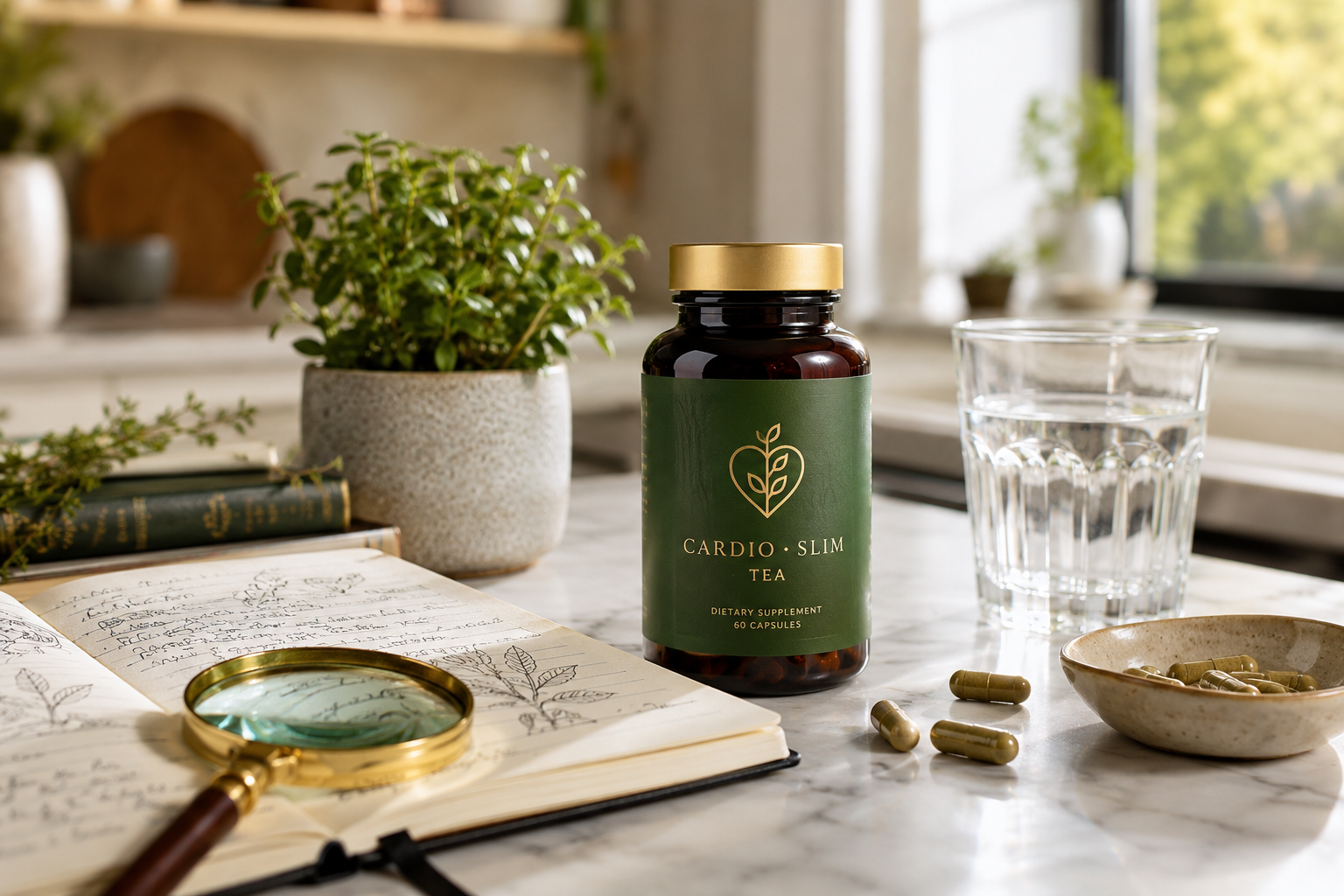
This is the live Cardio Slim Tea funnel our verdict is based on. We measure these on-page promises against the evidence, dose math, price, and refund mechanics above — tap the image to see the seller’s current offer and terms.
 Live sales page →
 Here's what I'd actually do
If you opened this at 11 pm and the page made the supplement look like an answer to something larger:
Close this tab. Cardio Slim Tea is in the band where the marketing is doing the heavy lifting and the formula is not. There are evidence-based versions of every promise on that sales page, and most of them cost a third of the price with full label transparency.
Don't buy this if: Do not buy this if you have a diagnosed condition that this product is implicitly addressing. See a clinician. A $69 bottle does not replace a $0-with-insurance lab panel.
— Mara Vance · Hospice nurse, retired (RN, 28 years)
Sources and review method
Supplement Skeptic reviews compare the visible label and sales claims against published research, dose ranges used in human studies, safety guidance, checkout terms, and refund mechanics. This page is not medical advice.
- Serban C, et al. Effect of sour tea (Hibiscus sabdariffa L.) on arterial hypertension: meta-analysis. — Meta-analysis used for the hibiscus blood pressure effect-size discussion.
- McKay DL, et al. Hibiscus sabdariffa L. tea (tisane) lowers blood pressure in prehypertensive and mildly hypertensive adults. — Foundational hibiscus BP RCT — used for the 240 mL × 3 daily dosing reference.
- Siervo M, et al. Inorganic nitrate and beetroot juice supplementation reduces blood pressure in adults: a meta-analysis. — Beetroot nitrate / blood pressure meta-analysis.
- Olthof MR, et al. Low dose betaine supplementation leads to immediate and long term lowering of plasma homocysteine. — TMG / betaine homocysteine RCT — uses 1.5–6 g/day, several orders of magnitude above what's in a tea bag.
- FTC: Health products compliance guidance. — Used for the regulatory frame on supplement-vs-medical-device claim limits.
Frequently asked questions
- Does hibiscus tea actually lower blood pressure?
- Modestly, yes. Serban et al.'s 2015 meta-analysis (J Hypertens) of 5 RCTs found hibiscus tea lowered systolic BP by ~7.6 mmHg and diastolic by ~3.5 mmHg vs control. The effect was strongest in pre-hypertensive subjects. McKay et al. 2010 (J Nutr) showed similar effects with 240 mL hibiscus tea three times daily for 6 weeks. Cardio Slim Tea contains hibiscus alongside 14 other ingredients in a single tea bag, so the per-ingredient dose is much lower than the trials. You'd get a stronger effect drinking three cups of plain hibiscus tea.
- What about TMG and homocysteine?
- Trimethylglycine (TMG, betaine) is a real homocysteine-lowering compound — but the dose used in clinical trials is 3–6 grams per day. A tea bag containing TMG as one of 15 ingredients delivers somewhere in the milligram range, not the gram range. The 'optimizing homocysteine levels' framing in the Cardio Slim VSL outruns what the formula can deliver.
- Will Cardio Slim Tea help me lose weight?
- Probably no more than any other unsweetened tea consumed in place of caloric beverages. Green tea has small thermogenic and lipid-oxidation effects in studies (Hursel et al. 2009 meta-analysis showed ~1 kg weight loss over 12 weeks). The effect is modest, requires ~270 mg/day of EGCG, and is not 'belly fat melting'. Beverage swap (replacing soda or juice with any unsweetened tea) is the actual mechanism here, not unique to this blend.
- Is it safe to combine with my blood pressure medication?
- Mostly low-risk, but: hibiscus + ACE inhibitors and ARBs have shown additive effects in case reports. If you are on an ACE inhibitor, ARB, or thiazide diuretic, the additive effect is usually mild but real. The bigger concern is the sales pitch implying you can normalize BP and reduce medications — do not adjust prescription medications based on tea. Always coordinate with your prescribing physician.
- What's the actual price?
- Pricing on the Cardio Slim Tea site varies by bundle: $79 single 30-day supply, $59/box at 3-pack, $49/box at 6-pack. Free US shipping on 3- and 6-pack. The ClickBank average earned-per-sale of $164.71 implies the average customer is paying ~$220 — meaning most buyers are taking the 3- or 6-month bundle, which is exactly what the bundle pricing is designed to do.
More in Dietary Supplements