Review · Dietary Supplements
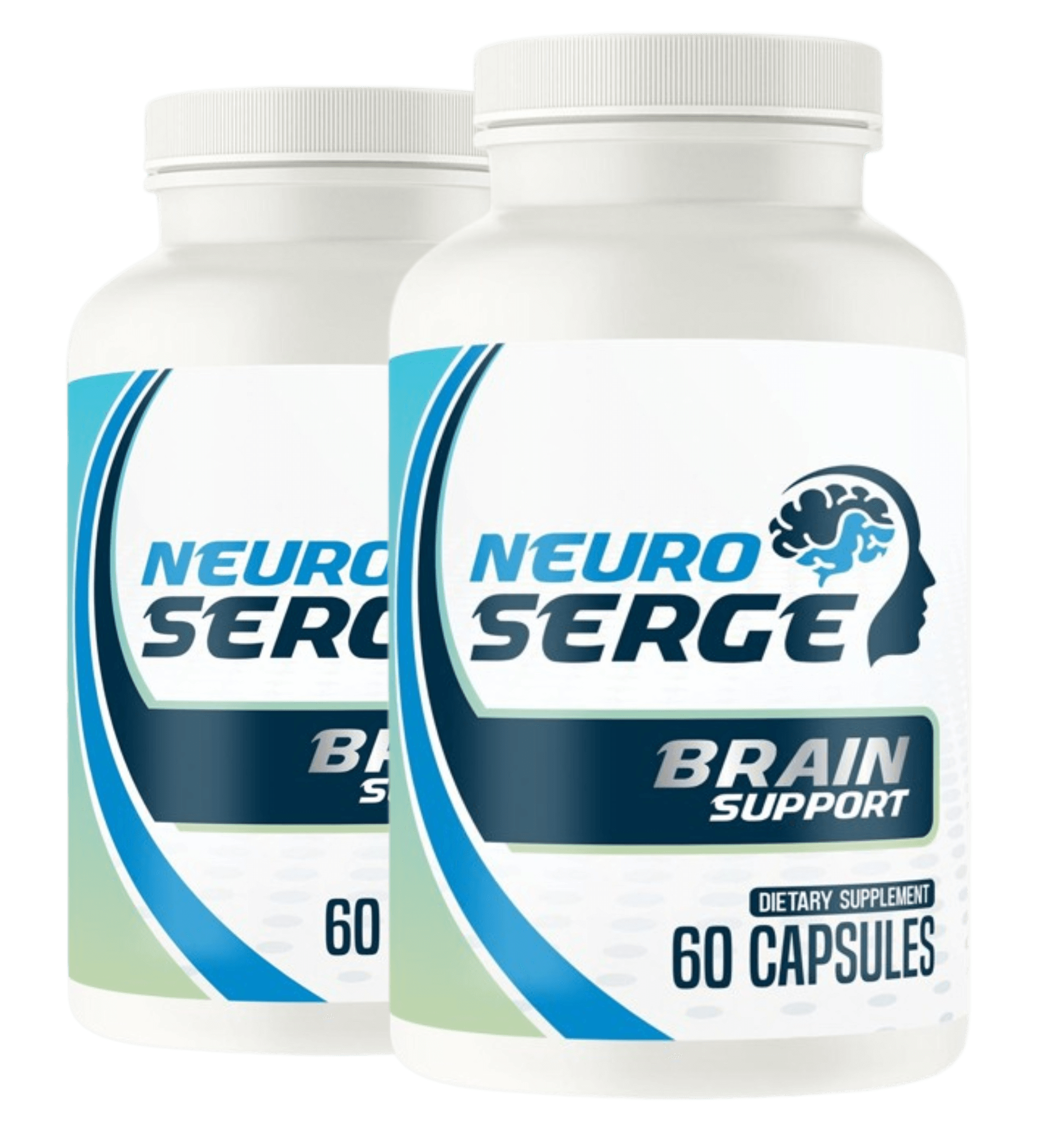
Neuro Serge
Neuro Serge claims '20+ clinically-proven ingredients' but its public ingredient panel names only six (olive leaf, cinnamon, deglycyrrhizinated licorice, green tea extract, grape seed extract, bilberry extract). The rest live inside an undisclosed proprietary blend. The bonus stack ('Balance Your Blood Sugar Blueprint', 'The Blood Sugar Solution') is the give-away: this is a glucose-management formula re-skinned as a brain product. The video preface labels itself 'Medical Breakthrough Gluco Repair' before the brain pitch begins.
Skeptic read
Skeptical3.0/10
Neuro Serge claims '20+ clinically-proven ingredients' but its public ingredient panel names only six (olive leaf, cinnamon, deglycyrrhizinated licorice, green tea extract, grape seed extract, bilberry extract). The rest live inside an undisclosed proprietary blend. The bonus stack ('Balance Your Blood Sugar Blueprint', 'The Blood Sugar Solution') is the give-away: this is a glucose-management formula re-skinned as a brain product. The video preface labels itself 'Medical Breakthrough Gluco Repair' before the brain pitch begins.
- Price checked
- From $49 (single bottle $79)
- Dose visibility
- Limited: key ingredient doses are hidden or hard to verify
- Main risk
- '20+ ingredients' marketing claim with only 6 publicly named — the rest is opaque proprietary blend
- Better use case
- Buyers who already wanted a glucose-support stack (olive leaf, cinnamon, green tea, grape seed) and are happy paying brain-product prices for it
- Skip if
- You actually want a brain supplement — Neuro Serge is not built for that purpose by ingredient design
- Evidence file
- 5 sources attached
What Neuro Serge is actually selling
Neuro Serge is pitched as a brain health capsule “with a unique blend of 20+ ingredients and nutrients.” The video that loads on the landing page identifies itself as “Neuro Serge - Medical Breakthrough Gluco Repair - Text Presentation” — that is verbatim from the page title element on the live site.
The bonus stack tells you what the product was designed to be. Bonus #1 is “Balance Your Blood Sugar Blueprint.” Bonus #2 is “The Blood Sugar Solution: Unlocking Your Weight Loss and Wellness.” These are not brain bonuses. They are the original product’s bonuses, repurposed without renaming because the operator did not bother to swap them.
What you actually buy is a capsule containing six publicly named ingredients (olive leaf, cinnamon, deglycyrrhizinated licorice, green tea extract, grape seed extract, bilberry) plus an undisclosed proprietary blend. The page promises “20+ ingredients” but only displays six. The other 14+ are inside the blend.
This is the cleanest example of a relabeled product we’ve reviewed this quarter.
The label — what’s publicly named
| Ingredient | Primary evidence base |
|---|---|
| Olive Leaf | Cardiovascular, mild glucose-lowering (Wainstein 2012) |
| Cinnamomum cassia | Glycemic control (Allen 2013 meta-analysis) |
| Deglycyrrhizinated Licorice (DGL) | GI/ulcer protection, NOT brain |
| Green Tea Extract | Cardiovascular, modest weight effect |
| Grape Seed Extract | Blood pressure, endothelial function |
| Bilberry Extract | Vision support; some antioxidant data |
| Proprietary blend (14+ undisclosed ingredients) | Unknown |
Notice what is absent: no Bacopa, no Lion’s Mane, no citicoline, no acetyl-L-carnitine, no phosphatidylserine, no L-tyrosine, no Rhodiola. The standard nootropic ingredients with actual cognitive RCT evidence are not on the public ingredient panel.
Evidence review of what’s named
Olive Leaf
Wainstein et al. 2012 used olive leaf extract for glycemic improvement in diabetic subjects. CV evidence at 500–1000 mg/day. Brain evidence is preclinical only.
Cinnamon (Cassia)
Allen et al. 2013 meta-analysis: small fasting glucose reduction in type 2 diabetes at 1–6 g/day. Liver toxicity from coumarin in cassia at high doses. Not a brain ingredient.
Deglycyrrhizinated Licorice
Used for GI protection and ulcer support. The page claims it “may help manage stress” — this is a stretch. DGL has its glycyrrhizin removed precisely because glycyrrhizin (the only stress/cortisol-active compound in licorice) raises blood pressure. DGL is the version that doesn’t have that effect.
Green Tea Extract
EGCG-standardized extract has cardiovascular and metabolic effects. Brain effects are mostly preclinical or correlational.
Grape Seed Extract
Sivaprakasapillai et al. 2009 RCT: BP reduction at 300 mg/day in metabolic syndrome subjects. Real cardiovascular ingredient. Not primarily a brain ingredient.
Bilberry
Vision support evidence is moderate; brain evidence is thin.
What’s missing — the diagnostic absence
A formula targeting cognition would prominently feature:
| Ingredient | RCT evidence base | Typical clinical dose |
|---|---|---|
| Bacopa monnieri | Stough 2008, Calabrese 2008 | 300 mg/day |
| Citicoline (CDP-choline) | Spiers 1996, Fioravanti 2005 | 250–500 mg/day |
| Acetyl-L-Carnitine | Multiple RCTs in age-related cognitive decline | 1500–2000 mg/day |
| Phosphatidylserine | Multiple RCTs | 100–300 mg/day |
| Lion’s Mane | Mori 2009 RCT | 750–3000 mg/day |
| Rhodiola rosea | Hung 2011 review | 200–400 mg/day |
None publicly listed on Neuro Serge’s panel. This is the primary reason for the verdict.
Cost-per-clinical-dose math
Neuro Serge: $49–79 per 30-day bottle.
Equivalent commodity glucose-support stack (matching the public ingredient list at clinical doses):
| Product | Monthly cost |
|---|---|
| Now Foods Olive Leaf 500 mg, 100 caps | $13 |
| Ceylon Cinnamon 1200 mg, 60 caps | $9 |
| Now Foods Grape Seed Extract 100 mg, 100 caps | $13 |
| Total | ~$35/month |
Or — if you actually wanted a brain stack — at clinical doses:
| Product | Monthly cost |
|---|---|
| Bacopa 300 mg standardized 50% bacosides | $15 |
| Citicoline (Cognizin) 250 mg, 60 caps | $25 |
| Lion’s Mane 1500 mg, 60 caps | $20 |
| Total | ~$60/month |
Either alternative beats Neuro Serge on cost-per-clinical-dose. The brain-stack version actually treats the indication Neuro Serge claims to address.
Marketing teardown
May 2026 audit:
- Page title HTML literally reads “(3) Neuro Serge - Medical Breakthrough Gluco Repair - Text Presentation” — visible in
<title>tag, betraying the relabeling - Bonus eBooks are both glucose-themed
- “20+ ingredients” claim with only 6 public — proprietary blend opacity at maximum
- “Manufactured in the USA from the finest of foreign and domestic ingredients” — boilerplate ClickBank copy
- Pricing ladder $79 / $69 / $49 — standard architecture
- “97% of customers order 6 bottles” — unverified, almost certainly fabricated
- ClickBank catalog flag
hasRecurring: true— verify subscription enrollment carefully at checkout - Testimonial quotes use first-name-plus-state format with no verifiable identities
Verdict rationale
Neuro Serge gets a 3.0 because:
- It is structurally a glucose-management formula relabeled for brain marketing, and the title tag still displays the original positioning
- The “20+ ingredients” claim with 14+ undisclosed makes the formulation un-evaluable
- Bonus stack confirms original product positioning
- No standard nootropic ingredients on the public panel
- Premium pricing for a relabel
- Recurring billing flag without prominent subscription disclosure
It does not score below 3.0 because:
- The publicly named ingredients are real and have real (non-brain) evidence
- 180-day refund window is long
- No banned or dangerous ingredients
- Olive leaf, cinnamon, grape seed are individually low-risk
Bottom line
Neuro Serge appears to be a glucose-support formula whose marketing has been pivoted to brain health without changing the bonus eBooks, the video preface, or the underlying ingredient mix. If you want a brain supplement, this isn’t one by ingredient design. If you want olive leaf, cinnamon, and grape seed at clinical doses for glycemic support, the commodity stack costs half as much and discloses the doses.
Skeptic Desk verdict: Skeptical — 3.0/10. A relabeled product. Read the page-title HTML before you read the marketing.
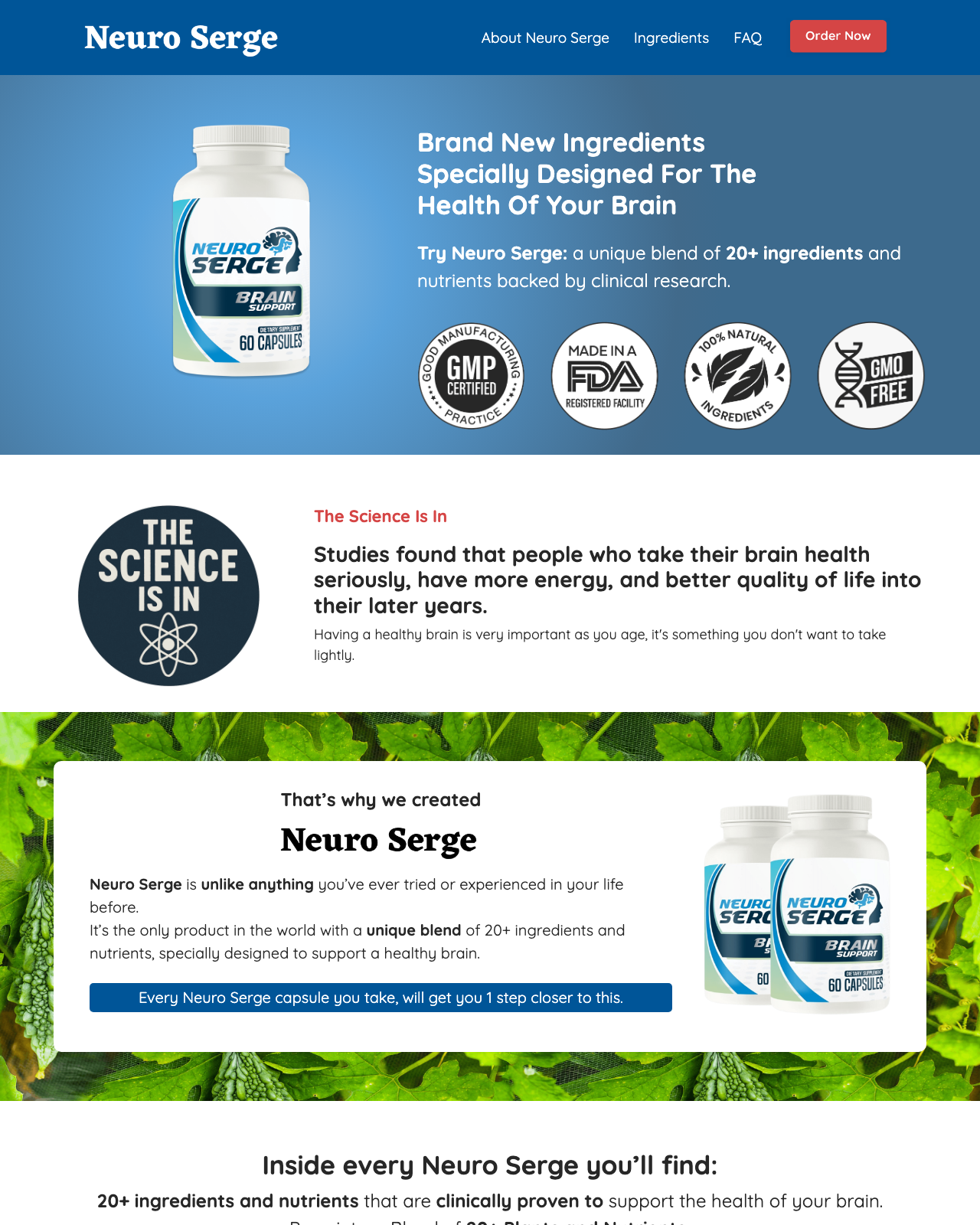
This is the live Neuro Serge funnel our verdict is based on. We measure these on-page promises against the evidence, dose math, price, and refund mechanics above — tap the image to see the seller’s current offer and terms.
 Live sales page →
 Here's what I'd actually do
If you opened this at 11 pm and the page made the supplement look like an answer to something larger:
Close this tab. Neuro Serge is in the band where the marketing is doing the heavy lifting and the formula is not. There are evidence-based versions of every promise on that sales page, and most of them cost a third of the price with full label transparency.
Don't buy this if: Do not buy this if you have a diagnosed condition that this product is implicitly addressing. See a clinician. A $69 bottle does not replace a $0-with-insurance lab panel.
— Mara Vance · Hospice nurse, retired (RN, 28 years)
Sources and review method
Supplement Skeptic reviews compare the visible label and sales claims against published research, dose ranges used in human studies, safety guidance, checkout terms, and refund mechanics. This page is not medical advice.
- Wainstein J, et al. Olive leaf extract as a hypoglycemic agent in both human diabetic subjects and in rats. — Olive leaf extract human glucose-control study used as evidence anchor.
- Stough C, et al. Examining the nootropic effects of a special extract of Bacopa monniera on cognitive functioning. — Bacopa monnieri RCT — referenced as an example of an actual brain ingredient with cognitive RCT evidence (notably absent from Neuro Serge).
- Sivaprakasapillai B, et al. Effect of grape seed extract on blood pressure in subjects with the metabolic syndrome. — Grape seed extract / blood pressure RCT (cardiovascular evidence base for one of the named ingredients).
- Allen RW, et al. Cinnamon use in type 2 diabetes: an updated systematic review and meta-analysis. — Cinnamon / glucose meta-analysis — confirms ingredient is in glucose-management literature, not brain literature.
- FTC: Health products compliance guidance. — Used for the regulatory frame on '20+ clinically-proven ingredients' claims and undisclosed proprietary blends.
Frequently asked questions
- Is Neuro Serge actually a brain supplement?
- By ingredient profile, no. The six publicly named ingredients (olive leaf, cinnamon, deglycyrrhizinated licorice, green tea extract, grape seed extract, bilberry) are predominantly cardiovascular, hepatic, or glycemic — not nootropic. The undisclosed blend may include brain-targeted ingredients, but the product makes no commitment to which. The video literally previews itself as a 'Gluco Repair' presentation. Functionally this is a glucose-management formula relabeled for brain marketing.
- What ingredients would a real brain supplement contain?
- The evidence-supported brain ingredients you'd expect to see — and don't, in Neuro Serge's public ingredient list — are: Bacopa monnieri 300 mg (Stough et al. 2008 RCT), citicoline 250–500 mg (Spiers et al. 1996), Lion's Mane 750–3000 mg, acetyl-L-carnitine 1500–2000 mg, phosphatidylserine 100–300 mg. The absence of any of these from the public ingredient panel is the strongest signal that Neuro Serge is not a primarily nootropic formulation.
- Is olive leaf good for the brain?
- Olive leaf has cardiovascular and metabolic evidence at 500–1000 mg/day, and one small trial (Wainstein et al. 2012) for glycemic control. There is some preclinical evidence for oleuropein and brain inflammation, but no convincing human cognitive RCTs. The page's framing of olive leaf as primarily a heart/glucose ingredient is honest. As a brain ingredient, it's speculative.
- What's the actual concern with the recurring billing?
- ClickBank lists this product with hasRecurring=true. The sales page does not foreground subscription enrollment, but the catalog flag indicates the offer is configured to allow recurring charges. Read the order page carefully before completing checkout. If you see an auto-ship checkbox, decide consciously whether you want it. If you discover unwanted recurring charges, ClickBank's standard refund window applies and they enforce cancellations through customer support.
- What does Neuro Serge actually cost?
- $79 single bottle, $69/bottle at 3-pack ($207), $49/bottle at 6-pack ($294). The average ClickBank earned-per-sale of $175 at 75% commission means the typical buyer is paying around $233 — meaning most buyers are bundling. The 180-day refund applies.
More in Dietary Supplements