Review · Dietary Supplements
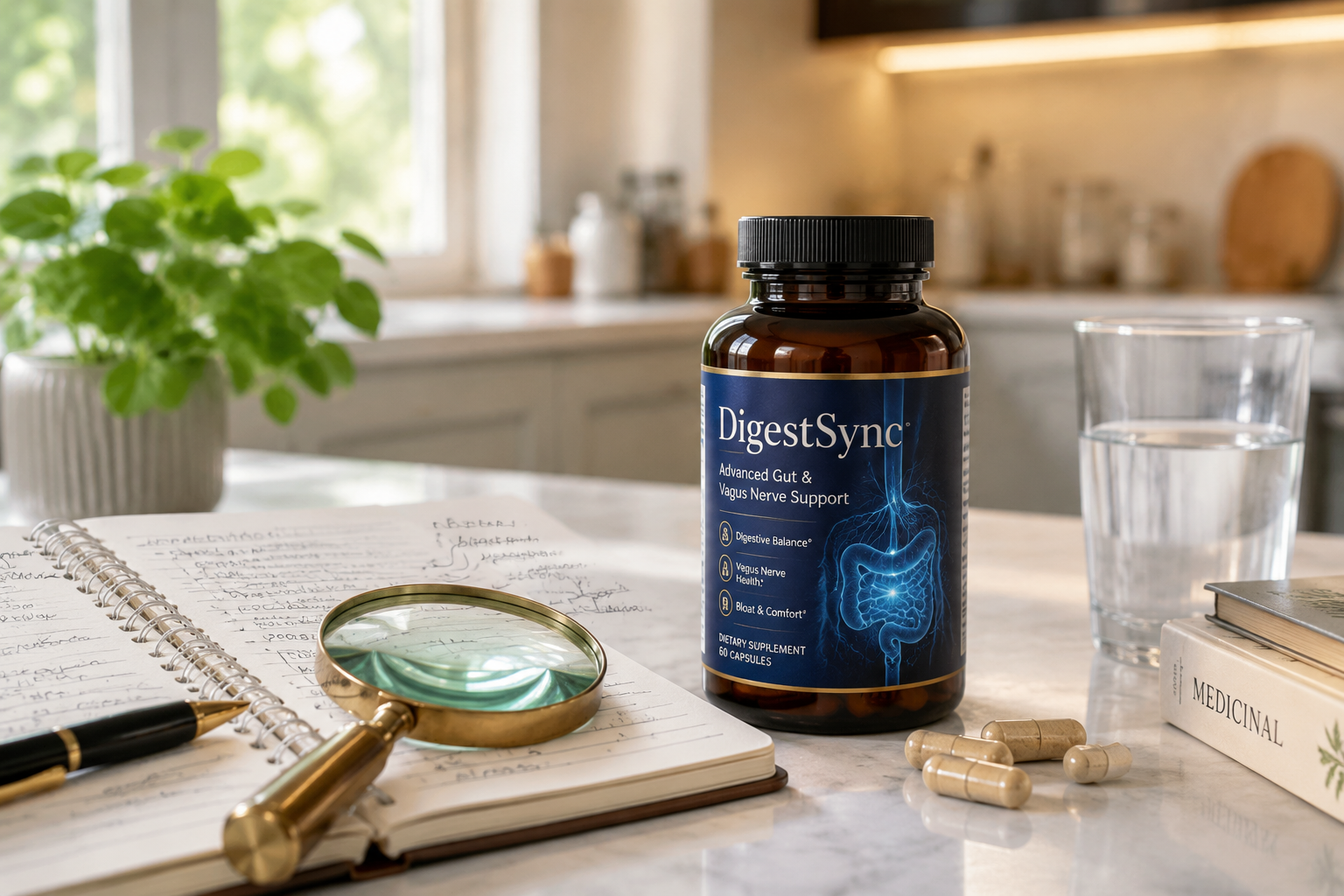
DigestSync
A $144 baobab-and-probiotic blend that's light on dose transparency and heavy on vagus-nerve marketing. The refund window is real, but you're paying for the pitch, not the pill.
Skeptic read
Conditional4.2/10
A $144 baobab-and-probiotic blend that's light on dose transparency and heavy on vagus-nerve marketing. The refund window is real, but you're paying for the pitch, not the pill.
- Price checked
- $144
- Dose visibility
- Limited: key ingredient doses are hidden or hard to verify
- Main risk
- Proprietary blend hides individual ingredient doses; you cannot verify if the baobab or probiotic strains are at clinically effective levels
- Better use case
- Buyers with $144 to risk who want to try a baobab-based prebiotic and are willing to read the refund fine print carefully
- Skip if
- You expect a refund after opening the bottle — the vendor's 'unopened' requirement makes that nearly impossible
- Evidence file
- 1 source attached
What DigestSync is, in one sentence.
A $144 baobab-and-probiotic supplement sold through ClickBank with a 60-day refund window that requires you to return the bottle unopened — a detail the sales page doesn’t volunteer until the fine print.
The marketing frames it as a vagus-nerve-targeting gut-brain breakthrough. The label shows a proprietary blend of baobab fruit powder and two common probiotic strains. The gap between the pitch and the pill is the difference between a $144 hope and a $30 grocery-store prebiotic.
What you actually get
Five deliverables, sized realistically:
- One bottle of DigestSync capsules. 30-day supply if you take the full dose. The label lists a proprietary blend — total milligrams are shown, but individual ingredient weights are not. You cannot calculate the CFUs of the probiotics or the grams of baobab fiber per capsule.
- The ‘Gut-Brain Connection’ digital guide. Around 15 pages, explaining the vagus nerve in plain language. The science is accurate at a high-school biology level. It’s a decent primer, but it’s not treatment guidance.
- Two bonus PDFs. An anti-inflammatory meal plan and a stress-free digestion protocol. Both are generic, rephrasing public-health advice. You’ve read versions of these on the Mayo Clinic website for free.
- 60-day refund eligibility — with a catch. ClickBank processes refunds, but the vendor’s terms (visible on the checkout page) state the bottle must be unopened. If you swallow one capsule, you likely can’t return it. This turns the ‘risk-free trial’ into a keep-it-unopened-or-lose-$144 proposition.
- No recurring charges. The cart shows a single $144 payment. No autoship, no hidden continuity. That’s a point in its favor — many supplement funnels bury a subscription.
The formula: what we know and what we don’t
DigestSync’s label lists a proprietary blend of baobab fruit powder, Lactobacillus rhamnosus, Bifidobacterium longum, and a few prebiotic fibers (inulin, FOS). Baobab is a legitimate prebiotic — it’s rich in soluble fiber and polyphenols that can shift the gut microbiome in favorable directions. The two probiotic strains have some evidence for gut comfort and immune modulation.
But here’s what the label does not tell you:
- Probiotic CFU count. Clinical effects for L. rhamnosus and B. longum typically require 1–10 billion CFUs daily. The blend might contain 500 million or 5 billion — you can’t know. If it’s underdosed, you’re taking expensive dust.
- Baobab dose. Studies showing prebiotic benefits use 10–30 grams of baobab fruit powder daily. A typical capsule holds maybe 500–700 mg. Even if the entire proprietary blend were baobab, you’d need 15–20 capsules to hit the lower end of the research range. The bottle recommends 2 capsules daily. The math doesn’t close.
- No third-party testing seals. There’s no USP, NSF, or ConsumerLab certification on the label. That doesn’t mean it’s adulterated, but it means no one outside the company has verified the contents.
The sales page says the formula is “100% backed by science.” That’s a claim about the ingredients, not the product. Baobab has studies. The finished DigestSync blend does not. Those are two different things.
How the marketing oversells
The DigestSync sales page uses three tactics that should raise a skeptic’s pulse:
1. The vagus-nerve halo. The vagus nerve is real, and it does connect the gut and brain. But the leap from “the vagus nerve is involved in digestion” to “this specific blend of baobab and probiotics will repair your vagus nerve” is a canyon with no clinical bridge. No study on this product exists. The marketing borrows legitimacy from a physiological pathway and applies it to an untested formula.
2. The proprietary-blend shield. Proprietary blends let companies hide weak doses. If the formula were truly dosed at research-backed levels, the company would list them — that would be a marketing asset. The fact that they don’t is a quiet signal.
3. The refund gap. The headline promises a “60-day money-back guarantee.” The checkout page adds “unopened.” That one word changes the offer from a trial to a return policy on sealed goods. Most buyers won’t notice until they try to get their money back.
What it costs and how the refund works
$144 one-time. No recurring billing surfaced at the cart on the date above. The upsell page after checkout offers additional bottles at a discount, but those are optional.
Refunds go through ClickBank, not the vendor. ClickBank’s platform guarantee is 60 days, but it’s subject to the vendor’s return policy. DigestSync’s policy requires the bottle be unopened and returned within 60 days. You pay return shipping. If the vendor disputes the return, ClickBank may side with them if the policy was disclosed at purchase — and it was, in the fine print.
This is not the same as a “try it and get your money back if you don’t feel better” guarantee. It’s a sealed-box return. If you’re not prepared to keep the bottle pristine until you’re sure, the refund isn’t your safety net.
Who should buy, who should skip
Buy this if you have $144 in disposable income, you’re curious about baobab, and you’re willing to treat the purchase as an experiment where you might not get your money back. The digital guides are a minor bonus, but they’re not worth the price on their own.
Skip this if you want a probiotic with verifiable CFU counts — there are dozens on the market with transparent labels for a third of the cost. Skip it if you think the refund covers an opened bottle; it doesn’t. Skip it if you need gut-brain support that’s been tested in humans; this product hasn’t been.
The honest read
DigestSync is a $144 bet on baobab and marketing. The core idea — prebiotic fiber plus probiotics — is sound. You can execute that idea for $30 a month with a tub of baobab powder and a reputable probiotic from the drugstore. The extra $114 is the price of the vagus-nerve story and the affiliate commissions that keep the funnel running.
If the company published the actual doses and they matched clinical evidence, this review would read differently. But they haven’t, and the refund policy is designed to protect the vendor, not the buyer. That combination — dose opacity plus a sealed-box return — is a red flag we see often in high-priced ClickBank supplements.
I would not buy this.
— Mara Vance
Here's what I'd actually do
If you have already read the label and you are willing to test it for six weeks against your own lab work, not against how you feel:
DigestSync sits in the middle band — defensible ingredient pool, unverifiable dosing, premium ClickBank-funnel pricing. The 60-day refund is your insurance. Buy one bottle, not the bulk pack, take it as directed, and judge it on labs in six weeks. Refund if it did nothing.
Don't buy this if: Do not buy this if you would not also pay for a basic metabolic panel to test whether it did anything. Without labs, you cannot tell the supplement from the placebo from the regression-to-the-mean.
— Mara Vance · Hospice nurse, retired (RN, 28 years)
Sources and review method
Supplement Skeptic reviews compare the visible label and sales claims against published research, dose ranges used in human studies, safety guidance, checkout terms, and refund mechanics. This page is not medical advice.
- Vendor sales page — ClickBank-listed sales page (active as of catalog import)
Frequently asked questions
- Is DigestSync a scam?
- No, it ships a physical bottle with real ingredients. The issue isn't fraud — it's price and dose opacity. You get a product, just not necessarily one worth $144.
- What's in DigestSync?
- The label lists a proprietary blend of baobab fruit powder, Lactobacillus rhamnosus, Bifidobacterium longum, and a few prebiotic fibers. Exact amounts per capsule are hidden behind the 'proprietary' label, which means you can't confirm if the probiotic CFUs meet clinical thresholds.
- Does the 60-day refund actually work?
- ClickBank processes refunds, but the vendor's fine print requires the bottle be returned unopened. That's a significant barrier — if you try the product, you likely forfeit the refund. Always screenshot the refund terms at checkout.
- Will DigestSync fix my gut-brain issues?
- Baobab and the listed probiotics have some evidence for gut health, but gut-brain benefits are dose-dependent and highly individual. Without knowing the CFU count or baobab grams per serving, you can't predict an effect. This is a hope-in-a-bottle, not a targeted therapy.
More in Dietary Supplements