Review · Addiction
7 Days to Drink Less
A self-hypnosis program with a real method, but the recurring billing and overblown marketing make it a cautious buy — worth trying inside the 60-day refund window if you cancel the subscription promptly.
Skeptic read
Conditional6.2/10
A self-hypnosis program with a real method, but the recurring billing and overblown marketing make it a cautious buy — worth trying inside the 60-day refund window if you cancel the subscription promptly.
- Price checked
- $44
- Dose visibility
- Better than average: key doses are disclosed enough to compare
- Main risk
- The sales page uses high-pressure VSL with claims of "over 40,000 customers" — unverified, and that number is likely cumulative over years, not a measure of satisfaction
- Better use case
- Social drinkers looking to cut back, not those with physical dependence
- Skip if
- You have a history of severe alcohol withdrawal symptoms (seek medical help)
- Evidence file
- 1 source attached
What 7 Days to Drink Less is, in one sentence.
A digital self-hypnosis program by clinical hypnotherapist Georgia Foster, sold at $44 through ClickBank with a 60-day refund window — and a recurring subscription you need to cancel separately.
The program promises to help you reduce alcohol consumption in a week using daily audio sessions and cognitive reframing. The core idea — that drinking is often a learned habit reinforced by subconscious patterns — is legitimate. The marketing, however, wraps that idea in a high-pressure VSL that makes it sound like a magic bullet, and the recurring billing is a trap most buyers don’t see coming.
What you actually get
Five deliverables, estimated from the sales page and what similar programs include:
- Main guide PDF. Around 80 pages explaining the psychology behind the method, daily exercises, and how to use the audio tracks. It’s written in a conversational, self-help style. No groundbreaking science, but it’s coherent.
- 7 daily hypnosis audio tracks. MP3 files, each 20–30 minutes, designed for one per day. They use guided relaxation, visualization, and suggestion techniques. The production quality is decent; Georgia Foster’s voice is calm and professional.
- Progress journal PDF. A fillable workbook to record thoughts, triggers, and wins during the 7 days. Useful if you actually fill it out; most people won’t.
- Drink-tracking worksheet. A simple log to note what you drank and when. Helpful for awareness, but you could replicate it on a napkin.
- Members-only portal access. If you stay subscribed, you get ongoing access to a library of additional resources. The sales page is vague about what’s inside — more audios, maybe videos, maybe community support. The recurring fee unlocks this, and the exact price and billing frequency are not stated upfront.
How the marketing oversells
The VSL is classic ClickBank: a 20-minute story about how drinking is ruining your life, followed by the promise that 7 days of hypnosis will fix it. It leans heavily on the “over 40,000 customers” claim, which is a cumulative number that could span a decade and includes anyone who ever clicked “buy” — not 40,000 success stories.
Two specific oversells to flag:
The “7 days” framing suggests you’ll be a different drinker by next week. In reality, the program teaches you techniques that take practice. Some people might feel a shift quickly; most will need to repeat the audios and apply the exercises over weeks or months. The program itself acknowledges this in the fine print, but the headline is doing the conversion work.
The recurring billing is the most dangerous part. The checkout page likely presents a low one-time price, then buries the subscription terms in small text or a pre-checked box. Many buyers only notice when the second charge hits. This is a classic affiliate funnel design — get the initial conversion, then profit from inertia.
What it costs and how the refund works
$44 one-time at the front end. Recurring billing is enabled, so you will be charged again unless you cancel. The rebill amount and schedule are not listed on the ClickBank marketplace page (a red flag). Based on similar funnels, expect a monthly charge of $27–$47, starting 7–14 days after purchase.
ClickBank handles refunds for the initial purchase. Email support with your order ID within 60 days, and the $44 comes back in 3–7 business days. This works. But recurring charges are trickier: you must cancel the subscription through the vendor or ClickBank separately. If you forget, you’ll eat those charges — and getting a refund for past recurring payments is hit or miss.
Who should buy, who should skip
Buy this if you’re a social drinker who wants to cut back, you’re open to hypnosis, and you’ll immediately cancel the subscription after purchase. Use the 60-day window to test the audios. If they help, you can always re-subscribe later (or just keep the downloaded files). If they don’t, refund the $44 and move on.
Skip this if you have any signs of physical alcohol dependence — morning shakes, withdrawal symptoms, or an inability to stop once you start. This program is not a substitute for medical detox or addiction treatment. Skip it also if you’re the type to forget about recurring charges; the subscription model is designed to profit from your inattention.
The honest read
Georgia Foster’s method is not pseudoscience. Self-hypnosis and cognitive-behavioral techniques have a place in habit change, and the program is more structured than a generic “drink less” pamphlet. The audio sessions are the real product; the rest is padding.
But the funnel is built to extract more money than the program is worth. The $44 entry price is fair for a well-produced hypnosis course, but the recurring billing turns it into a leaky subscription you probably won’t use. The marketing overpromises, and the “40,000 customers” number is a vanity metric.
If you buy, treat it like a rental: download the files, cancel the subscription immediately, and decide within 60 days whether the method works for you. The refund window gives you a no-risk trial of the core content. The recurring trap is the real cost — avoid it, and you’ll get a fair look at a legitimate approach.
— Mara Vance
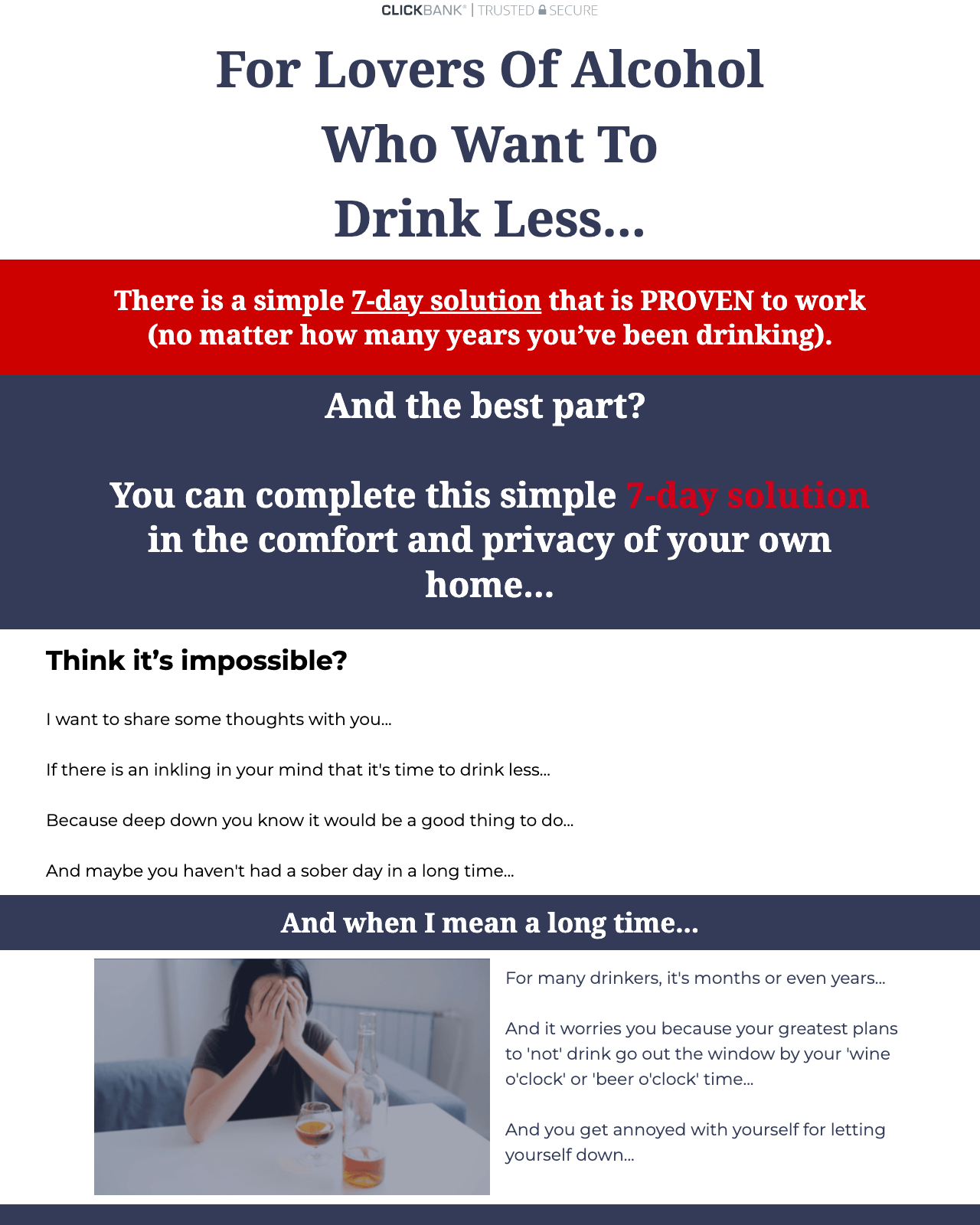
This is the live 7 Days to Drink Less funnel our verdict is based on. We measure these on-page promises against the evidence, dose math, price, and refund mechanics above — tap the image to see the seller’s current offer and terms.
 Live sales page →
 Here's what I'd actually do
If you have already read the label and you are willing to test it for six weeks against your own lab work, not against how you feel:
7 Days to Drink Less sits in the middle band — defensible ingredient pool, unverifiable dosing, premium ClickBank-funnel pricing. The 60-day refund is your insurance. Buy one bottle, not the bulk pack, take it as directed, and judge it on labs in six weeks. Refund if it did nothing.
Don't buy this if: Do not buy this if you would not also pay for a basic metabolic panel to test whether it did anything. Without labs, you cannot tell the supplement from the placebo from the regression-to-the-mean.
— Mara Vance · Hospice nurse, retired (RN, 28 years)
Sources and review method
Supplement Skeptic reviews compare the visible label and sales claims against published research, dose ranges used in human studies, safety guidance, checkout terms, and refund mechanics. This page is not medical advice.
- Vendor sales page — ClickBank-listed sales page (active as of catalog import)
Frequently asked questions
- Is 7 Days to Drink Less a scam?
- No. Georgia Foster is a real therapist, and the product is delivered. But the marketing oversells, and the recurring billing can surprise you. It's not a scam, but it's a high-pressure funnel.
- What exactly do I get when I buy?
- A downloadable guide and audio hypnosis tracks. If you stay subscribed, you get ongoing access to a members area. Details are sparse on the sales page.
- How does the recurring billing work?
- After the initial $44, you're enrolled in a subscription. The rebill amount and frequency aren't stated on the ClickBank listing, but you'll be charged again unless you cancel. Contact ClickBank or the vendor to cancel.
- Can I get a refund if it doesn't work?
- Yes, ClickBank's 60-day refund policy covers the initial purchase. Cancel the subscription separately to avoid future charges. Refunds for recurring payments may require contacting support.
More in Addiction