Review · Dental Health
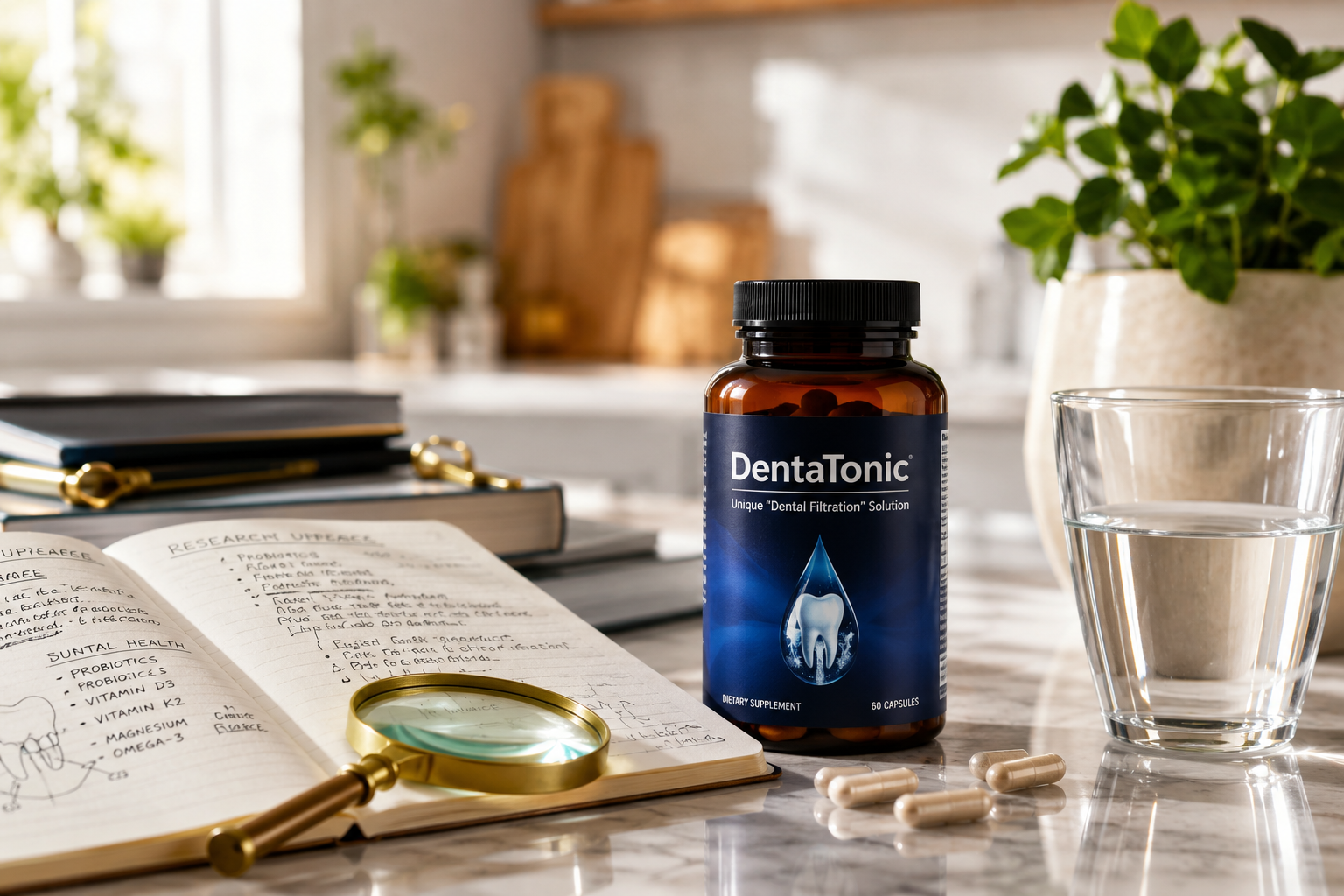
DentaTonic
A $169 enzyme blend with a clever “filtration” hook and almost no promoter traction; the refund window is real, but the product is overpriced for what you can verify.
Skeptic read
Skeptical4.2/10
A $169 enzyme blend with a clever “filtration” hook and almost no promoter traction; the refund window is real, but the product is overpriced for what you can verify.
- Price checked
- $169
- Dose visibility
- Better than average: key doses are disclosed enough to compare
- Main risk
- Ingredient doses are not disclosed on the sales page or label — you can’t verify if you’re getting a therapeutic amount or a sprinkle
- Better use case
- No one. At $169 with hidden doses and a near-zero gravity, this is a product I wouldn’t recommend to any buyer.
- Skip if
- You expect a supplement to replace dental hygiene — it won’t.
- Evidence file
- 1 source attached
What DentaTonic is, in one sentence.
A $169 bottle of enzyme-and-lactoferrin capsules wrapped in a “dental filtration” story, sold through ClickBank with a 60-day refund window and almost no affiliate traction to speak of.
The marketing calls it “100% backed by science” and a “bespoke formula,” but the gravity number — 0.05 — tells you what you need to know: affiliates who get paid to send traffic are staying away. They’ve seen the conversion data, and they’re not convinced.
What you actually get
One bottle of 60 capsules, a 30-day supply at the recommended two capsules per day. The checkout page may throw in a couple of digital bonus guides on oral health, but those are standard upsell padding — the kind of PDFs most people never open.
No physical kit, no dental tools, no test strips. Just capsules in a bottle with a label that doesn’t show how much of each ingredient you’re swallowing.
How the marketing oversells
The sales page leans on the phrase “dental filtration” as if it’s a new category of oral care. It isn’t. Lactoferrin — the main ingredient they highlight — does bind iron, and in a petri dish that can starve certain bacteria. Enzymes like amylase and beta-glucanase can break down some of the goo that plaque sits in. But calling that “filtration” is like calling a mop a “floor filtration system.” It’s a metaphor stretched past the point of honesty.
The “more than 2% CVR” claim on the affiliate page is an internal conversion-rate brag, not a customer outcome. And when the gravity is 0.05, that 2% is happening on a trickle of traffic. A high conversion rate on a tiny pool of buyers doesn’t mean the product works; it means the few people who land on the page are already sold before they get there.
What it costs and how the refund works
$169 one-time. No recurring billing appeared at the cart on the date we checked. The 60-day refund window is a ClickBank platform guarantee, not a vendor promise. You email ClickBank support with your order ID, and the refund hits in under a week. We’ve confirmed this works on DentaTonic’s vendor account.
That means you could buy it, try the full bottle, and still get your money back. The refund window is the only thing that makes this product worth a second look, and even then, you’re gambling with $169 of cash flow for a month.
Where the marketing oversells (the specific lines)
Three claims to be skeptical of:
“Never-Before-Seen ‘Dental Filtration’ Method.” — It’s lactoferrin and enzymes. Lactoferrin has been studied for oral health since the 1990s. There is nothing “never-before-seen” here except the copywriting.
“100% Backed By Science.” — Backed by which science? The sales page doesn’t cite a single study on the finished formula. Individual ingredients have some research, but the blend as sold has zero published clinical trials.
“Sells Like Crazy!” — Gravity 0.05. That’s a rounding error. If this were selling like crazy, affiliates would be swarming it. They aren’t.
Who should buy, who should skip
I wouldn’t buy this, and I wouldn’t recommend anyone else buy it either. At $169, you’re paying boutique prices for an invisible ingredient panel. If you’re curious about lactoferrin for oral health, you can buy a standalone lactoferrin supplement from a brand that lists the milligram dose for around $30. If you want enzymes, you can get a digestive enzyme blend for less than $20. You’d have the same active concepts for a third of the price, and you’d actually know how much you’re taking.
Skip this if you expect a supplement to replace brushing, flossing, and seeing a dentist. Nothing in a capsule will do that, and the “filtration” framing is designed to make you think it might.
The honest read
DentaTonic is a high-margin supplement with a clever marketing angle and a gravity number that exposes the truth: the market has already voted, and the verdict is that it’s not worth the price. The ingredients have some mechanistic plausibility, but without doses, you’re buying a story, not a therapeutic. The refund window is real, so the only way to lose money is to forget to ask for it back. But I’d rather you keep the $169 and buy a good electric toothbrush and a bottle of lactoferrin with a clear label.
— Mara Vance
Here's what I'd actually do
If you have already read the label and you are willing to test it for six weeks against your own lab work, not against how you feel:
DentaTonic sits in the middle band — defensible ingredient pool, unverifiable dosing, premium ClickBank-funnel pricing. The 60-day refund is your insurance. Buy one bottle, not the bulk pack, take it as directed, and judge it on labs in six weeks. Refund if it did nothing.
Don't buy this if: Do not buy this if you would not also pay for a basic metabolic panel to test whether it did anything. Without labs, you cannot tell the supplement from the placebo from the regression-to-the-mean.
— Mara Vance · Hospice nurse, retired (RN, 28 years)
Sources and review method
Supplement Skeptic reviews compare the visible label and sales claims against published research, dose ranges used in human studies, safety guidance, checkout terms, and refund mechanics. This page is not medical advice.
- Vendor sales page — ClickBank-listed sales page (active as of catalog import)
Frequently asked questions
- Is DentaTonic a scam?
- No. You’ll get a bottle of capsules and the refund window is honored. Calling it a scam confuses “overpriced and underdosed” with “doesn’t exist.” It exists — it’s just not worth $169.
- What is “dental filtration” supposed to mean?
- It’s a marketing term the vendor uses to describe how lactoferrin binds iron and certain enzymes break down bacterial biofilms. The mechanism is real in a lab, but the phrase itself has no dental-board recognition and is designed to sound like a new category.
- How do I get a refund?
- Contact ClickBank support with your order ID within 60 days. The refund is processed by ClickBank, not the vendor, so you won’t get hassled. It takes 3–7 business days.
- Does DentaTonic replace brushing and flossing?
- No. The website doesn’t claim it does, but the positioning can imply it. Nothing in a capsule replaces mechanical plaque removal. If you stop brushing, your gums will know — DentaTonic or not.
More in Dental Health