Review · Dietary Supplements
Curalife
A $135 blood-sugar supplement with a thin clinical trial, undisclosed ingredient doses, and a sales page written for promoters, not buyers; the refund window is real, but the formula doesn't justify the price.
Skeptic read
Avoid4.2/10
A $135 blood-sugar supplement with a thin clinical trial, undisclosed ingredient doses, and a sales page written for promoters, not buyers; the refund window is real, but the formula doesn't justify the price.
- Price checked
- $135
- Dose visibility
- Limited: key ingredient doses are hidden or hard to verify
- Main risk
- The clinical trial was small (n=60), short (12 weeks), and funded by the manufacturer — classic red flags
- Better use case
- Someone who has tried standalone berberine and cinnamon without results and wants a pre-mixed combination out of curiosity
- Skip if
- You're on a budget — berberine capsules cost $15–$25 per month and have stronger evidence
- Evidence file
- 1 source attached
What Curalin is, in one sentence.
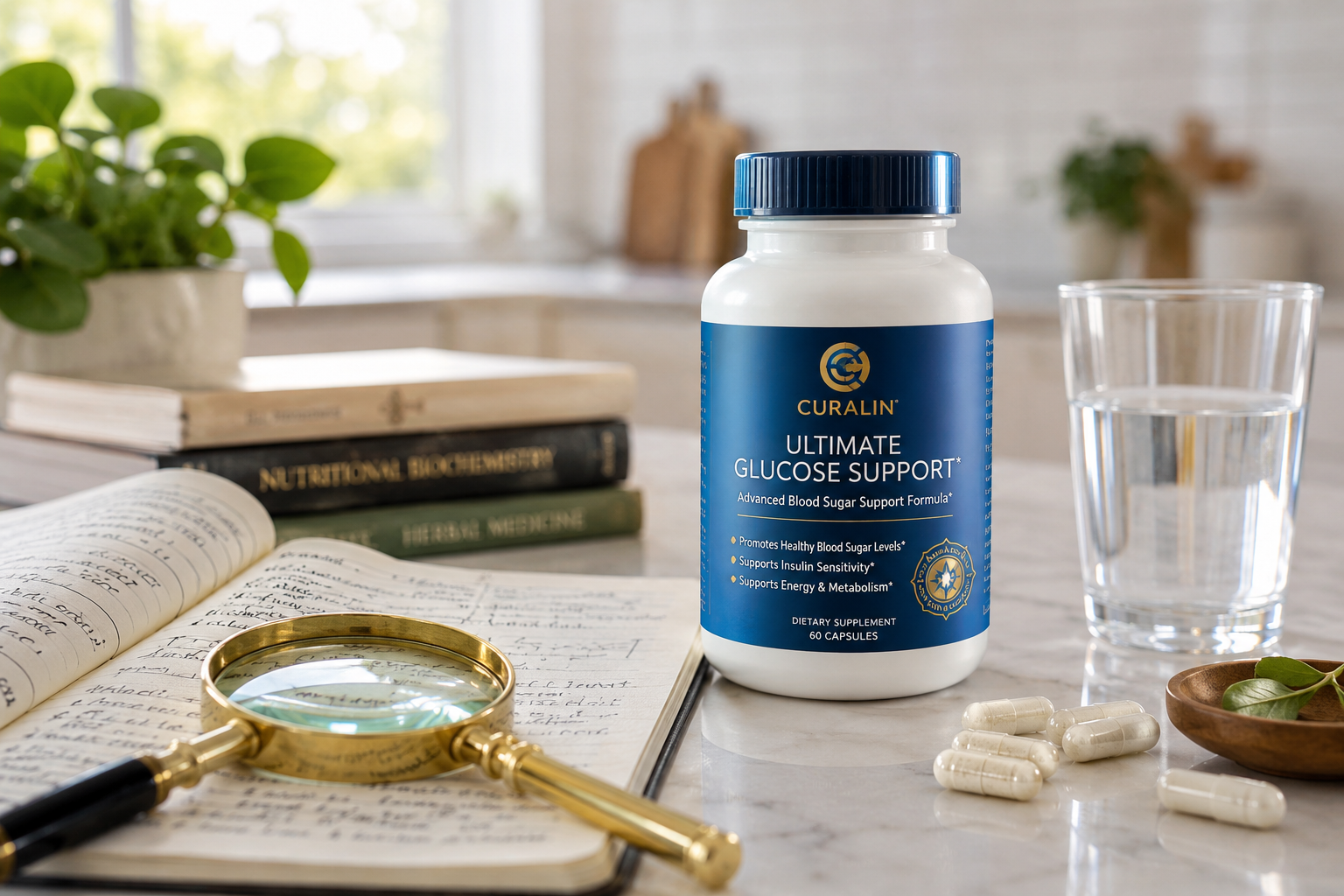
A nine-ingredient blood-sugar supplement sold at $135 per bottle through a ClickBank funnel that pays affiliates 100% commission on the first sale. The marketing is aimed at affiliates, not at you.
The product itself is real — a bottle of 60 capsules arrives, and there’s a small published study behind it. But the price, the hidden doses, and the auto-ship trap make it a poor choice for almost anyone who knows how to read a supplement label.
What you actually get
- One bottle of Curalin (60 capsules, 30-day supply). The label says take two capsules daily. That’s $4.50 per day.
- A digital ‘blood sugar guide’ PDF. Generic advice: eat fewer refined carbs, walk after meals, stay hydrated. You can find the same information on the first page of any diabetes organization’s website for free.
- Access to a private Facebook group. In practice, this is a stream of testimonials, before-and-after photos, and occasional posts from the company pushing new offers. Not a substitute for medical advice.
- Auto-ship enrollment. The checkout page pre-checks a box that enrolls you in monthly deliveries. Cancel it immediately after ordering, or you’ll see another $135 charge in 30 days. This is not a one-time purchase unless you actively opt out.
- A 60-day ClickBank refund window. ClickBank will refund you if you ask, but the vendor’s own return policy says opened bottles are non-refundable. In practice, many buyers report getting their money back after a firm email to ClickBank support, but it’s not a clean guarantee.
The ingredient list — and what’s missing
Curalin contains nine ingredients: berberine, cinnamon bark, banaba leaf, bitter melon, Gymnema sylvestre, fenugreek, alpha-lipoic acid, chromium, and vanadium. All of these have some evidence for blood-sugar support, but the evidence varies widely in quality.
Berberine is the strongest player here. Multiple meta-analyses show it lowers HbA1c by about 0.9% at doses of 500 mg two to three times daily. Cinnamon has a modest effect, maybe 0.1–0.2% HbA1c drop, at doses of 1–6 grams per day. Banaba and Gymnema have small, short-term studies. Chromium and vanadium are trace minerals with mixed results.
The problem: Curalin hides all nine ingredients behind a proprietary blend totaling 1,200 mg per two-capsule serving. That means you’re getting at most 1,200 mg of everything combined. If berberine is the main active, it’s almost certainly underdosed — 1,200 mg total blend can’t deliver the 1,000–1,500 mg of berberine that the research says you need. The company knows this. They don’t publish the breakdown because it would reveal that you’re paying $135 for a fraction of the effective dose.
The clinical trial — what it actually shows
CuraLife funded a 12-week, randomized, placebo-controlled trial of 60 people with type 2 diabetes. The Curalin group saw an HbA1c drop of 0.96% versus 0.21% in the placebo group. That’s a statistically significant result, and it’s the reason the company can say “clinically tested.”
But the study has the classic limitations of industry-funded research: small sample, short duration, no independent replication. The effect size is almost exactly what you’d expect from berberine alone. Without a head-to-head comparison against berberine at a known dose, there’s no way to know if Curalin is doing anything more than a cheap generic supplement would.
I’m not saying the study is fraudulent. I’m saying it’s thin evidence for a $135 product when the same outcome is available for $15 a month at any health-food store.
How the marketing oversells
The sales page is written for affiliates, not for people with blood-sugar concerns. The headline promises “IMMEDIATE GAINS” and “UP TO 100% COMMISSION!” — that’s recruiter language. The page talks about EPCs, conversion rates, and cold traffic. None of that tells you whether the pills work.
When the product page does address consumers, it leans heavily on the clinical trial and on emotional testimonials. It doesn’t mention the proprietary blend, the auto-ship, or the fact that the trial was company-funded. It also doesn’t mention that lifestyle changes — diet, exercise, weight loss — lower HbA1c more than any supplement, and they’re free.
The “$120+ AOV” claim on the affiliate page is a red flag. It means the average order value is high because the funnel pushes multiple bottles or an upsell. The product is priced to generate commissions, not to deliver value.
What it costs and how the refund really works
$135 for a 30-day supply, with a pre-checked auto-ship that kicks in monthly. If you buy three bottles at once, the price drops to $99 per bottle, but you’re still locked into a subscription unless you cancel.
ClickBank’s 60-day refund policy applies, but supplements are a gray area. The vendor’s terms say you must return the product unopened to get a refund. ClickBank may override that, but it’s not guaranteed. If you plan to test this product, keep the bottle sealed until you’ve read the label and decided. Better yet, don’t buy it at all.
Who should buy, who should skip
Buy this if you’ve exhausted standalone berberine and cinnamon and want to see if a proprietary blend does something different. But only buy it inside the refund window, with a calendar reminder set for day 55, and cancel the auto-ship the moment you order.
Skip this if you’re on a budget, if you’re taking prescription diabetes drugs, or if you want to know exactly what you’re putting in your body. The hidden doses make it impossible to assess safety or efficacy. For $135, you could buy a year’s supply of berberine, a good glucometer, and a consultation with a registered dietitian — and you’d be far better off.
The honest read
Curalin is not a scam. The product exists, the trial exists, and the ingredients are real. But it’s a terrible value. The price is inflated by a 100% affiliate commission that turns every customer into a commission check. The proprietary blend hides underdosing. The auto-ship is designed to catch people who don’t read the fine print.
If this were $30 and transparently labeled, I’d call it a reasonable experiment. At $135 with hidden doses and a subscription trap, I would not buy this, and I would not recommend it to anyone I care about. The refund window is your only safety net, and even that is shaky. There are better, cheaper, more honest ways to support your blood sugar.
— Mara Vance
Here's what I'd actually do
If you opened this at 11 pm and the page made the supplement look like an answer to something larger:
Close this tab. Curalife is in the band where the marketing is doing the heavy lifting and the formula is not. There are evidence-based versions of every promise on that sales page, and most of them cost a third of the price with full label transparency.
Don't buy this if: Do not buy this if you have a diagnosed condition that this product is implicitly addressing. See a clinician. A $69 bottle does not replace a $0-with-insurance lab panel.
— Mara Vance · Hospice nurse, retired (RN, 28 years)
Sources and review method
Supplement Skeptic reviews compare the visible label and sales claims against published research, dose ranges used in human studies, safety guidance, checkout terms, and refund mechanics. This page is not medical advice.
- Vendor sales page — ClickBank-listed sales page (active as of catalog import)
Frequently asked questions
- Does Curalin really work for blood sugar?
- The company-funded trial showed a statistically significant drop in HbA1c (0.96% vs 0.21% placebo). That's a real result, but the study was small and short. The effect size is similar to what you'd expect from berberine alone, which costs a fraction of the price. Without independent replication, the evidence is thin.
- What's in Curalin?
- Nine ingredients: berberine, cinnamon bark, banaba leaf, bitter melon, Gymnema sylvestre, fenugreek, alpha-lipoic acid, chromium, and vanadium. The label groups them into a proprietary blend, so you can't see how much of each you're getting. That's a problem, because berberine needs 500 mg 2–3× daily to work, and it's unlikely that's what's in two capsules.
- Can I get a refund if I don't like it?
- ClickBank offers a 60-day money-back guarantee on all products, including Curalin. However, the vendor's own policy says opened bottles are non-refundable. In practice, ClickBank often sides with the buyer, but there's no guarantee. If you try it, keep the bottle sealed until you're sure.
- Why is it so expensive?
- Because the vendor pays affiliates up to $134.98 per sale (100% commission on the first order). That means nearly all of your $135 goes to the affiliate, not the product. The actual cost of the ingredients inside the bottle is likely under $10. You're paying for the marketing machine, not the pills.
More in Dietary Supplements