Review · Dietary Supplements
Zeneara - #1 Ear Offer On ClickBank
A $110 ear-health supplement sold on affiliate hype with no disclosed ingredient list. Skip it unless you enjoy gambling on mystery pills inside a 60-day refund window.
Skeptic read
Avoid3.2/10
A $110 ear-health supplement sold on affiliate hype with no disclosed ingredient list. Skip it unless you enjoy gambling on mystery pills inside a 60-day refund window.
- Price checked
- $110
- Dose visibility
- Better than average: key doses are disclosed enough to compare
- Main risk
- No ingredient list, no supplement facts panel, no dosage information publicly available — this is a massive red flag
- Better use case
- No one — there is no buyer profile for whom a $110 mystery supplement is a rational purchase
- Skip if
- You value knowing what you're putting in your body
- Evidence file
- 1 source attached
What Zeneara is, in one sentence.
A $110 ear-health supplement with no publicly disclosed ingredient list, sold through a ClickBank funnel that pitches affiliate earnings instead of clinical evidence.
The marketing positions it as a breakthrough for tinnitus, hearing loss, and ear health. The actual product page offers no mechanism of action, no supplement facts panel, and no indication of what’s inside the bottle. That’s not a red flag — that’s the whole flag factory.
What you actually get
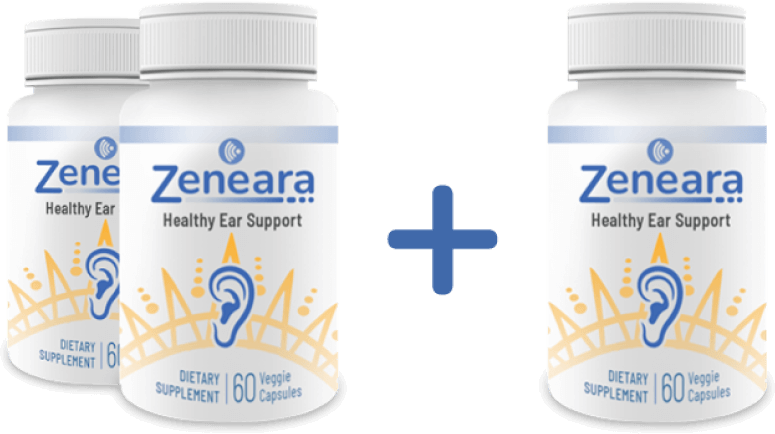
One bottle of Zeneara capsules. Quantity unknown. Dosage unknown. The sales page shows a bottle image but no label detail. You’ll also get access to whatever upsells the funnel throws at you after checkout — likely more bottles at a ‘discount’ or a related supplement. The vendor’s ClickBank listing promises ‘multiple landing pages,’ but that’s an affiliate feature, not a consumer benefit.
There is no mention of a certificate of analysis, third-party testing, or manufacturing standards. For a supplement that costs more than a month’s supply of most clinically studied ear-health nutrients, that’s inexcusable.
How the marketing oversells
The ClickBank marketplace description is the giveaway: ‘Get your first six-figure day promoting this incredible ear health offer! This offer has generated more than $3 per click for affs!’ That’s not a product claim; it’s a recruitment pitch for affiliates. The vendor is selling the opportunity to sell, not the supplement itself. The gravity score of 15.18 means a lot of affiliates are pushing it, which inflates visibility without any correlation to product quality.
When a supplement’s primary marketing language is about EPCs and conversion rates, the end user is the product being sold to affiliates. Your ear health is secondary.
What it costs and how the refund works
$110 one-time at the front end. No recurring billing surfaced at the cart on the date above. Upsells may add to the total. ClickBank handles refunds: email support with your order ID within 60 days and you’ll get your money back in 3–7 business days. That’s real. But refunds don’t undo the fact that you ingested an unknown substance for up to two months.
The ingredient problem
We can’t analyze what we can’t see. Common ear-health supplements include magnesium (for noise-induced hearing loss), zinc (for tinnitus), ginkgo biloba (for circulation), and N-acetylcysteine (for antioxidant protection). Clinical doses exist for each: magnesium 200–400 mg, zinc 15–30 mg, ginkgo 120–240 mg, NAC 600–1,200 mg. Without a label, we can’t tell you if Zeneara contains any of these, let alone at effective doses. The $110 price suggests it might, but it also might be a blend of cheap fillers with a high affiliate commission built in.
Who should buy, who should skip
Skip this. There is no scenario where buying a $110 mystery supplement is a sound decision. If you’re dealing with tinnitus or hearing loss, see an audiologist or ENT. If you want to try a supplement, buy one with a transparent label from a reputable brand — many cost under $30.
The only reason to buy Zeneara is if you’re an affiliate testing the funnel for conversion data. For everyone else, the refund window isn’t a safety net — it’s an admission that the product can’t stand on its own.
The honest read
Zeneara is a black box with a high price tag and an affiliate-first marketing strategy. The vendor has chosen not to disclose what’s in it, which means they’re betting you’ll buy on hope and the promise of a refund. That’s not a health product; that’s a lottery ticket with a 60-day return policy.
If a supplement works, the company shouts the ingredients from the rooftops. Silence at this price point is a calculated decision. I would not buy this, and I would not recommend anyone else do so either.
— Mara Vance
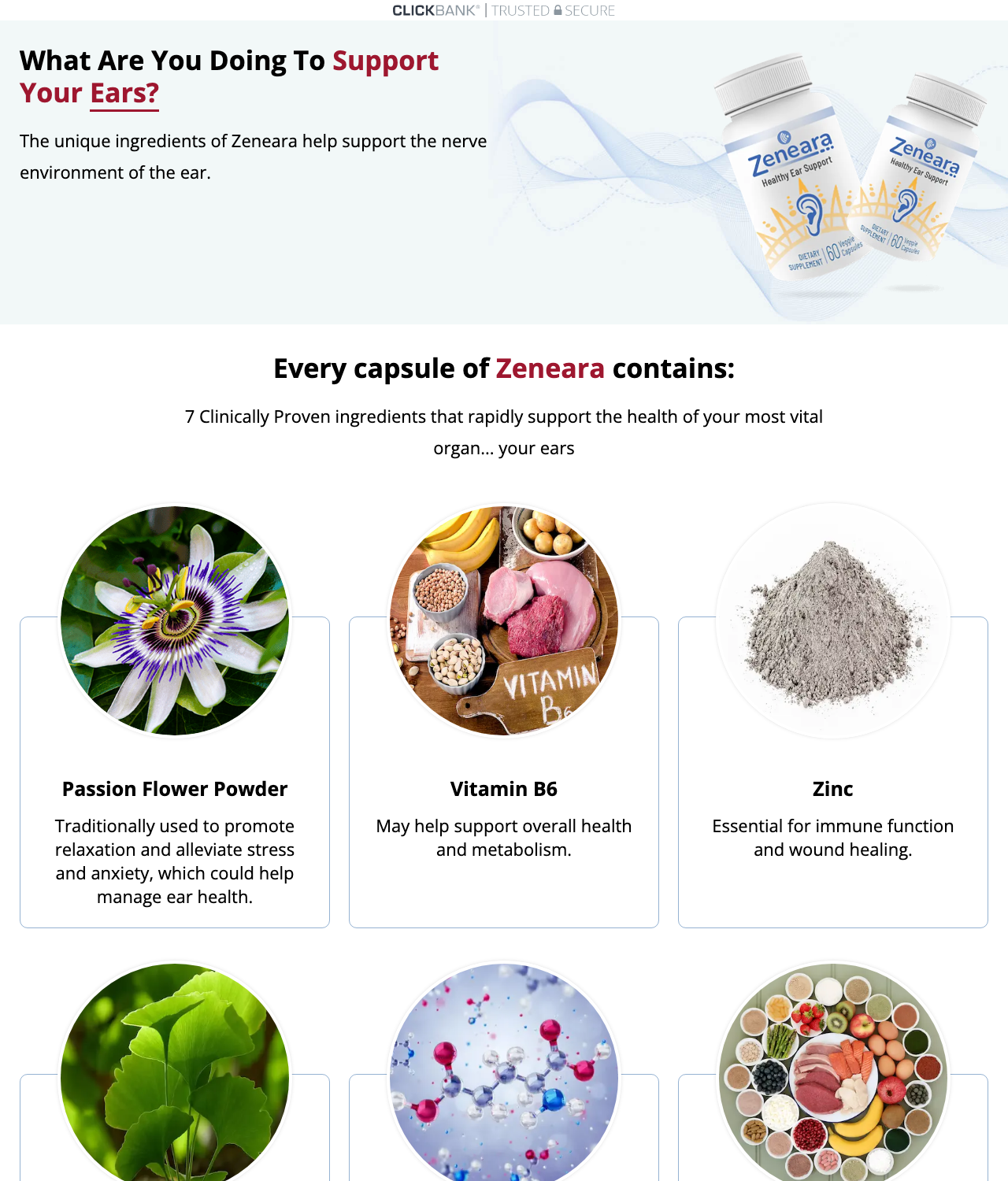
This is the live Zeneara - #1 Ear Offer On ClickBank funnel our verdict is based on. We measure these on-page promises against the evidence, dose math, price, and refund mechanics above — tap the image to see the seller’s current offer and terms.
 Live sales page →
 Here's what I'd actually do
If you opened this at 11 pm and the page made the supplement look like an answer to something larger:
Close this tab. Zeneara - #1 Ear Offer On ClickBank is in the band where the marketing is doing the heavy lifting and the formula is not. There are evidence-based versions of every promise on that sales page, and most of them cost a third of the price with full label transparency.
Don't buy this if: Do not buy this if you have a diagnosed condition that this product is implicitly addressing. See a clinician. A $69 bottle does not replace a $0-with-insurance lab panel.
— Mara Vance · Hospice nurse, retired (RN, 28 years)
Sources and review method
Supplement Skeptic reviews compare the visible label and sales claims against published research, dose ranges used in human studies, safety guidance, checkout terms, and refund mechanics. This page is not medical advice.
- Vendor sales page — ClickBank-listed sales page (active as of catalog import)
Frequently asked questions
- What's in Zeneara?
- We don't know. The vendor does not disclose the ingredient list on the sales page or in any publicly available material. For a supplement, that's a dealbreaker. Without knowing what's in it, you can't assess safety, dosage, or interactions.
- Does Zeneara really work for tinnitus or hearing loss?
- There is no evidence presented to suggest it does. The sales page makes no specific health claims backed by research. Ear health supplements typically contain nutrients like magnesium, zinc, or ginkgo, but without a label, we can't even guess if Zeneara includes them at clinically relevant doses.
- Is the 60-day refund real?
- Yes, it's a ClickBank guarantee. If you buy and find the product useless (or the bottle arrives with no label), you can email ClickBank support within 60 days and get a full refund. The vendor can't block it. But you'll be out the return shipping if you have to send the bottle back, and you'll have swallowed mystery capsules in the meantime.
- Why is the sales page talking about affiliate earnings?
- Because Zeneara is marketed primarily to affiliates, not to end users. The 'description' in the ClickBank marketplace is a pitch to people who will resell the product. Consumers are an afterthought. That's a structural conflict of interest: the vendor's priority is making the offer attractive to marketers, not making a supplement that works.
More in Dietary Supplements