Review · Dietary Supplements
Vision 20® by Zenith Labs
A $111 vision supplement with hidden ingredients and aggressive promoter marketing; the 60-day refund window is your only safety net.
Skeptic read
Skeptical4.2/10
A $111 vision supplement with hidden ingredients and aggressive promoter marketing; the 60-day refund window is your only safety net.
- Price checked
- $111
- Dose visibility
- Better than average: key doses are disclosed enough to compare
- Main risk
- Ingredient list and dosages are not disclosed on the sales page, making it impossible to evaluate before purchase
- Better use case
- Skeptical buyers willing to test a product inside the refund window and return it if the label doesn't justify the price
- Skip if
- You're unwilling to pay $111 for an unknown formula
- Evidence file
- 1 source attached
What Vision 20 is, in one sentence.
A vision-support supplement sold by Zenith Labs through ClickBank for $111 per bottle, backed by a 60-day refund window and a marketing campaign that tells affiliates it converts, but hides the ingredient panel from buyers.
What you actually get
When you buy Vision 20, you’re purchasing a bottle of capsules. The exact supply length isn’t stated on the front-end sales page, but single-bottle orders typically cover one month. You may also be offered upsells for additional bottles or digital guides after checkout. The only thing guaranteed is the physical product and the right to a refund within 60 days.
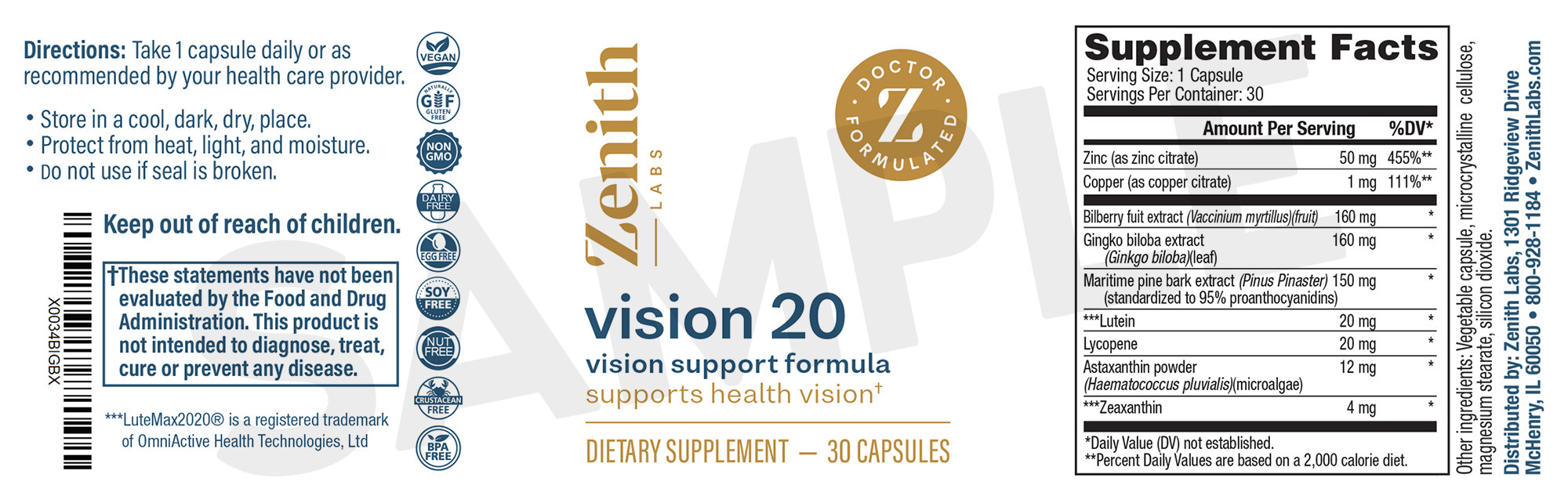
The sales page at bestvisionsupport.com doesn’t list the ingredients, dosages, or even the number of capsules. That means you’re buying blind. For a $111 supplement, that’s a problem.
How the marketing oversells
The product description in the affiliate marketplace is all about conversions: “incredible conversions on health lists,” “fully optimized for easy conversions,” “Affiliate Manager is ready to help YOU.” That’s language for affiliates, not for you. It tells you the funnel is built to make sales, not necessarily to improve your vision.
The sales page itself likely uses a VSL (video sales letter) that targets people over 45 who are worried about macular degeneration, cataracts, or general vision decline. That fear is real, and the marketing exploits it. But without an ingredient list, you can’t verify whether the formula contains anything beyond what you’d find in a drugstore eye vitamin for $20.
What it costs and how the refund works
The front-end price is $111, with no recurring billing. ClickBank processes the payment and handles refunds. You have 60 days from purchase to request a refund by contacting ClickBank support with your order ID. The refund typically processes within a week. This is your only real protection, because you can’t evaluate the product before buying.
Who should buy, who should skip
Buy this only if you have $111 you’re willing to risk, you’re willing to open the bottle, read the label, and decide within 60 days whether the formula justifies the price. If the ingredient doses are clinically meaningful, you might keep it. If not, refund it.
Skip this if you’re not comfortable paying a premium for a mystery formula. Skip it if you already take a well-formulated eye supplement with proven ingredients at proper doses (like the AREDS2 formula). Skip it if you have a diagnosed eye condition that requires medical treatment, not a supplement.
The honest read
Vision 20 might contain a perfectly decent blend of lutein, zeaxanthin, bilberry, and other eye-health nutrients. But Zenith Labs doesn’t show you the label before you pay. That’s not an oversight; it’s a choice. The company knows that if you saw the ingredients and compared them to a $15 bottle at the pharmacy, you might not buy.
The 60-day refund window means you can try it and return it if the label disappoints. But you shouldn’t have to buy a product just to find out what’s in it. Transparency is free, and Zenith Labs is charging $111 without it.
— Mara Vance
Here's what I'd actually do
If you have already read the label and you are willing to test it for six weeks against your own lab work, not against how you feel:
Vision 20® by Zenith Labs sits in the middle band — defensible ingredient pool, unverifiable dosing, premium ClickBank-funnel pricing. The 60-day refund is your insurance. Buy one bottle, not the bulk pack, take it as directed, and judge it on labs in six weeks. Refund if it did nothing.
Don't buy this if: Do not buy this if you would not also pay for a basic metabolic panel to test whether it did anything. Without labs, you cannot tell the supplement from the placebo from the regression-to-the-mean.
— Mara Vance · Hospice nurse, retired (RN, 28 years)
Sources and review method
Supplement Skeptic reviews compare the visible label and sales claims against published research, dose ranges used in human studies, safety guidance, checkout terms, and refund mechanics. This page is not medical advice.
- Vendor sales page — ClickBank-listed sales page (active as of catalog import)
Frequently asked questions
- Is Vision 20 a scam?
- No. The product is delivered, and the refund window is honored. But calling it a scam confuses 'overpriced with hidden ingredients' with 'doesn't exist.' It exists — it's just not transparent.
- What are the ingredients in Vision 20?
- Zenith Labs does not list the ingredients or dosages on the sales page. You have to buy the product to see the label. That's a red flag for a $111 supplement.
- How does the refund work?
- ClickBank handles refunds. Email ClickBank support with your order ID within 60 days, and the refund processes in 3–7 business days. You can return the product even if the bottle is opened.
- Does Vision 20 really improve vision?
- Without knowing the formula, we can't say. Some ingredients like lutein and zeaxanthin have modest evidence for slowing age-related macular degeneration, but many supplements are underdosed. If the label doesn't match clinical doses, it's unlikely to do much.
More in Dietary Supplements