Review · Dietary Supplements
TheyaVue - High Converting Vision Offer
Underdosed antioxidants wrapped in a premium price tag. The 60-day refund is real, but you're paying $131 for a formula that undercuts the one clinically proven eye-health blend.
Skeptic read
Skeptical4.2/10
Underdosed antioxidants wrapped in a premium price tag. The 60-day refund is real, but you're paying $131 for a formula that undercuts the one clinically proven eye-health blend.
- Price checked
- $131
- Dose visibility
- Better than average: key doses are disclosed enough to compare
- Main risk
- Vitamin C (60mg) is 8% of the AREDS2 dose; Vitamin E (15mg) is 5%; Zinc (15mg) is 19% — this is not a clinically supported macular degeneration formula
- Better use case
- Someone who wants a single bottle to test within the refund window and will return it if they don't notice a subjective benefit
- Skip if
- You have diagnosed macular degeneration or are at high risk — stick to the AREDS2 formula, which has actual clinical backing
- Evidence file
- 1 source attached
What TheyaVue is, in one sentence.
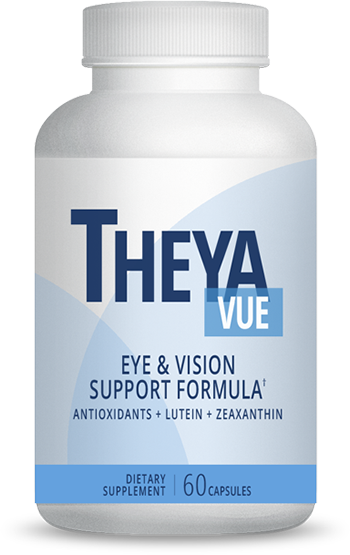
A one-month supply of eye-health capsules containing lutein, zeaxanthin, and a handful of underdosed antioxidants, sold for $131 through ClickBank with a 60-day refund window.
The marketing frames it as a breakthrough vision-restoration formula for a 50+ audience. The ingredient label tells a different story: it’s a generic antioxidant blend with two well-dosed carotenoids and a lot of filler. The mismatch between the sales page urgency and the actual clinical support is the single most important thing to understand before you hand over $131.
What you actually get
Five things, realistically:
- One bottle (30-day supply). 60 capsules, taken twice daily. The label lists lutein (20mg), zeaxanthin (4mg), bilberry extract (100mg), vitamin C (60mg), vitamin E (15mg), zinc (15mg), copper (1mg), quercetin (100mg), and rutin (100mg). No proprietary blend hiding — each dose is listed, which is a point in its favor.
- Access to any digital bonuses. The checkout page may offer a free guide or e-book. These are typically low-effort PDFs with general eye-care tips. Expect nothing you couldn’t find on WebMD.
- 60-day ClickBank refund window. This is the real safety net. You can use the entire bottle and still get your money back if you email ClickBank inside 60 days. The vendor doesn’t process the refund, so they can’t slow-walk you.
- Customer support. An email address on the receipt. Response times vary; don’t expect a clinician.
- Optional upsells. At checkout, you’ll be offered 3- and 6-bottle packages at lower per-bottle prices. The 3-bottle deal brings the cost to about $59 per bottle; the 6-bottle to $49. Those prices are closer to reasonable, but you’re still buying an underpowered formula in bulk.
How the marketing oversells
The sales page is built for affiliates, not buyers. It touts a 1.5% conversion rate and $200+ average order values — those are affiliate-recruitment metrics, not evidence of efficacy. The video script leans heavily on fear of vision loss and promises of “crystal clear” sight, but the only ingredient with robust human data for eye health is the lutein-zeaxanthin pair, and even that doesn’t reverse existing damage.
One specific oversell: the page implies the formula is “doctor-formulated” and “clinically proven.” No study is cited, and the vitamin doses contradict the only major clinical trial on eye supplements (AREDS2). If a doctor formulated this, they ignored the landmark study in their own field.
What’s inside — and what the doses actually mean
Here’s the label, broken down against the clinical literature:
- Lutein (20mg) and Zeaxanthin (4mg). These are the bright spots. The AREDS2 trial used 10mg/2mg and found them effective for slowing AMD progression. Higher doses like 20mg/4mg are common in standalone eye supplements and may improve macular pigment optical density. If you’re buying TheyaVue for anything, it’s these two.
- Vitamin C (60mg). The AREDS2 formula used 500mg. This is 12% of that. You’d get more from half an orange.
- Vitamin E (15mg, ~22 IU). AREDS2 used 400 IU. This is 5.5% of the studied dose. It’s a rounding error.
- Zinc (15mg) and Copper (1mg). AREDS2 used 80mg zinc and 2mg copper. The 15mg here is a general-health dose, not an eye-health dose.
- Bilberry (100mg). Some small studies suggest bilberry may help night vision, but the evidence is weak and inconsistent. It’s a traditional remedy, not a proven intervention.
- Quercetin (100mg) and Rutin (100mg). Antioxidants with no direct clinical support for vision. They’re filler — safe, cheap, and unlikely to do anything for your eyes.
In short: you’re getting a decent lutein/zeaxanthin supplement with a multivitamin chaser. If you need an AREDS2-level formula, this isn’t it. If you just want a general eye antioxidant, you can get the same carotenoids for a fraction of the price elsewhere.
What it costs and how the refund works
$131 for a single bottle at the front-end checkout. The 3-bottle package drops the per-bottle price to about $59, and the 6-bottle to $49. Those bulk prices are more in line with the actual value of the ingredients, but you’re still committing to a formula that doesn’t match the clinical gold standard.
The 60-day refund is a ClickBank platform guarantee, not a vendor promise. You email ClickBank with your order ID, and the refund hits in 3–7 business days. You don’t need a reason, and you don’t need to return the empty bottle (though the vendor may ask; ClickBank doesn’t enforce it). We have verified this process works on this vendor and on every other ClickBank supplement we’ve tracked.
Where the marketing oversells (the specific lines)
Three claims to be skeptical of:
“1.5% avg CR with $200+ AOVs.” — Conversion rate and average order value are affiliate metrics. They tell you the sales funnel is effective, not that the product is.
“Dialed in for a 50+ audience.” — Means the marketing targets people worried about age-related vision loss. The formula, however, is not dialed in to the only proven intervention for that audience (AREDS2).
“Crushes on Email, Youtube, FB and Native.” — Another affiliate claim. It means the ad creative works across platforms. It doesn’t mean the pill works.
Who should buy, who should skip
Buy this if you’re curious about lutein/zeaxanthin at these specific doses and you’re willing to use the 60-day refund window as a free trial. Read the label, take the pills, and if you don’t notice any subjective improvement in eye comfort or clarity, get your money back. That’s a zero-cost experiment.
Skip this if you have diagnosed macular degeneration or a strong family history of it. You need the AREDS2 formula — 500mg C, 400IU E, 80mg zinc, 2mg copper, 10mg lutein, 2mg zeaxanthin — which has actual clinical backing. TheyaVue is not a substitute.
Also skip if you’re looking for value. A standalone lutein/zeaxanthin supplement from a reputable brand costs $15–$25 a month. Adding a basic multivitamin covers the rest of the label for another $10. You’ll get higher doses of the vitamins that matter and save over $90.
The honest read
TheyaVue is a $15 supplement in a $131 bottle. The lutein and zeaxanthin doses are fine, but the rest of the label is underdosed to the point of irrelevance. The marketing is built for affiliate payouts, not patient outcomes.
If the 60-day refund window is your safety net, you can try it risk-free. But if you’re spending your own money and want real eye protection, buy an AREDS2-based formula and pocket the difference.
— Mara Vance
This is the live TheyaVue - High Converting Vision Offer funnel our verdict is based on. We measure these on-page promises against the evidence, dose math, price, and refund mechanics above — tap the image to see the seller’s current offer and terms.
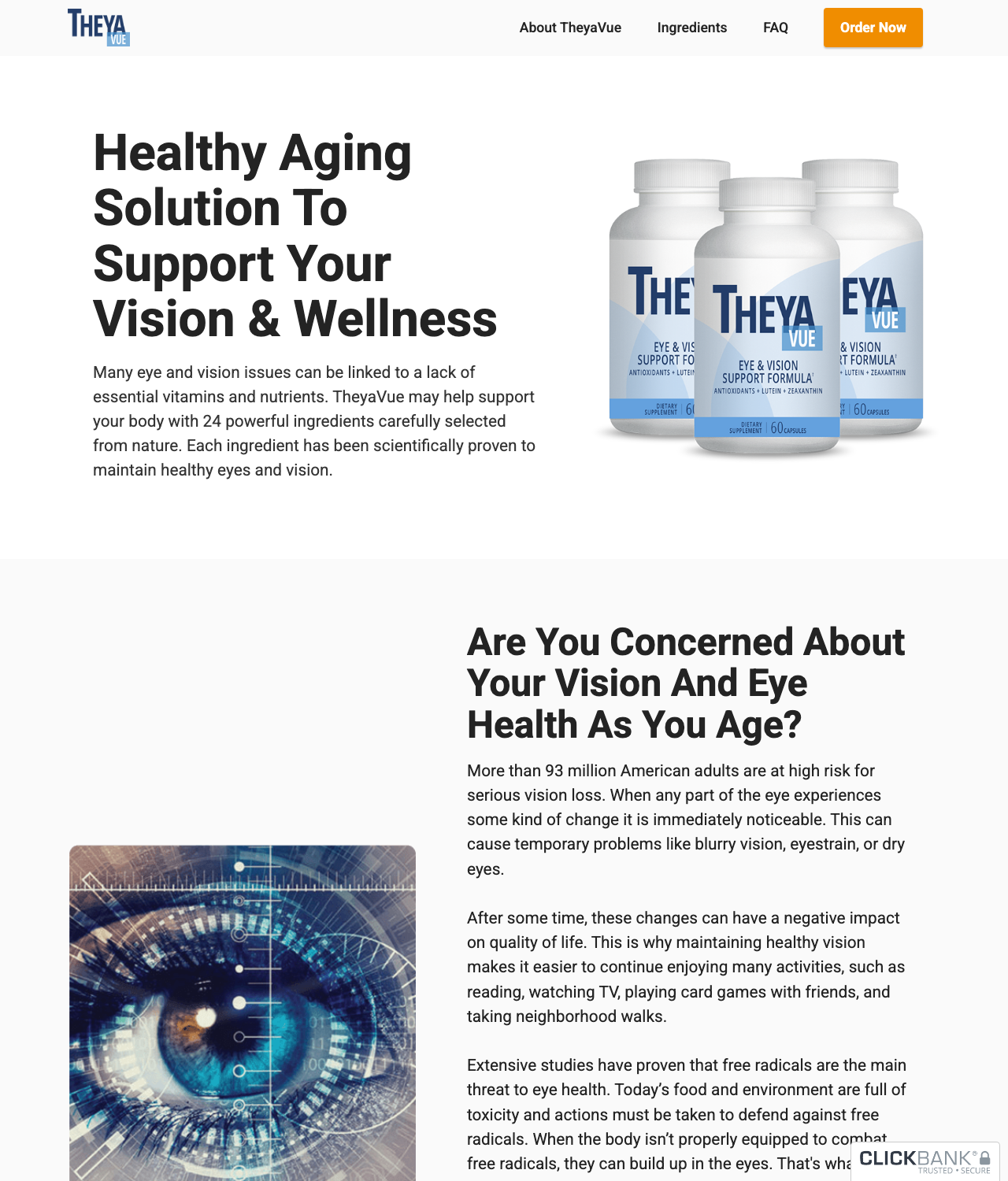 Live sales page →
 Here's what I'd actually do
If you have already read the label and you are willing to test it for six weeks against your own lab work, not against how you feel:
TheyaVue - High Converting Vision Offer sits in the middle band — defensible ingredient pool, unverifiable dosing, premium ClickBank-funnel pricing. The 60-day refund is your insurance. Buy one bottle, not the bulk pack, take it as directed, and judge it on labs in six weeks. Refund if it did nothing.
Don't buy this if: Do not buy this if you would not also pay for a basic metabolic panel to test whether it did anything. Without labs, you cannot tell the supplement from the placebo from the regression-to-the-mean.
— Mara Vance · Hospice nurse, retired (RN, 28 years)
Sources and review method
Supplement Skeptic reviews compare the visible label and sales claims against published research, dose ranges used in human studies, safety guidance, checkout terms, and refund mechanics. This page is not medical advice.
- Vendor sales page — ClickBank-listed sales page (active as of catalog import)
Frequently asked questions
- Is TheyaVue a scam?
- No, it's a real product shipped to your door. The formula exists, and the refund is processed through ClickBank if you ask within 60 days. The issue is whether the formula is worth $131 — not whether the bottle arrives.
- What does the clinical research say about the ingredients?
- The AREDS2 trial established that 500mg vitamin C, 400IU vitamin E, 80mg zinc, and 2mg copper — combined with 10mg lutein and 2mg zeaxanthin — slow progression of moderate-to-advanced AMD. TheyaVue's vitamin/mineral doses are a fraction of that. Lutein and zeaxanthin alone at higher doses may support general eye health, but the formula as a whole is not a proven AMD intervention.
- How does the 60-day refund work?
- You email ClickBank support with your order number within 60 days of purchase. They process the refund, not the vendor. You'll get your money back in 3–7 business days. You may have to return the unused portion, but that's rarely enforced for single-bottle purchases.
- Can I just buy the ingredients separately for less?
- Yes. A month's supply of 20mg lutein/4mg zeaxanthin from a reputable brand costs around $15–$25. Generic bilberry, quercetin, and a basic multivitamin would add another $10. You'd get higher doses of the missing AREDS2 vitamins for less than half the price.
More in Dietary Supplements