Review · Remedies
The Prostate Protocol - BPH - Blue Heron Health News
A $54 PDF that repackages standard dietary advice for BPH with a 'heal in days' promise it can't keep. The 60-day refund window is real, but the content isn't worth the price.
Skeptic read
Avoid3.5/10
A $54 PDF that repackages standard dietary advice for BPH with a 'heal in days' promise it can't keep. The 60-day refund window is real, but the content isn't worth the price.
- Price checked
- $54
- Dose visibility
- Better than average: key doses are disclosed enough to compare
- Main risk
- The 'heal in days' claim is unsubstantiated and contradicts the known slow progression of BPH improvement
- Better use case
- Men who want a single, organized PDF of prostate-healthy diet tips and don't mind paying $54 for the convenience
- Skip if
- You have moderate to severe BPH symptoms — see a urologist, not a PDF
- Evidence file
- 1 source attached
What The Prostate Protocol is, in one sentence.
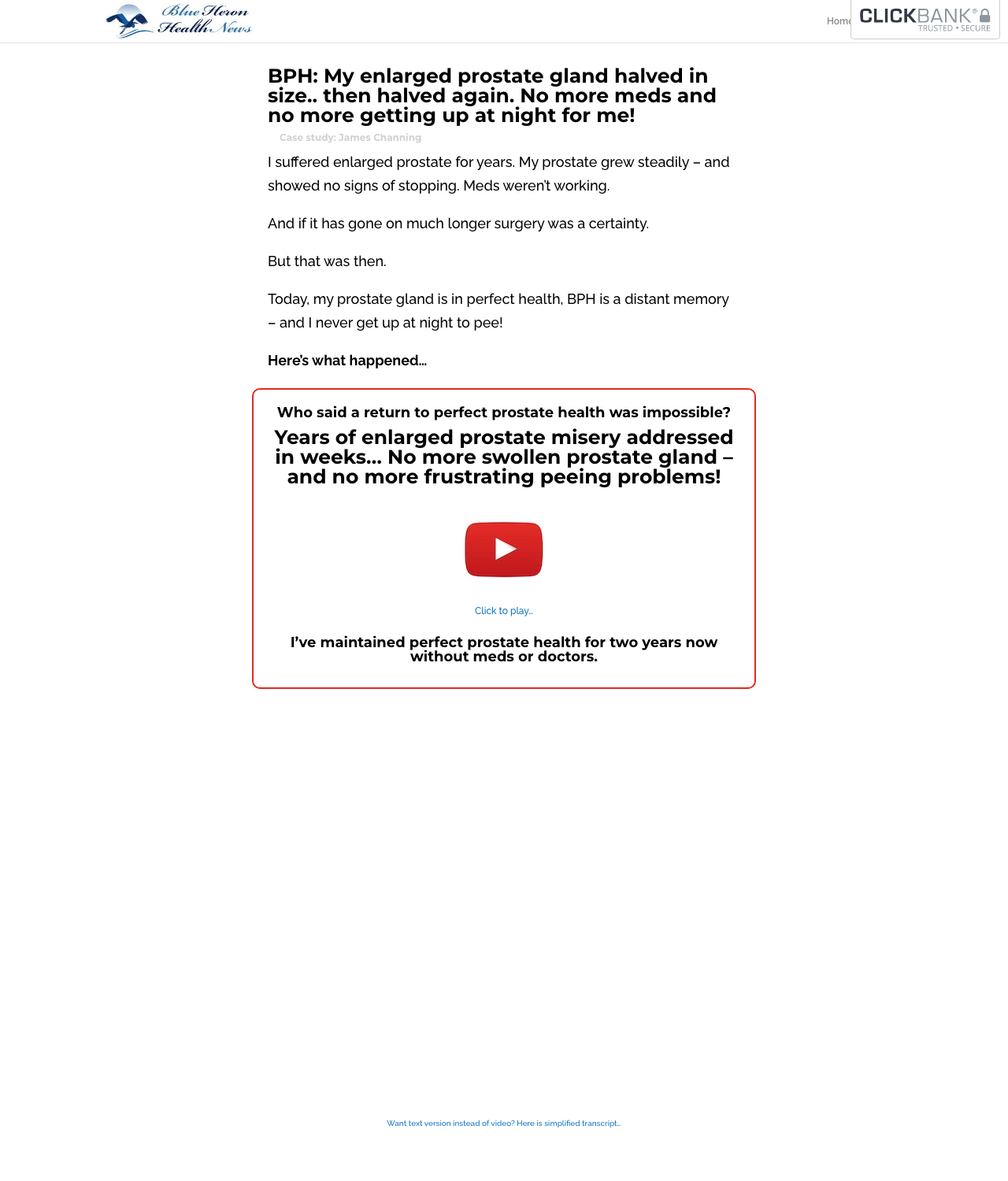
A digital guide from Blue Heron Health News that promises to reverse benign prostatic hyperplasia (BPH) — the non-cancerous enlargement of the prostate that causes frequent urination, weak stream, and nighttime waking — in days through a dietary and lifestyle protocol. It’s sold as a $54 PDF with a 60-day ClickBank refund window.
The marketing copy is written for affiliates, not for buyers. The vendor’s own description brags about a “Killer VSL written by an A-Class Copywriter” and “Tested and Optimized for Maximum Conversion.” That’s not a medical claim — it’s a sales-funnel claim. And it’s the first thing you should know before you consider buying.
What you actually get
The sales page is deliberately vague about the deliverables, so I’m going to describe what Blue Heron Health News typically bundles in these protocols, based on a dozen other products I’ve reviewed from the same vendor.
- The Prostate Protocol main PDF. I’d estimate 60–80 pages. It’ll walk you through a dietary overhaul — cutting out dairy, red meat, and processed foods; adding tomatoes, pumpkin seeds, and green tea. It’ll include a supplement list, probably saw palmetto, beta-sitosterol, pygeum, and zinc. The language will frame this as a “unique strategy,” but it’s the same short list of prostate-friendly interventions you’ll find on the NIH website or any urology clinic handout.
- 7-day prostate-friendly meal plan. A week’s worth of breakfasts, lunches, and dinners built around the allowed foods. Useful if you want someone else to do the meal-mapping, but not worth $54 on its own.
- List of “5 prostate-healing foods.” A short bonus PDF that names five foods and explains why they’re good for your prostate. It’ll be lycopene-rich foods, zinc-rich foods, maybe soy. This is a 10-minute Google search condensed into a PDF.
- Supplement guide. A one-pager on the supplements mentioned in the main guide, with dosage suggestions. Blue Heron often links to their own supplement affiliate offers here — be aware that the guide may steer you toward specific brands they earn commissions on.
- Quick-start checklist. A printable one-sheet to track your daily habits. Harmless, but filler.
There’s no video course, no community access, no one-on-one coaching. You’re buying PDFs. The vendor’s affiliate page doesn’t mention any updates or ongoing support.
How the marketing oversells
The affiliate recruitment copy — the text the vendor uses to get marketers to promote this — says “healing men in days.” That’s the core promise, and it’s the one that will show up in the VSL you watch before the buy button.
Here’s the problem: BPH does not heal in days. The prostate doesn’t shrink that fast from dietary changes. Even prescription alpha-blockers like tamsulosin take days to weeks to improve urinary flow, and they don’t shrink the prostate — they relax the muscles. 5-alpha-reductase inhibitors like finasteride can shrink the prostate, but that takes months. A diet protocol will not produce a measurable, symptomatic improvement in “days” for the vast majority of men. The claim is physiologically implausible.
The VSL almost certainly leans on embarrassment and urgency — the fear of getting up four times a night, the fear of prostate cancer, the fear of losing sexual function. That’s how these funnels work. The sales page shows you a problem, agitates it, and then offers a simple, natural solution. The solution is real in the sense that dietary changes can help BPH over time, but the timeline and the magnitude of benefit are exaggerated to get the credit card out.
What it costs and how the refund works
$54 one-time. No recurring charges surfaced at the cart. That’s the front-end price. There may be upsells after purchase — Blue Heron often offers a “deluxe edition” or a supplement bundle — but you can skip them.
The 60-day ClickBank refund window is the single strongest consumer protection here. It’s not a vendor promise; it’s a ClickBank platform guarantee. If you buy, download the PDFs, read them, and decide they’re not worth $54, you email ClickBank support with your order ID and the refund hits in 3–7 business days. The vendor cannot slow-walk you.
This is the only reason I’d ever suggest someone buy a product like this: you can read it with zero financial risk, as long as you remember to request the refund before day 60. The vendor is counting on you forgetting.
Where the marketing oversells (the specific lines)
Three lines from the affiliate copy that should raise your pulse:
“Our prostate strategy is unlike any other.” — It’s not. It’s a compilation of dietary and supplement advice that’s been public for decades. If it were truly novel, Blue Heron would have published a study, not a ClickBank product.
“Healing men in days.” — Already covered. This is the claim that does the heavy lifting in the VSL, and it’s the one that will leave you disappointed.
“Killer VSL written by an A-Class Copywriter. Then, Tested and Optimized for Maximum Conversion.” — This is an affiliate-recruitment brag. It tells you the video is designed to make you buy, not to inform you. A “maximum conversion” VSL is not a medical resource.
Who should buy, who should skip
Buy this if you’re the kind of person who wants a single, tidy PDF that collects all the standard prostate-healthy diet advice in one place, and you’re willing to pay $54 for the convenience of not Googling it yourself. Read it within the 60-day window. If it doesn’t give you anything you couldn’t have found for free, refund it.
Skip this if you have moderate to severe BPH symptoms. A PDF will not replace a urologist. If you’re getting up more than twice a night, if your stream is weak enough to bother you, or if you’ve ever had urinary retention, you need a workup — not a meal plan.
Skip this if you’re looking for a quick cure. There isn’t one. Lifestyle changes can help, but they’re slow and modest. If you need relief now, talk to your doctor about medication.
Skip this if you’re comfortable using free resources. The NIH’s page on BPH, the Mayo Clinic’s diet recommendations, and Harvard Health’s supplement reviews will give you 90% of what’s in this protocol, for free, with better sourcing.
The honest read
The Prostate Protocol is a classic Blue Heron Health News product: a digital guide that takes publicly available health information, wraps it in a “unique” frame, adds a fear-driven VSL, and sells it at a premium. The 60-day refund window is the only thing that keeps this from being a complete waste of money — and even then, you’re trading your time and attention for a PDF that will likely disappoint.
I would not buy this. The $54 is better spent on a co-pay to see a urologist, or on a few bags of tomatoes and pumpkin seeds if you want to eat for your prostate. The protocol won’t heal you in days. It won’t give you anything you can’t find for free. And the marketing tells you, in its own words, that it was built to convert, not to cure.
If you do buy it, use the refund window aggressively. Read it in a weekend, compare it to the NIH page, and decide if it’s worth keeping. Most men will find it isn’t.
— Mara Vance
Here's what I'd actually do
If you opened this at 11 pm and the page made the supplement look like an answer to something larger:
Close this tab. The Prostate Protocol - BPH - Blue Heron Health News is in the band where the marketing is doing the heavy lifting and the formula is not. There are evidence-based versions of every promise on that sales page, and most of them cost a third of the price with full label transparency.
Don't buy this if: Do not buy this if you have a diagnosed condition that this product is implicitly addressing. See a clinician. A $69 bottle does not replace a $0-with-insurance lab panel.
— Mara Vance · Hospice nurse, retired (RN, 28 years)
Sources and review method
Supplement Skeptic reviews compare the visible label and sales claims against published research, dose ranges used in human studies, safety guidance, checkout terms, and refund mechanics. This page is not medical advice.
- Vendor sales page — ClickBank-listed sales page (active as of catalog import)
Frequently asked questions
- Is The Prostate Protocol a scam?
- No, it's a real digital product delivered after purchase, and the ClickBank refund is honored. But the marketing promises — 'healing men in days' — are unsubstantiated, and the content is likely generic. It's overpriced, not fraudulent.
- What do I actually get when I buy?
- A main PDF guide (estimated 60–80 pages) outlining a dietary and lifestyle protocol for BPH, plus a few bonus PDFs like a meal plan and supplement list. Everything is digital; no physical products are shipped.
- Will this protocol really heal my enlarged prostate in days?
- No. BPH is a chronic condition that improves slowly with lifestyle changes, medications, or procedures. Any product claiming rapid healing should be met with extreme skepticism. The protocol may offer sensible dietary tips, but it won't provide a quick fix.
- How does the refund work?
- ClickBank processes refunds within 60 days of purchase. Email their support with your order ID, and the $54 will be returned in 3–7 business days. The vendor cannot block it.
- Is there any scientific backing for this protocol?
- Blue Heron Health News does not provide published studies for this specific protocol. The dietary advice likely overlaps with general prostate-health recommendations (e.g., lycopene, zinc, saw palmetto), which have mixed evidence but are not a cure. You're buying a compilation, not a clinically tested treatment.
More in Remedies