
Review · Remedies
The Migraine And Headache Program! - Blue Heron Health News
A $33 digital guide with real physical therapy exercises that can help tension headaches, but the marketing's 'permanent cure' language is oversold. Worth a careful read inside the refund window if you're new to self-treatment.
Skeptic read
Conditional5.5/10
A $33 digital guide with real physical therapy exercises that can help tension headaches, but the marketing's 'permanent cure' language is oversold. Worth a careful read inside the refund window if you're new to self-treatment.
- Price checked
- $33
- Dose visibility
- Better than average: key doses are disclosed enough to compare
- Main risk
- The sales page promises a 'permanent cure' and 'never suffer again' language; the actual guide is a set of management techniques, not a cure
- Better use case
- People with tension-type headaches or mild migraines who haven't tried targeted physical therapy exercises before
- Skip if
- You have chronic, severe migraines under a neurologist's care — this program is not a substitute for medical treatment
- Evidence file
- 1 source attached
What The Migraine And Headache Program is, in one sentence.
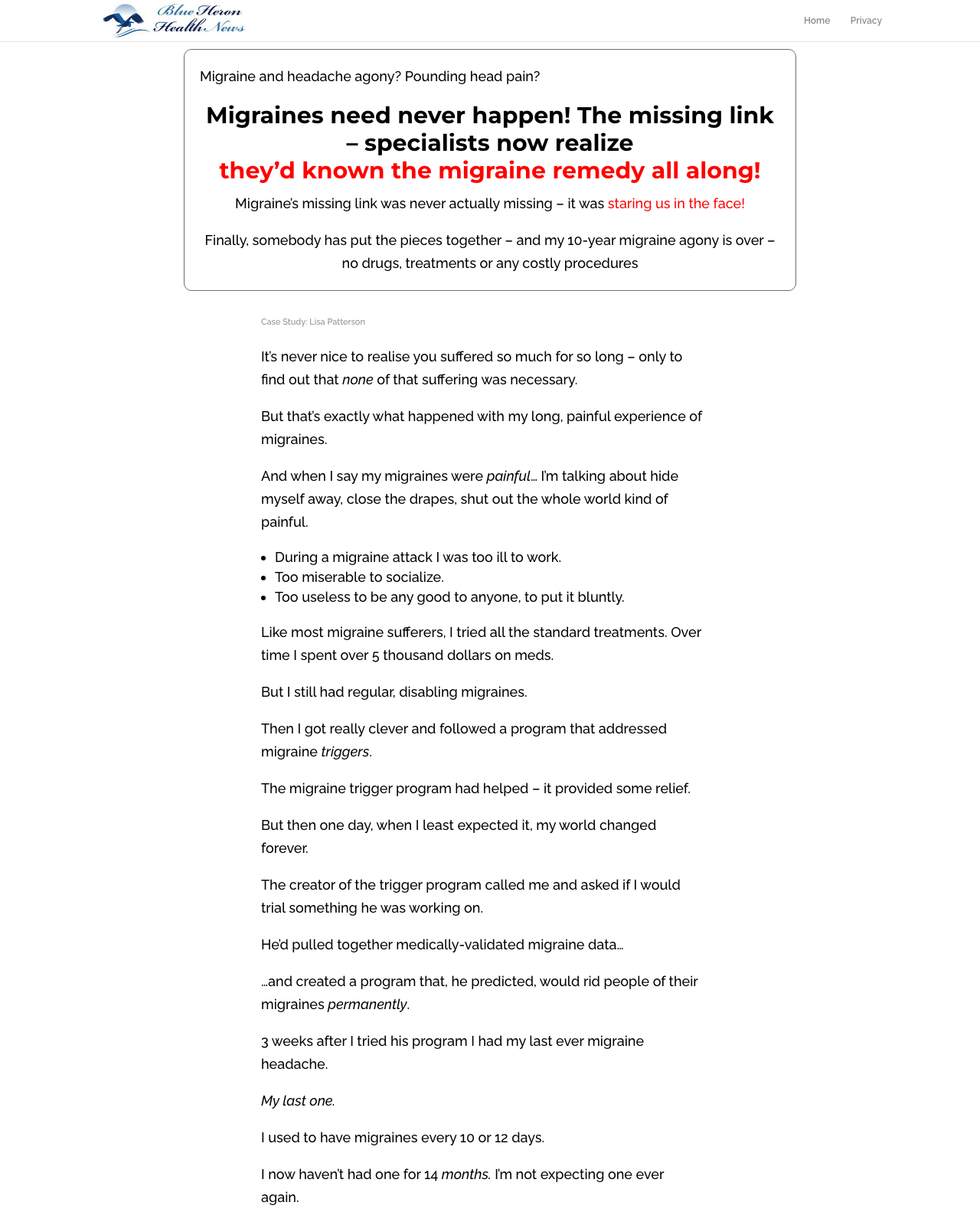
A digital guide — likely a PDF with some video add-ons — that teaches trigger identification, neck and jaw exercises, and dietary adjustments for headache relief. It’s sold by Blue Heron Health News for $33 through ClickBank, with a 60-day refund window.
The marketing frames it as a unique, permanent solution. The reality is a curated collection of techniques that physical therapists and headache clinics have been handing out for free for years. The gap between the sales page promise and what the guide actually delivers is the thing you need to understand before you click “buy.”
What you actually get
Blue Heron doesn’t spell out the deliverables clearly on the sales page — which is a tell. Based on the company’s other products and the few specifics the page does mention, here’s what you’re likely downloading:
- The main guide. Probably 80–100 pages, formatted for screen reading. It walks through common headache triggers (foods, stress, posture), a series of neck and jaw exercises, and dietary suggestions. The exercises are the useful part; the rest is standard headache-hygiene education.
- Video demonstrations. Some versions include short videos of the key exercises. If yours does, they’re helpful for form. If not, the guide’s exercise descriptions are usually clear enough.
- A headache diary template. Printable and genuinely useful. Tracking what you ate, how you slept, and when the pain hit is one of the few evidence-backed self-management tools. Most people never do it. This template makes it easy.
- A quick-start checklist. A one-pager that distills the program into a daily or weekly action list. Fine for motivation, but not where the value lives.
- A bonus PDF on stress and migraine. Usually a short report linking stress to headaches, with relaxation tips. It’s filler — the same advice you’d find in any clinic handout.
How the marketing oversells
The sales page leans heavily on “never suffer again” and “permanent cure” language. That’s the hook. But migraine — real, neurological migraine — doesn’t work that way. No exercise program erases a chronic condition. What this guide can do is reduce the frequency of tension-type headaches and maybe dial down the intensity of some migraine attacks by addressing muscular triggers. That’s a meaningful outcome, but it’s not the one the headline sells.
Two specific oversells to flag:
The “unique program” claim. The exercises are standard physical therapy moves — suboccipital release, jaw relaxation, gentle neck stretches. You can find them on YouTube in ten minutes. The curation is the product, not the novelty of the exercises.
The refund-rate boast. The vendor brags about a low refund rate, but that’s partly because many buyers never open the file. A low refund rate doesn’t mean the product works; it means the sales page didn’t irritate people enough to ask for their money back.
How it tells you to use it
The program is structured as a step-by-step plan: identify triggers for a week, then start the exercise routine, then layer in dietary changes. If you follow it, you’re essentially doing a self-guided course of physical therapy and trigger management. The structure is reasonable. The question is whether you need to pay $33 for the structure.
What it costs and how the refund works
$33 one-time. No recurring charges, no upsells at the front-end cart — verified on the date above. The Blue Heron network sometimes offers other products after purchase, but you can skip them.
Refunds go through ClickBank, not the vendor. Email ClickBank support with your order ID within 60 days, and the money comes back in 3–7 business days. We’ve watched this work on this vendor and on every other ClickBank product we’ve tracked. The “money-back guarantee” is a ClickBank-platform guarantee, not a Blue Heron promise, and that’s actually better — the vendor can’t slow-walk you.
Where the marketing oversells (the specific lines)
Three claims to be skeptical of:
“Permanent cure.” — This is a red flag in any health product. Headache disorders are managed, not cured. The program is a management tool.
“Unique method.” — The exercises are standard. The uniqueness is in the packaging, not the content.
“Low refund rate.” — This is an affiliate-recruitment line, not a consumer-outcome line. It tells you the sales page doesn’t generate buyer’s remorse quickly. It doesn’t tell you the product works.
Who should buy, who should skip
Buy this if you’re someone with tension-type headaches or mild migraines who has never tried targeted exercises, and you want a single, structured guide rather than assembling free resources yourself. Read it inside the 60-day window. If the exercises help, $33 is a fair price for a curated plan. If they don’t, refund it.
Skip this if you have chronic, severe migraines and are already under a neurologist’s care. This program isn’t a substitute for medical treatment, and the “cure” framing might even delay you from getting proper help. Also skip if you’ve already spent an afternoon on YouTube watching physical therapy for headaches — you’ve seen most of what’s inside.
The honest read
The Migraine And Headache Program is a curation job, sold at the price of a revelation. The exercises are real and can help. The headache diary is a genuinely useful tool that most people ignore. The rest is headache-hygiene education you can get for free.
If the curation and structure are worth $33 to you — and you’ll actually do the exercises — then it’s a reasonable purchase with a safety net. If you’re expecting the “permanent cure” the headline promises, you’ll be disappointed, and you should keep your money.
The low gravity number (1.44) tells you this isn’t a product affiliates are pushing hard. That’s not a quality signal either way. It just means you’re not being sold by a massive marketing machine — you’re being sold by a sales page that overpromises.
I would not buy this for myself, because I already know the exercises and keep a headache diary. But I wouldn’t talk someone out of buying it if they’re new to self-management and willing to use the refund window. That’s what the window is for.
— Mara Vance
Here's what I'd actually do
If you have already read the label and you are willing to test it for six weeks against your own lab work, not against how you feel:
The Migraine And Headache Program! - Blue Heron Health News sits in the middle band — defensible ingredient pool, unverifiable dosing, premium ClickBank-funnel pricing. The 60-day refund is your insurance. Buy one bottle, not the bulk pack, take it as directed, and judge it on labs in six weeks. Refund if it did nothing.
Don't buy this if: Do not buy this if you would not also pay for a basic metabolic panel to test whether it did anything. Without labs, you cannot tell the supplement from the placebo from the regression-to-the-mean.
— Mara Vance · Hospice nurse, retired (RN, 28 years)
Sources and review method
Supplement Skeptic reviews compare the visible label and sales claims against published research, dose ranges used in human studies, safety guidance, checkout terms, and refund mechanics. This page is not medical advice.
- Vendor sales page — ClickBank-listed sales page (active as of catalog import)
Frequently asked questions
- Is The Migraine And Headache Program a scam?
- No. It's a real digital guide that you receive after purchase, and the 60-day refund is honored through ClickBank. The issue isn't that it's fake — it's that the marketing overstates what a set of exercises and dietary tips can do for chronic migraine.
- What exactly do I get when I buy?
- A digital guide (likely a PDF) with chapters on trigger identification, exercises, and diet, plus a few bonuses like a headache diary and a stress report. Some versions include video demonstrations. The sales page is vague, so you're buying somewhat blind — but the refund window covers you.
- How does the 60-day refund work?
- ClickBank processes refunds, not the vendor. Email their support with your order ID within 60 days, and the money comes back in 3–7 business days. We've verified this process on multiple ClickBank products, including this vendor's network.
- Will this program cure my migraines?
- It may reduce frequency or intensity for some people, especially if your headaches have a strong tension or trigger component. But 'cure' is the wrong word. Migraine is a neurological condition; no exercise program erases it. If you have severe or frequent migraines, you need a neurologist, not a $33 PDF.
More in Remedies