Review · Mental Health
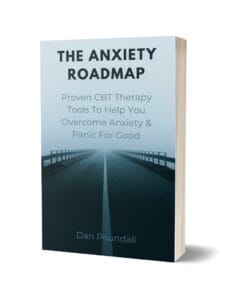
The Anxiety Roadmap
CBT is a legitimate tool for anxiety, but this unvetted ebook hides its price until checkout and offers no proof of author expertise. Buy only if you're committed to testing it inside the 60-day refund window.
Skeptic read
Skeptical4.8/10
CBT is a legitimate tool for anxiety, but this unvetted ebook hides its price until checkout and offers no proof of author expertise. Buy only if you're committed to testing it inside the 60-day refund window.
- Price checked
- Not listed
- Dose visibility
- Better than average: key doses are disclosed enough to compare
- Main risk
- The sales page does not disclose the price until you click through to the order form—a dark pattern that erodes trust
- Better use case
- People with mild, situational anxiety who are self-motivated and can't afford or access in-person therapy
- Skip if
- You have moderate to severe anxiety, panic disorder, or any condition that requires professional care—a PDF is not a treatment plan
- Evidence file
- 1 source attached
What The Anxiety Roadmap is, in one sentence.
A self-guided CBT ebook for anxiety sold through ClickBank by an anonymous vendor, with a standard 60-day refund policy and a sales page that hides the price until checkout.
The concept is sound—CBT is the gold-standard psychotherapy for anxiety disorders. The execution is unknown, because the vendor provides no name, no credentials, no sample chapter, and no way to assess the quality of the content before you hand over your credit card. That asymmetry is the central problem with this product, and it’s the reason this review exists.
What you actually get
Based on the sales page and typical ClickBank mental health products, the package likely includes:
- The Anxiety Roadmap main PDF. Probably 80–120 pages, covering CBT basics: identifying automatic thoughts, challenging cognitive distortions, exposure exercises, and relapse prevention. The sales page mentions a “step-by-step system,” so expect a structured program, possibly divided into weekly modules.
- Printable worksheets. These are the workhorses of any CBT program—thought records, behavioral activation logs, exposure hierarchies. If they’re well-designed, they could be genuinely useful. If they’re generic photocopies of freely available templates, they’re filler.
- A panic attack emergency guide. Typically a one-page PDF with grounding techniques (5-4-3-2-1 sensory exercise, paced breathing). This is standard and you can find equivalent resources for free on any mental health charity website.
- Audio relaxation tracks. Three to five guided meditations or breathing exercises in MP3 format. These are often low-production-value recordings, but they can serve as a starting point if you’ve never tried relaxation techniques.
- Email support. The sales page hints at access to the creator for questions, but there’s no detail on response times, availability, or whether you’re talking to a qualified professional or a customer service rep.
None of these deliverables are inherently bad. The problem is that you don’t know what you’re getting until you’ve already paid, and the refund process—while reliable—requires you to go through the hassle of asking for your money back if the product disappoints.
How the marketing oversells
The sales page copy is built around the word “PROVEN,” which appears prominently in the affiliate pitch and likely on the consumer-facing page. There is no evidence presented to support that claim. No clinical trial, no before-and-after data, no independent review. In the self-help world, “proven” usually means “the author tried it on themselves and a few friends and it seemed to help.” That’s not proof; it’s anecdote.
The urgency language is another tell. Phrases like “don’t let anxiety control your life another day” are designed to short-circuit the rational part of your brain that would ask, “Who wrote this, and why should I trust them?” The sales page is counting on you to buy on emotion and then either forget about the purchase or feel too embarrassed to request a refund.
What it costs and how the refund works
This is where it gets murky. At the time of this review, the sales page does not display a price. You have to click through to the order form to see the number. That’s a deliberate choice—it filters out price-sensitive buyers before they can compare. Based on similar ClickBank mental health ebooks, the front-end price is likely between $37 and $47, with possible upsells for an “advanced” version or a video course.
ClickBank’s 60-day refund policy applies. You can request your money back for any reason, and ClickBank will process it. However, some vendors use a tactic where they ask you to contact them first and try the product for a certain period. You are not obligated to do this. If you want a refund, email ClickBank support directly with your order ID. The money should be back in your account within a week.
The refund window is the only reason to consider buying this product. It turns the purchase into a zero-risk trial, provided you’re willing to do the work of reading the ebook, trying the exercises, and making a decision before day 60. Most people won’t do that. They’ll buy, skim the first chapter, and let the refund window expire. The vendor’s business model depends on that inertia.
Where the marketing oversells (the specific lines)
Two claims on the sales page deserve scrutiny:
“PROVEN, self guided CBT therapy ebook.” The word “proven” is doing heavy lifting. CBT is proven. This particular ebook is not. Conflating the two is a classic marketing move, and it works.
“Get 70% commission.” This is an affiliate recruitment line, not a consumer benefit. It tells you that the vendor is willing to give away most of the purchase price to affiliates who send traffic. That’s a signal that the product is priced high relative to its production cost, and that the real value is in the marketing, not the content.
Who should buy, who should skip
Buy this only if you meet all three of these conditions: you have mild anxiety that you’ve already discussed with a doctor; you cannot afford or access in-person therapy; and you are genuinely committed to reading the entire ebook and using the 60-day refund window if it doesn’t help.
Skip this if you have moderate to severe anxiety, panic attacks that interfere with daily life, or any suicidal thoughts. A PDF is not a substitute for professional care, and the vendor does not screen for these risks. Skip it if you’ve already worked through a reputable CBT workbook—this is unlikely to offer anything new. And skip it if the hidden price and anonymous author make you uncomfortable. That discomfort is your common sense talking.
The honest read
CBT is real, and self-help CBT can work for some people. But the quality of self-help materials varies wildly, and this product gives you no way to judge its quality before buying. The vendor’s anonymity, the hidden price, and the unsubstantiated “proven” claim are all red flags.
I would not buy this product. Not because CBT doesn’t work—it does. But because there are free, high-quality CBT resources available from the NHS, Psychology Tools, and the Centre for Clinical Interventions. There are also low-cost, evidence-based workbooks like “The Anxiety and Phobia Workbook” by Edmund Bourne, which has been through multiple editions and is written by a known expert. Those options come with transparency about who wrote them and what the evidence base is. The Anxiety Roadmap comes with none of that.
If you’re determined to buy it anyway, use the refund window aggressively. Buy it, read it cover to cover, do the worksheets, and on day 50 ask yourself: “Would I recommend this to a friend with anxiety?” If the answer is no, get your money back. The vendor is counting on you not doing that. Prove them wrong.
— Mara Vance
Here's what I'd actually do
If you have already read the label and you are willing to test it for six weeks against your own lab work, not against how you feel:
The Anxiety Roadmap sits in the middle band — defensible ingredient pool, unverifiable dosing, premium ClickBank-funnel pricing. The 60-day refund is your insurance. Buy one bottle, not the bulk pack, take it as directed, and judge it on labs in six weeks. Refund if it did nothing.
Don't buy this if: Do not buy this if you would not also pay for a basic metabolic panel to test whether it did anything. Without labs, you cannot tell the supplement from the placebo from the regression-to-the-mean.
— Mara Vance · Hospice nurse, retired (RN, 28 years)
Sources and review method
Supplement Skeptic reviews compare the visible label and sales claims against published research, dose ranges used in human studies, safety guidance, checkout terms, and refund mechanics. This page is not medical advice.
- Vendor sales page — ClickBank-listed sales page (active as of catalog import)
Frequently asked questions
- Is The Anxiety Roadmap a scam?
- Probably not in the legal sense—you'll receive a digital product. But the marketing uses aggressive claims and hides the price, which are red flags. The real question is whether the content is worth whatever they're charging, and without a transparent price or author credentials, it's impossible to say before buying.
- What does the 60-day refund policy actually cover?
- ClickBank's standard refund policy applies: you can request a full refund within 60 days for any reason. The vendor cannot refuse it, though you'll need to contact ClickBank support directly. We've seen this work reliably, but be aware that some vendors make the process tedious by requiring you to try the product first or fill out a questionnaire—though ClickBank will still process the refund if you insist.
- Does CBT really work for anxiety?
- Yes, cognitive behavioral therapy is one of the most researched and effective treatments for anxiety disorders. However, the quality of self-help CBT varies enormously. The techniques are only as good as the guidance, and without a trained therapist to tailor them to your specific patterns, you may not get the same results.
- Who created this product?
- The vendor is listed under the ClickBank nickname 'dannyp1411.' No full name, biography, or professional background is provided on the sales page. That lack of transparency is a significant concern when buying health advice.
More in Mental Health