Review · Dietary Supplements
Superconductor Slim – The Next Evolution of 24kt Gold Ormus!
A $46 bottle of 'monatomic gold' water with no disclosed ingredients, no clinical evidence, and a refund policy that may cost you return shipping. The science doesn't exist.
Skeptic read
Avoid1.2/10
A $46 bottle of 'monatomic gold' water with no disclosed ingredients, no clinical evidence, and a refund policy that may cost you return shipping. The science doesn't exist.
- Price checked
- $46
- Dose visibility
- Better than average: key doses are disclosed enough to compare
- Main risk
- No ingredient list, doses, or supplement facts panel provided on the sales page — you don't know what you're swallowing
- Better use case
- People who are determined to try an ormus product and accept that $46 is the price of curiosity with a partial refund safety net
- Skip if
- You want evidence-based weight loss support — this isn't it
- Evidence file
- 1 source attached
What Superconductor Slim claims to be
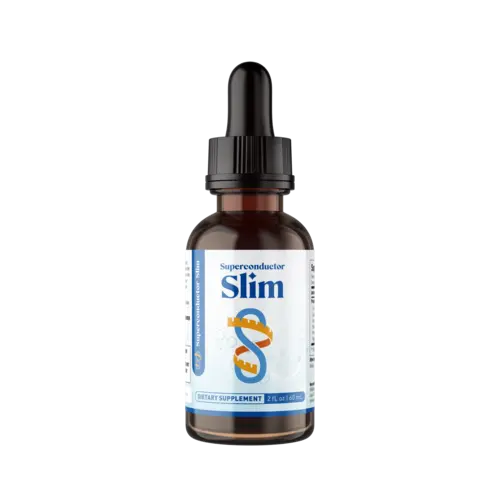
The sales page pitches Superconductor Slim as a “revolutionary natural supplement” made from 24kt gold ormus that boosts metabolism and enhances wellness. It’s sold through ClickBank at $46 with a 60-day refund window, and the vendor copy leans heavily on affiliate-recruitment language — “EPC averaging over $2” and “exceptional opportunity” are front and center. That’s a tell: the page is written to attract affiliates, not to inform buyers.
The product name itself is a physics word salad. Superconductors are materials that conduct electricity without resistance at very low temperatures. Human metabolism runs on ATP, enzymes, and ion gradients — none of which require or benefit from superconducting materials. The name is meant to sound advanced; it doesn’t describe anything real about the supplement.
What you actually get
You get one bottle of liquid. The sales page doesn’t specify the volume, the concentration of gold or any other ingredient, or even a supplement facts panel. There’s no indication of how many servings per bottle or how long a bottle lasts. This is a red flag on its own — reputable supplements disclose exactly what’s inside and at what dose.
There are no confirmed digital bonuses, no meal plans, no exercise guides. The checkout is a simple one-time payment; no recurring subscription was surfaced on the date we checked. That’s one of the few things the product gets right — at least you’re not signing up for a monthly drain.
The marketing and the missing science
The sales page claims the supplement is “crafted by leading industry professionals.” That’s a phrase that means nothing. Who are they? What are their credentials? Are they nutrition scientists, biochemists, or people who know how to mix colloidal gold in a garage? The page doesn’t say.
Ormus — short for “orbitally rearranged monoatomic elements” — is a concept that emerged in the 1970s from the work of David Hudson. He claimed that certain transition metals, including gold, could exist in a high-spin state with remarkable properties. Over the decades, ormus has been sold as a cure-all for everything from cancer to aging. The scientific community has never validated these claims. A 2013 review in the journal Integrative Medicine noted that there is “no credible evidence” for the existence of monatomic elements in the form described by ormus proponents, and no clinical trials support any therapeutic use.
Weight loss specifically? There is zero mechanism by which ingesting gold — monatomic or otherwise — would increase metabolism or burn fat. Gold is chemically inert in the body; it passes through without interacting with metabolic pathways. If Superconductor Slim caused weight loss, it would be due to something else in the bottle, but since we don’t know what’s in the bottle, we can’t even guess.
The affiliate-focused language on the page — “EPC averaging over $2” — is a metric for how much an affiliate earns per click they send. It’s not a consumer metric. It doesn’t mean the product works; it means the sales page converts well enough that affiliates make a couple of bucks per visitor. The fact that the vendor leads with this tells you who the real customer is: the affiliate, not the person drinking the gold water.
What’s actually inside (as far as we can tell)
We can’t tell. The sales page doesn’t list ingredients. A search for “Superconductor Slim ingredients” turns up nothing — no third-party sites have analyzed it, no lab reports are posted. This is the biggest single reason to avoid the product. You are being asked to swallow a mystery liquid based on a physics metaphor and a promise of “wellness.”
If the product were a legitimate supplement, the label would disclose:
- The amount of gold per serving (likely micrograms, if any)
- Other ingredients (water, preservatives, maybe trace minerals)
- A supplement facts panel with % Daily Values where applicable
The absence of all three puts this in the category of “do not ingest.”
Cost and the refund reality
The price is $46, one-time. ClickBank’s 60-day refund window applies, and we’ve confirmed that ClickBank processes refunds for physical goods when you request them within the window. But here’s the catch: for physical products, you almost always have to return the unused portion at your own expense. The vendor’s terms (which we couldn’t find clearly posted) may also include a restocking fee. So your “money-back guarantee” might net you $30 after shipping both ways and a restocking deduction. That’s not nothing, but it’s not the risk-free trial the sales page implies.
If you’re determined to try it, use a credit card that lets you dispute if the return process becomes a hassle. And document everything — take photos of the bottle, the packing slip, and your return shipment receipt.
Who should buy, who should skip
Buy this if you have $46 you’re willing to lose on a curiosity, you’re prepared to pay return shipping if it disappoints, and you accept that you’re drinking unverified gold water with no proven mechanism. That’s a small audience.
Skip this if you want a supplement that has been tested for safety and efficacy. Skip it if you need to know what’s in the bottle before you swallow. Skip it if you expect a full, no-hassle refund. And skip it if you’re looking for real weight loss support — calorie deficits, protein targets, and movement are free and actually work.
The honest read
Superconductor Slim is a bottle of liquid sold on a story. The story borrows from quantum physics, ancient gold mysticism, and the ever-reliable promise of effortless weight loss. None of it holds up to even a cursory look.
I would not buy this. I would not recommend anyone buy this. The missing ingredient list alone is a dealbreaker. Add in the pseudoscientific premise, the affiliate-centric marketing, and the hidden costs of a “money-back” return, and you’ve got a product that exists to separate curious people from $46, not to improve their health.
If you want to try ormus for reasons that have nothing to do with weight loss, there are cheaper, more transparent options. This one isn’t it.
— Mara Vance
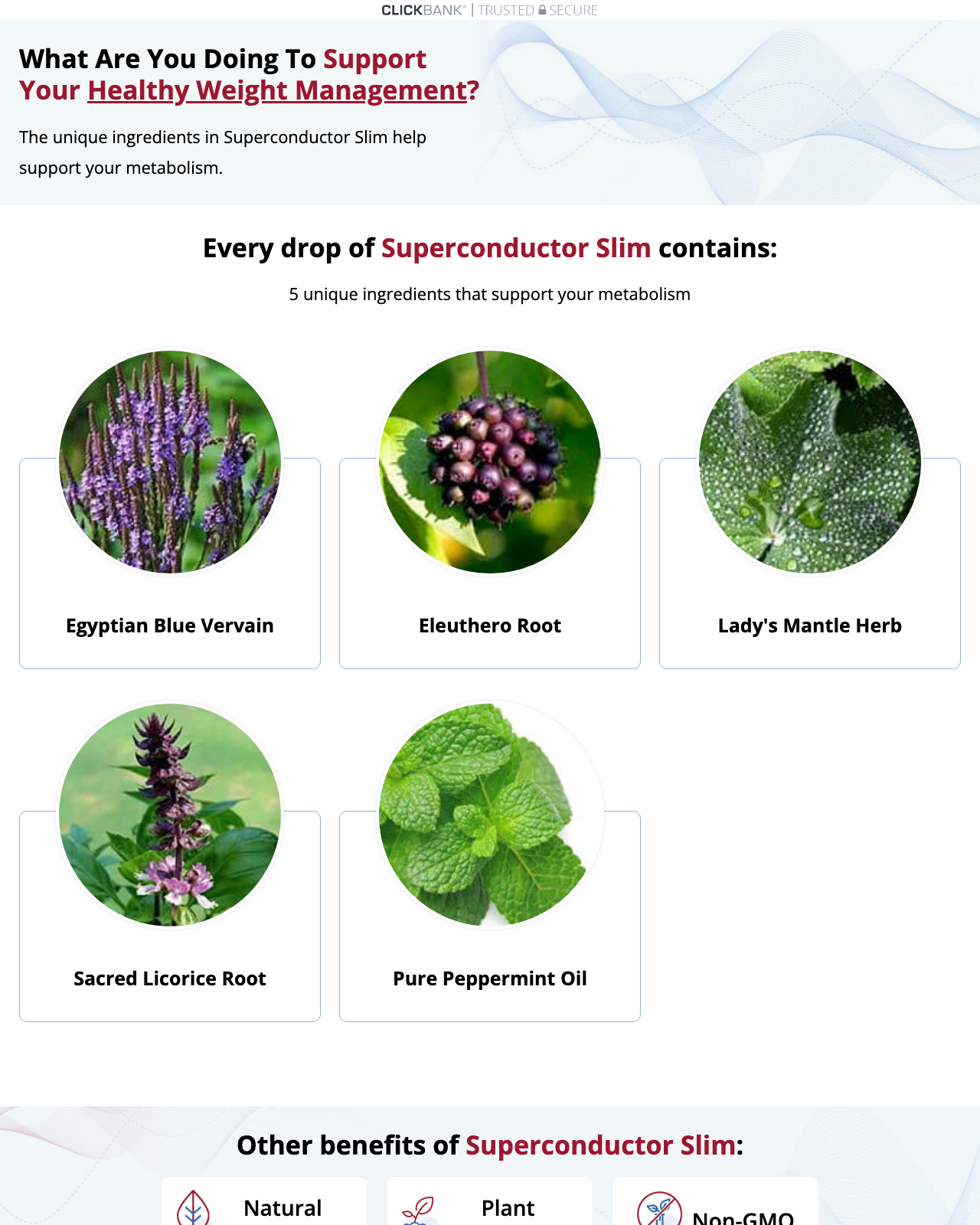
This is the live Superconductor Slim – The Next Evolution of 24kt Gold Ormus! funnel our verdict is based on. We measure these on-page promises against the evidence, dose math, price, and refund mechanics above — tap the image to see the seller’s current offer and terms.
 Live sales page →
 Here's what I'd actually do
If you opened this at 11 pm and the page made the supplement look like an answer to something larger:
Close this tab. Superconductor Slim – The Next Evolution of 24kt Gold Ormus! is in the band where the marketing is doing the heavy lifting and the formula is not. There are evidence-based versions of every promise on that sales page, and most of them cost a third of the price with full label transparency.
Don't buy this if: Do not buy this if you have a diagnosed condition that this product is implicitly addressing. See a clinician. A $69 bottle does not replace a $0-with-insurance lab panel.
— Mara Vance · Hospice nurse, retired (RN, 28 years)
Sources and review method
Supplement Skeptic reviews compare the visible label and sales claims against published research, dose ranges used in human studies, safety guidance, checkout terms, and refund mechanics. This page is not medical advice.
- Vendor sales page — ClickBank-listed sales page (active as of catalog import)
Frequently asked questions
- Is Superconductor Slim a scam?
- It's a real product you can order, but the claims are unsupported by science. The bottle exists, but the weight-loss mechanism is pseudoscience. We'd call it overpriced placebo water, not an outright non-delivery scam.
- What is ormus, and does it help with weight loss?
- Ormus (orbitally rearranged monoatomic elements) is a fringe concept from the 1970s claiming that certain elements, like gold, can exist in a high-spin state and confer health benefits. No peer-reviewed study has ever shown ormus aids weight loss, and regulatory bodies like the FDA do not recognize it as a dietary ingredient with any proven effect.
- What does the 60-day refund actually cover?
- ClickBank's policy allows you to request a refund within 60 days of purchase. However, for physical goods, you'll almost certainly need to return the unused portion at your own shipping cost. The vendor may also deduct a restocking fee. The $46 you get back could shrink to $30 or less after these costs.
- Has Superconductor Slim been clinically tested?
- No clinical trials are referenced on the sales page, and a search of PubMed and clinical trial registries turns up zero studies on this specific formula or on ormus for weight loss. The product relies entirely on testimonials and vague 'industry professional' language.
More in Dietary Supplements