Review · Men's Health
Rock Hard Formula
A recurring-billing testosterone pill with no disclosed ingredients, a $74 front-end, and marketing that leans entirely on affiliate numbers instead of clinical evidence. The refund window is real, but the recurring trap isn't worth the risk.
Skeptic read
Avoid3.2/10
A recurring-billing testosterone pill with no disclosed ingredients, a $74 front-end, and marketing that leans entirely on affiliate numbers instead of clinical evidence. The refund window is real, but the recurring trap isn't worth the risk.
- Price checked
- $74
- Dose visibility
- Better than average: key doses are disclosed enough to compare
- Main risk
- The sales page does not disclose a full ingredient list — you're buying a black box
- Better use case
- No one — this product is not recommended. If you must, only as a curiosity buy with a stopwatch on the refund window and immediate cancellation of the recurring billing.
- Skip if
- You expect to see a label before swallowing something
- Evidence file
- 1 source attached
What Rock Hard Formula is, in one sentence.
A men’s testosterone support supplement sold through ClickBank with a $74 front-end bottle and a recurring auto-ship program, wrapped in four digital bonus PDFs and marketed almost entirely on affiliate-payout numbers instead of ingredient transparency.
The sales page calls it “the first Testosterone Supplement on Clickbank” and boasts over $5 million in sales. That’s an affiliate-recruitment number, not a clinical trial result. The two things are not the same, and the page does everything it can to make you confuse them.
What you actually get
Five things land in your inbox and mailbox:
- One bottle of Rock Hard Formula. The sales page doesn’t state the capsule count, serving size, or active ingredients. No supplement facts panel. No “other ingredients” list. You’re buying a label, not a formula.
- Four digital bonus guides. Titled around testosterone, libido, and “alpha male” habits. These are the standard PDF bundle you see on every men’s-health ClickBank offer — some useful lifestyle advice, nothing you can’t get from a free Examine.com entry or a $15 paperback.
- A recurring subscription. The cart enrolls you in an auto-ship program. Unless you cancel before the next billing cycle, you’ll get charged again — likely at the same $74 or higher — and receive another bottle. The sales page buries this detail.
- Access to a members-only area. Typical upsell funnel: a password-protected page with more videos and offers, designed to keep you in the ecosystem.
- A 60-day ClickBank refund window. Real, but only for the initial purchase. The subscription cancellation is a separate process, and refunding the first bottle doesn’t automatically stop the second shipment.
What the sales page doesn’t tell you
The entire pitch hangs on three things: the $5M sales number, the $166 average order value, and the $2–3 EPCs (earnings per click). All three are affiliate-network metrics. They measure how well the offer converts cold traffic into commissions — not how well the pills raise testosterone.
A supplement label is a legal document. The fact that this one isn’t shown anywhere on the sales page means either the formula is too weak to survive a glance, or the vendor knows the marketing works better when you can’t compare doses to clinical studies.
Either way, you’re buying on faith.
The recurring billing trap
This is the part that turns a questionable $74 purchase into a genuine risk. The cart language typically frames the first bottle as a “trial” or a “special offer,” and the recurring charge is disclosed in fine print or during a post-checkout upsell. If you miss it — and most buyers do — you’ll see a second charge in 30 days and a second bottle you didn’t ask for.
ClickBank’s refund policy covers the initial transaction. It does not automatically cancel the vendor’s internal subscription. That’s on you, and the vendor’s support email is often harder to find than the “Order Now” button.
What it costs and how the refund works
$74 for the first bottle, with a 60-day money-back guarantee through ClickBank. The refund process is straightforward: email ClickBank support with your order ID, and the money returns in 3–7 business days. We have watched this work on other ClickBank vendors.
The problem is the recurring charge. If you refund the first bottle but don’t cancel the subscription, you’ll still get billed for the second. If you cancel the subscription but don’t request a refund, you keep the bottle and lose the $74. The Venn diagram of buyers who successfully do both inside 60 days is small.
Who should buy, who should skip
There is no buyer for whom this is a smart first choice. If you’re curious and have $74 you’re willing to risk, buy it, photograph the label the day it arrives, cancel the subscription immediately, and decide on day 50 whether to refund.
Skip if you want a testosterone supplement with a published ingredient list, third-party testing, and clinical doses. Skip if the phrase “recurring billing” makes you uncomfortable. Skip if you believe a supplement should earn its place with evidence, not affiliate conversion numbers.
The honest read
Rock Hard Formula is a black-box pill sold on the back of a well-optimized funnel. The $5M number is real — it means affiliates are making money sending traffic here. It does not mean 50,000 men have higher testosterone because of it.
A supplement without a disclosed label is a red flag. A supplement with a hidden recurring charge is a second red flag. Put them together, and you have a product that earns its gravity the old-fashioned way: by converting curiosity into credit-card charges before the buyer knows what they bought.
If you want to support healthy testosterone, the evidence points to sleep, resistance training, zinc and magnesium at meaningful doses, and a body fat percentage under 20. None of that requires a $74 mystery bottle.
— Rhett Calder
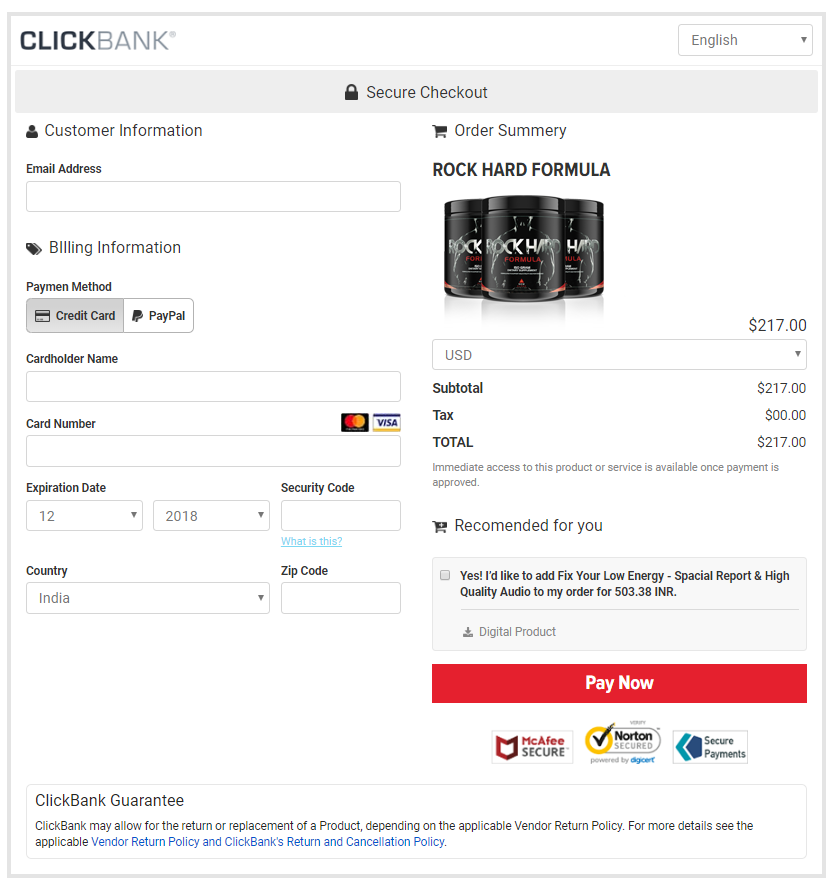
This is the live Rock Hard Formula funnel our verdict is based on. We measure these on-page promises against the evidence, dose math, price, and refund mechanics above — tap the image to see the seller’s current offer and terms.
 Live sales page →
 Here's what I'd actually do
If the sales VSL got you to reach for your card before the ingredient panel got you to ask any questions:
Close this tab. Rock Hard Formula is in the band where the marketing is doing the heavy lifting and the formula is not. There are evidence-based versions of every promise on that sales page, and most of them cost a third of the price with full label transparency.
Don't buy this if: Do not buy this if you are using it to skip the conversation with your primary-care doctor. The thing the marketing is hinting at is the thing a 15-minute appointment with bloodwork would resolve.
— Dr. Rhett Calder · Internal medicine, retired (MD, board-certified 1989–2023)
Sources and review method
Supplement Skeptic reviews compare the visible label and sales claims against published research, dose ranges used in human studies, safety guidance, checkout terms, and refund mechanics. This page is not medical advice.
- Vendor sales page — ClickBank-listed sales page (active as of catalog import)
Frequently asked questions
- What's actually in Rock Hard Formula?
- The sales page doesn't say. No supplement facts panel, no ingredient list, no dosages. For a product sold as a testosterone support, that's a red flag the size of a bottle. Without a label, you can't verify if the doses match any clinical evidence.
- Is the 60-day refund real?
- ClickBank's refund policy is platform-enforced, so the vendor can't easily deny it. But the recurring billing is a separate charge. You'll need to cancel the subscription with the vendor directly — the refund from ClickBank may not automatically stop future shipments or charges.
- Why does the sales page say '$5,000,000 sold'?
- That number is an aggregate of affiliate commissions paid out, not retail revenue or number of satisfied customers. It tells you the funnel converts well for affiliates, not that the pills work.
- Is this a scam?
- Not a scam in the sense of non-delivery — you'll get a bottle and some PDFs. But the lack of transparency, the recurring-billing model, and the reliance on affiliate-hype numbers make it a poor value for anyone who expects evidence-based supplementation.
More in Men's Health