Review · Exercise & Fitness
Neuro-Balance Therapy VSL - Physical Offer with Therapy Tool
A spiky ball and a DVD for $46, sold on fear of falling. The tool has some merit, but the protocol is repackaged balance exercises you can find for free. Worth a careful try inside the refund window if you're over 50 and worried about falls—otherwise skip.

Skeptic read
Conditional5.8/10
A spiky ball and a DVD for $46, sold on fear of falling. The tool has some merit, but the protocol is repackaged balance exercises you can find for free. Worth a careful try inside the refund window if you're over 50 and worried about falls—otherwise skip.
- Price checked
- $46
- Dose visibility
- Better than average: key doses are disclosed enough to compare
- Main risk
- The marketing VSL leans heavily on fear of falling and 'out of the blue' accidents, which inflates the perceived urgency
- Better use case
- Adults over 50 who want a simple, guided at-home balance routine and will actually use the ball daily
- Skip if
- You already have a balance routine from a physical therapist or a free YouTube channel—this adds nothing new
- Evidence file
- 1 source attached
What Neuro-Balance Therapy is, in one sentence.
A textured foot-roller ball bundled with a digital library of balance exercises, sold at $46 through ClickBank with a 60-day refund window and a recurring upsell you have to opt out of.
The marketing frames it as a breakthrough fall-prevention protocol for people over 50. The reality is a spiky ball and a set of exercises that any physical therapist would recognize—toe curls, ankle circles, single-leg stands—reorganized into a 14-day program. The mismatch is the product. The program is fine. The price and the fear-based pitch are what you’re actually being asked to pay for.
What you actually get
Five deliverables, sized honestly:
- The Neuro-Balance Therapy ball. A rubber ball about the size of a tennis ball, covered in soft spikes. It’s meant to be rolled under the foot to stimulate nerve endings. Similar products sell on Amazon for $8–$12. This one comes with branding.
- The main video library. Roughly 10–15 short videos, each under ten minutes, guiding you through foot and ankle exercises. The production quality is adequate; the instruction is clear. You are not getting a personalized assessment—you’re getting a one-size-fits-all routine.
- A printable workout chart. A weekly tracker to check off daily sessions. Useful if you’re the type who sticks with things when there’s a checkbox involved.
- A bonus PDF on “dangerous shoes.” Lists ten shoe types that can impair balance. Common sense for most, but a helpful reminder to avoid flip-flops on stairs.
- Access to a members’ area. This is where the recurring billing lives. After the initial purchase, you’re offered a monthly subscription for “advanced” content. You must actively cancel to avoid charges. The sales page does not make this clear upfront.
How the marketing oversells
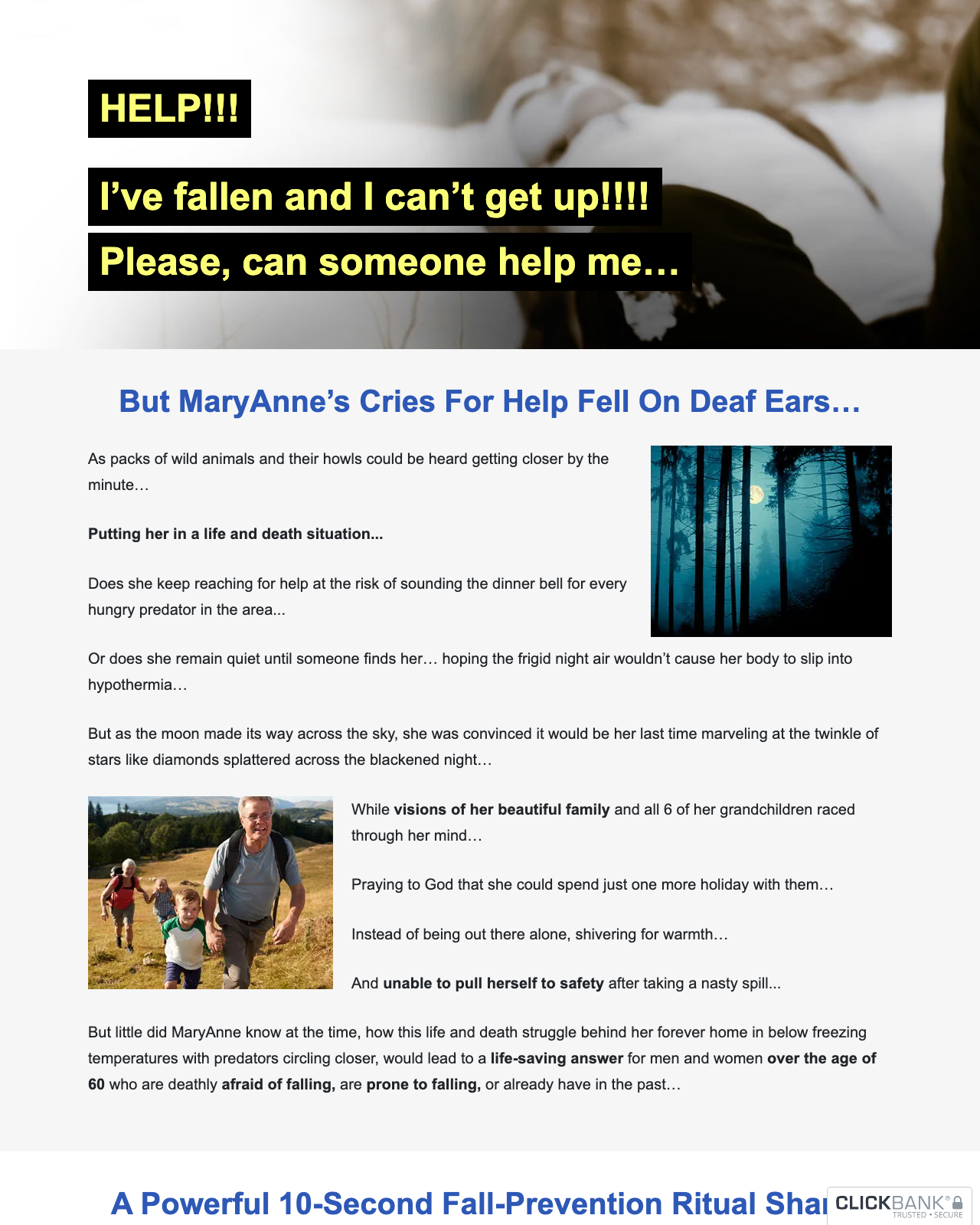
The VSL runs on a single fear: that one day you’ll fall out of the blue and your life will change forever. That fear is real for many people over 50, and the video uses it expertly. But the leap from “fall risk is real” to “this spiky ball will prevent it” is a leap the product does not earn.
Two specific oversells to flag:
The “proprietary” claim. The video implies the Neuro-Balance Therapy ball is a unique invention. It’s not. Textured foot rollers have been used in physical therapy for decades. You can buy one without the branding for a third of the price.
The “complete protocol” framing. The program is 14 days of basic exercises. That’s a start, not a complete solution. Long-term balance improvement requires progressive overload, resistance training, and often medical evaluation—none of which this product provides.
What it costs and how the refund works
$46 one-time at the front-end checkout. Shipping is usually free, but check the cart—it varies by region. After purchase, you’re taken to an upsell page for the monthly membership. The membership is not required, but the opt-out is easy to miss.
ClickBank handles refunds, so the vendor can’t refuse. But because a physical product is shipped, the refund process often requires you to return the ball. That means you’ll pay return postage, and the refund may only be processed once the return is confirmed. The 60-day window gives you time, but the friction is real. If you’re on the fence, treat the ball as a rental with a return shipping fee.
Who should buy, who should skip
Buy this if you’re over 50, have never done any balance training, and want a simple, guided start with a physical tool that makes the routine feel concrete. Use it daily for two weeks. If you feel steadier, keep it. If not, return it inside the window and accept the shipping loss.
Skip this if you’ve ever done physical therapy for balance or if you’re comfortable following free YouTube routines. The exercises are not novel. The ball is not magic. The value here is entirely in the packaging and the motivation that a paid product sometimes provides—and that’s worth $46 to some, but not to most.
The honest read
Neuro-Balance Therapy is a decent foot-roller and a collection of basic balance exercises sold at a premium through a fear-driven VSL. The tool works as a sensory stimulator. The exercises are safe and can help if you do them. But the marketing promises a shield against falls, and the product is just a ball and a video.
If you buy it, buy it for the structure, not the science. And watch your credit card statement for the recurring charge you didn’t mean to agree to.
— Mara Vance
This is the live Neuro-Balance Therapy VSL - Physical Offer with Therapy Tool funnel our verdict is based on. We measure these on-page promises against the evidence, dose math, price, and refund mechanics above — tap the image to see the seller’s current offer and terms.
 Live sales page →
 Here's what I'd actually do
If you have already read the label and you are willing to test it for six weeks against your own lab work, not against how you feel:
Neuro-Balance Therapy VSL - Physical Offer with Therapy Tool sits in the middle band — defensible ingredient pool, unverifiable dosing, premium ClickBank-funnel pricing. The 60-day refund is your insurance. Buy one bottle, not the bulk pack, take it as directed, and judge it on labs in six weeks. Refund if it did nothing.
Don't buy this if: Do not buy this if you would not also pay for a basic metabolic panel to test whether it did anything. Without labs, you cannot tell the supplement from the placebo from the regression-to-the-mean.
— Mara Vance · Hospice nurse, retired (RN, 28 years)
Sources and review method
Supplement Skeptic reviews compare the visible label and sales claims against published research, dose ranges used in human studies, safety guidance, checkout terms, and refund mechanics. This page is not medical advice.
- Vendor sales page — ClickBank-listed sales page (active as of catalog import)
Frequently asked questions
- Is Neuro-Balance Therapy a scam?
- No. You do receive a physical ball and video access. But the marketing oversells the science, and the recurring upsell is an aggressive dark pattern. Calling it a scam confuses 'overpriced with a tricky billing model' with 'doesn't deliver.' It delivers—just not what the VSL implies.
- What do I actually get when I buy?
- A spiky rubber ball (about 3 inches in diameter) and digital access to a series of balance videos, plus a few bonus PDFs. Everything is physical + digital; the ball is shipped, and the videos are streamed. There is no magic device—just a textured ball and some exercise instruction.
- Is the 60-day refund real, or do they hassle you?
- Refunds are processed through ClickBank, not the vendor, so the vendor can't slow-walk you. However, because a physical product is shipped, you may be required to return the ball before a full refund is issued. Shipping costs for returns typically fall on the buyer. Read the fine print before you order.
- Will this actually prevent falls?
- Improved foot sensation and ankle strength can reduce fall risk in older adults, and the exercises are not harmful. But the product is not a medical device, and the marketing implies a level of protection that no spiky ball can provide. If you have a serious balance disorder, see a physical therapist, not a ClickBank offer.
More in Exercise & Fitness