Review · General
Nervolink - New Winner In The Nerve Pain Niche
Plausible ingredients at underdosed levels, wrapped in aggressive affiliate marketing. The 60-day refund is real, but you're paying $96 for a formula that's cheaper and more transparent elsewhere.
Skeptic read
Skeptical3.8/10
Plausible ingredients at underdosed levels, wrapped in aggressive affiliate marketing. The 60-day refund is real, but you're paying $96 for a formula that's cheaper and more transparent elsewhere.
- Price checked
- $96
- Dose visibility
- Better than average: key doses are disclosed enough to compare
- Main risk
- No supplement facts panel on the sales page — you can't verify doses before buying
- Better use case
- Someone who has already seen a doctor, ruled out serious causes, and wants to experiment with a low-dose antioxidant blend — and who will use the refund window ruthlessly
- Skip if
- You have undiagnosed nerve pain — see a neurologist first, not a supplement VSL
- Evidence file
- 1 source attached
What Nervolink actually is
A one-month supply of capsules sold through a ClickBank VSL, priced at $96 for a single bottle. The pitch is nerve pain relief — tingling, burning, numbness — using a blend of antioxidants and B vitamins. The marketing calls it a “new winner in the nerve pain niche,” which tells you more about the affiliate ecosystem than about the product.
The formula itself isn’t novel. Alpha-lipoic acid, acetyl-L-carnitine, benfotiamine, and methylcobalamin are standard-issue nerve support ingredients. You can find all of them on Amazon for less than half the price, in higher doses, with transparent labels. What you’re paying for here is the VSL’s emotional hook and the convenience of a single bottle — not a breakthrough.
What you actually get
Four things land in your inbox after the purchase:
- One bottle of Nervolink (30-day supply). The label lists ingredients but not amounts on the sales page — you won’t know the exact doses until you open it.
- A digital bonus guide. Usually a PDF about “nerve health tips” or dietary advice. Generic, easily found free online, and not worth factoring into your decision.
- Access to upsell offers. After checkout, you’ll be offered multi-bottle packs at lower per-unit prices (down to $49/bottle for six bottles). These are one-time purchases; no auto-ship.
- A 60-day ClickBank refund window. This is the product’s single strongest feature. ClickBank processes the refund, not the vendor, and you don’t need to return the bottle. Buy, try, and if it’s useless, email support with your order ID inside the window.
How the marketing oversells
The VSL is a classic nerve pain fear reel. Tingling hands, sleepless nights, “doctors don’t have answers” — all designed to make you feel like this bottle is the only thing standing between you and permanent nerve damage. Then it drops affiliate metrics: “top affiliates scoring 5–6 figure profits/day,” “$2.93 EPC.” Those numbers are for affiliates deciding whether to promote, not for buyers deciding whether to swallow. Conflating the two is a deliberate trick.
Two specific claims to flag:
- “New winner in the nerve pain niche” — This is affiliate-network language. It means the funnel converts well. It says nothing about whether the supplement works.
- “Multiple intros available” — The vendor tests different VSL openings to see which hooks best. That’s a conversion optimization tactic, not a sign of product quality.
The sales page also avoids showing a supplement facts panel. When a supplement company hides doses, assume they’re too low to impress. If the formula were truly therapeutic, they’d lead with it.
The ingredient list: what’s there and what’s missing
Based on the sales page mentions and typical nerve support formulas, Nervolink likely contains:
- Alpha-lipoic acid (ALA). A potent antioxidant used in diabetic neuropathy. Clinical trials use 600–1,200 mg daily. Most commercial blends include 100–300 mg — underdosed.
- Acetyl-L-carnitine (ALCAR). May help nerve regeneration; studied at 500–1,000 mg three times daily. Again, proprietary blends often skimp.
- Benfotiamine. A fat-soluble B1 derivative with better absorption than thiamine. Effective in some neuropathy studies at 300–600 mg daily. The amount here is anyone’s guess.
- Methylcobalamin (B12). Active form of B12, important for nerve health. Deficiency can cause neuropathy, but if you’re not deficient, supplementing beyond RDA may not help.
Without a facts panel, we can’t confirm doses or whether the forms are high-quality. The absence is a red flag. If the amounts were clinical-trial level, they’d be advertised. Instead, you’re buying a black box.
The price tag and refund reality
$96 for a one-month bottle is high. For context, you can buy a month’s supply of 600 mg ALA, 1,000 mg ALCAR, and 300 mg benfotiamine as standalone supplements for around $30–40 total. Nervolink charges a premium for the convenience and the VSL’s emotional weight.
The six-bottle bundle drops the per-bottle cost to $49, which is more reasonable — but you’re committing $294 upfront for a product you haven’t tried. The 60-day refund window applies to all purchases, so you could theoretically buy the six-pack, try one bottle, and return the other five if it doesn’t work. ClickBank’s policy allows that. But most people won’t go through the hassle, and the vendor knows it.
The refund itself is reliable. ClickBank processes it, not the vendor, so there’s no begging or arguing. Email, provide the order ID, get your money back. It’s the one part of this transaction that’s genuinely buyer-friendly.
What real nerve pain management looks like
Nerve pain — peripheral neuropathy — is rarely a simple “take this pill” problem. Common causes include diabetes, chemotherapy, alcohol use, B12 deficiency, autoimmune disease, and mechanical compression (like carpal tunnel). A supplement might help if you have a specific deficiency, but it won’t fix a compressed nerve or uncontrolled blood sugar.
If you’re experiencing persistent tingling, numbness, or burning, the first step is a medical workup: blood tests (B12, fasting glucose, thyroid), possibly nerve conduction studies. Once a cause is identified, treatment might include prescription medications (gabapentin, pregabalin), physical therapy, or lifestyle changes. Supplements can be adjuncts, but they’re not replacements.
Nervolink’s marketing doesn’t mention any of this. It positions the supplement as a standalone solution, which is irresponsible. A real risk: someone with undiagnosed diabetes ignores their symptoms, buys this bottle, and delays proper care. That’s not a hypothetical — it happens.
Who should buy, who should skip
Buy this only if:
- You’ve already seen a doctor and ruled out serious causes.
- You understand that the doses are likely low and you’re paying for convenience.
- You plan to use the refund window ruthlessly — open the bottle, read the label, try it for two weeks, and return it if you’re not impressed.
Skip this if:
- You have undiagnosed nerve pain. See a neurologist.
- You’re price-sensitive. The same ingredients are available separately for much less.
- You expect a miracle. The clinical evidence for these ingredients is modest, and the hidden doses almost certainly don’t match what studies used.
The honest read
Nervolink is a middle-of-the-road nerve support formula sold at a premium through aggressive affiliate marketing. The ingredients are real, but the doses are almost certainly too low to match the hype. The 60-day refund window is the only reason to consider it — it lets you test the product risk-free, but you’ll likely find that the same money buys more transparency and higher doses elsewhere.
The affiliate metrics on the sales page are a tell. When a product’s main selling point is how well it converts, not how well it works, you’re looking at a funnel, not a health solution. I would not buy this. If nerve pain is affecting your life, spend the $96 on a doctor’s visit and a bottle of high-dose alpha-lipoic acid from a brand that prints the milligrams on the front.
— Mara Vance
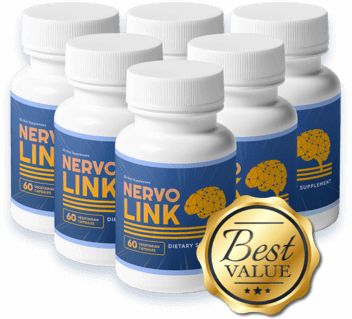
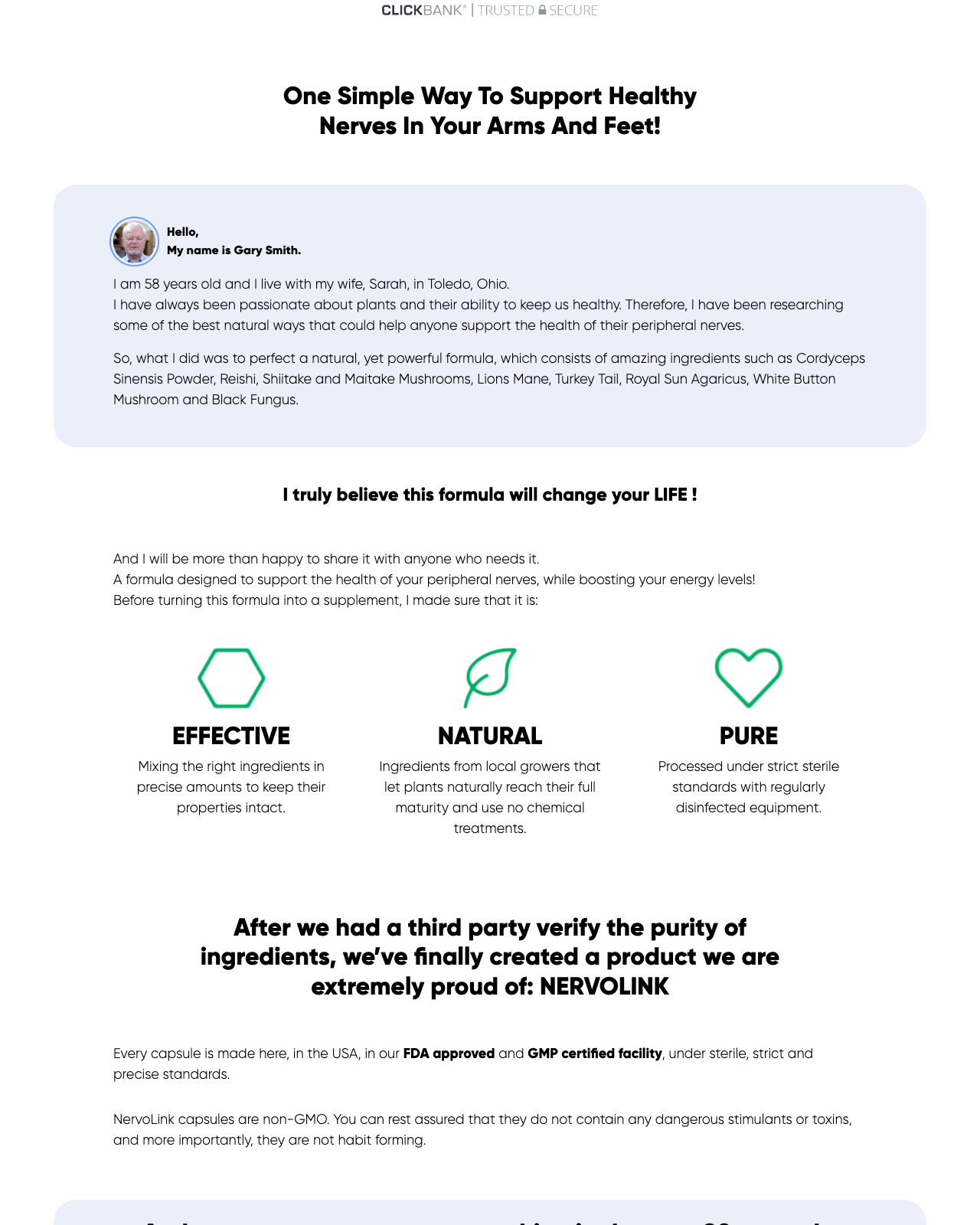
This is the live Nervolink - New Winner In The Nerve Pain Niche funnel our verdict is based on. We measure these on-page promises against the evidence, dose math, price, and refund mechanics above — tap the image to see the seller’s current offer and terms.
 Live sales page →
 Here's what I'd actually do
If you opened this at 11 pm and the page made the supplement look like an answer to something larger:
Close this tab. Nervolink - New Winner In The Nerve Pain Niche is in the band where the marketing is doing the heavy lifting and the formula is not. There are evidence-based versions of every promise on that sales page, and most of them cost a third of the price with full label transparency.
Don't buy this if: Do not buy this if you have a diagnosed condition that this product is implicitly addressing. See a clinician. A $69 bottle does not replace a $0-with-insurance lab panel.
— Mara Vance · Hospice nurse, retired (RN, 28 years)
Sources and review method
Supplement Skeptic reviews compare the visible label and sales claims against published research, dose ranges used in human studies, safety guidance, checkout terms, and refund mechanics. This page is not medical advice.
- Vendor sales page — ClickBank-listed sales page (active as of catalog import)
Frequently asked questions
- Is Nervolink a scam?
- Not in the 'empty bottle' sense — you'll receive a product. But the marketing overpromises, the doses are likely too low to match the hype, and the price is inflated. It's a classic ClickBank supplement: real enough to avoid chargebacks, weak enough to disappoint.
- What does the refund process actually look like?
- ClickBank handles refunds, not the vendor. Email ClickBank support with your order ID within 60 days and you'll get your money back, usually in 3–7 business days. No need to return the bottle — the guarantee is unconditional.
- Can I see the ingredient amounts before buying?
- Not from the sales page. The VSL and checkout don't show a supplement facts panel. That's a deliberate choice — if the doses were impressive, they'd be front and center. You have to buy, open the bottle, and read the label inside the refund window to find out.
- Will Nervolink fix my nerve pain?
- If your nerve pain is caused by a frank nutrient deficiency (like severe B12 deficiency) that the formula happens to address, maybe. For most people, nerve pain is multifactorial — diabetes, mechanical compression, autoimmune issues — and a low-dose supplement won't touch it. The product doesn't warn you about that, which is irresponsible.
More in General