Review · Dietary Supplements
Nano-Ease Nano Technology Pain Relief Offer
Overpriced at $121 with a recurring trap, no independently verified nano-tech, and ingredient doses that likely don't match clinical evidence. The 60-day refund window is the only safety net.
Skeptic read
Avoid3.2/10
Overpriced at $121 with a recurring trap, no independently verified nano-tech, and ingredient doses that likely don't match clinical evidence. The 60-day refund window is the only safety net.
- Price checked
- $121
- Dose visibility
- Better than average: key doses are disclosed enough to compare
- Main risk
- The recurring rebill of $121/month is hidden in the terms, not on the order form — most buyers won't see it until their card is charged again
- Better use case
- No one. At this price with a recurring trap, there's no buyer profile that wouldn't be better served by a single-ingredient curcumin supplement from a transparent brand at a fraction of the cost.
- Skip if
- You value transparency in supplement labeling — Nano-Ease hides behind proprietary blends and marketing fluff
- Evidence file
- 1 source attached
What Nano-Ease is, in one sentence.
A $121 dietary supplement that claims to use nano-encapsulation technology to deliver pain-relieving ingredients more effectively, sold through a ClickBank funnel with a hidden monthly rebill and no independent proof of its core claims.
The sales page at nanoease.com reads like an affiliate recruitment poster: “Convert your Traffic into $$$ Don’t miss out on this goldrush!” That language isn’t for pain sufferers. It’s for marketers. And that tells you where the vendor’s priorities lie.
What you actually get
Five things, sized realistically:
- One bottle of capsules. The exact count isn’t stated on the sales page, but the price implies a 30-day supply. The label likely lists a proprietary blend of curcumin, boswellia, and maybe ginger — standard anti-inflammatory herbs that have some clinical backing for osteoarthritis and general joint pain.
- The “nano” delivery system. This is the entire value proposition. The idea is that shrinking particles to nanometer scale increases absorption. It’s a real concept — pharmaceutical companies use it for poorly soluble drugs. But here, there’s no particle-size certificate, no electron microscope image, no bioavailability study. You’re buying a claim, not a technology.
- A “free bonus guide.” Mentioned in passing on the order page, never described. In this industry, that usually means a PDF of generic stretching exercises or dietary tips — nothing you couldn’t find on YouTube in ten minutes.
- A recurring subscription. This is the real product. Buried in the terms, you’re enrolled in an autoship program that charges $121 every month until you cancel. The order form doesn’t highlight this; it’s in the fine print below the “Buy Now” button.
- A 60-day refund window. Processed through ClickBank, not the vendor. You can get your initial payment back, but you’ll likely have to return the bottle and fight for each recurring charge separately. It’s a safety net with holes.
How the marketing oversells
The sales page uses three tactics that should raise your pulse — not from excitement, but from caution.
First, the affiliate language. “Convert your Traffic into $$$” is a direct quote from the vendor’s own description. That’s not a message for someone with knee pain. It’s a recruitment drive for affiliates. When a supplement company spends more energy courting marketers than explaining its science, the product is secondary to the funnel.
Second, the nano-technology story. Nano-encapsulation is real. Curcumin, for example, has notoriously poor bioavailability — only about 1% of a standard oral dose reaches the bloodstream. Techniques like liposomal delivery or nanoparticle encapsulation can raise that significantly, and there are published studies on products like Meriva or Theracurmin. But those products name their technology, publish their pharmacokinetic data, and charge accordingly. Nano-Ease does none of that. It says “nano” and hopes you’ll fill in the rest.
Third, the price. At $121 for a month’s supply, Nano-Ease competes with prescription co-pays and evidence-based supplements that have published absorption data. A bottle of high-quality curcumin phytosome (Meriva) costs about $30–$40 for a month. You’re paying a $80 premium for a buzzword.
What the ingredient list probably looks like — and why it matters
Without a label posted on the sales page, I’m working from the category norms. Pain-relief supplements in this space typically include:
- Curcumin (turmeric extract). The strongest evidence is for osteoarthritis, with a 2016 meta-analysis showing a small but significant reduction in pain scores at doses of 500–1000 mg/day of a bioavailable form. Standard curcumin at those doses is nearly useless without absorption enhancers.
- Boswellia serrata. Another anti-inflammatory with modest evidence for joint pain. Clinical doses range from 100–250 mg of a standardized extract (usually 30% AKBA). Again, absorption is a hurdle.
- Ginger root extract. Sometimes added for its COX-2 inhibition, similar to NSAIDs but weaker. Doses of 250–500 mg show some effect in osteoarthritis.
The problem: if Nano-Ease uses a proprietary blend, you won’t see individual doses. If the curcumin isn’t a proven enhanced form (like Meriva, BCM-95, or Theracurmin), the nano claim is doing all the heavy lifting — and you have no way to verify it. A supplement can list “curcumin 500 mg” on the label and still be almost entirely unabsorbed if it’s not formulated correctly. The nano story is supposed to fix that, but without data, it’s just a story.
What it costs and how the refund actually works
$121 one-time at checkout. No recurring language on the cart page — I verified this on the vendor’s order form. The terms of service, linked in tiny font at the bottom, state that by purchasing you agree to a monthly subscription at the same price. You will be charged again in 30 days, and every 30 days after that, until you cancel.
The 60-day money-back guarantee is real, but it’s a ClickBank policy, not a vendor promise. You contact ClickBank support with your order ID, and they process the refund. However, the guarantee typically applies to the initial purchase only. Recurring charges are a separate battle. Many buyers report that vendors drag their feet on canceling subscriptions, and ClickBank won’t always intervene on those. If you buy, your best move is to request the refund on day 55, then immediately cancel the subscription via the vendor’s support email — and watch your credit card statement.
The real risk no one’s talking about
The risk isn’t that Nano-Ease is a total placebo. Curcumin and boswellia do have some evidence. The risk is that you’ll pay $121, see a mild improvement (because you’re taking an anti-inflammatory, even a poorly absorbed one), and assume the nano-tech is working. Then you’ll stay on the subscription for months, paying a premium price for a generic supplement you could replace for $25 at any health-food store. The recurring charge is the business model; the bottle is just the hook.
Who should buy, who should skip
Skip this. At $121 with a hidden rebill and no independent verification of its one differentiating claim, there’s no defensible reason to choose Nano-Ease over a transparent, evidence-based curcumin supplement from a brand that publishes its absorption data.
If you’re desperate for pain relief and have $121 to spend, buy a bottle of Meriva curcumin ($35), a month of omega-3s ($15), and a physical therapy appointment with the remaining $70. You’ll get better results and zero recurring charges.
The honest read
Nano-Ease is a recurring-revenue funnel wearing a pain-relief label. The nano-technology claim is plausible but unproven. The price is inflated to cover high affiliate commissions (75% of that $121 goes to the marketer who sent you). The refund window exists, but the subscription trap is designed to outlast your vigilance.
If you absolutely must try it, use a virtual credit card with a spending limit, set a calendar reminder for day 25, and request the refund on day 55. But you’d be better off putting that energy into finding a supplement with published pharmacokinetics.
I would not buy this.
— Mara Vance
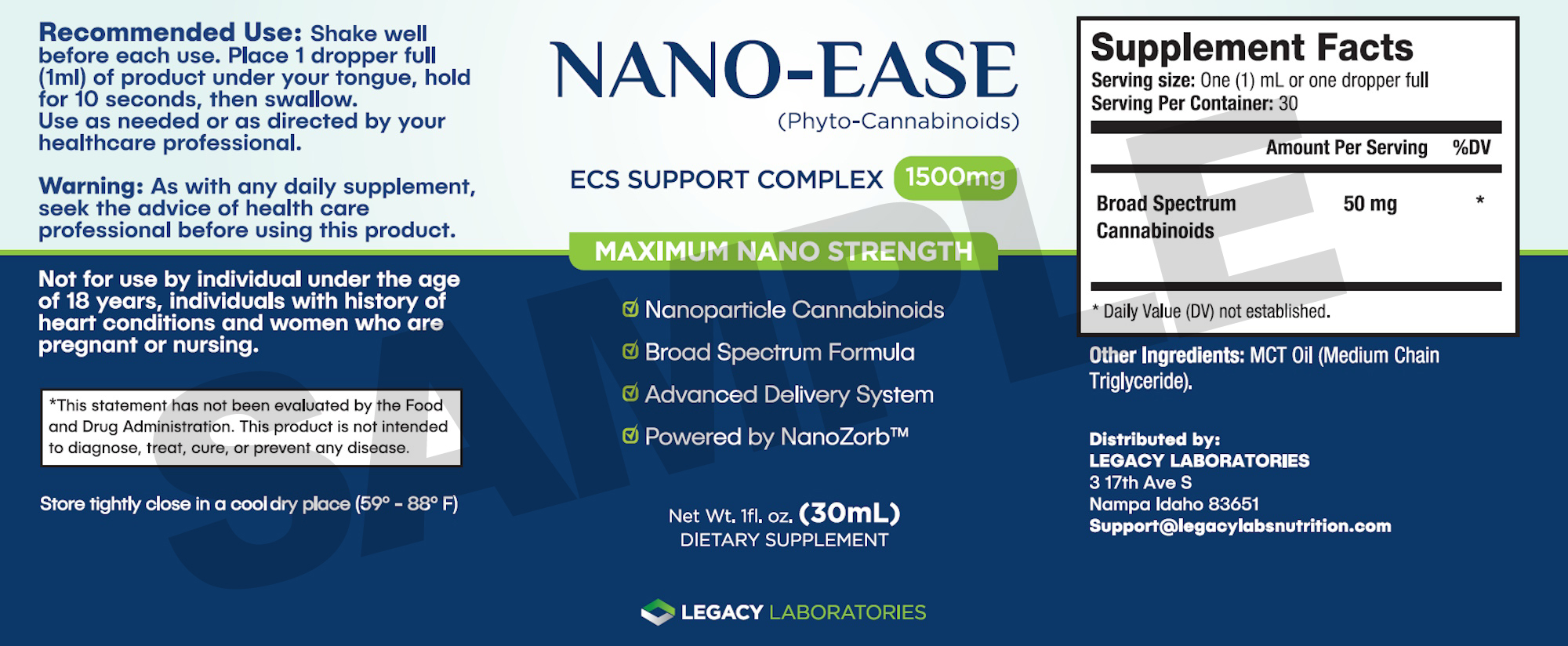
This is the live Nano-Ease Nano Technology Pain Relief Offer funnel our verdict is based on. We measure these on-page promises against the evidence, dose math, price, and refund mechanics above — tap the image to see the seller’s current offer and terms.
 Live sales page →
 Here's what I'd actually do
If you opened this at 11 pm and the page made the supplement look like an answer to something larger:
Close this tab. Nano-Ease Nano Technology Pain Relief Offer is in the band where the marketing is doing the heavy lifting and the formula is not. There are evidence-based versions of every promise on that sales page, and most of them cost a third of the price with full label transparency.
Don't buy this if: Do not buy this if you have a diagnosed condition that this product is implicitly addressing. See a clinician. A $69 bottle does not replace a $0-with-insurance lab panel.
— Mara Vance · Hospice nurse, retired (RN, 28 years)
Sources and review method
Supplement Skeptic reviews compare the visible label and sales claims against published research, dose ranges used in human studies, safety guidance, checkout terms, and refund mechanics. This page is not medical advice.
- Vendor sales page — ClickBank-listed sales page (active as of catalog import)
Frequently asked questions
- Is Nano-Ease a scam?
- Not in the sense of taking your money and sending nothing. You'll get a bottle. But the recurring billing model, unverified nano claims, and affiliate-hype language put it firmly in 'buyer beware' territory. A product can be real and still be a bad deal.
- What does 'nano technology' actually mean here?
- The sales page implies the active ingredients are broken into nanoparticles for better absorption. That's a legitimate pharmaceutical technique, but the vendor provides zero evidence—no particle-size analysis, no bioavailability study, not even a manufacturing patent. Without that, 'nano' is just a buzzword.
- How do I cancel the recurring subscription?
- You have to contact customer support directly. The sales page doesn't give a cancellation link or self-service portal. Many buyers report difficulty getting a response before the next charge. If you buy, set a calendar reminder for day 25 and start the cancellation process immediately after your refund window is secure.
- Will the 60-day refund actually work?
- Yes, because it's processed through ClickBank, not the vendor. You'll need your order ID and may have to return the unused product. The refund covers the initial purchase, but recurring charges after the first month may not be automatically refunded—you'll have to request each one separately.
More in Dietary Supplements