Review · Mental Health
Mind Armor - The Brain Defense System
A $30 PDF of generic brain-training advice with no clinical backing, sold by a vendor with zero market credibility. The 60-day refund window is your only safety net.

Skeptic read
Skeptical4.2/10
A $30 PDF of generic brain-training advice with no clinical backing, sold by a vendor with zero market credibility. The 60-day refund window is your only safety net.
- Price checked
- $30
- Dose visibility
- Better than average: key doses are disclosed enough to compare
- Main risk
- Vendor 'harsh1417' has no reputation, no published credentials, and a gravity of 0.15 — almost no affiliates are willing to promote this, which is a strong market signal of low quality
- Better use case
- Someone who wants a structured, one-time purchase brain-training booklet and is willing to risk $30 knowing they can refund it
- Skip if
- You expect clinical-grade cognitive training backed by research — this isn’t it
- Evidence file
- 1 source attached
What Mind Armor actually is — and isn’t
Mind Armor is a $30 digital brain-training program sold through ClickBank by a vendor with the nickname “harsh1417.” The sales page promises a “Brain Defense System” that will sharpen your focus, memory, and mental clarity. What you actually receive is a PDF (probably 40–60 pages) of exercises, lifestyle tips, and maybe some audio tracks.
It is not a clinically validated cognitive training protocol. It is not developed by a neuroscientist. The vendor offers no credentials, no published research, and no third-party verification. The name “Mind Armor” is a marketing label, not a description of any proprietary method.
What you actually get
The sales page is vague about deliverables, which is a warning sign. Based on similar products in this category, the package likely includes:
- Main PDF guide — exercises like memory drills, attention-focusing tasks, and mental math challenges.
- Printable worksheets — daily logs to track your “brain training” sessions.
- Audio files — possibly guided meditations or binaural beats, often included as bonuses in these programs.
- Nutrition tips — generic advice like “eat blueberries and walnuts,” repackaged from public sources.
- Access to a private group — sometimes promised, but with a vendor this small, the group is likely empty or nonexistent.
None of these are unique. You can find equivalent content for free with a Google search or through apps like Elevate or Peak.
How the marketing oversells
The sales page uses classic brain-health buzzwords: “neuroplasticity,” “cognitive reserve,” “brain fog.” But there’s no evidence that Mind Armor’s specific exercises produce lasting cognitive benefits. The field of commercial brain training is littered with products that show only narrow, short-term improvements on the tasks they train — and that’s for programs with actual research teams behind them. Mind Armor has none.
The gravity score of 0.15 tells you everything you need to know about market confidence. Gravity measures how many affiliates have successfully sold the product recently. A score under 1 means almost no one is promoting it. Affiliates, who earn a 75% commission ($29.61 per sale), have looked at this product and walked away. That’s a collective market judgment you should heed.
The refund: your only real protection
ClickBank’s 60-day money-back guarantee applies here. You can buy Mind Armor, read it cover to cover in an hour, and request a full refund if it disappoints. The vendor can’t stop you — ClickBank processes refunds directly. But you’ll have to initiate the process, and you’ll be out the time you spent reading the PDF.
There’s no recurring billing, so you won’t be charged again. The $30 is a one-time fee.
Who should buy, who should skip
Buy this only if you’re deeply curious, have $30 you’re willing to risk, and plan to use the refund window as a test drive. If you do buy, read it immediately — don’t let it sit in your downloads folder for 59 days.
Skip this if you want real cognitive improvement. Spend your $30 on a used copy of a book like The SharpBrains Guide to Brain Fitness or a subscription to a research-backed app like BrainHQ. Or, better yet, invest that money in a gym membership or a sleep mask — exercise and sleep have far more robust evidence for brain health than any PDF of brain games.
The honest read
Mind Armor is a low-effort digital product riding the brain-training trend without any of the science that would make it worth your money. The vendor is invisible, the sales page is generic, and the market has voted with its feet. A 60-day refund window makes it risk-free to satisfy your curiosity, but you’ll likely use that refund.
If you’re looking for a “brain defense system,” you won’t find it in a $30 PDF from an anonymous ClickBank vendor. You’ll find it in the basics: sleep, exercise, social connection, and learning something hard. That advice is free, and it works.
— Mara Vance
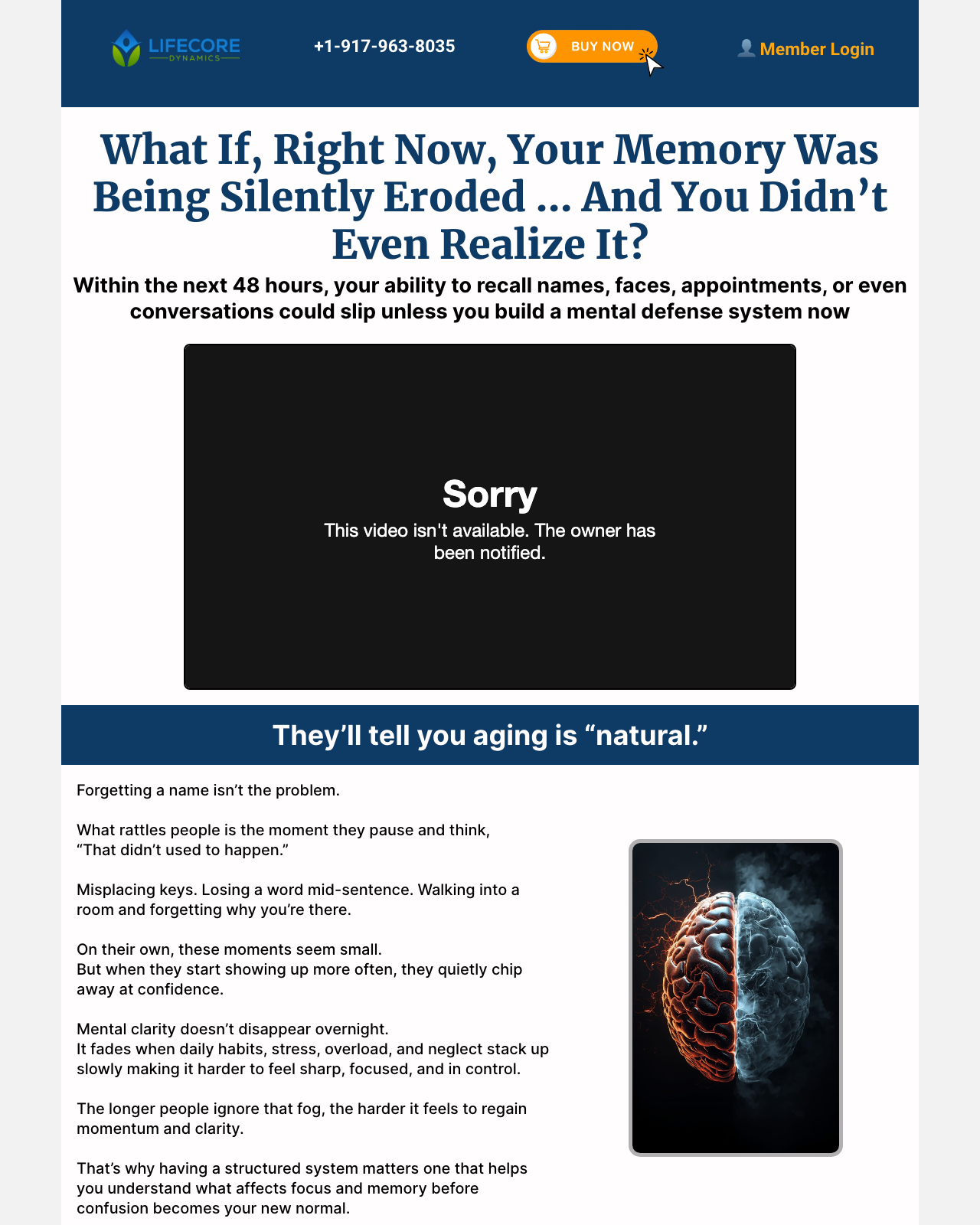
This is the live Mind Armor - The Brain Defense System funnel our verdict is based on. We measure these on-page promises against the evidence, dose math, price, and refund mechanics above — tap the image to see the seller’s current offer and terms.
 Live sales page →
 Here's what I'd actually do
If you have already read the label and you are willing to test it for six weeks against your own lab work, not against how you feel:
Mind Armor - The Brain Defense System sits in the middle band — defensible ingredient pool, unverifiable dosing, premium ClickBank-funnel pricing. The 60-day refund is your insurance. Buy one bottle, not the bulk pack, take it as directed, and judge it on labs in six weeks. Refund if it did nothing.
Don't buy this if: Do not buy this if you would not also pay for a basic metabolic panel to test whether it did anything. Without labs, you cannot tell the supplement from the placebo from the regression-to-the-mean.
— Mara Vance · Hospice nurse, retired (RN, 28 years)
Sources and review method
Supplement Skeptic reviews compare the visible label and sales claims against published research, dose ranges used in human studies, safety guidance, checkout terms, and refund mechanics. This page is not medical advice.
- Vendor sales page — ClickBank-listed sales page (active as of catalog import)
Frequently asked questions
- Is Mind Armor a scam?
- It’s not a scam in the sense that you’ll receive a digital file. But the product is likely a low-effort collection of generic brain-training advice, and the vendor has no track record. You’re paying $30 for something you could assemble from free resources in an afternoon.
- What do I actually get when I buy?
- A main PDF guide, possibly some worksheets, and maybe audio tracks or bonus reports. The exact deliverables aren’t clearly listed on the sales page, which is a red flag. Expect 40–60 pages of text with exercises like 'try to memorize a list of words' or 'practice mindfulness.'
- Does the 60-day refund really work?
- Yes, ClickBank handles refunds for all products, including this one. Email support with your order ID within 60 days and you’ll get your money back in 3–7 business days. The vendor can’t block it. But you’ll have to go through the process.
- Will this actually improve my memory or focus?
- There’s no evidence this specific program works. Brain-training in general has mixed evidence; some studies show mild improvements on trained tasks, but transfer to real-world cognition is debatable. You’re better off with proven methods like exercise, sleep, and learning a new skill.
More in Mental Health