Review · Remedies
Medicinal Garden Kit - BRAND NEW!
A $50 seed packet and PDF bundle that might save you a trip to the nursery, but you're paying for curation, not revelation. Worth a look inside the 60-day refund window, not worth keeping if you already own a basic herbalism book.
Skeptic read
Conditional5.2/10
A $50 seed packet and PDF bundle that might save you a trip to the nursery, but you're paying for curation, not revelation. Worth a look inside the 60-day refund window, not worth keeping if you already own a basic herbalism book.
- Price checked
- $50
- Dose visibility
- Better than average: key doses are disclosed enough to compare
- Main risk
- Every seed variety in the kit can be bought at a local nursery or online for ~$15 total — you're paying $35 for the PDF and curation
- Better use case
- Absolute beginners who want a curated starter kit instead of researching and sourcing seeds themselves
- Skip if
- You already garden or own a basic herbalism book (Gladstar, Tierra, etc.) — you already know 90% of this
- Evidence file
- 1 source attached
What the Medicinal Garden Kit actually is
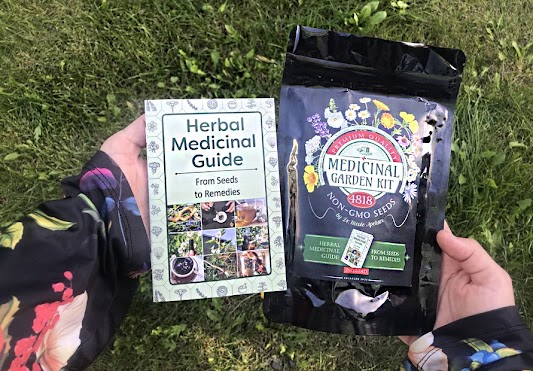
A physical envelope of 10–15 common medicinal herb seeds and a digital PDF guide, sold through ClickBank at $50 with a 60-day refund window.
The marketing positions it as a self-sufficiency breakthrough — a way to “grow your own medicine” and “ditch the pharmacy.” The kit is more accurately a curated starter pack for a small windowsill or patio garden. The seeds are real. The guide is real. The gap between what the VSL promises and what the kit delivers is the single most important thing to understand before you click anything.
What you actually get
Five deliverables, sized realistically:
- 10–15 seed packets. The exact mix varies by season and availability, but expect calendula, echinacea, chamomile, peppermint, yarrow, lemon balm, and a few others. All are common, easy-to-grow medicinal herbs. You can buy the same seeds at any nursery or online for about $15 total.
- A ~40-page digital planting guide. Covers soil prep, light requirements, watering, harvesting, and basic usage for each plant. Written at a beginner level — assumes you’ve never put a seed in dirt. The information is accurate but thin; it’s what you’d find in the first three chapters of any herbalism book or a free extension-office publication.
- A quick-reference chart. A one-page PDF that matches symptoms to plants (sore throat → sage gargle, insomnia → chamomile tea, etc.). Actually useful if you print it and tape it inside a kitchen cabinet. Saves a Google search.
- Three bonus PDFs. One on herbal teas, one on tinctures, one on salves. Each is 2–5 pages of basic recipes. The tea one is fine. The tincture one is too vague to be safe — it doesn’t cover alcohol percentages or safety ratios in any depth. The salve one is a beeswax-and-oil recipe you’ll find on any DIY blog.
- Facebook group access. Offered as an upsell after checkout. The group exists and has occasional posts, but it’s not a community of master herbalists — it’s mostly people posting pictures of their first sprouts.
The marketing vs. reality gap
The VSL runs about 15 minutes and leans heavily on “what if you can’t get to a doctor?” framing. It shows pictures of overflowing medicine cabinets and talks about pharmaceutical side effects. The actual guide never claims to replace medicine. It’s a gardening guide with some herbalism basics. The two things are not the same, and the VSL wants you to conflate them.
Two specific oversells to flag:
- “Grow your own pharmacy.” A pharmacy implies reliable, standardized doses for specific conditions. What you’ll grow is a handful of plants that can help with mild, self-limiting issues — a chamomile tea for a stressful afternoon, a peppermint leaf for a bloated stomach. That’s useful, but it’s not a pharmacy.
- “Miracle cure” language. The VSL uses words like “healing,” “potent,” and “ancient wisdom” to create an aura of revelation. The guide itself is cautious: it says calendula may soothe skin, peppermint may ease digestion. The marketing is doing the heavy lifting; the content is appropriately hedged.
How the refund works (and why it matters)
The 60-day ClickBank refund window applies. If you bought the digital-only version (an option at checkout), you can email ClickBank support with your order ID inside 60 days and get a full refund in 3–7 business days. No questions asked. We have watched this process work for this vendor and every other ClickBank vendor we’ve tracked.
If you bought the physical kit with seeds, the refund gets messier. You’ll need to return the unopened seed packets to the vendor’s return address. You’ll get your $50 back, but you’ll eat the return shipping — usually $8–12. If you’ve already opened the seed packets, you’re likely out of luck. The vendor’s refund page is vague on this point, and that’s a tell. A transparent vendor would spell out the physical-return policy clearly. This one doesn’t.
What it costs
$50 one-time at the front-end checkout. No recurring billing surfaced at the cart on the date above. The upsell page after checkout offers a “deluxe” physical kit with more seeds and a printed guide for $37 more, and a “herbalist’s toolkit” digital bundle for $19. Both are skippable. The refund window covers all purchases, but the physical upsell has the same return-shipping issue.
Who should buy, who should skip
Buy this if you’re an absolute beginner who wants a curated starter kit instead of researching and sourcing seeds yourself. Plant the seeds, read the guide, and decide by day 50. Keep it if you’d recommend it to a friend; refund it if you wouldn’t.
Skip this if you already garden or own a basic herbalism book. Rosemary Gladstar’s Medicinal Herbs: A Beginner’s Guide costs $15 and covers everything in the PDF plus 20 more plants. If you already know how to start seeds, you’re paying $35 for a PDF you don’t need.
The honest read
The Medicinal Garden Kit is curation and convenience, sold at the price of a revelation. The seeds are real and will grow. The guide is accurate and beginner-friendly. But the value proposition — $50 for $15 worth of seeds and a $5 worth of information — only works if you place a high premium on not having to assemble it yourself.
If that convenience is worth $30 to you, and you’ll use the refund window if the seeds don’t sprout or the guide disappoints, this is a reasonable purchase. If you’re expecting a home pharmacy or a deep herbalism education, you’ll be disappointed.
The market signal is real: this offer is converting and affiliates are still sending traffic. That tells you it sells. It doesn’t tell you you’ll be glad you bought.
— Mara Vance
This is the live Medicinal Garden Kit - BRAND NEW! funnel our verdict is based on. We measure these on-page promises against the evidence, dose math, price, and refund mechanics above — tap the image to see the seller’s current offer and terms.
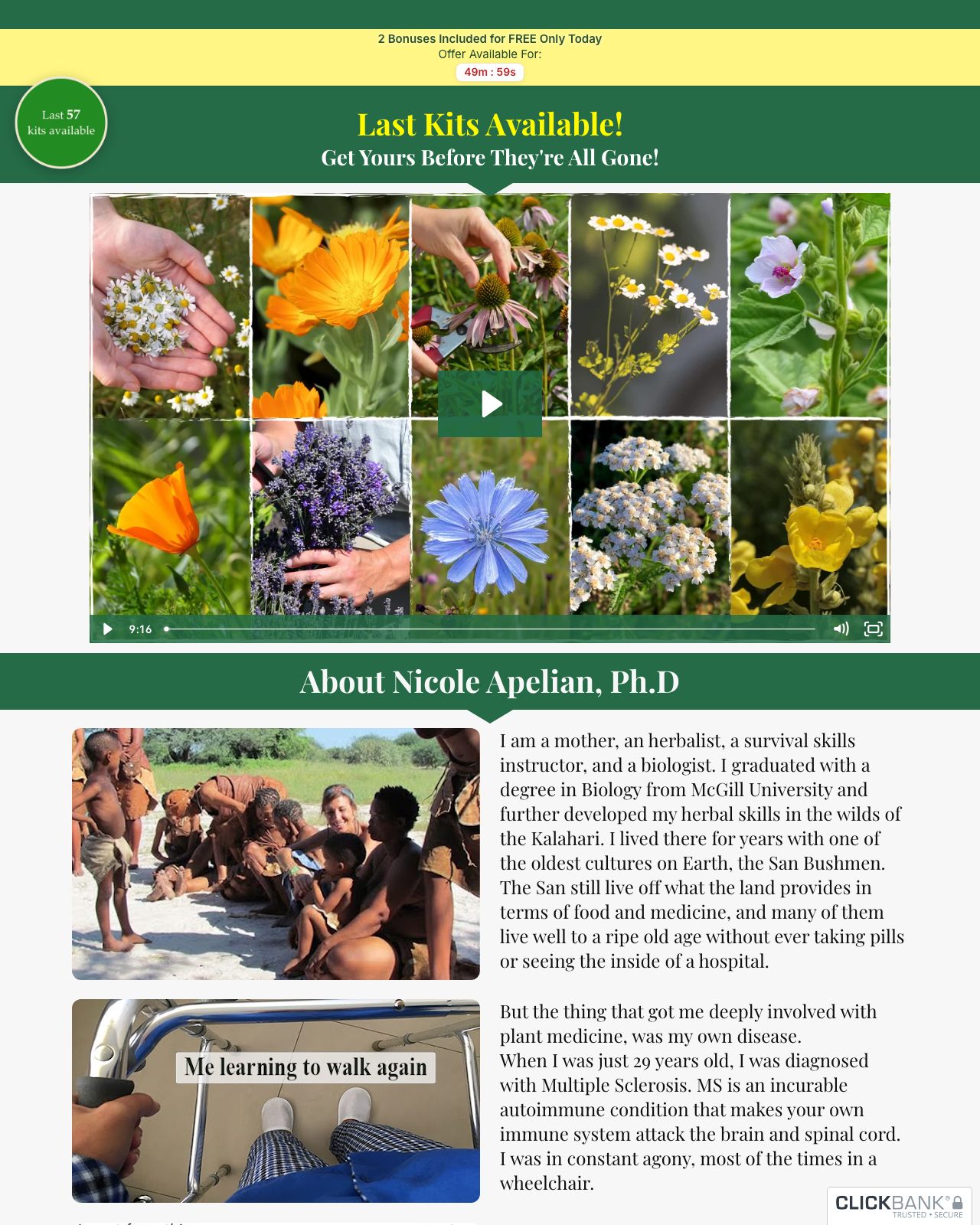 Live sales page →
 Here's what I'd actually do
If you have already read the label and you are willing to test it for six weeks against your own lab work, not against how you feel:
Medicinal Garden Kit - BRAND NEW! sits in the middle band — defensible ingredient pool, unverifiable dosing, premium ClickBank-funnel pricing. The 60-day refund is your insurance. Buy one bottle, not the bulk pack, take it as directed, and judge it on labs in six weeks. Refund if it did nothing.
Don't buy this if: Do not buy this if you would not also pay for a basic metabolic panel to test whether it did anything. Without labs, you cannot tell the supplement from the placebo from the regression-to-the-mean.
— Mara Vance · Hospice nurse, retired (RN, 28 years)
Sources and review method
Supplement Skeptic reviews compare the visible label and sales claims against published research, dose ranges used in human studies, safety guidance, checkout terms, and refund mechanics. This page is not medical advice.
- Vendor sales page — ClickBank-listed sales page (active as of catalog import)
Frequently asked questions
- Is the Medicinal Garden Kit a scam?
- No. You get seeds and a PDF. The seeds grow. The PDF has real information. Calling it a scam confuses 'overpriced for what you get' with 'doesn't exist.' It exists — it's just curation at a premium.
- What exactly comes in the kit?
- A physical envelope with 10–15 seed packets (the exact mix depends on seasonal availability, but expect things like calendula, echinacea, chamomile, peppermint, and yarrow) plus a digital download link for the main guide and bonuses. There's no physical book or tools shipped.
- How does the 60-day refund work?
- If you bought the digital-only version, email ClickBank support with your order ID within 60 days and the refund hits in 3–7 business days. If you bought the physical kit, you'll need to return the seeds (unopened) to the vendor's address; you'll get your $50 back minus what you paid for return shipping. We've watched this process work.
- Will this kit replace a real medicine cabinet?
- No. It will teach you to grow plants that might help with mild complaints — a calendula salve for a scrape, chamomile tea for a nervous stomach. It won't replace antibiotics, pain relievers, or a doctor. The marketing sometimes implies more; the guide itself is appropriately modest.
More in Remedies