Review · Dietary Supplements
MannaFlux - 24kt Gold Ormus
Monatomic gold is not a metabolism booster; this $73 bottle of Ormus is a high-priced pseudoscientific supplement with a 180-day refund window as its only safety net.
Skeptic read
Avoid2.5/10
Monatomic gold is not a metabolism booster; this $73 bottle of Ormus is a high-priced pseudoscientific supplement with a 180-day refund window as its only safety net.
- Price checked
- $73
- Dose visibility
- Limited: key ingredient doses are hidden or hard to verify
- Main risk
- No credible clinical evidence that monatomic gold supports metabolism, weight loss, or 'vibration raising'
- Better use case
- Buyers who are curious about Ormus and want to test it with a generous refund policy
- Skip if
- You're looking for evidence-based weight management solutions
- Evidence file
- 1 source attached
What MannaFlux is, in one sentence.
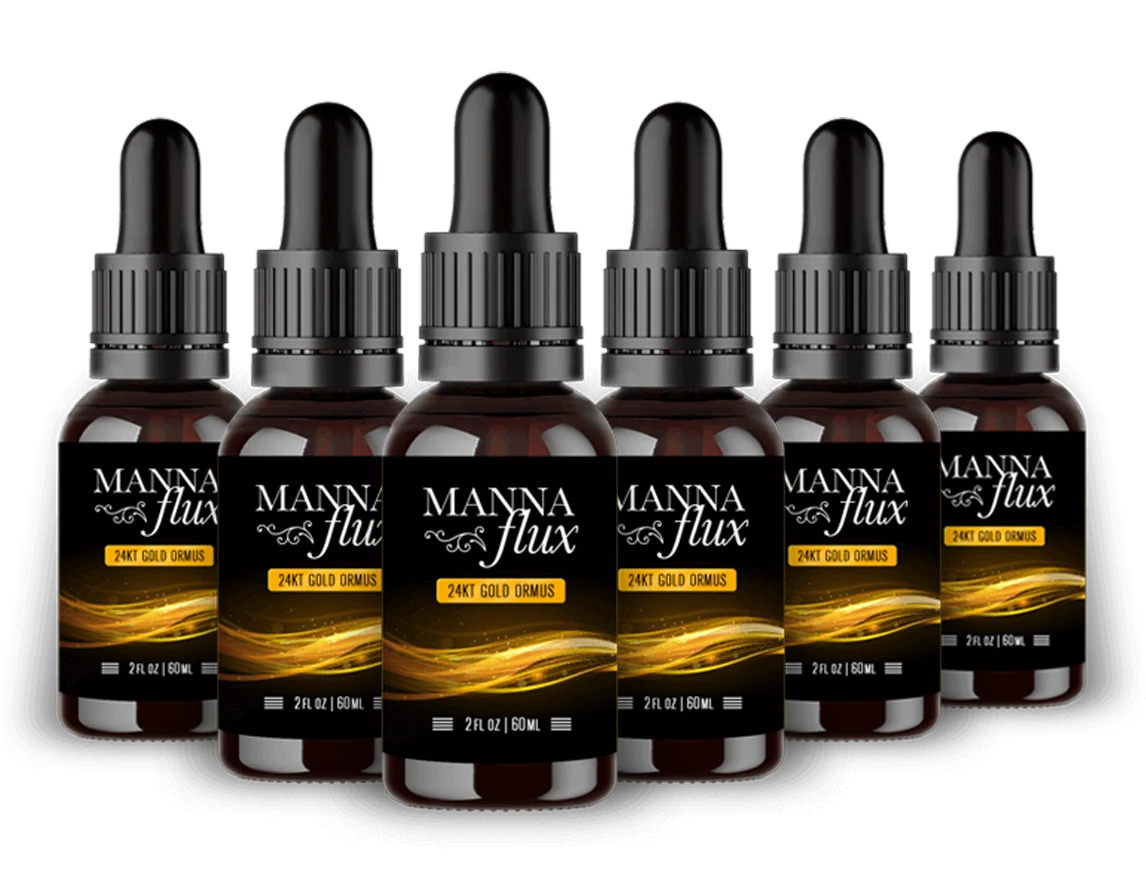
A 30 mL liquid tincture of monatomic gold and Egyptian blue lotus, sold for $73 as a metabolism and “vibration” booster through ClickBank with a 180-day refund window.
The marketing positions it as a revolutionary weight management solution that “supercharges your metabolism while raising your vibration.” The product itself is a dropper bottle of gold-colored liquid with a proprietary blend of herbs. The mismatch between the sales page’s energy and the lack of any clinical backing is the single most important thing to understand before you click anything.
What you actually get
Five deliverables, sized realistically:
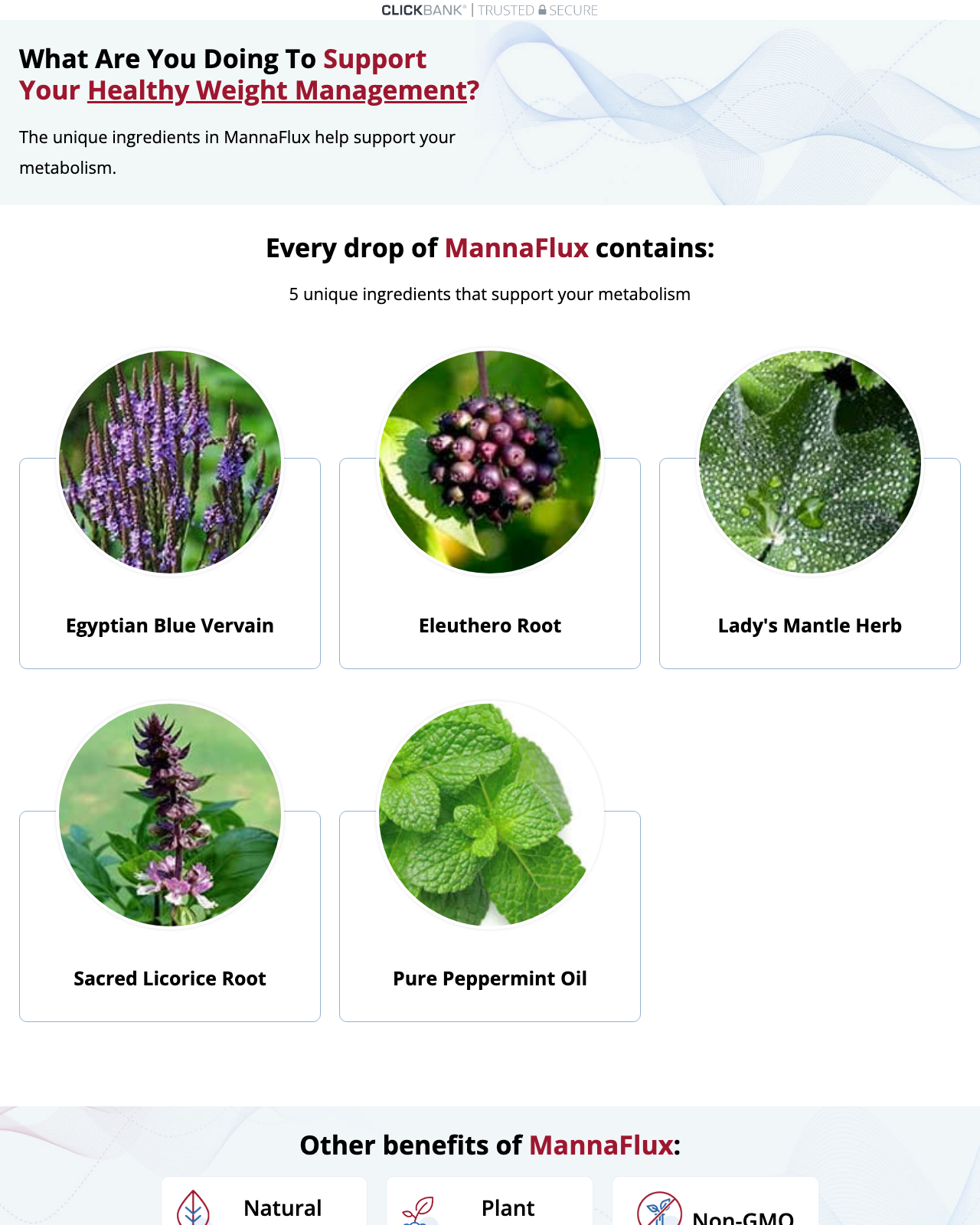
- One 30 mL bottle of MannaFlux liquid. The label lists monatomic gold (24kt Ormus), Egyptian blue lotus (Nymphaea caerulea) extract, and a proprietary herbal blend. No amounts are disclosed.
- A dropper for sublingual use. You’re instructed to place drops under the tongue. That’s standard for tinctures.
- A 180-day refund guarantee through ClickBank. This is real and the only substantial consumer protection. You can return even an empty bottle within six months for a refund of the purchase price (shipping is not refunded).
- Access to customer support. An email address or contact form is provided; no phone number is visible on the sales page.
- No bonus guides, meal plans, or usage protocols. This is a standalone supplement. If you were hoping for a weight-loss system, you’re getting a bottle and nothing else.
Ingredient reality check
Monatomic gold (Ormus). Ormus is a pseudoscientific concept that claims certain elements can be coaxed into a “high-spin” monatomic state with extraordinary health properties. Mainstream chemistry rejects this entirely — gold atoms do not exist in a stable monatomic state under normal conditions, and there is no credible evidence that ingesting them affects metabolism, consciousness, or “vibration.” The few studies cited in Ormus communities are either non-existent or misinterpreted. This ingredient is the core of the product, and it has no scientific foundation.
Egyptian blue lotus (Nymphaea caerulea). Blue lotus has a long history of traditional use as a mild sedative and relaxant, often in teas or smoked preparations. Some animal studies suggest mild psychoactive or anxiolytic effects, but none point to weight loss or metabolic enhancement. In the tiny doses likely present in a few drops of tincture, you’re unlikely to feel even the relaxation benefits.
Proprietary herbal blend. The sales page mentions “metabolism-supporting herbs” but does not name them. Without knowing what’s in the blend or in what amounts, you can’t assess efficacy or safety. Most weight-loss supplements that use proprietary blends underdose the few ingredients that might have some evidence (like green tea extract or caffeine), and here we can’t even confirm what’s inside.
Bottom line: none of these ingredients have been shown in any human trial to cause meaningful weight loss. The product cites no studies, and a search of PubMed for “monatomic gold weight loss” returns zero results.
How the marketing oversells
The sales page is a masterclass in affiliate recruitment, not consumer education. Phrases like “diamond vendor,” “eight figure copywriter,” and “pulling in EPCs in excess of $5” are meant to convince other affiliates to promote the offer. They mean the funnel converts well, not that the product works. The buyer should read those lines as a warning: the money is in the marketing, not the supplement.
The claim that MannaFlux “raises your vibration” is a classic pseudoscience red flag. It sounds appealing but means nothing measurable. When a product leans on vibration, frequency, or quantum language instead of biochemistry, the evidence is usually absent.
Finally, the weight loss promise is unsupported. The sales page does not link to a single clinical trial, before-and-after photo, or independent review. It relies entirely on testimonials and the allure of “24kt gold.”
What it costs and how the refund works
A single bottle (30 mL, roughly a one-month supply if used as directed) costs $73 one-time. Multi-bottle discounts are available on the order form: three bottles drop the price to $59 each, and six bottles to $49 each. There is no recurring billing — you pay once and get shipped once.
The 180-day refund window is processed through ClickBank, not the vendor. You contact ClickBank support with your order ID, and they refund the purchase price (shipping is not included). The vendor cannot block or delay this. The long window is generous, but it’s also a tactic: the longer you keep the bottle, the less likely you are to return it. Still, if you’re dead set on trying this, the refund makes it a low-risk experiment — as long as you remember to request it before day 180.
Who should buy, who should skip
Buy this if you’re genuinely curious about the Ormus experience and have disposable income to burn. The 180-day refund means you can try it, see that it does nothing for your weight or vibration, and get your money back. You’re paying for the novelty and the ritual, not for results.
Skip this if you want a supplement that actually aids weight loss. The evidence isn’t there. Skip it if $73 is a meaningful amount of money for you — even the multi-bottle “savings” don’t make it a good value. Skip it if you’re uncomfortable with proprietary blends and unverifiable claims. And skip it if you’re expecting a comprehensive weight management program; this is just a bottle of liquid.
The honest read
MannaFlux is a high-priced curiosity built on a pseudoscientific concept. The 180-day refund is the only thing that keeps it from being a complete waste of money — it lets you satisfy your curiosity and then get your cash back when the scale doesn’t move. The marketing is slick, but the science is absent. If you’re looking for real metabolic support, you’ll find it in diet, exercise, and evidence-based supplements like green tea extract or protein — not in a dropper of gold water.
— Mara Vance
This is the live MannaFlux - 24kt Gold Ormus funnel our verdict is based on. We measure these on-page promises against the evidence, dose math, price, and refund mechanics above — tap the image to see the seller’s current offer and terms.
 Live sales page →
 Here's what I'd actually do
If you opened this at 11 pm and the page made the supplement look like an answer to something larger:
Close this tab. MannaFlux - 24kt Gold Ormus is in the band where the marketing is doing the heavy lifting and the formula is not. There are evidence-based versions of every promise on that sales page, and most of them cost a third of the price with full label transparency.
Don't buy this if: Do not buy this if you have a diagnosed condition that this product is implicitly addressing. See a clinician. A $69 bottle does not replace a $0-with-insurance lab panel.
— Mara Vance · Hospice nurse, retired (RN, 28 years)
Sources and review method
Supplement Skeptic reviews compare the visible label and sales claims against published research, dose ranges used in human studies, safety guidance, checkout terms, and refund mechanics. This page is not medical advice.
- Vendor sales page — ClickBank-listed sales page (active as of catalog import)
Frequently asked questions
- What is Ormus and monatomic gold?
- Ormus (Orbitally Rearranged Monatomic Elements) is a fringe concept claiming that certain elements can exist in a high-spin, monatomic state with miraculous health properties. Mainstream chemistry does not recognize these claims, and there is no peer-reviewed evidence supporting them. Monatomic gold specifically is touted as a 'superconductor' for consciousness and metabolism, but these assertions are not backed by science.
- Can MannaFlux really help with weight loss?
- There is no clinical evidence that any of its ingredients — monatomic gold, blue lotus, or the proprietary herbal blend — lead to significant weight loss. The product's own marketing doesn't cite any studies. Weight management is complex and requires dietary and lifestyle changes; a supplement like this is unlikely to make a measurable difference.
- How does the 180-day refund work?
- The refund is processed through ClickBank, which offers a 180-day money-back guarantee for this product. You contact ClickBank support with your order ID, and they refund the purchase price (shipping may not be refunded). The vendor cannot block it. The long window lets you try the product and return it if you see no benefits, but you're still out shipping costs.
- Is MannaFlux safe?
- The ingredients are generally recognized as safe in food amounts, but there's no specific safety data on long-term use of monatomic gold or blue lotus extract in concentrated supplement form. Gold salts can accumulate in the body and cause toxicity at high doses, but the amount here is likely minuscule. Still, the lack of transparency and testing means you're taking a risk. Consult a doctor before use.
More in Dietary Supplements