
Review · Exercise & Fitness
Hyperbolic Stretching 4.0
A $28 digital flexibility course that overpromises on speed and 'hyperbolic' magic, but delivers a basic stretching routine that can work if you stick with it. Worth a try inside the 60-day refund window, but you're paying for the framing, not the science.
Skeptic read
Conditional5.5/10
A $28 digital flexibility course that overpromises on speed and 'hyperbolic' magic, but delivers a basic stretching routine that can work if you stick with it. Worth a try inside the 60-day refund window, but you're paying for the framing, not the science.
- Price checked
- $28
- Dose visibility
- Better than average: key doses are disclosed enough to compare
- Main risk
- 'Hyperbolic stretching' is a marketing term, not a recognized physiological principle; the program is standard PNF and static stretching repackaged with a pseudoscientific name
- Better use case
- Beginners who need a structured daily stretching routine and are willing to be patient with realistic timelines
- Skip if
- You have a history of joint hypermobility, disc issues, or hip impingement — this program is not medically supervised and could worsen certain conditions
- Evidence file
- 1 source attached
What Hyperbolic Stretching 4.0 actually is
A 24-video digital flexibility course sold through ClickBank at $28, built around a term the vendor invented — “hyperbolic stretching” — to make standard PNF and static stretching sound like a proprietary breakthrough. The program promises full splits, unlocked hips, and full-body flexibility for all ages and fitness levels. What you get is a structured set of follow-along routines that, if done consistently, will improve your flexibility over weeks to months. What you don’t get is a shortcut that defies exercise physiology.
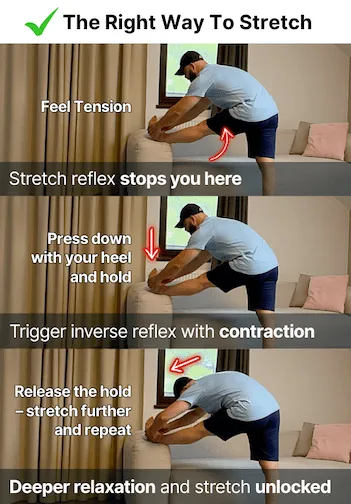
The vendor, Alex Larsson, frames the method as a “science-based approach.” But the science he’s referencing is the well-established principle of proprioceptive neuromuscular facilitation (PNF) — contract-relax stretching that’s been used in physical therapy for decades. There’s nothing hyperbolic about it. The name is a branding choice, not a description of mechanism.
What you actually get
Five deliverables, sized realistically:
- 24 streaming video lessons. These are follow-along routines, typically 8–15 minutes each, targeting different muscle groups. Production quality is adequate — clear audio, single-camera setup, minimal fluff. You can follow them on a phone or laptop.
- Main program PDF. A day-by-day schedule, technique cues, and some anatomy diagrams. It’s useful as a reference, but you’ll spend most of your time in the videos.
- Hip-opening bonus module. A separate set of videos focused specifically on hip mobility. This is the part of the program that’s most likely to help people who sit all day, and it’s the strongest bonus.
- Splits progression tracker. A printable PDF with milestones and a calendar. Filling it out is optional, but it does give you a way to measure progress that isn’t just “I feel looser.”
- Private Facebook group access. Vendor-moderated, not clinically supervised. The advice in there ranges from helpful to dangerously uninformed, especially when people start diagnosing each other’s hip pain. Treat it as a motivation tool, not a medical resource.
The marketing vs. the reality
The sales page leans on three claims that don’t hold up under even light scrutiny.
“Full splits in 4 weeks.” For a small fraction of buyers — young, already flexible, genetically loose-jointed — this might be true. For most adults past 30, it’s not. Flexibility gains are real but slow. A more honest timeline is 8–12 weeks of consistent daily practice for noticeable progress toward a full split, and for some people, full splits may never be achievable without risking joint damage. The 4-week promise sets up a refund-window mismatch: you’ll hit day 28 with partial progress, feel like you failed, and either refund or keep it hoping week 5 will be the breakthrough. That’s the conversion psychology, not a training guarantee.
“Hyperbolic stretching activates the survival muscle reflex.” This is the core pseudoscientific pitch. The idea is that a specific contraction pattern overrides the stretch reflex and forces the muscle to lengthen rapidly. In reality, PNF stretching uses a brief isometric contraction to induce autogenic inhibition — a temporary reduction in muscle tone that allows a deeper stretch. It works, but it’s not a “survival reflex” and it’s not unique to this program. Calling it hyperbolic is like calling a push-up “anti-gravity pectoral activation.”
“Works for all ages.” This one is mostly true. The routines are scalable, and older adults can benefit from the mobility work. But the program doesn’t account for age-related changes like reduced tendon elasticity or osteoarthritis, and it doesn’t offer modifications for common issues like spinal stenosis or hip replacements. The “all ages” claim is accurate in the sense that anyone can try it, but it’s not medically stratified.
What the evidence actually supports
PNF stretching is well-studied and effective. A 2018 meta-analysis in the Journal of Sports Science and Medicine found that PNF stretching produced greater acute gains in range of motion than static stretching alone. But the effect is temporary unless you train consistently, and the long-term superiority over static stretching is less clear. The program’s real value is in providing structure and accountability — not in any novel physiological mechanism.
What the program doesn’t address is the risk of overstretching. PNF stretching, when done aggressively, can cause muscle strains or exacerbate underlying joint instability. The videos include some safety cues, but there’s no screening for hypermobility or pre-existing injuries. If you have a history of dislocations, Ehlers-Danlos, or even just “loose” joints, this program could make you worse, not better. That’s the real risk — not that it won’t work, but that it might work in the wrong direction for a subset of buyers.
Pricing and the recurring billing trap
The front-end price is $28, one-time. But this vendor has recurring billing enabled on ClickBank, which means the cart almost certainly includes an upsell to a monthly membership — typically $19–$27 per month — for “VIP access” or “advanced content.” The checkbox is often pre-selected, and the language makes it sound like a free bonus trial. It’s not. If you don’t uncheck it, you’ll see a second charge on your statement 7–30 days later, and that charge will recur until you cancel through ClickBank.
The 60-day ClickBank refund policy covers the initial purchase and any upsells, but you must cancel the recurring subscription separately. ClickBank won’t automatically stop future bills just because you refunded the first one. This is a known pain point across many ClickBank health products, and Hyperbolic Stretching uses the same playbook. Read the cart carefully. Take a screenshot of the final price before you submit. And if you do buy, set a calendar reminder for day 55 to decide whether to keep or refund.
Who should buy, who should skip
Buy this if you’re a beginner who needs a structured flexibility routine and you’re willing to be patient. The $28 is a fair price for 24 follow-along videos and a daily schedule, provided you go in knowing the “hyperbolic” framing is marketing fluff. Use the 60-day window ruthlessly: do the program for 8 weeks, measure your progress against the tracker, and decide on day 55 whether it’s worth keeping.
Skip this if you have any joint instability, disc issues, or hip impingement — this program is not designed to screen for those, and the Facebook group will not catch them. Skip it if you’re expecting a scientifically novel method; you can get the same PNF stretching guidance from free physical therapy channels on YouTube, and you’ll save the $28 plus the headache of canceling a recurring upsell. Skip it if you’re not willing to read the cart carefully — the billing design counts on you missing the checkbox, and that’s a tell.
The honest read
Hyperbolic Stretching 4.0 is a standard flexibility program dressed up in language that implies a breakthrough. The routines work if you do them. The science behind them is real, but it’s not proprietary. The 4-week claim is designed to get you to buy, not to set a realistic expectation. And the recurring upsell is a quiet revenue stream that the vendor doesn’t advertise on the sales page.
For $28, you’re buying convenience — a packaged routine you don’t have to assemble yourself. That’s worth it for some people. For everyone else, the same money buys a yoga mat and a few months of free YouTube PNF routines, and you’ll end up just as flexible without the billing headache.
— Mara Vance
This is the live Hyperbolic Stretching 4.0 funnel our verdict is based on. We measure these on-page promises against the evidence, dose math, price, and refund mechanics above — tap the image to see the seller’s current offer and terms.
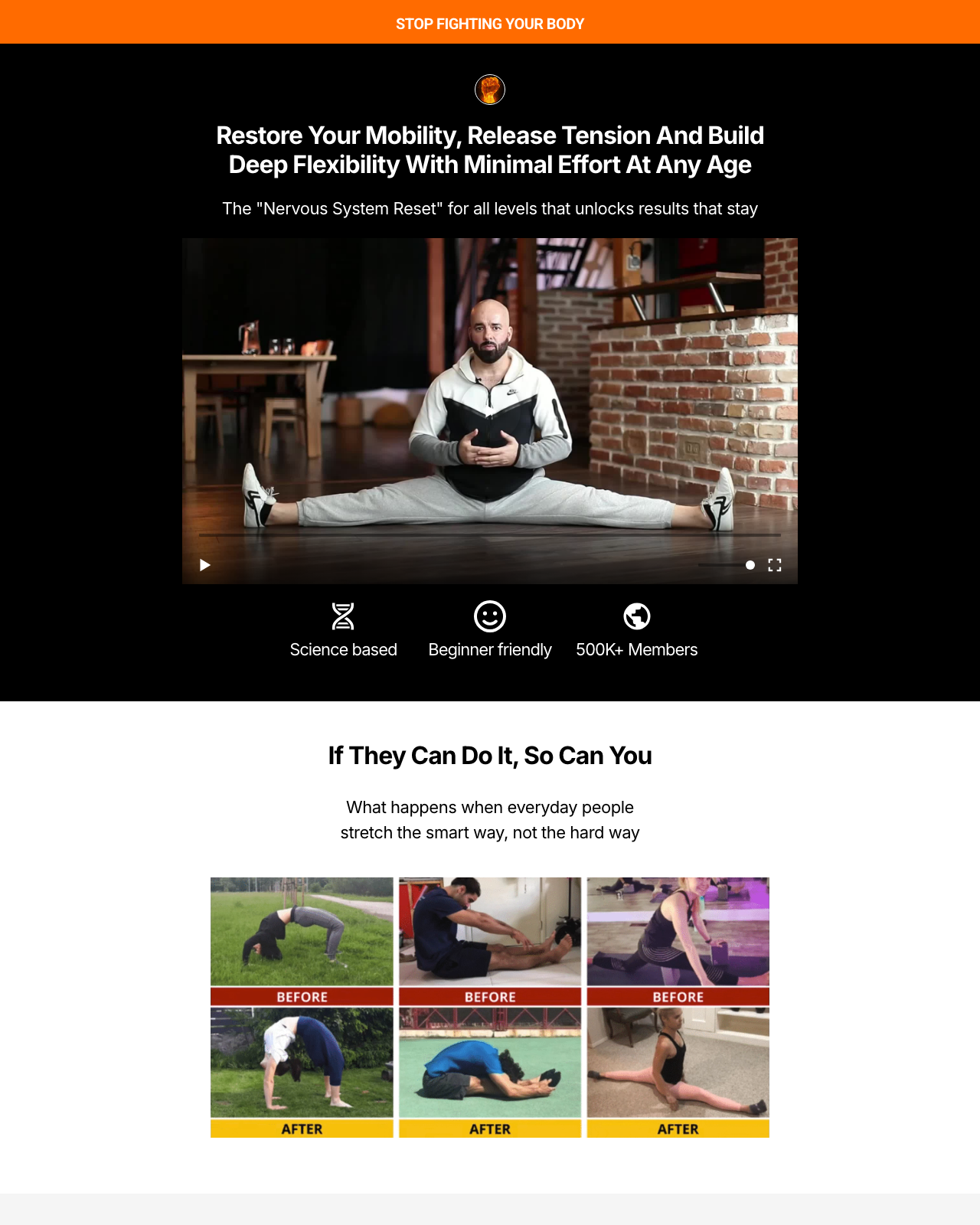 Live sales page →
 Here's what I'd actually do
If you have already read the label and you are willing to test it for six weeks against your own lab work, not against how you feel:
Hyperbolic Stretching 4.0 sits in the middle band — defensible ingredient pool, unverifiable dosing, premium ClickBank-funnel pricing. The 60-day refund is your insurance. Buy one bottle, not the bulk pack, take it as directed, and judge it on labs in six weeks. Refund if it did nothing.
Don't buy this if: Do not buy this if you would not also pay for a basic metabolic panel to test whether it did anything. Without labs, you cannot tell the supplement from the placebo from the regression-to-the-mean.
— Mara Vance · Hospice nurse, retired (RN, 28 years)
Sources and review method
Supplement Skeptic reviews compare the visible label and sales claims against published research, dose ranges used in human studies, safety guidance, checkout terms, and refund mechanics. This page is not medical advice.
- Vendor sales page — ClickBank-listed sales page (active as of catalog import)
Frequently asked questions
- Is Hyperbolic Stretching 4.0 a scam?
- No. You receive the videos and PDFs as described. The issue isn't non-delivery — it's that the marketing frames a standard flexibility program as a revolutionary discovery, and the recurring billing can catch buyers off guard. That's a disappointment, not a scam.
- What's the recurring charge I've heard about?
- The vendor has recurring billing enabled on ClickBank. After the $28 purchase, the cart may offer (and pre-select) a monthly membership to a 'VIP' area with extra content. If you don't uncheck it, you'll be billed again. The recurring subscription is separate from the main program and must be canceled independently through ClickBank.
- How do I get a refund if the program doesn't work for me?
- Contact ClickBank customer support with your order ID within 60 days of purchase. The refund covers the initial $28 and any associated upsells, but you must cancel the recurring subscription separately — ClickBank won't automatically stop future bills just because you refunded the first charge.
- Will this really get me to full splits in 4 weeks?
- For most adults, no. Genetics, age, and prior flexibility play huge roles. The program uses evidence-based techniques (PNF stretching) that can accelerate flexibility gains, but the 4-week claim is marketing, not a guarantee. Plan for 8–12 weeks of consistent practice for significant progress.
More in Exercise & Fitness