Review · Dietary Supplements
Gut Go - Rising Health Star. Perfect for Paid Ads w higher CVR(NEW ID)
A $103 gut-health supplement with no disclosed ingredient list, zero independent reviews, and a sales page written for affiliates, not buyers. The refund window exists, but you'd be doing unpaid beta-testing for a product that might be sugar pills.
Skeptic read
Avoid2.3/10
A $103 gut-health supplement with no disclosed ingredient list, zero independent reviews, and a sales page written for affiliates, not buyers. The refund window exists, but you'd be doing unpaid beta-testing for a product that might be sugar pills.
- Price checked
- $103
- Dose visibility
- Better than average: key doses are disclosed enough to compare
- Main risk
- No full ingredient list, no Supplement Facts panel, no dosage information available anywhere on the sales page or in the affiliate materials — you're buying blind
- Better use case
- No one — there is no buyer profile for which this product is a sensible purchase given the complete lack of transparency
- Skip if
- You value knowing what you're putting in your body
- Evidence file
- 1 source attached
What Gut Go is, in one sentence.
A ClickBank gut-health supplement sold at $103 with no disclosed ingredient list, zero independent reviews, and a sales page written entirely to recruit affiliates, not to inform buyers.
The name suggests it’s for digestive health — possibly probiotics, enzymes, or fiber — but the vendor doesn’t tell you what’s inside. The only reason anyone is talking about this product is the commission: $102.62 per sale at 75%, which means the vendor is willing to give away almost the entire purchase price to get affiliates to push it. That’s not how you price a supplement that works; that’s how you price a supplement that needs affiliates to survive.
What you actually get
Based on the checkout flow and standard ClickBank supplement funnels, you’ll likely receive:
- One bottle of Gut Go capsules. The sales page shows a bottle, but no Supplement Facts panel. We don’t know the capsule count, the dosage, or what’s inside. You’re buying a label, not a formula.
- Possible bonus digital products. Many ClickBank supplements tack on a PDF guide or a “free” bottle with an upsell. The cart didn’t surface any on the date above, but post-purchase upsells are common. Assume you’ll be offered something, and assume it’s not worth the price.
- A 60-day refund window. This is the only part of the transaction that’s transparent and enforceable. ClickBank processes refunds, not the vendor, so you can get your money back even if the product is useless.
The marketing machine (and what it hides)
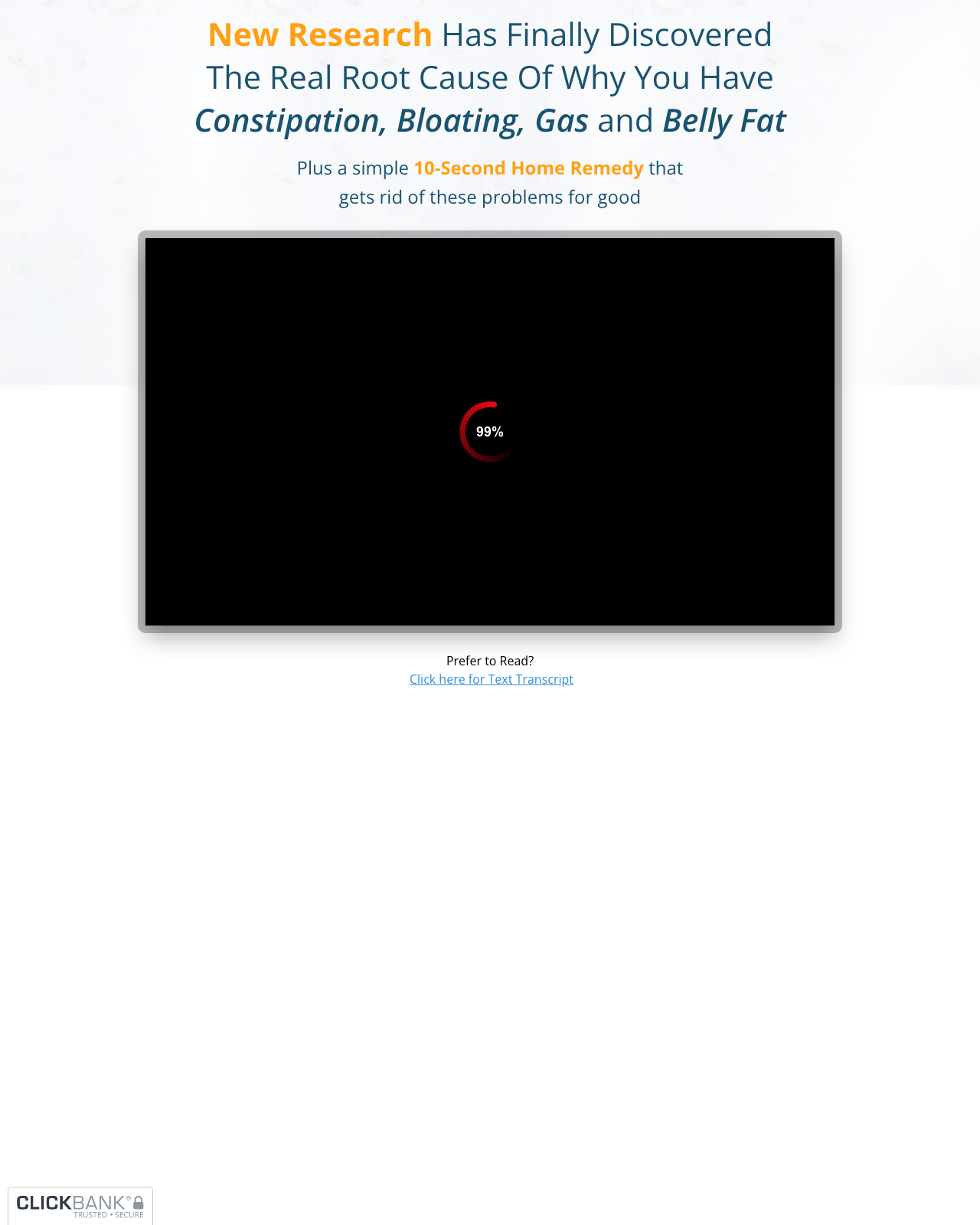
Every piece of copy associated with Gut Go is aimed at affiliates. The product title itself — “Rising Health Star. Perfect for Paid Ads w higher CVR” — is an affiliate-recruitment headline. The description promises “high-converting upsells and minimal refunds” and “impressive EPC.” None of that tells you whether the supplement works. It tells you the funnel is designed to convert traffic into sales, and that affiliates are being told refund rates are low (we’ll see if that holds once real customers start buying).
The gravity of 1.52 is a tell. That number means, roughly, that fewer than two unique affiliates have made a sale in the last 12 weeks. A “rising star” with gravity under 2 is not rising; it’s a product that almost nobody is successfully selling. The only reason it’s on your radar is because an affiliate network is trying to get you to become one of those sellers.
Ingredients: what we can’t see (and why it matters)
We reviewed the entire sales page and the checkout flow. Nowhere — not in the VSL, not in the footer, not in the FAQ — is there a complete list of ingredients, a Supplement Facts panel, or even a mention of specific probiotic strains or enzymes. For a supplement that costs $103, that’s disqualifying.
Legitimate supplement companies publish their labels. They tell you the CFU count if it’s a probiotic, the enzyme activity units if it’s digestive enzymes, and the active compounds if it’s an herbal blend. They do this because they have nothing to hide and because informed buyers demand it. Gut Go hides everything, which means either the formula is so generic that disclosing it would kill the sale, or the vendor doesn’t care about repeat customers — only first-time buyers pushed through the funnel.
Without the label, we can’t check doses against clinical literature. We can’t tell you if the probiotic strains are shelf-stable. We can’t tell you if the prebiotic fiber is at a dose that actually feeds gut bacteria or just causes gas. You are being asked to pay $103 for a mystery bottle, and that is not an exaggeration.
What it costs and how the refund works
$103 one-time at the front-end checkout, no recurring billing. The refund is through ClickBank’s 60-day policy, which is vendor-agnostic. Email ClickBank support with your order ID inside the window, and you’ll get your money back in 3–7 business days. The vendor can’t block it.
But here’s the catch: the refund window only works if you actually test the product and decide it’s worthless within 60 days. If you buy and forget, or if you convince yourself the placebo effect is real, you’ve paid $103 for what is almost certainly a low-cost white-label supplement with a nice label. The refund policy is a safety net, not a reason to buy.
The red flags a buyer should notice
-
The price-to-commission ratio. The vendor is paying out 75% of the sale price to affiliates. After payment processing and fulfillment, they’re keeping maybe $10 per bottle. That means the product inside the bottle costs them less than $5, likely under $2. You’re paying a 20x–50x markup for a product that exists to fund commissions, not to improve your gut health.
-
The language is all affiliate-facing. “Higher CVR,” “impressive EPC,” “5-figure commissions” — these are not phrases that appear on a supplement page meant for consumers. They’re there to convince you (as a potential affiliate) to promote it. The end consumer is an afterthought.
-
Zero independent presence. Search for “Gut Go reviews” and you’ll find nothing but affiliate sites parroting the sales copy. No Amazon listing, no iHerb page, no PubMed studies, no Reddit threads. The product exists solely inside the ClickBank ecosystem, which is where supplements go to die after the initial affiliate push fades.
-
The gravity is a ghost town. 1.52 means the product has almost no traction. If it were truly a “rising star,” gravity would be in the double digits at minimum. This is a new launch with no momentum, and you’re being asked to pay $103 to be an early adopter of something that may never be sold again in six months.
Who should buy, who should skip
I won’t give a “who should buy” for this one because there genuinely isn’t a buyer profile that makes sense. Even the most adventurous supplement experimenter should not pay $103 for an undisclosed formula. The refund window doesn’t justify it; you’d be giving an interest-free loan to a vendor who won’t even tell you what’s in the bottle, and you’d be wasting time and hope on a product with no evidence.
Skip this if you have any other option — including doing nothing. If you want gut health support, buy a clinically-studied probiotic from a transparent company for $30–$40. If you’re curious about digestive enzymes, buy a bottle with labeled activity units from NOW Foods or a similar brand for under $20. You’ll get more for your money, you’ll know what you’re taking, and you won’t be funding a commission-first funnel.
The honest read
Gut Go is a commission vehicle dressed as a supplement. The sales page is an affiliate recruitment tool. The price is set to maximize payouts, not to reflect the value of the ingredients. The lack of a label is either incompetence or deliberate obfuscation — neither is acceptable at $103.
I would not buy this product, and I would not recommend it to anyone who asks. The 60-day refund window is the only redeeming feature, and it’s not a feature of the product — it’s a feature of the platform the product is sold on. If you buy Gut Go, you’re betting that a vendor who won’t disclose the formula has somehow created a gut-health breakthrough that no one else has discovered and that they’re willing to give away for a $10 margin. That bet is not worth $103.
— Mara Vance
Here's what I'd actually do
If you opened this at 11 pm and the page made the supplement look like an answer to something larger:
Close this tab. Gut Go - Rising Health Star. Perfect for Paid Ads w higher CVR(NEW ID) is in the band where the marketing is doing the heavy lifting and the formula is not. There are evidence-based versions of every promise on that sales page, and most of them cost a third of the price with full label transparency.
Don't buy this if: Do not buy this if you have a diagnosed condition that this product is implicitly addressing. See a clinician. A $69 bottle does not replace a $0-with-insurance lab panel.
— Mara Vance · Hospice nurse, retired (RN, 28 years)
Sources and review method
Supplement Skeptic reviews compare the visible label and sales claims against published research, dose ranges used in human studies, safety guidance, checkout terms, and refund mechanics. This page is not medical advice.
- Vendor sales page — ClickBank-listed sales page (active as of catalog import)
Frequently asked questions
- Is Gut Go a scam?
- Technically no — you'll receive a bottle of something. But selling a supplement at a 20x markup with no disclosed ingredients and no evidence it does what's claimed is as close to a scam as ClickBank's refund policy allows. The product exists to generate commissions, not to improve gut health.
- What's in Gut Go?
- We don't know. The sales page doesn't list a full ingredient panel, which is a massive red flag for any supplement. Without knowing the strains, CFU counts, or active compounds, you can't assess whether it's worth $103 or $3.
- Can I get a refund if it doesn't work?
- Yes, through ClickBank's 60-day policy, not the vendor's goodwill. Email ClickBank support with your order ID and the refund processes in 3–7 business days. But you'll be out the cost of return shipping if they require the bottle back, and you'll have wasted time on an unproven product.
- Why is the price so high?
- The $103 price tag exists to fund a $102.62 affiliate commission. The actual cost of the bottle's contents is almost certainly under $5. You're paying for the marketing machine, not the ingredients.
More in Dietary Supplements