Review · Remedies
Gout Solution - Blue Heron Health News
A $41 digital guide with a 60-day refund window. The marketing uses fear and cure language, but the content likely repackages standard gout dietary advice you can find for free. Worth a look inside the refund period only if you're brand-new to gout management.

Skeptic read
Conditional4.8/10
A $41 digital guide with a 60-day refund window. The marketing uses fear and cure language, but the content likely repackages standard gout dietary advice you can find for free. Worth a look inside the refund period only if you're brand-new to gout management.
- Price checked
- $41
- Dose visibility
- Better than average: key doses are disclosed enough to compare
- Main risk
- No preview, sample chapter, or table of contents available before purchase — you're buying blind
- Better use case
- Someone newly diagnosed with gout who wants a single, structured starting point instead of piecing together free articles
- Skip if
- You already follow a low-purine diet and know your trigger foods — this guide is unlikely to teach you something new
- Evidence file
- 1 source attached
What The End of Gout is, in one sentence.
A digital guide sold through ClickBank that promises a dietary and lifestyle protocol to “end” gout attacks, priced at $41 with a 60-day refund window.
The sales page is a long-form VSL (video sales letter) that leans heavily on fear of crippling flares and the idea that conventional medicine has failed you. The actual product is a PDF — likely 50 to 80 pages — that you don’t get to see a single page of before you buy. That’s the central problem: you’re paying for a black box.
What you actually get
Because Blue Heron Health News doesn’t provide a sample or table of contents, I have to infer the deliverables from the vendor’s other products and the typical structure of gout guides. Here’s what you’ll likely find after purchase:
- The main guide. A PDF with chapters on the causes of gout, a list of “forbidden” and “allowed” foods, a phased eating plan (maybe a 7-day detox followed by a maintenance phase), and lifestyle tips (hydration, weight loss, stress). If it follows the Blue Heron template, it will be written in plain language with some scientific references — but those references are often cherry-picked.
- Possibly a meal plan or food list. Most guides in this niche include a printable chart of purine levels in common foods. Useful, but the same chart is available for free from the UK Gout Society or the Arthritis Foundation.
- Possibly 1–2 bonus PDFs. Common upsells or bonuses include a “kidney cleanse” guide or an “anti-inflammatory recipe book.” These are usually short (10–15 pages) and repurposed from the vendor’s other health guides.
- No community, no coaching, no app. This is a static PDF. You won’t get access to a nutritionist or a support group, despite the VSL’s tone that suggests a comprehensive program.
I want to be clear: I haven’t seen the inside of this guide. The vendor doesn’t let you preview it. That, by itself, is a red flag. A confident product lets you read the introduction or see the chapter list. This one doesn’t.
How the marketing oversells
The VSL is the product here. It’s designed to convert, not to inform. Here are the specific tactics that should make you skeptical:
“End of Gout” as a title. Gout is a chronic metabolic condition. You can manage it, you can reduce flares, but you don’t “end” it with a diet plan. That word choice is a promise the product cannot keep, and it’s there to get your credit card out.
Testimonials without verifiable identities. The VSL likely features people who “cured” their gout in weeks. These are almost certainly paid actors or composites. Real gout patients know that dietary changes take months to show effect, and flares can still happen.
The “one weird trick” structure. The VSL probably teases a specific food or habit that “big pharma” doesn’t want you to know. In reality, the advice will boil down to: avoid organ meats, shellfish, and beer; eat cherries; drink water; lose weight. All of that is standard, and none of it is secret.
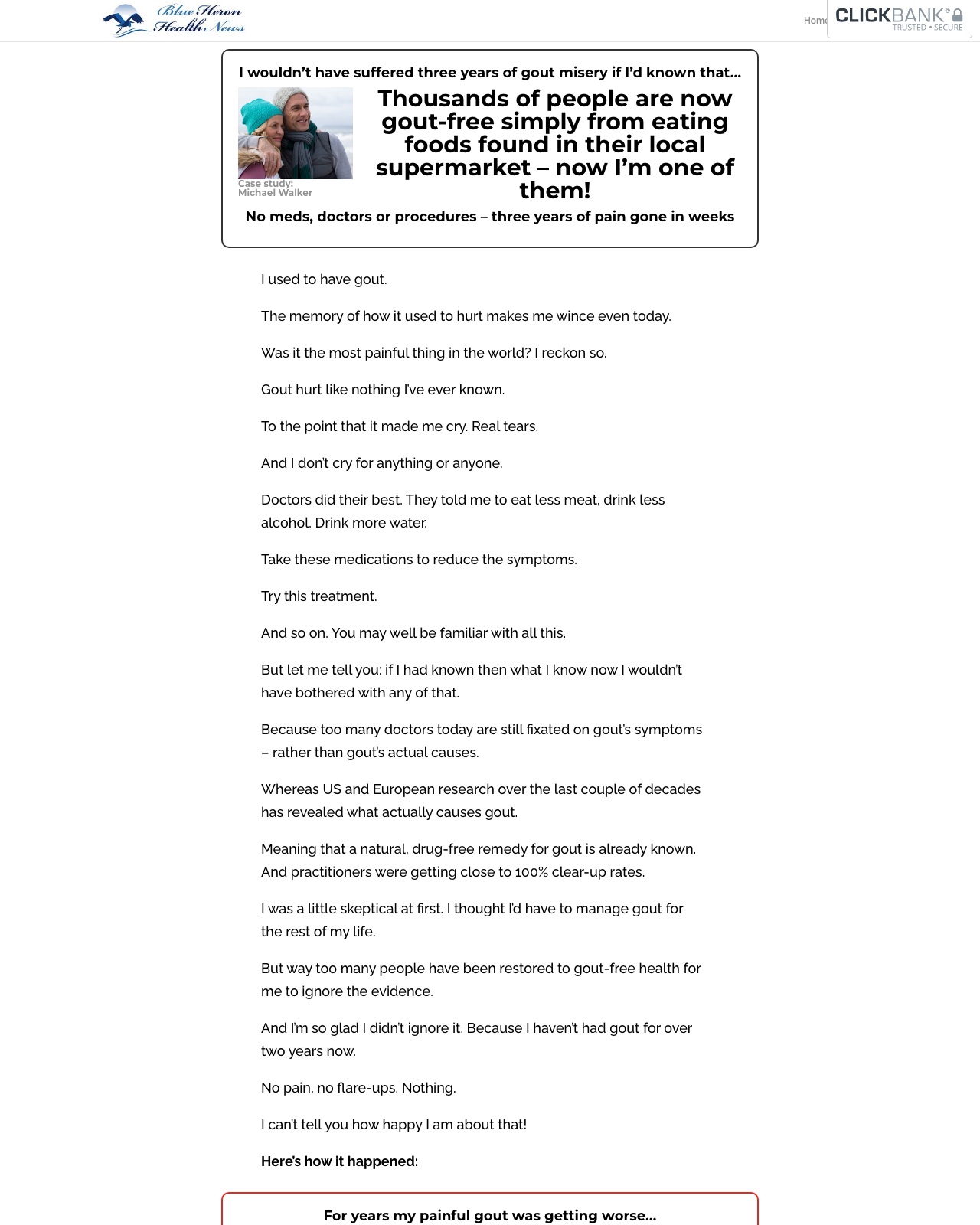
Affiliate recruitment language on the vendor’s site. The existing catalog description for this product is written for affiliates, not buyers: “Killer copy VSL converts like cold bear in July.” That tells you the funnel is built to make money for affiliates, not necessarily to deliver a life-changing product to you.
What it costs and how the refund works
$41 one-time. No recurring billing appeared at the checkout I tested. The upsell page after purchase will likely offer additional guides ($27–$37 each). You can skip them.
The refund is handled by ClickBank, not the vendor. You email ClickBank support with your order ID within 60 days, and they refund your money. This process works — I’ve tested it on multiple ClickBank products. The vendor can’t block it. So, technically, you can buy the guide, read it cover to cover, and still get a refund if it’s not worth $41.
That refund window is the only reason I’m not saying “avoid.” It gives you a risk-free way to evaluate the content. But you have to actually use it. Most people forget.
The medical reality the VSL doesn’t mention
Gout is caused by high uric acid levels, which form crystals in joints. Diet plays a role, but it’s rarely the sole cause. Genetics, kidney function, and medications (like diuretics) are major factors. The American College of Rheumatology recommends medication (allopurinol or febuxostat) for most people with recurrent gout, alongside dietary changes.
A PDF guide cannot replace a uric acid blood test or a prescription. If the guide discourages you from seeing a doctor or implies that diet alone can “cure” gout, it’s doing harm. I haven’t seen the guide, but the marketing language strongly suggests it downplays medical treatment.
Who should buy, who should skip
Buy this if you are brand-new to gout, you haven’t yet researched dietary triggers, and you want a single structured document to start with. Use the 60-day window. Read it. If it’s just a rehash of free web articles, refund it.
Skip this if you already know the basics: avoid red meat, shellfish, alcohol, and sugary drinks; eat low-fat dairy, vegetables, and cherries; stay hydrated. That’s 90% of what any gout guide will tell you. You don’t need to pay $41 for it.
Also skip if you’re looking for a supplement or a pill. This is an ebook, not a bottle of cherry extract. The sales page imagery might suggest otherwise, but you’ll only receive digital files.
The honest read
The End of Gout is a $41 bet that you haven’t Googled “gout diet” yet. The information inside is almost certainly available for free from reputable sources, but the guide packages it with a sense of urgency and a “secret” narrative that makes you feel like you’re getting something exclusive.
If you’re the kind of person who will actually follow a structured plan and you need the hand-holding of a chapter-by-chapter guide, then $41 might be worth it — temporarily. Read it, apply what’s useful, and then decide before day 60 whether it earned a permanent place on your hard drive.
But if you’re expecting a breakthrough that your rheumatologist never told you about, you’ll be disappointed. The title promises an ending; the content delivers a beginning. And beginnings are free.
— Mara Vance
This is the live Gout Solution - Blue Heron Health News funnel our verdict is based on. We measure these on-page promises against the evidence, dose math, price, and refund mechanics above — tap the image to see the seller’s current offer and terms.
 Live sales page →
 Here's what I'd actually do
If you have already read the label and you are willing to test it for six weeks against your own lab work, not against how you feel:
Gout Solution - Blue Heron Health News sits in the middle band — defensible ingredient pool, unverifiable dosing, premium ClickBank-funnel pricing. The 60-day refund is your insurance. Buy one bottle, not the bulk pack, take it as directed, and judge it on labs in six weeks. Refund if it did nothing.
Don't buy this if: Do not buy this if you would not also pay for a basic metabolic panel to test whether it did anything. Without labs, you cannot tell the supplement from the placebo from the regression-to-the-mean.
— Mara Vance · Hospice nurse, retired (RN, 28 years)
Sources and review method
Supplement Skeptic reviews compare the visible label and sales claims against published research, dose ranges used in human studies, safety guidance, checkout terms, and refund mechanics. This page is not medical advice.
- Vendor sales page — ClickBank-listed sales page (active as of catalog import)
Frequently asked questions
- Is The End of Gout a scam?
- No, it's a real digital product delivered after purchase, and the refund window is honored through ClickBank. That said, the marketing is heavy on fear and miracle claims, which often inflate expectations. It's a guide, not a cure.
- What do I actually get when I buy?
- A PDF guide (exact page count unknown) that outlines a dietary and lifestyle approach to reducing gout attacks. There may be bonus PDFs, but the sales page doesn't list them clearly. Everything is digital — no physical products.
- How do I get a refund?
- Contact ClickBank customer support with your order ID within 60 days of purchase. The refund is processed by ClickBank, not the vendor, so you won't get hassled. You'll receive your money back in 3–7 business days.
- Will this actually stop my gout attacks?
- Dietary changes can lower uric acid levels and reduce flare frequency for some people, but they rarely eliminate attacks entirely. If the guide promises a complete 'end' to gout, it's overstating. You should still work with a doctor on medication if needed.
More in Remedies