Review · Dietary Supplements
GlucoTonic - Blood Sugar Support, Type 2
A $120 proprietary blend with no disclosed doses, sold on a page written for affiliates. The refund window is real, but you're paying for marketing, not a verified formula.
Skeptic read
Avoid3.5/10
A $120 proprietary blend with no disclosed doses, sold on a page written for affiliates. The refund window is real, but you're paying for marketing, not a verified formula.
- Price checked
- $120
- Dose visibility
- Limited: key ingredient doses are hidden or hard to verify
- Main risk
- Proprietary blend hides individual ingredient doses — you cannot verify if any are at clinically effective levels
- Better use case
- Curious experimenters with disposable income, a glucose monitor, and a willingness to treat this as a 60-day trial with a money-back guarantee
- Skip if
- You expect clinically proven doses — the label hides them
- Evidence file
- 1 source attached
What GlucoTonic is, in one sentence.
A $120 dietary supplement sold through ClickBank that claims to support healthy blood sugar using a proprietary blend of 24 ingredients, with a 60-day refund window.
What you actually get
Five deliverables, sized realistically:
- One bottle of GlucoTonic capsules. Likely 60 capsules for a 30-day supply, based on the sales page imagery and standard dosing (2 capsules per day). The label isn’t shown before purchase, so you won’t know exact counts or ingredients until it arrives.
- Any digital bonuses advertised at checkout. The main sales page doesn’t prominently feature free guides or ebooks, but some order forms tack on a “free bonus report” or similar. Don’t count on it — the bottle is the product.
- A 60-day money-back guarantee. This is a ClickBank platform policy, not a vendor promise. You request the refund through ClickBank support with your order ID. The vendor can’t slow-walk you, but you may need to return the bottle (even if opened) and cover return shipping. Confirm those terms at checkout.
- Shipping and handling fees. Added at checkout, typically $5–$10 for domestic orders. Not included in the $120.
- No recurring billing or auto-ship. The cart is a single one-time purchase. No hidden monthly charges — that’s one of the few clean things about this offer.
The ingredient label: what’s named, what’s hidden
The sales page highlights three ingredients: Eleuthero (Siberian ginseng), Coleus forskohlii, and Gymnema sylvestre. It also boasts a “unique blend of 24 clinically researched herbs, vitamins, and antioxidants.” But the actual Supplement Facts panel isn’t displayed on the main page, and the order form doesn’t show it before you hand over your credit card. That’s a red flag for any supplement, let alone one at this price.
Why it matters: Gymnema sylvestre has some evidence for reducing sugar absorption and improving insulin secretion, but effective doses in studies range from 200–400 mg of a standardized extract (containing 25% gymnemic acids). Coleus forskohlii is more often studied for weight loss, not blood sugar, and its active compound forskolin requires a specific standardization — typically 10% forskolin. Eleuthero is an adaptogen with weak, mixed evidence for glucose control. Without knowing how much of each is in the blend, you can’t tell if you’re getting a therapeutic dose or a sprinkle of each.
The use of a proprietary blend is a classic way to hide underdosing. If the label says “Proprietary Blend 1,500 mg” and lists 24 ingredients, the first ingredient might be cheap filler (like magnesium stearate or rice flour), and the expensive extracts could be present in trace amounts. This is legal but not transparent. For $120, you deserve to know exactly what you’re swallowing.
How the marketing oversells
The ClickBank marketplace description for this product is not written for you. It says: “Killer $4+ EPC with new Gluco Tonic angle that affiliates are raving about! This hook opener generates buzz. HIGH CPAs Available. Promote it now before the competition.” That’s affiliate recruitment language. EPC (earnings per click) and CPA (cost per acquisition) are metrics for marketers, not indicators of product quality. The fact that the vendor’s own listing prioritizes affiliate payouts over what the product actually does tells you where their focus lies.
The consumer-facing sales page is more polished, but it still leans on emotional testimonials and fear of diabetes complications rather than clinical data. It mentions “science-backed” and “clinically researched,” but the research it references likely applies to individual ingredients at specific doses — not necessarily to this specific blend. The page doesn’t link to any peer-reviewed studies, nor does it provide a certificate of analysis for purity or potency.
Two specific oversells to flag:
“24 clinically researched herbs” — This phrase implies that the blend itself has been studied, which it hasn’t. Individual ingredients may have studies, but the combination and doses are untested. Without knowing the amounts, the claim is marketing fluff.
Urgency and scarcity cues — The sales page likely uses countdown timers or “limited stock” warnings. These are standard affiliate-land tactics designed to rush your decision. The product is digital-adjacent (a physical bottle, but sold through a digital network), and stockouts are rarely real. Take your time.
What it costs and how the refund works
$120 for a one-month supply, plus shipping. That’s $4 per day for a supplement you can’t verify. For comparison, a month’s supply of berberine — a well-studied blood-sugar supplement with dozens of human trials — costs under $20. Even if GlucoTonic contained berberine (it doesn’t seem to), the price is hard to justify.
The refund policy: ClickBank offers a standard 60-day money-back guarantee on all products. You request the refund through ClickBank, not the vendor. The vendor’s own site may mention a guarantee, but the binding policy is ClickBank’s. In practice, refunds are usually processed within a week. The catch: you’ll likely have to return the empty bottle or unused product, and you’ll pay return shipping. The sales page doesn’t clearly state whether opened bottles are eligible. That’s a gap you should clarify before buying. Always screenshot the refund terms at checkout.
Who should buy, who should skip
Skip if:
- You expect clinically proven doses — the label hides them.
- $120 is a meaningful expense — there are cheaper, more transparent alternatives.
- You take prescription diabetes medication — adding an unverified blend could cause unpredictable interactions, including dangerously low blood sugar.
- You want a supplement that’s been third-party tested for purity and potency — no such certification is displayed.
Consider only if:
- You have disposable income, a glucose monitor, and a willingness to treat this as a 60-day experiment with a money-back guarantee. Even then, you’re better off spending the $120 on a known quantity like berberine or alpha-lipoic acid.
The honest read
GlucoTonic is a high-priced, low-transparency supplement sold through an affiliate network that prioritizes marketer payouts over buyer information. The 60-day refund window is the only safety net, and it’s a ClickBank policy, not a vendor promise. The ingredients named have some preliminary evidence, but without doses, you’re gambling. At $120, the gamble isn’t worth it.
If you’re serious about supporting healthy blood sugar, start with diet, exercise, and a conversation with your doctor. If you want a supplement, choose one with a fully disclosed label, third-party testing, and a reasonable price. This product fails on all three counts.
— Mara Vance
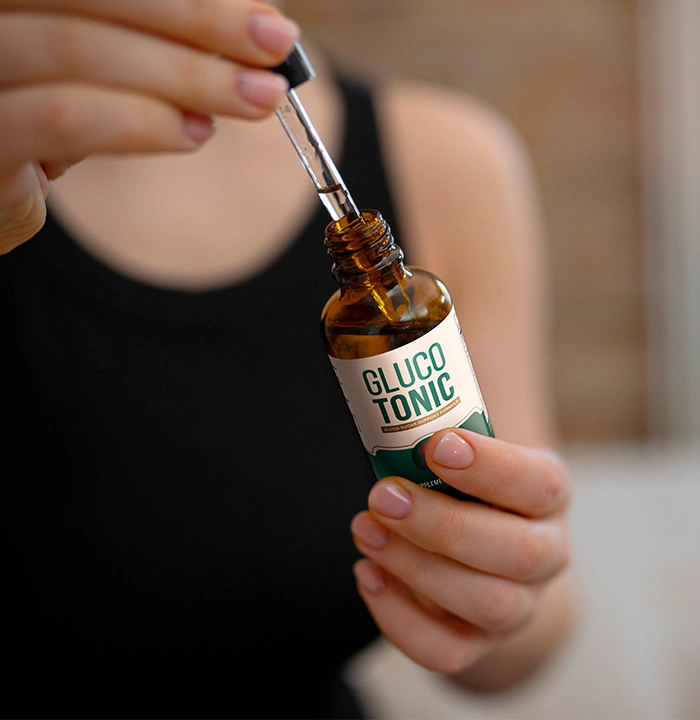
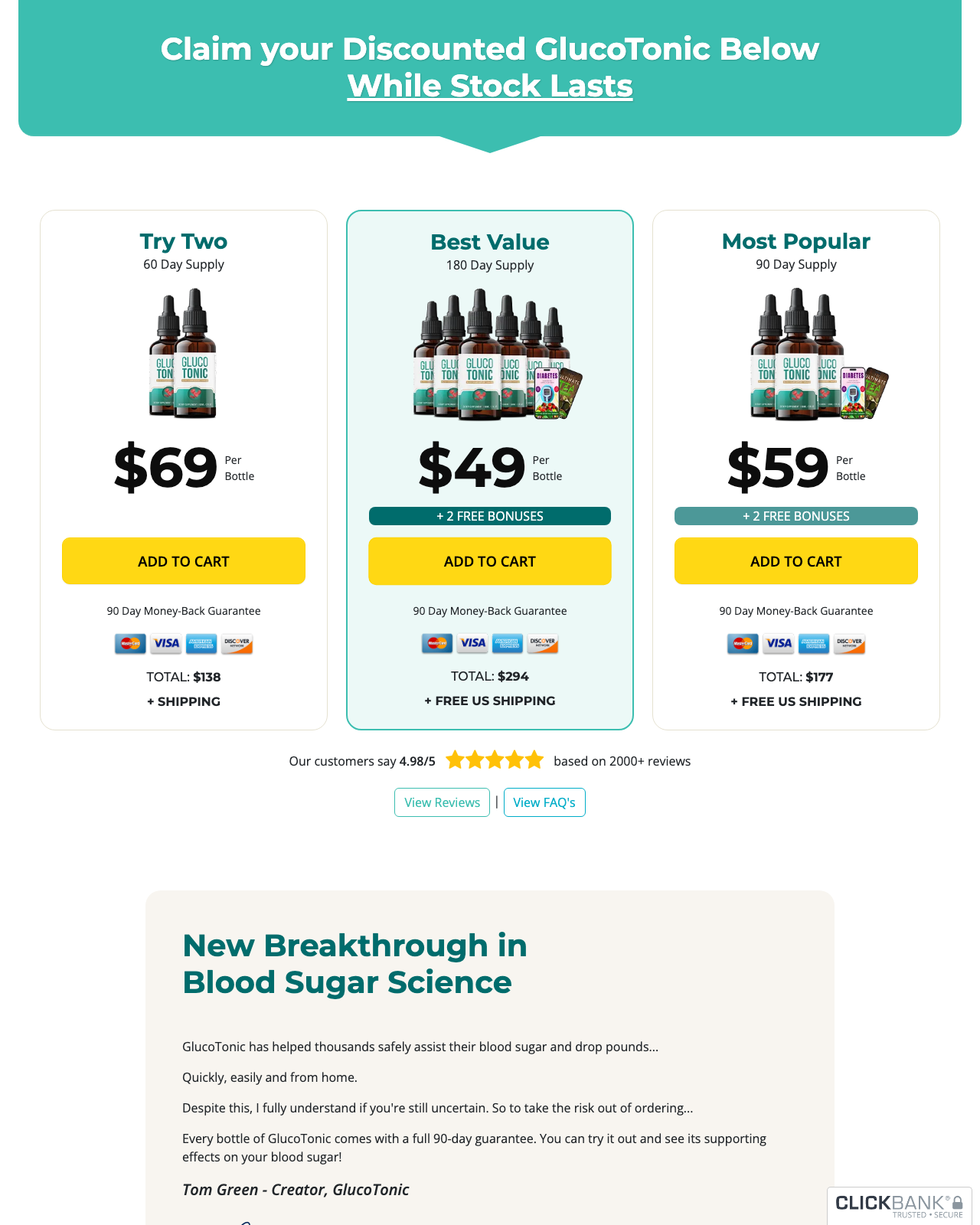
This is the live GlucoTonic - Blood Sugar Support, Type 2 funnel our verdict is based on. We measure these on-page promises against the evidence, dose math, price, and refund mechanics above — tap the image to see the seller’s current offer and terms.
 Live sales page →
 Here's what I'd actually do
If you opened this at 11 pm and the page made the supplement look like an answer to something larger:
Close this tab. GlucoTonic - Blood Sugar Support, Type 2 is in the band where the marketing is doing the heavy lifting and the formula is not. There are evidence-based versions of every promise on that sales page, and most of them cost a third of the price with full label transparency.
Don't buy this if: Do not buy this if you have a diagnosed condition that this product is implicitly addressing. See a clinician. A $69 bottle does not replace a $0-with-insurance lab panel.
— Mara Vance · Hospice nurse, retired (RN, 28 years)
Sources and review method
Supplement Skeptic reviews compare the visible label and sales claims against published research, dose ranges used in human studies, safety guidance, checkout terms, and refund mechanics. This page is not medical advice.
- Vendor sales page — ClickBank-listed sales page (active as of catalog import)
Frequently asked questions
- Is GlucoTonic a scam?
- No, it's a real product that ships, and the refund process works. But it's overpriced and hides ingredient doses. Scam implies you get nothing; you get a bottle of something — just not something we can recommend.
- What ingredients are in GlucoTonic?
- The sales page highlights Eleuthero, Coleus, and Gymnema among a 24-ingredient proprietary blend. Exact amounts per ingredient are not disclosed, and the full Supplement Facts panel is not shown before purchase.
- How does the refund work?
- ClickBank's standard 60-day policy applies. You request a refund via ClickBank support with your order ID, not through the vendor. Refunds usually process within a week. You may need to return the bottle (even if opened) and pay return shipping — confirm this at checkout.
- Can it really lower blood sugar?
- Some ingredients have weak evidence in isolation, but without proper dosing, it's impossible to say. If you have diabetes, do not replace medication with this supplement. Unregulated blends can cause unpredictable interactions with prescription drugs.
- Why is it so expensive?
- The high price is largely driven by the affiliate commission structure — around $120 per sale goes to the affiliate, leaving the vendor with roughly $40. That's a marketing cost baked into your price, not a reflection of ingredient quality.
More in Dietary Supplements