
Review · Nutrition
Diet Free Weekends Solution
A $14 diet plan that promises weekend indulgences without guilt, but the recurring billing and lack of unique science make it a hard pass unless you're just curious and will cancel within the refund window.

Skeptic read
Skeptical4.5/10
A $14 diet plan that promises weekend indulgences without guilt, but the recurring billing and lack of unique science make it a hard pass unless you're just curious and will cancel within the refund window.
- Price checked
- $14
- Dose visibility
- Better than average: key doses are disclosed enough to compare
- Main risk
- Recurring billing is enabled — the $14 is likely a gateway to a monthly subscription you may not notice until the second charge hits
- Better use case
- Curious dieters willing to spend $14 to see if a structured weekend refeed plan is different from free advice — and who will immediately cancel the recurring subscription
- Skip if
- You're looking for evidence-based nutrition advice from a credentialed professional — this sales page lists no author, no RDN, no research
- Evidence file
- 1 source attached
What Diet Free Weekends Solution is, in one sentence.
A $14 digital diet guide that promises fat loss while eating your favorite foods on weekends, sold through a generic ClickBank landing page with recurring billing attached.
The core idea — structured higher-calorie weekends — isn’t new. It’s a form of calorie cycling that dietitians sometimes call “refeed days” or “flexible dieting.” The question isn’t whether the concept can work (it can, if the weekly deficit is right). It’s whether this particular guide adds anything you can’t get from a free blog post.
What you actually get
The vendor doesn’t provide a table of contents or sample pages, so we’re working from the sales page and the ClickBank listing. Based on the price point and the recurring flag, here’s what the package likely includes:
- The main PDF guide. Probably 30–50 pages, explaining the weekday/weekend split, some meal ideas, and the “rules” for weekend eating. At $14, don’t expect a comprehensive textbook.
- Meal-plan templates. A few sample days for weekdays (lower calorie) and weekends (higher calorie). These are usually fill-in-the-blank style, not personalized.
- A “cheat day” strategy sheet. This is the hook — how to enjoy pizza, burgers, etc. without “ruining” your progress. In practice, it’s almost certainly just a reminder to keep portions reasonable and not turn a refeed into a binge.
- Upsell to a recurring membership. The product listing has
hasRecurring: true. That means after the initial $14, you’ll likely be billed monthly for access to a members’ area, coaching, or additional content. The sales page may or may not make this clear before you click “buy.” - Possibly a private Facebook group or email support. This is standard for low-cost ClickBank diet products, but we can’t confirm it exists.
How the marketing oversells
The sales page at chamkanllc.lpages.co/velocitysystem is a single landing page with a headline, a few bullet points, and a buy button. There are no before-and-after photos, no author credentials, no study citations, and no sample content. That’s a problem.
The headline claim — “Lose fat while enjoying your favorite foods on Friday, Saturday and Sunday” — is classic diet-book bait. It takes a real adherence strategy (allowing some flexibility on weekends so you don’t quit mid-week) and frames it as a metabolic secret. It’s not. It’s just a way to make a calorie deficit feel less miserable.
The bigger concern is the recurring billing. The ClickBank catalog flags this product as recurring, but the landing page doesn’t mention a subscription. That means you could buy the $14 guide and later find a $19.95/month charge on your card. This is legal if disclosed somewhere in the checkout flow, but it’s a dark pattern that relies on buyers not reading the fine print.
How it tells you to use it
Without seeing the actual guide, we can infer the structure from similar products: you follow a lower-calorie plan Monday through Thursday, then relax the rules Friday through Sunday. The weekend isn’t a free-for-all — there are probably limits on portions or types of foods — but the marketing makes it sound like a free-for-all.
If the guide includes a weekly calorie target and a way to track it, that’s useful. If it just says “eat clean on weekdays, enjoy weekends,” that’s not a plan — it’s a suggestion you could get from a friend.
What it costs and how the refund works
$14 one-time at the front-end checkout, but recurring billing is enabled. That means you’ll almost certainly be offered a trial or a subscription upsell after the initial purchase. The exact recurring amount isn’t listed in the marketplace, but typical ClickBank diet subscriptions run $9.95–$29.95/month.
ClickBank handles refunds. You have 60 days from purchase to request a refund by emailing ClickBank support with your order ID. The refund applies to the initial $14 and any recurring charges within that window. The catch: if you don’t cancel the subscription, you’ll keep getting billed after the 60 days are up. So if you buy this, set a calendar reminder for day 55.
Where the marketing oversells (the specific lines)
The landing page is too sparse to pick apart line by line, but the core oversell is the promise itself: that you can eat your favorite foods every weekend and still lose fat. That’s true only if your weekdays are restrictive enough to create a deficit, and your weekends don’t erase it. The sales page doesn’t mention that trade-off.
The other oversell is the price. $14 sounds cheap, but the recurring billing turns it into a much more expensive product over time. If you forget to cancel for three months, that “cheap” diet guide cost you $50–$100.
Who should buy, who should skip
Buy this only if you’re genuinely curious whether a weekend-refeed structure is different from the free advice you’ve already read, and you’re willing to:
- Read the guide immediately.
- Cancel the recurring subscription the same day.
- Decide within 60 days whether to keep it or refund it.
Skip this if you want evidence-based nutrition advice from someone with credentials. The sales page lists no author, no RDN, no research. You’re buying a PDF from a vendor whose landing page is a generic template.
Skip this if you’ve been burned by recurring billing before. The hasRecurring flag is a warning: this is a continuity product, not a one-time purchase. If you’re not comfortable navigating ClickBank’s cancellation process, don’t hand over your card.
The honest read
Diet Free Weekends Solution is a low-cost diet guide with a high-cost catch. The concept — structured weekend eating — is sound enough that you could implement it with a free calorie-tracking app and a little self-discipline. The guide might package that concept in a convenient PDF, but it doesn’t appear to offer anything you can’t find in a 10-minute Google search.
The recurring billing is the real product. The $14 front-end is just the hook. If you buy, treat it like a trial: read fast, cancel the subscription, and set a refund reminder. If the guide turns out to be 30 pages of common sense, you’ll want that $14 back.
I would not buy this. The sales page gives me no reason to trust the author, the content, or the business model. A diet plan that hides its subscription is a diet plan I don’t want to support.
— Mara Vance
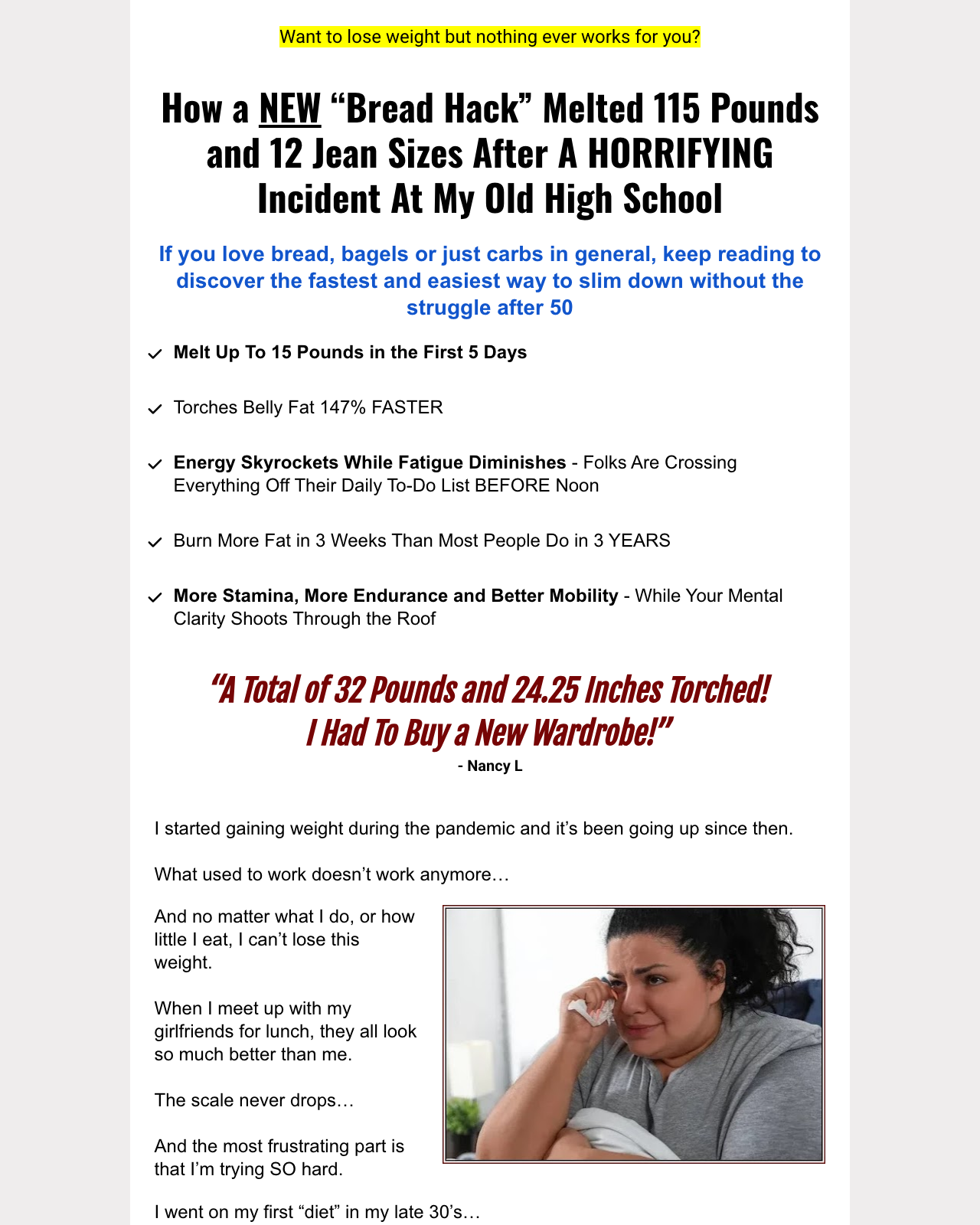
This is the live Diet Free Weekends Solution funnel our verdict is based on. We measure these on-page promises against the evidence, dose math, price, and refund mechanics above — tap the image to see the seller’s current offer and terms.
 Live sales page →
 Here's what I'd actually do
If you have already read the label and you are willing to test it for six weeks against your own lab work, not against how you feel:
Diet Free Weekends Solution sits in the middle band — defensible ingredient pool, unverifiable dosing, premium ClickBank-funnel pricing. The 60-day refund is your insurance. Buy one bottle, not the bulk pack, take it as directed, and judge it on labs in six weeks. Refund if it did nothing.
Don't buy this if: Do not buy this if you would not also pay for a basic metabolic panel to test whether it did anything. Without labs, you cannot tell the supplement from the placebo from the regression-to-the-mean.
— Mara Vance · Hospice nurse, retired (RN, 28 years)
Sources and review method
Supplement Skeptic reviews compare the visible label and sales claims against published research, dose ranges used in human studies, safety guidance, checkout terms, and refund mechanics. This page is not medical advice.
- Vendor sales page — ClickBank-listed sales page (active as of catalog import)
Frequently asked questions
- Is Diet Free Weekends Solution a scam?
- Not a scam in the sense that you'll get nothing — a PDF will likely be delivered. But the recurring billing turns a cheap trial into a subscription, and the sales page reveals almost nothing about what's inside. That's a red flag, not a scam.
- What do I actually get when I buy?
- A digital diet guide, probably a PDF, with some meal plans and a weekend eating strategy. There may be an upsell to a membership area. Because the vendor uses ClickBank, you'll also get a receipt with a subscription attached — watch for that.
- How does the recurring billing work?
- The product listing flags 'hasRecurring: true', which means after the initial $14 purchase, you'll likely be enrolled in a monthly charge. The sales page may not make this obvious. Check your ClickBank receipt and cancel the subscription immediately if you only wanted the one-time guide.
- Can I really eat whatever I want on weekends and still lose fat?
- If the plan is just calorie cycling — lower calories on weekdays, higher on weekends — then yes, you can lose fat as long as the weekly average is a deficit. But that's not magic; it's math. The 'favorite foods' framing is marketing, not a metabolic loophole.
More in Nutrition