Review · Dental Health
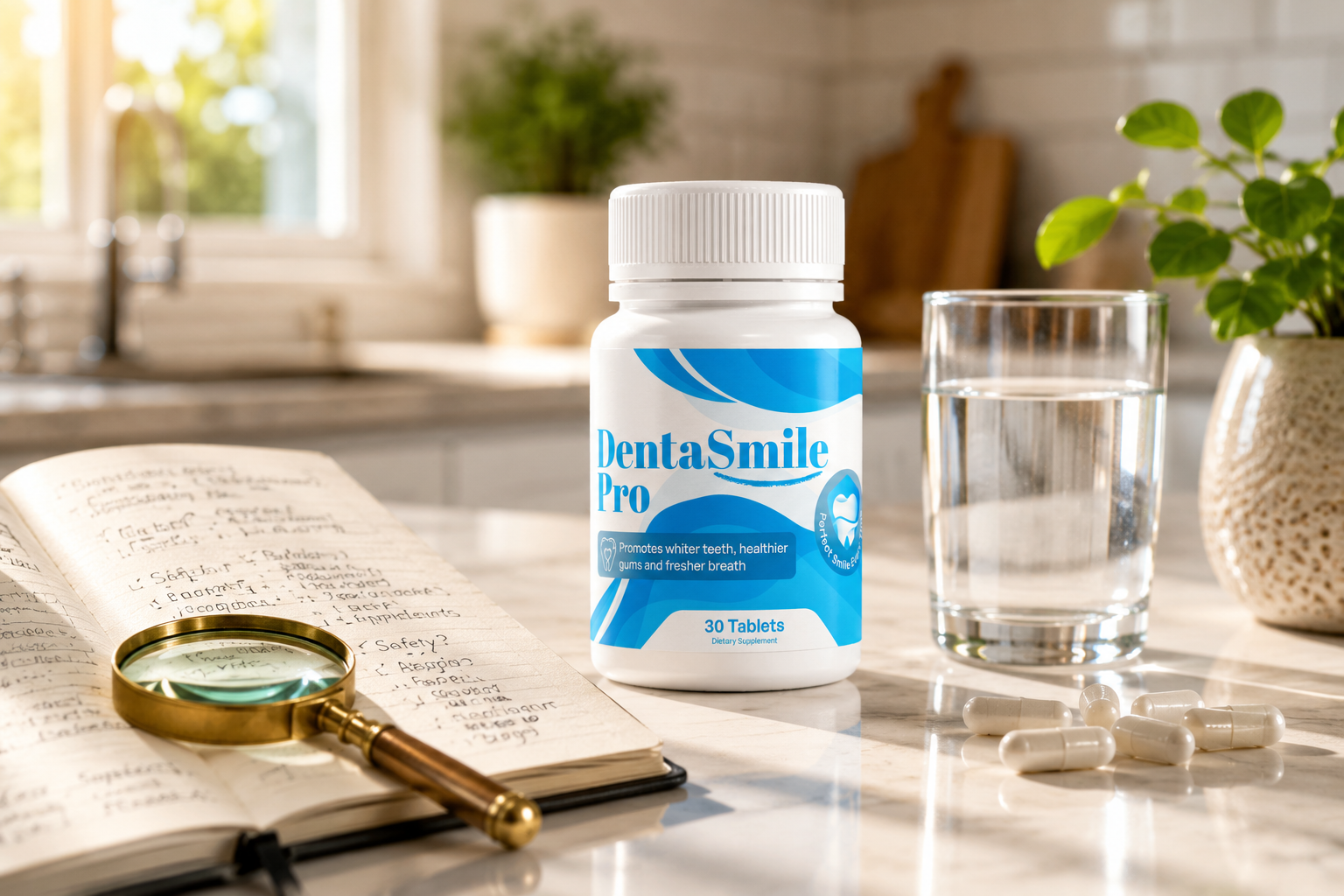
DentaSmile Pro - Hot NEW 8-in-1 Oral Care Solution!
A $92 dental supplement with an undisclosed formula and marketing that reads like an affiliate recruitment ad. The 60-day refund is the only safety net.
Skeptic read
Skeptical3.2/10
A $92 dental supplement with an undisclosed formula and marketing that reads like an affiliate recruitment ad. The 60-day refund is the only safety net.
- Price checked
- $92
- Dose visibility
- Limited: key ingredient doses are hidden or hard to verify
- Main risk
- The sales page does not disclose the full ingredient list, dosages, or strain specifics — you're buying blind
- Better use case
- Buyers willing to request a refund the moment the ingredient label doesn't match the hype — and who won't open the bottle until they verify
- Skip if
- You expect to see a full ingredient panel before buying — the sales page hides it
- Evidence file
- 1 source attached
What DentaSmile Pro is, in one sentence.
A dental supplement sold through ClickBank at $92 a bottle with an undisclosed formula, marketed as an “8-in-1” oral care solution but backed by nothing more than affiliate-recruitment copy and a 60-day refund window.
The sales page pitches it as a breakthrough for teeth whitening, gum health, and fresh breath, but the ingredient list — the only thing that matters in a supplement — is nowhere to be found. That’s not a minor oversight. It’s the central problem.
What you actually get
The sales page is vague, but typical ClickBank supplement offers in this price range include:
- One bottle of DentaSmile Pro capsules. Probably a 30-day supply, but the page doesn’t say. No count, no dosage instructions, no Supplement Facts panel. You’ll find out when the package arrives.
- Bonus digital guides. The checkout page likely throws in a couple of PDFs with titles like “8 Secrets to Whiter Teeth” or “The Bad Breath Cure.” These are standard upsell filler — rarely more than a few pages of generic advice you can Google.
- Access to a members’ area or upsell funnel. Not confirmed, but common. The real profit for the vendor often comes from a post-purchase upsell to a “deluxe” formula or a subscription. The front-end sales page doesn’t mention this.
Until the vendor publishes the label, “what you actually get” is a mystery bottle and a promise.
The ingredient black box
Dental supplements typically lean on probiotics like Lactobacillus reuteri or L. salivarius, sometimes paired with minerals (calcium, phosphate) or enzymes. There’s real science here — specific strains at specific doses can reduce plaque, gingivitis, and bad breath. But the dose matters. A lot.
For example, L. reuteri DSM 17938 and ATCC PTA 5289 have shown benefits at 200 million CFU per day. If DentaSmile Pro contains those strains but at 10 million CFU, it’s underdosed and likely useless. Without the label, you can’t know.
The sales page uses phrases like “proprietary blend” and “8-in-1 power” but never shows the Supplement Facts panel. That’s a deliberate choice. A transparent company would put the label front and center. The absence tells you the formula either can’t stand up to scrutiny or is so generic that showing it would kill the “secret sauce” mystique.
I won’t recommend a supplement I can’t analyze. If the vendor reads this: publish the label. Until then, I would not buy this.
How the marketing oversells
The original ClickBank listing for this product — the one affiliates see — is a pitch to marketers, not buyers. It says:
“Make bank with a top product that delivers unique angles, high conversions, and unmatched EPCs! Apply NOW and secure your spot with this game-changing offer!”
That’s affiliate-network language. It means the vendor is recruiting affiliates to push the product, not that the product works. The same page lists a gravity of 0.19 — which means almost no affiliates are promoting it. “High conversions” and “unmatched EPCs” are aspirational, not factual.
The consumer-facing sales page is different, but it inherits the same overpromise: dramatic before/after images, urgent countdown timers, and testimonials you can’t verify. It’s a classic ClickBank funnel: hook with a problem (yellow teeth, bleeding gums), sell the dream, hide the details.
One specific red flag: the page claims “8-in-1” benefits but never explains what the 8 are. Whitening? Cavity prevention? Gum repair? Fresh breath? Probably all of the above, but without an ingredient list, it’s just a number.
What it costs and how the refund works
$92 one-time, no recurring billing surfaced at the cart. That’s high for a dental supplement — most run $30–$50. At this price, you’re paying for the marketing, not the ingredients.
ClickBank’s 60-day refund policy applies. Email their support with your order ID within 60 days and you’ll get your money back. However, for physical goods, the policy states items must be unopened. If you open the bottle and find it’s just calcium and filler, you might have to argue your case. Some vendors accept returns of opened products; others don’t. The sales page doesn’t clarify which camp DentaSmile Pro falls into.
My advice: if you buy, don’t open the bottle until you’ve seen the label. If the label isn’t on the bottle itself (yes, that happens), photograph the unopened package and request a refund immediately.
Who should buy, who should skip
Buy this if you’re a professional supplement reviewer with a lab budget, or if you’re willing to gamble $92 on the chance that the undisclosed formula is miraculously effective. And even then, only if you’ll use the refund window aggressively.
Skip this if you have any sense. Seriously — there are dental probiotics on Amazon with published labels, third-party testing, and prices under $40. Until DentaSmile Pro shows its work, it’s not worth the risk.
If you’ve already bought it, open a ticket with ClickBank and ask for the Supplement Facts panel. If the vendor won’t provide it, that’s your answer.
The honest read
DentaSmile Pro is a black box wrapped in affiliate hype. The 60-day refund is real, but the product itself is a question mark. At $92, you’re paying for a mystery — and in the supplement world, mysteries are almost always disappointments.
I’d love to review the actual formula. If the vendor sends me a label, I’ll update this page with a full ingredient analysis. Until then, this is a hard pass.
— Mara Vance
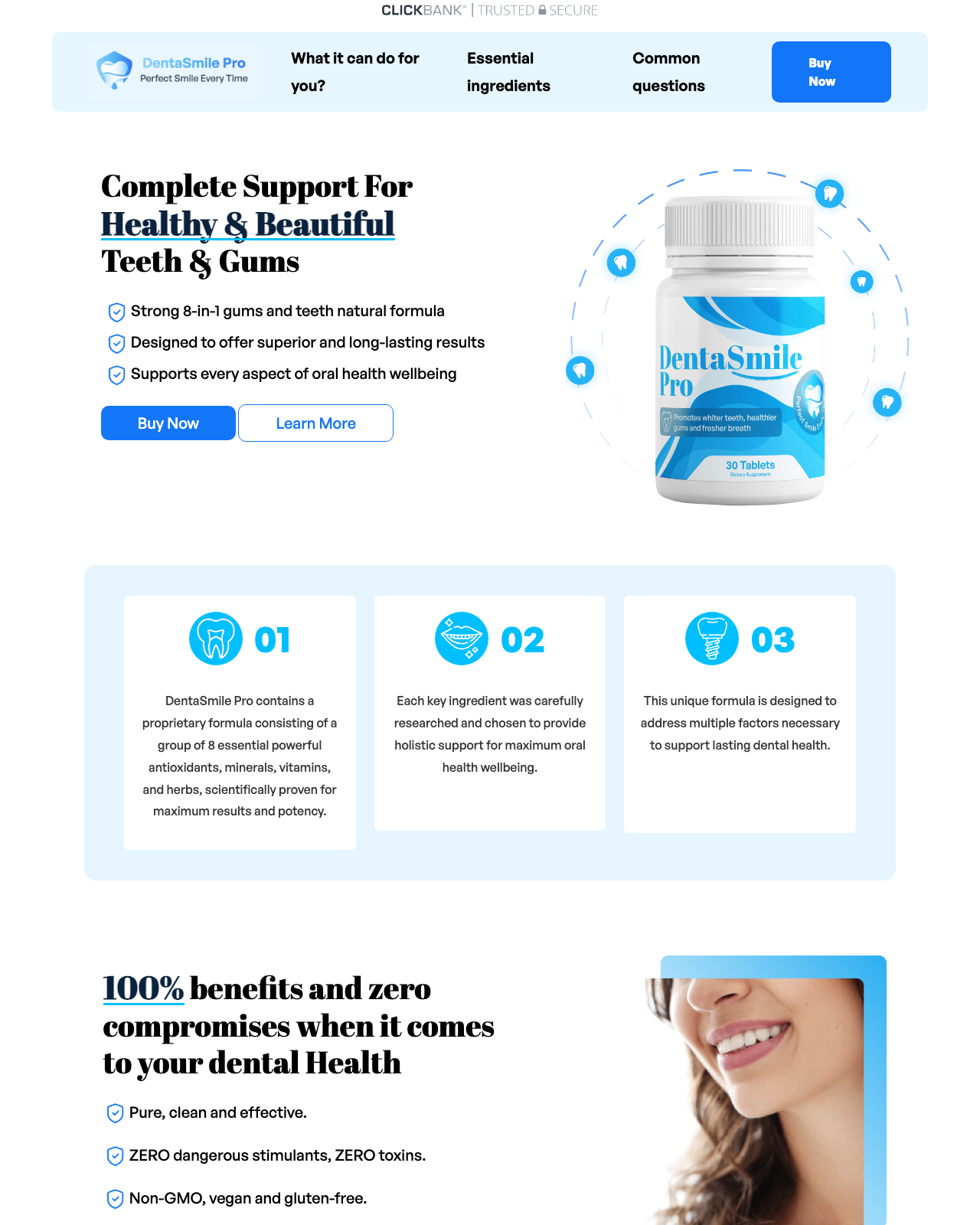
This is the live DentaSmile Pro - Hot NEW 8-in-1 Oral Care Solution! funnel our verdict is based on. We measure these on-page promises against the evidence, dose math, price, and refund mechanics above — tap the image to see the seller’s current offer and terms.
 Live sales page →
 Here's what I'd actually do
If you opened this at 11 pm and the page made the supplement look like an answer to something larger:
Close this tab. DentaSmile Pro - Hot NEW 8-in-1 Oral Care Solution! is in the band where the marketing is doing the heavy lifting and the formula is not. There are evidence-based versions of every promise on that sales page, and most of them cost a third of the price with full label transparency.
Don't buy this if: Do not buy this if you have a diagnosed condition that this product is implicitly addressing. See a clinician. A $69 bottle does not replace a $0-with-insurance lab panel.
— Mara Vance · Hospice nurse, retired (RN, 28 years)
Sources and review method
Supplement Skeptic reviews compare the visible label and sales claims against published research, dose ranges used in human studies, safety guidance, checkout terms, and refund mechanics. This page is not medical advice.
- Vendor sales page — ClickBank-listed sales page (active as of catalog import)
Frequently asked questions
- Is DentaSmile Pro a scam?
- No, it's a real product that ships a bottle. But selling a supplement without showing the label is a red flag. The bigger risk is that you pay $92 for a formula that doesn't match the marketing — not that you get nothing.
- What's actually in DentaSmile Pro?
- We don't know. The sales page mentions '8-in-1' and hints at probiotics, enzymes, and minerals, but the Supplement Facts panel isn't shown. Without that, you can't compare doses to clinical research. That's the single biggest reason to avoid this until the vendor publishes the label.
- Does the 60-day refund really work?
- Yes, ClickBank processes refunds. Email their support with your order ID within 60 days. However, if you open the bottle, some vendors push back — ClickBank's policy says 'unopened' for physical goods, but they often side with the buyer if you complain about efficacy. Keep the packaging until you decide.
- Can DentaSmile Pro really whiten teeth and fix gums?
- Maybe — if it contains proven ingredients at proven doses. For example, Lactobacillus reuteri strains show promise for gum health in studies, but only at specific CFU counts. Without the label, we have no idea. Assume the '8-in-1' claim is marketing until proven otherwise.
More in Dental Health