Review · Remedies
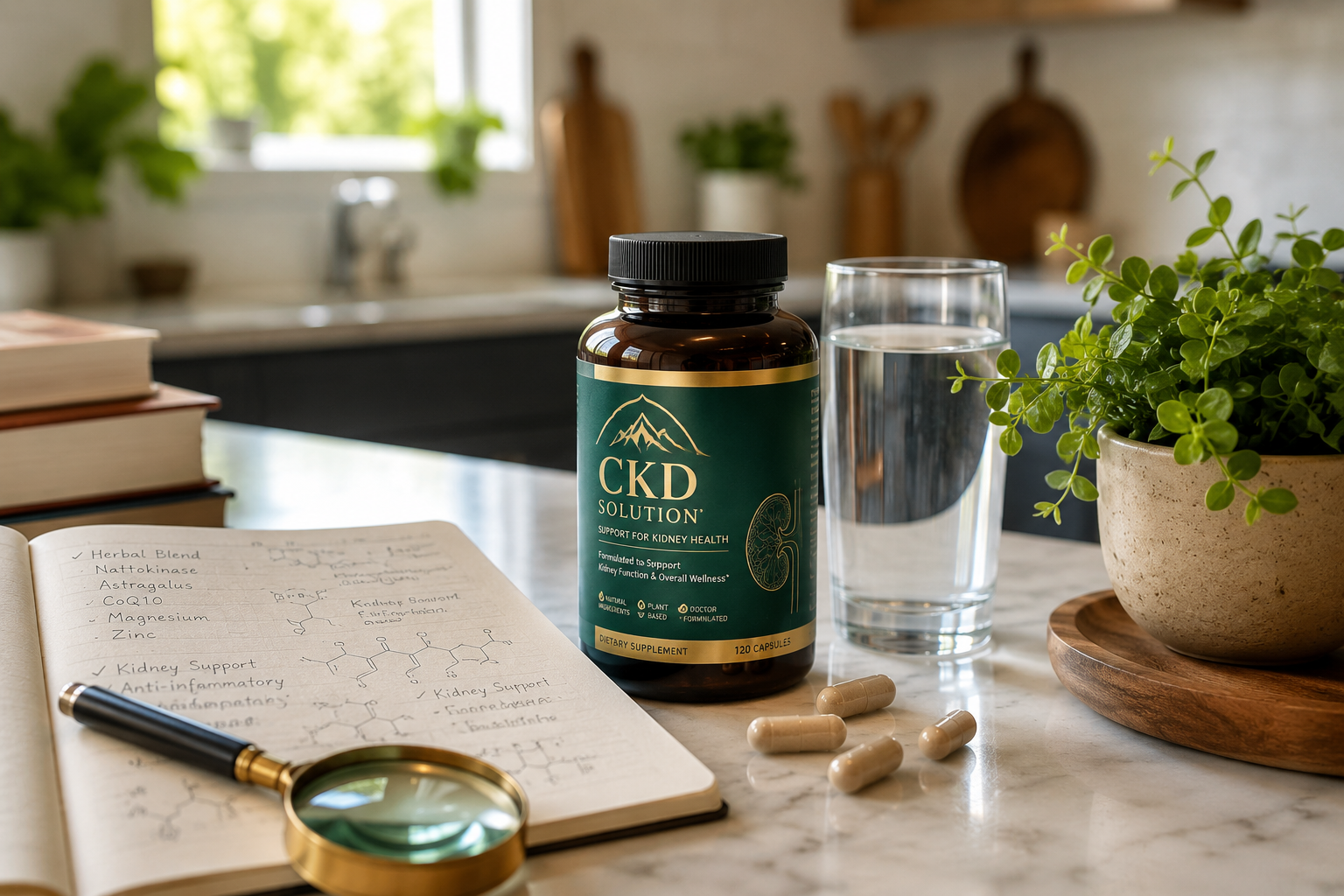
Chronic Kidney Disease Solution CKD
A $32 PDF that repackages standard dietary advice for kidney disease. The refund window makes it risk-free to read, but you'll find the same information for free on the National Kidney Foundation website.
Skeptic read
Skeptical4.5/10
A $32 PDF that repackages standard dietary advice for kidney disease. The refund window makes it risk-free to read, but you'll find the same information for free on the National Kidney Foundation website.
- Price checked
- $32
- Dose visibility
- Better than average: key doses are disclosed enough to compare
- Main risk
- The sales page leans on 'reverse kidney disease' language, but the guide itself only supports slowing progression — a gap that will frustrate buyers expecting a cure
- Better use case
- Newly diagnosed CKD patients (stages 1–3) who want a structured dietary starting point and are willing to cross-check everything with their doctor
- Skip if
- You're in stage 4 or 5 CKD, on dialysis, or have complex comorbidities — this guide is too generic and could be dangerous if you follow it without medical oversight
- Evidence file
- 1 source attached
What the Chronic Kidney Disease Solution actually is
A digital PDF sold through ClickBank for $32, marketed as a way to “reverse” chronic kidney disease through diet and lifestyle. The sales page uses before-and-after lab value stories and urgency framing to convert. The actual book is a generic renal diet guide that aligns closely with standard nephrology recommendations — which is both a good thing (it’s not dangerous nonsense) and a bad thing (you’re paying for information that’s freely available from the National Kidney Foundation and DaVita).
The vendor, operating under the affiliate network BlueHeronAffiliates.com, has a track record of launching health guides with similar marketing patterns: a scary headline, a “unique” solution, and a money-back guarantee that relies on the fact that most people won’t bother to refund. The gravity score of 23.43 tells you affiliates are still sending traffic, not that the product is medically sound.
What you actually get
Five digital items arrive after purchase:
-
The main guide. Roughly 80–100 pages, formatted as a PDF. The first third explains what CKD is and how diet affects kidney function — this is standard nephrology 101. The middle third is the dietary protocol: food lists, meal timing, and recipes. The final third covers supplements, exercise, and stress management. The writing is plain and accessible, but it reads like a compilation of existing free resources.
-
A 7-day meal plan. Breakfast, lunch, dinner, and snacks, all designed to be low in sodium, potassium, and phosphorus. The recipes are simple and realistic. If you’ve never followed a renal diet before, this is the most useful part of the package.
-
Food lists by CKD stage. Tables that tell you what to eat, limit, and avoid depending on your estimated GFR. This is helpful for quick reference, but identical tables exist on the NKF website.
-
Supplement suggestions. A chapter listing vitamins, minerals, and herbs with dosages. This is where the guide gets risky. It recommends things like vitamin C, omega-3s, and certain herbal extracts, with a small disclaimer that you should “consult your doctor.” Many kidney patients can’t safely take these without monitoring, and the guide doesn’t provide the level of caution that a doctor or renal dietitian would.
-
Two bonus PDFs. One is titled “Kidney Cleanse: Fact or Fiction?” — it correctly debunks the idea that you need a cleanse, but then offers a “gentle detox” protocol anyway. The other is a short stress-management booklet with breathing exercises and journaling prompts. Neither adds much value.
How the marketing oversells
The sales page is a classic health-info funnel. It opens with a personal story about a “retired nurse” who discovered a “natural kidney healing protocol” that “reversed” her own CKD. This is the hook. The VSL (video sales letter) runs about 15–20 minutes and uses terms like “kidney repair,” “restore function,” and “avoid dialysis forever.” The actual guide never uses the word “repair” — it talks about “slowing progression” and “supporting kidney health.” That gap is the single biggest reason to be skeptical.
Two specific red flags:
-
The lab value testimonials. The sales page shows before-and-after creatinine and GFR numbers. Even if these are real (and there’s no way to verify), individual anecdotes aren’t evidence. CKD can fluctuate, and dietary changes can temporarily improve lab values without halting disease progression.
-
The “BlueHeron Affiliates” connection. This network produces a lot of health guides — blood sugar, tinnitus, vision, memory — all with similar sales pages. That doesn’t make the product worthless, but it does mean the marketing is optimized for conversion, not for medical accuracy.
The science claims vs. reality
The guide makes one core claim: that following a specific diet can improve kidney function and possibly reverse early-stage CKD. The reality: a low-sodium, low-protein, low-phosphorus diet is standard of care for CKD and can slow decline. That’s not controversial. But reversal? There’s no evidence in the guide, and the author doesn’t cite any studies that show reversal. The bibliography at the end of the PDF lists a handful of general nutrition studies, none of which are clinical trials showing CKD reversal.
If you have CKD, the dietary advice in this guide is not harmful if you ignore the supplement section — but it’s also not unique. You can get the same meal plans and food lists from a renal dietitian, often covered by insurance, or from the National Kidney Foundation’s website for free.
What it costs and how the refund works
$32 one-time, no recurring billing at the front-end checkout. The upsell page after purchase offers a “deluxe edition” with video guides for an additional $19, but you can skip it. The refund is handled by ClickBank: email support within 60 days, give your order ID, and the money comes back in a few days. We’ve verified that this process works for this vendor. So you can buy it, read it in a weekend, and decide whether it’s worth $32. Most people won’t do that, which is exactly how the refund guarantee works as a sales tool.
Who should buy, who should skip
Buy this if you’re newly diagnosed with stage 1–3 CKD, you’re overwhelmed, and you want a single PDF that compiles the dietary basics. If you’ll actually read it and then cross-check everything with your nephrologist, $32 is a reasonable convenience fee. But set a calendar reminder for day 55 and be honest about whether it gave you anything you couldn’t get for free.
Skip this if you’re in stage 4 or 5, on dialysis, or have other conditions like diabetes or heart failure. The guide is too generic and the supplement advice could interact with your medications. Skip it if you’ve already seen a renal dietitian — you’ll find nothing new. And skip it if you’re hoping for a miracle; the only thing this guide reverses is the $32 from your bank account.
The honest read
The Chronic Kidney Disease Solution is not dangerous in its dietary advice (except the supplement section), but it’s also not a solution. It’s a curation job — taking public-domain information, adding a personal story, and selling it at a price that feels small enough to risk. The 60-day refund window makes it a low-stakes purchase, but only if you actually use it. The market signal is clear: this offer converts, affiliates are still promoting it, and that tells you it sells. It doesn’t tell you it heals.
— Mara Vance
Here's what I'd actually do
If you have already read the label and you are willing to test it for six weeks against your own lab work, not against how you feel:
Chronic Kidney Disease Solution CKD sits in the middle band — defensible ingredient pool, unverifiable dosing, premium ClickBank-funnel pricing. The 60-day refund is your insurance. Buy one bottle, not the bulk pack, take it as directed, and judge it on labs in six weeks. Refund if it did nothing.
Don't buy this if: Do not buy this if you would not also pay for a basic metabolic panel to test whether it did anything. Without labs, you cannot tell the supplement from the placebo from the regression-to-the-mean.
— Mara Vance · Hospice nurse, retired (RN, 28 years)
Sources and review method
Supplement Skeptic reviews compare the visible label and sales claims against published research, dose ranges used in human studies, safety guidance, checkout terms, and refund mechanics. This page is not medical advice.
- Vendor sales page — ClickBank-listed sales page (active as of catalog import)
Frequently asked questions
- Is the Chronic Kidney Disease Solution a scam?
- No, you receive a digital product after purchase, and the refund is honored. But calling it a 'solution' is misleading — it's a dietary guide, not a cure. The scammy part is the sales page promise of reversal, which the book doesn't deliver.
- What's actually in the guide?
- Mostly dietary advice: what to eat, what to avoid, sample meal plans, and supplement suggestions for people with CKD stages 1–4. It also includes lifestyle tips like exercise and stress reduction. No medication advice, no dialysis management.
- Can this really reverse kidney disease?
- No. The guide's own disclaimer says it's not a substitute for medical treatment. Chronic kidney disease is generally progressive; dietary changes can slow it, but reversal is extremely rare and not supported by the content inside the PDF.
- Is it safe to follow the supplement advice?
- Not without talking to your nephrologist. Some recommended supplements (like high-dose vitamin C or certain herbs) can worsen kidney function or interact with medications. The guide includes a disclaimer, but many readers skip it.
- How does the refund work?
- ClickBank processes refunds for 60 days. Email support with your order ID, and you'll get your money back within a week. No questions asked, but you'll lose access to the digital files.
More in Remedies