Review · Dietary Supplements
CelluCare - New Breakthrough In Blood Sugar Science
An overpriced, under-disclosed blood sugar supplement with a subscription trap. The ingredient list is a black box — you can’t verify doses or safety, and the $194 price tag is mostly affiliate commission padding.
Skeptic read
Avoid4.2/10
An overpriced, under-disclosed blood sugar supplement with a subscription trap. The ingredient list is a black box — you can’t verify doses or safety, and the $194 price tag is mostly affiliate commission padding.
- Price checked
- $194
- Dose visibility
- Better than average: key doses are disclosed enough to compare
- Main risk
- The sales page hides the full ingredient list and doses; you’re buying a mystery blend — no way to check if it’s underdosed or unsafe
- Better use case
- No one — at this price and with hidden ingredients, there’s no buyer profile for whom this makes sense over transparent, affordable alternatives
- Skip if
- You take prescription medications (especially diabetes drugs) — hidden ingredients could interact dangerously
- Evidence file
- 1 source attached
What CelluCare actually is
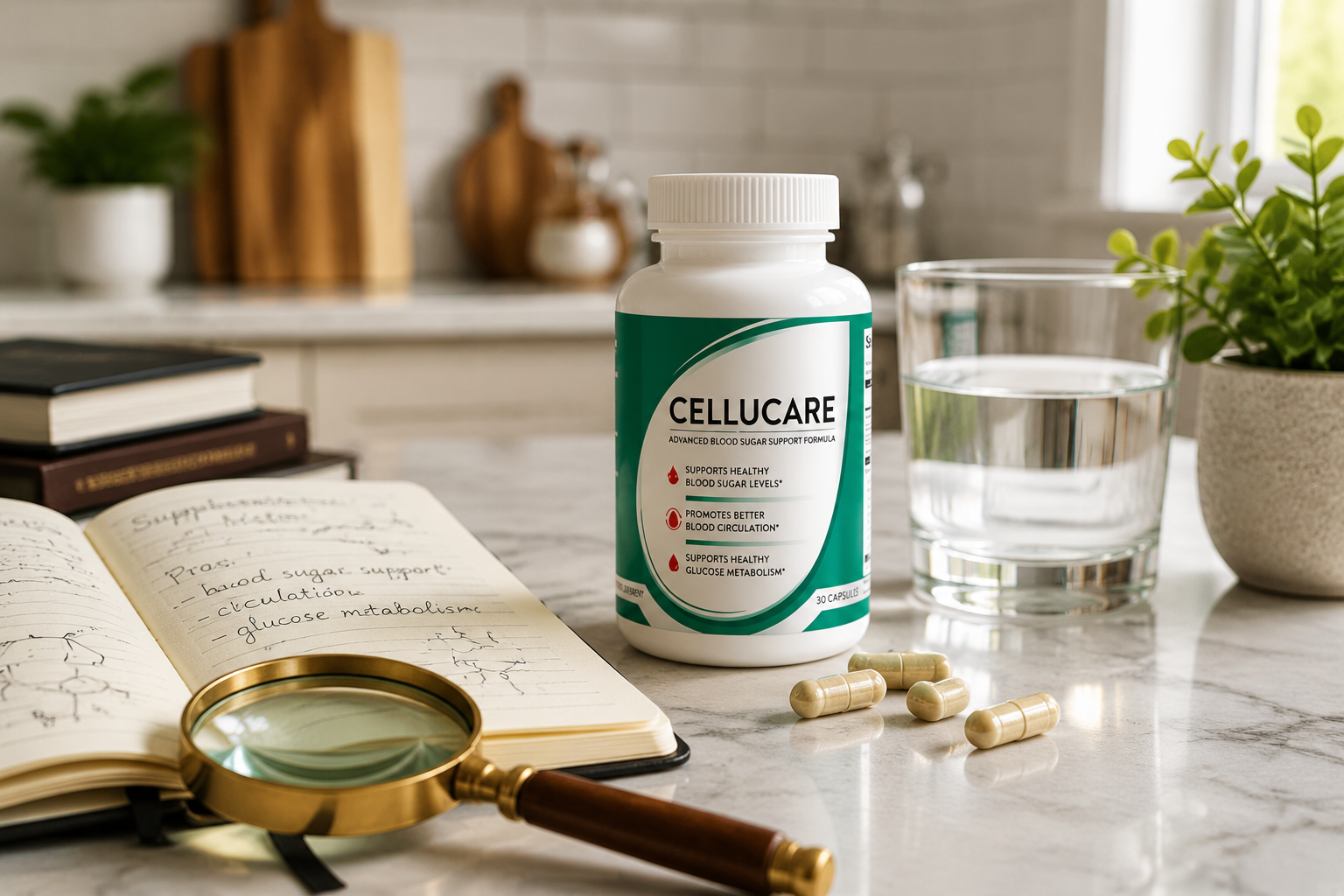
A blood sugar support supplement sold through ClickBank at $194 per bottle, with automatic monthly rebills. The sales page is a classic VSL-driven funnel: 20 minutes of fear and hope around blood sugar, energy crashes, and a “breakthrough” formula. But when you try to find out what’s in the bottle, the page goes silent. No Supplement Facts panel, no ingredient list, no dosages. That’s not an oversight — it’s a strategy. If you knew what was inside, you could price-compare and dose-check. The vendor doesn’t want you to do that.
The product ships as a physical bottle, and ClickBank shows a gravity of 8.1 — meaning a moderate number of affiliates are moving it. That’s not a stamp of quality; it tells you the funnel converts. The high payout ($194.11 average, 75% commission) means affiliates are incentivized to push it hard, and your purchase price is mostly funding that push.
What you actually get
Five things, sized realistically:
- One bottle of CelluCare. The sales page doesn’t specify capsule count, but the pricing implies a 30-day supply. You won’t know the serving size or daily dose until you open the box.
- Automatic subscription enrollment. Unless you spot the tiny opt-out link during checkout, you’ll be charged $194 again next month and every month after. This is the vendor’s real business model.
- Three bonus digital reports. Standard ClickBank upsell fare — titles like “The Blood Sugar Reset” or “Energy Reboot Guide” that recycle public-domain diet advice. You’ll probably never open them.
- VIP customer portal access. A locked webpage with generic tips. Value: zero.
- 60-day refund eligibility (first order only). ClickBank will refund that initial $194 if you ask within 60 days. But you must cancel the subscription separately. Many buyers forget, get rebilled, and then can’t get that second charge back because it’s outside the refund window or from a different transaction.
The ingredient story (or lack of one)
This is where CelluCare falls apart. A supplement review lives or dies on the label. Without it, we’re guessing. The sales page name-drops “herbs and antioxidants” but nothing concrete. Common blood sugar ingredients like berberine, cinnamon, chromium, alpha-lipoic acid, and bitter melon have clinical backing — but only at specific doses. Berberine, for example, is typically effective at 500 mg two to three times daily. If CelluCare contains 50 mg in a proprietary blend, it’s useless. We can’t know.
The omission is a deliberate choice. Transparent brands put the Supplement Facts panel front and center. CelluCare hides it. That alone should stop you from clicking “buy.” You’re being asked to spend $194 on a mystery blend from a vendor whose main selling point is how much they pay affiliates.
How the marketing oversells
The VSL hits every blood sugar anxiety button: fatigue, brain fog, crashing after meals, “stubborn belly fat.” It promises a “new breakthrough” that “they” don’t want you to know about. This is a script. The same language is used to sell dozens of ClickBank supplements. There’s no breakthrough — just a white-labeled formula dropped into a high-commission funnel.
Two specific misdirections:
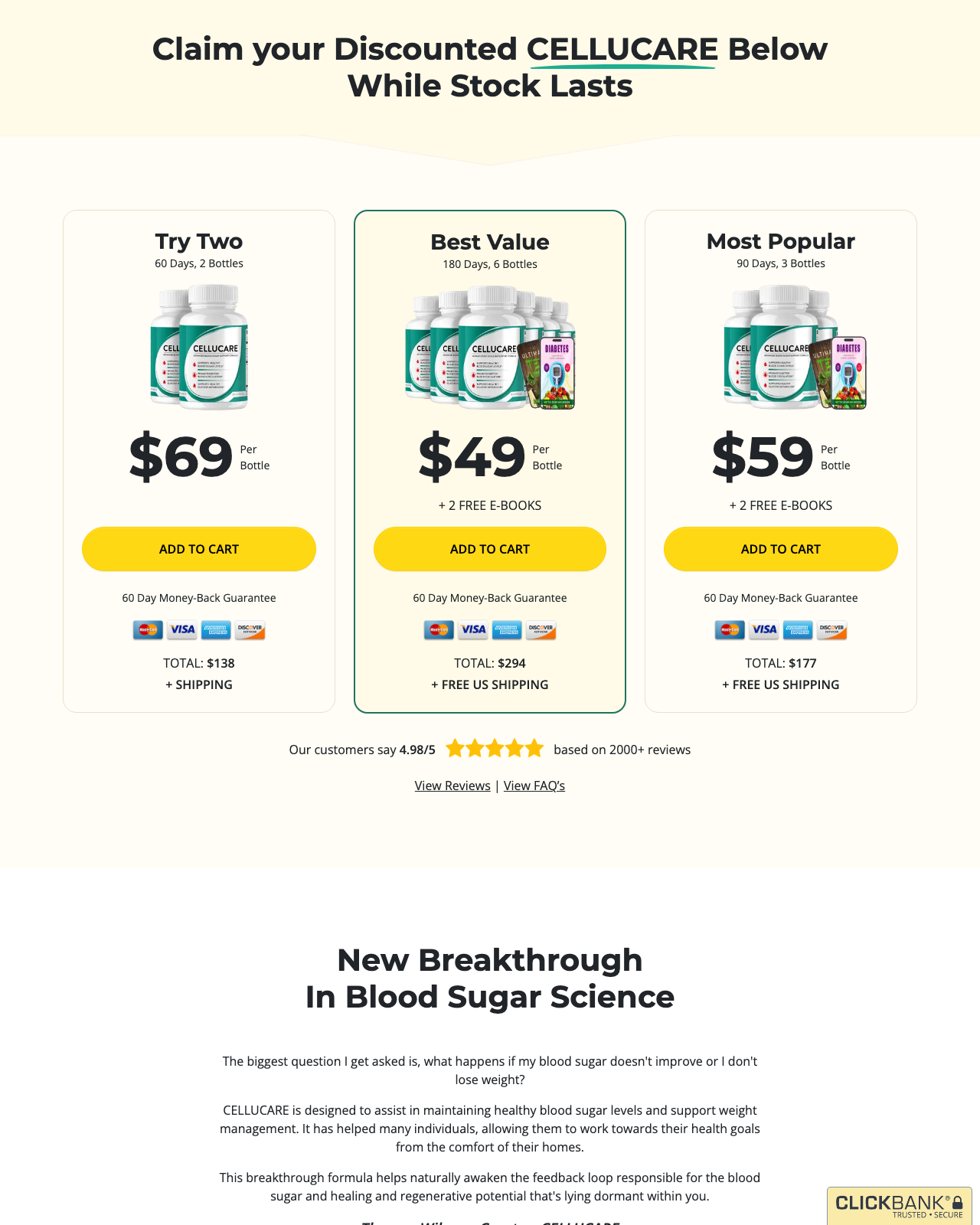
“$160 Payouts available! Reach out to [email protected]” — This is an affiliate recruitment message that accidentally ended up in the marketplace description. It tells you exactly how much of your money goes to the person who sent you the link. At $194, that leaves $34 for product, shipping, and vendor profit. The pills inside that bottle are worth maybe $5.
“Multiple high-performance accolades” — There’s no third-party award. “High-performance” is ClickBank affiliate slang for “converts well.” It has nothing to do with product efficacy or safety.
The cost and the refund reality
$194 one-time, then $194/month until you cancel. The checkout page is designed to make the subscription look like the only option. A small text link lets you buy a single bottle, but it’s easy to miss. Even if you buy just one, you’re paying $194 for a 30-day supply of unknown ingredients. For comparison, a bottle of pure berberine (500 mg, 60 capsules) from a transparent, third-party tested brand costs about $20. Chromium picolinate is pennies a day. You’re paying a 10x premium for the mystery.
The 60-day ClickBank refund is real for the first charge. Email ClickBank support with your order ID, and you’ll get your money back. But that refund doesn’t cancel the subscription. You have to contact the vendor separately or call your bank. And if you don’t notice the second charge until after it posts, you’ll have to fight for a chargeback — ClickBank won’t help with recurring billing disputes beyond the initial order.
Who should buy, who should skip
I can’t recommend this to anyone. If you’re struggling with blood sugar, talk to your doctor. If you want a supplement, buy one with a transparent label, clinical doses, and third-party testing — from a brand that doesn’t hide behind a ClickBank funnel. Berberine, chromium, and cinnamon extracts are cheap and well-studied. You can get a year’s supply for less than the cost of one bottle of CelluCare.
Skip this if:
- You take diabetes medication — hidden ingredients could cause hypoglycemia.
- You value knowing what you swallow.
- You don’t want to wrestle with a subscription trap.
The honest read
CelluCare is a high-priced mystery supplement built for affiliate commissions, not for your health. The missing ingredient list is the tell. The recurring billing is the trap. The $194 price is mostly marketing overhead. If you’re curious enough to buy it anyway, do it with a plan: open the bottle, read the label, compare doses to clinical evidence, and request a refund within 60 days if it’s underdosed. But honestly? Just save yourself the hassle and buy a transparent supplement from a brand that respects your right to know what you’re taking.
I would not buy this.
— Mara Vance
This is the live CelluCare - New Breakthrough In Blood Sugar Science funnel our verdict is based on. We measure these on-page promises against the evidence, dose math, price, and refund mechanics above — tap the image to see the seller’s current offer and terms.
 Live sales page →
 Here's what I'd actually do
If you opened this at 11 pm and the page made the supplement look like an answer to something larger:
Close this tab. CelluCare - New Breakthrough In Blood Sugar Science is in the band where the marketing is doing the heavy lifting and the formula is not. There are evidence-based versions of every promise on that sales page, and most of them cost a third of the price with full label transparency.
Don't buy this if: Do not buy this if you have a diagnosed condition that this product is implicitly addressing. See a clinician. A $69 bottle does not replace a $0-with-insurance lab panel.
— Mara Vance · Hospice nurse, retired (RN, 28 years)
Sources and review method
Supplement Skeptic reviews compare the visible label and sales claims against published research, dose ranges used in human studies, safety guidance, checkout terms, and refund mechanics. This page is not medical advice.
- Vendor sales page — ClickBank-listed sales page (active as of catalog import)
Frequently asked questions
- What’s actually in CelluCare?
- We don’t know. The sales page mentions 'herbs and antioxidants' but provides no Supplement Facts panel, no ingredient list, and no dosages. That’s a red flag. A legitimate supplement discloses exactly what’s in each capsule so you can verify safety and efficacy.
- Is the 60-day refund real?
- Yes, for the first order. ClickBank will refund the purchase price if you request it within 60 days. But you must also cancel the subscription separately — the refund doesn’t automatically stop future rebills. If you forget, you’ll be charged again.
- Why is it so expensive?
- Because the vendor is paying affiliates up to $160 per sale. That cost is baked into your $194 price. Similar formulations from transparent brands cost a fraction of that. You’re paying for the marketing machine, not the pills.
- Could CelluCare actually lower my blood sugar?
- Possibly, if it contains effective ingredients at clinical doses. Common blood sugar support ingredients like berberine (500 mg 2–3x/day), cinnamon extract (250 mg 2x/day), and chromium picolinate (200–1000 mcg/day) have evidence. But without a label, you can’t know if CelluCare includes them or at what strength. Don’t gamble with your health.
More in Dietary Supplements