Review · Dietary Supplements
Cardio Shield: Is Cardio Shield a Scam?
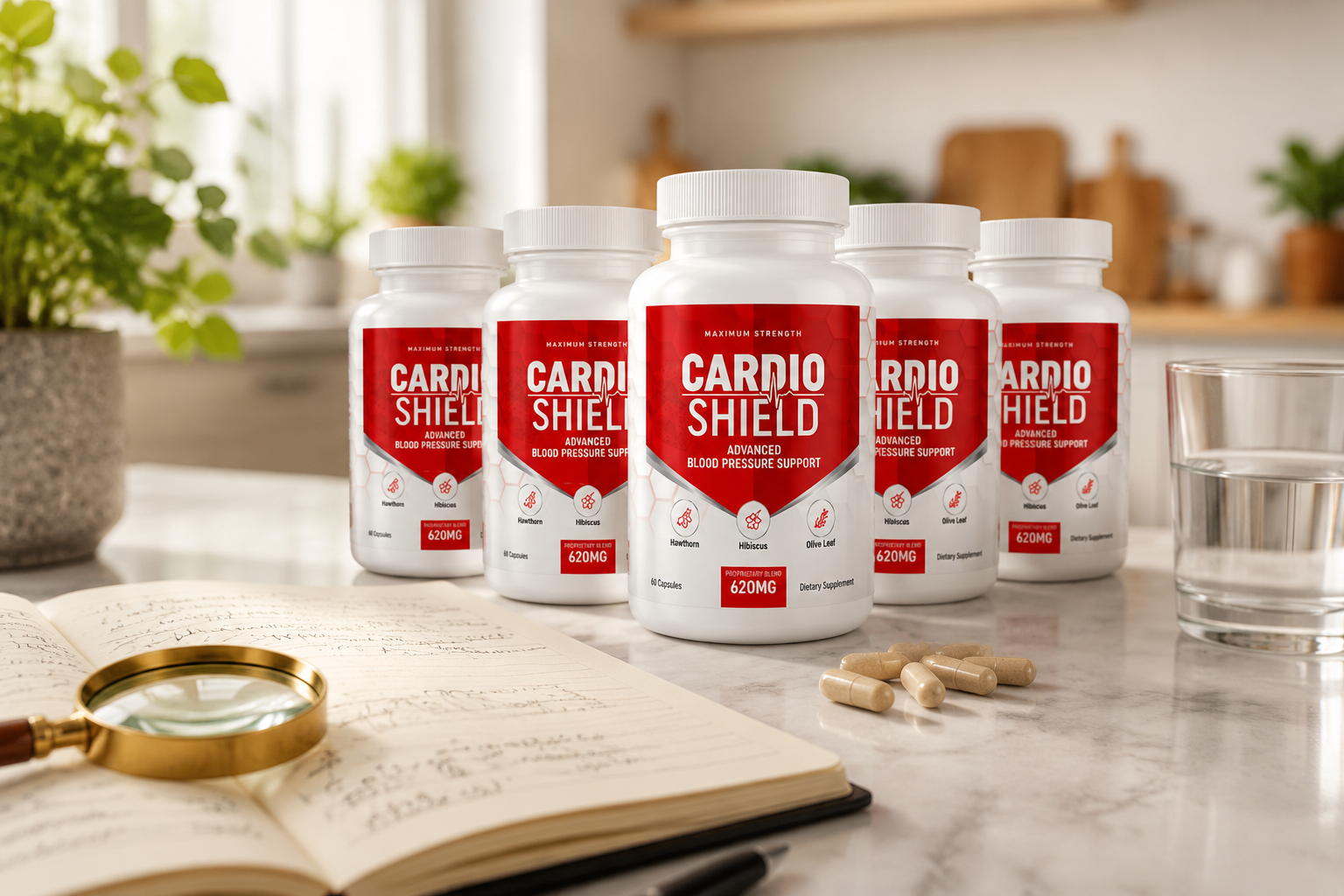
Not a scam: no fraud, refund denial, or regulator action turned up anywhere we looked, and the verdict here is Skeptical at 4.1/10. Cardio Shield is a real $39-59/bottle blood pressure supplement with a genuinely clean 180-day refund, but none of its four named ingredients — hawthorn, olive leaf, green tea, garlic — carries a disclosed dose anywhere on the label or sales page.
Skeptic read
Skeptical4.1/10
Not a scam: no fraud, refund denial, or regulator action turned up anywhere we looked, and the verdict here is Skeptical at 4.1/10. Cardio Shield is a real $39-59/bottle blood pressure supplement with a genuinely clean 180-day refund, but none of its four named ingredients — hawthorn, olive leaf, green tea, garlic — carries a disclosed dose anywhere on the label or sales page.
- Price checked
- From $39 (single bottle $59)
- Dose visibility
- Limited: key ingredient doses are hidden or hard to verify
- Main risk
- None of the four named ingredients' doses are disclosed anywhere on the sales page, references page, or product description
- Better use case
- Buyers who want to try hawthorn, olive leaf extract, green tea extract, and garlic together in one capsule and don't need to know the exact milligrams
- Skip if
- You take prescription blood pressure medication — hawthorn and garlic can both interact with antihypertensive drugs, and NIH's NCCIH recommends talking to a provider before combining herbal products with blood pressure medicine
- Evidence file
- 9 sources attached
Not a scam. After searching BBB, Reddit, FTC/state AG records, and refund-complaint trackers, we found no documented fraud, no regulator action, and no refund-denial pattern tied to Cardio Shield. The verdict is Skeptical at 4.1/10: a real $39-59/bottle blood pressure supplement with a working 180-day refund, sold with four named ingredients that all have some blood-pressure research behind them — but not one of those four ingredients has a disclosed dose anywhere on the label.
What Cardio Shield Costs Today
The live sales page at getcardioshield.com (fetched 2026-08-27) sells three tiers, all through ClickBank checkout:
| Package | Price per bottle | Total charged | Shipping | Approx. per day |
|---|---|---|---|---|
| 1 bottle (30-day supply) | $59 | $78.95 | $19.95 | ~$2.63 |
| 3 bottles (90-day supply) | $49 | $147 | Free | ~$1.63 |
| 6 bottles (180-day supply) | $39 | $234 | Free | ~$1.30 |
The vendor lists “retail prices” of $99, $297, and $594 next to each tier and frames the checkout price as a 40-64% discount off those numbers. Those retail figures are the seller’s own reference prices, not an independently verified market rate — treat the ”% off” framing as marketing, not a real savings calculation. No autoship or recurring billing appears at checkout on the tiers above; each is a one-time charge.
What’s Actually in Cardio Shield
The sales page names four active ingredients directly in the pitch: Hawthorn Leaf, Olive Leaf Extract, Green Tea Extract, and Garlic, followed by the phrase “and many others” with no further detail. There is no supplement facts panel, no per-capsule serving size, and no total blend weight published anywhere on the site — not the sales page, not the references page, not the disclaimer.
| Ingredient | Disclosed dose | What the research shows | Source |
|---|---|---|---|
| Hawthorn Leaf | Not disclosed | NCCIH: “little or no quality evidence” for most claimed heart benefits; conflicting evidence even for heart failure, the best-studied use | NCCIH Hawthorn fact sheet |
| Olive Leaf Extract | Not disclosed | 500 mg/day reduced systolic blood pressure by roughly 5.8 mmHg over 8+ weeks across 5 RCTs (325 patients); 1,000 mg/day showed no added benefit over placebo | PMC systematic review, PMC8035902 |
| Green Tea Extract | Not disclosed | Meta-analysis of 13 RCTs (1,367 subjects): modest reduction of ~1.98 mmHg systolic and ~1.92 mmHg diastolic, strongest at low doses without added caffeine | PMC meta-analysis, PMC4150247 |
| Garlic | Not disclosed | NCCIH: “limited evidence” garlic supplements reduce blood pressure “to a small extent”; more consistent evidence for a modest LDL-cholesterol reduction | NCCIH Garlic fact sheet |
| ”and many others” | Not disclosed, not even named | Cannot be evaluated — the sales page asserts additional ingredients exist without naming or quantifying any of them | Vendor sales page |
The vendor’s own references page lists roughly two dozen citations — NCBI, Heart.org, JAMA Internal Medicine, AHA journals, CDC, and Harvard Health among them. These are real, checkable sources, but they support general facts about blood pressure and the ingredient categories (potassium, hawthorn, garlic), not a clinical trial of the finished Cardio Shield formula at the doses it actually contains. That distinction matters: citing real research about an ingredient class is not the same as proving your specific product delivers an effective amount of it.
Real Complaints: What We Found (and Didn’t)
We searched BBB, Reddit, Trustpilot, Ripoff Report, and FTC/state AG enforcement records for “Cardio Shield” complaints, lawsuits, or regulatory action. None turned up a documented complaint thread, a BBB business profile with a rating, or any enforcement record as of 2026-08-27.
What does rank heavily for “cardio shield scam” is a wave of SEO content-farm pages — we pulled one example (scamlegitalert.com) that carries every “scam alert” keyword pattern (fake, counterfeit, warning, consumer alert) but contains no dated complaint, no named platform, and no verifiable user account. That kind of content is written to rank for anxious searchers, not to document real grievances. Its existence is not evidence the product is a scam; its absence of any specific, checkable complaint is itself the finding. If a documented complaint record surfaces later, this section should be updated to reflect it — as of this review, there isn’t one.
The Sales Page Audit: Timer, Doctor, Scarcity — What’s Really There
We fetched the live sales page directly and checked for the manipulation devices common to this category. Here’s what we found and didn’t find:
- No countdown timer. No JavaScript timer element or “offer expires in” language anywhere on the page.
- No fake scarcity. No “only X left in stock” or “X people viewing this” messaging.
- No fabricated doctor. The narrator, “Jerry,” explicitly introduces himself as “no doctor, scientist or even a nutritionist” — a grandfather figure, not a manufactured medical authority. That’s an unusual amount of restraint for a ClickBank health offer.
- Inflated price anchors, present. The $99/$297/$594 “retail price” comparisons are a real manipulation device — they exist to make the discounted price look better than a neutral market comparison would show.
- Borrowed-authority citations, present. Real journal citations are used to support general claims about the ingredient category, not the specific formula — a subtler device than a fake doctor, but still designed to transfer credibility the finished product hasn’t earned.
We also found at least two other live domains (cardioshield-usa.com, the-cardio-shield.com) selling what appears to be the same or a closely related product, both also processed through ClickBank. Multiple funnels for one ClickBank vendor is common practice for testing different ad creative, not on its own a red flag — but it does mean the exact copy you see can vary by which link you click. It also matters because the copy is not equally honest across funnels: at the time of writing, cardioshield-usa.com states the product “meets strict FDA regulations for safety and effectiveness” and shows a “4.9/5 by 57,000+ happy customers” rating. The FDA does not approve or certify dietary supplements for effectiveness, and no source for that customer count is given. If you land on that domain, treat those two lines as marketing, not fact.
How the 180-Day Refund Actually Works
This is the strongest part of the offer. The vendor’s own refund policy page lays out a specific, numbered process:
- Contact support within 180 days of your order, by email or phone (5am-1am EST, seven days a week).
- Get a US return address from the support team — you’re told not to ship anywhere else, or the return won’t be accepted.
- Ship back unopened bottles only. You keep any bottle you’ve already opened; you’re only required to return unused inventory.
- Pay return shipping yourself. This is on you, not the vendor.
- Wait 1-2 weeks after the fulfillment center receives your return for the refund to post, depending on your bank.
The fulfillment center address (285 Northeast Ave, Tallmadge, OH 44278) is published directly on the refund policy page, not hidden behind a support ticket. That’s more transparency than most ClickBank offers show on this specific point, and it’s the main reason this review lands in Skeptical rather than lower: a working, documented refund mechanism is a real consumer protection, even when the label itself is thin.
The Cheaper Way to Get the Same Ingredients
If you want the four named actives at doses the research actually studied, buying them separately from a commodity brand costs less per month than Cardio Shield’s undisclosed amounts:
| Ingredient | Studied dose | Approx. monthly cost (commodity brand) |
|---|---|---|
| Hawthorn extract, standardized | 300-900 mg/day (per NCCIH-reviewed trials) | ~$8-10 |
| Olive leaf extract | 500 mg/day | ~$8-12 |
| Green tea extract, low-dose/decaffeinated | Modest effect at low doses per meta-analysis | ~$5-7 |
| Garlic, aged or standardized extract | Consistent with NCCIH-reviewed trials | ~$8-10 |
| Total | ~$29-39/month |
That range overlaps or beats Cardio Shield’s $39-59 per bottle, and you get to read an actual milligram amount on each label before you buy. What you lose is the single-capsule convenience of one product instead of four, and any interaction risk still applies regardless of which route you take — see the avoid-if list above before combining any of these with blood pressure or blood-thinning medication.
For a broader look at this category, Cardio Slim Tea covers a differently-formatted cardiovascular-support product in the same price range, and the Blue Heron High Blood Pressure protocol reviews a non-supplement, information-based approach to the same problem.
Bottom Line
Cardio Shield is not the scam its top search results imply — no fraud, no regulator action, no refund-denial pattern turned up anywhere we looked, and the 180-day refund process is genuinely well documented. What it is: a $39-59/bottle formula built on four real, modestly-studied blood pressure ingredients, sold with zero disclosed doses for any of them. If you’re on blood pressure or blood-thinning medication, talk to your prescriber before trying it — hawthorn and garlic both carry real interaction cautions. If you’re not, and you’re comfortable testing an undisclosed-dose blend backed by a working refund, this isn’t the trap the “scam” searches suggest. If dose transparency matters more to you than convenience, the commodity stack above gets you the same four ingredients at their studied amounts for less money and a label you can actually read.
Here's what I'd actually do
If you have already read the label and you are willing to test it for six weeks against your own lab work, not against how you feel:
Cardio Shield sits in the middle band — defensible ingredient pool, unverifiable dosing, premium ClickBank-funnel pricing. The 60-day refund is your insurance. Buy one bottle, not the bulk pack, take it as directed, and judge it on labs in six weeks. Refund if it did nothing.
Don't buy this if: Do not buy this if you would not also pay for a basic metabolic panel to test whether it did anything. Without labs, you cannot tell the supplement from the placebo from the regression-to-the-mean.
— Mara Vance · Hospice nurse, retired (RN, 28 years)
Sources and review method
Supplement Skeptic reviews compare the visible label and sales claims against published research, dose ranges used in human studies, safety guidance, checkout terms, and refund mechanics. This page is not medical advice.
- Vendor sales page — Live sales page fetched 2026-08-27; pricing tiers, named ingredients, no timer/scarcity/doctor claim found
- Vendor refund policy — 180-day refund window, physical return address (Tallmadge, OH), step-by-step process
- Vendor scientific references page — Citations support general blood-pressure claims, not the finished formula; no supplement facts panel or doses shown
- Alternate ClickBank-linked storefront — Second live funnel selling the same product, also fulfilled through ClickBank
- NCCIH — Hawthorn: Usefulness and Safety — NIH: little quality evidence for most claimed benefits; interaction caution with heart/blood pressure medication
- NCCIH — Garlic — NIH: limited evidence of small blood pressure reduction; increased bleeding risk with anticoagulants/aspirin
- Olive leaf extract cardiometabolic meta-analysis (PMC8035902) — 500 mg/day reduced systolic BP ~5.8 mmHg over 8+ weeks across 5 RCTs, 325 patients
- Green tea and blood pressure meta-analysis (PMC4150247) — 13 RCTs, 1,367 subjects: modest ~2 mmHg systolic / ~1.9 mmHg diastolic reduction, strongest at low dose
- Scam-alert content farm example — Representative of the SEO content ranking for 'cardio shield scam' — keyword-stuffed, no dated complaints, counts, or named platforms
Who should skip Cardio Shield
Skip Cardio Shield if you take prescription blood pressure medication or a blood thinner: hawthorn and garlic can both interact with those drugs, and NIH's NCCIH explicitly recommends talking to your provider before combining any herbal product with heart or blood pressure medicine — this sales page never raises that caution itself. Skip it if you need to know the actual milligram dose of what you're taking before you buy; none of the four named actives has a published amount. Skip it if you've already read the research on hawthorn, olive leaf extract, green tea, and garlic and would rather buy each at its studied dose from a commodity brand for less money per month. Cardio Shield is a reasonable test only for someone comfortable trying an undisclosed-dose herbal blend for 180 days with a working refund as the backstop, and who is not on medication that interacts with any of its ingredients.
Frequently asked questions
- Is Cardio Shield a scam?
- No evidence of one. We searched for BBB complaints, Reddit threads, FTC or state AG action, and refund-denial reports and found none as of August 2026. What ranks for 'cardio shield scam' is mostly generic SEO content with no dated complaints or named platforms, not documentation of fraud. The real issue is dose transparency, not legitimacy.
- How much does Cardio Shield cost?
- $59 for one bottle (30-day supply) plus $19.95 shipping, $49 per bottle for three (90-day supply, free shipping, $147 total), or $39 per bottle for six (180-day supply, free shipping, $234 total). The vendor's own $99/$297/$594 'retail price' comparisons are reference prices set by the seller, not independently verified market prices.
- How does the Cardio Shield refund actually work?
- You contact vendor support by email or phone within 180 days of your order, they give you a US return address, you ship back any unopened bottles at your own cost, and the refund posts 1-2 weeks after they receive the return. You keep any opened bottles. It's a documented process with a physical fulfillment address in Tallmadge, Ohio, not a bare promise.
- Where can I buy Cardio Shield safely?
- Through the official ClickBank-processed checkout at getcardioshield.com. Searches also surface an unrelated Amazon-listed capsule product also called 'Cardio Shield' — confirm you're comparing the same product before assuming a price difference means a deal or a fake.
- Are there side effects or drug interactions with Cardio Shield?
- The two ingredients with the clearest interaction risk are hawthorn and garlic. NIH's NCCIH says hawthorn may interact with heart medications in ways that aren't fully understood, and garlic supplements can increase bleeding risk, especially alongside anticoagulants or aspirin. If you're on blood pressure or blood-thinning medication, talk to your prescriber before starting this or any herbal blend.
- How long before Cardio Shield works?
- The vendor's own sales page says to expect 60 to 90 days for meaningful results and recommends the 180-day (6-bottle) supply to see it through. That timeline isn't tied to any cited clinical trial of the finished formula; it's the seller's guidance.
- Is there a cheaper alternative to Cardio Shield?
- Yes. Buying standardized hawthorn extract, 500 mg olive leaf extract, a low-dose green tea catechin extract, and a garlic supplement individually from a commodity brand runs roughly $28-35 a month at each ingredient's studied dose, versus $39-59 for Cardio Shield's undisclosed amounts. You lose the single-capsule convenience but gain a label you can actually verify.
More in Dietary Supplements