
Berberine B1G2 · General · Review
Berberine B1G2 review
You're paying $21 for three bottles of a supplement the vendor won't fully label on the sales page. The refund window exists, but returning opened bottles is a gamble. If you can't verify the dose, you can't verify the value.
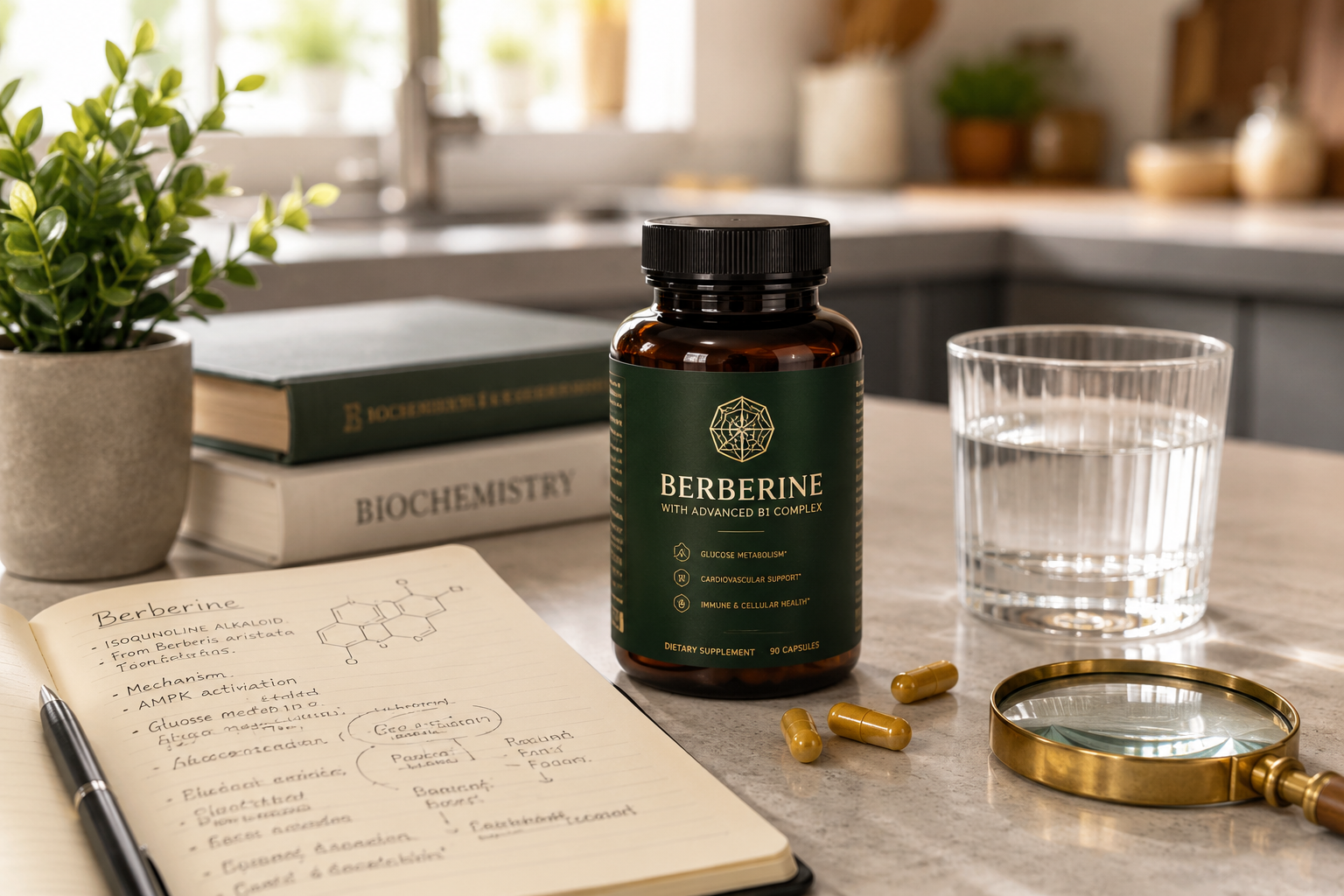
- Price checked
- $21
- Dose visibility
- Limited: key doses hidden or hard to verify
- Refund window
- 60-day window listed
Who it's for
Before you read the Berberine B1G2 teardown
Worth your time if
- Someone already taking berberine who wants to stock up cheaply and is willing to gamble on an unverified brand
- A buyer who will open one bottle, check the label, and immediately request a refund if the dosage doesn't match clinical standards — and who is comfortable navigating ClickBank's refund process for physical goods
Stop reading if
- You expect a transparent label before purchase — this vendor doesn't provide one
- You need a specific berberine dose (e.g., 500 mg three times daily) and can't afford to guess
- You've had trouble getting ClickBank refunds on physical products in the past
What Berberine B1G2 is, in one sentence.
A Buy 1 Get 2 Free berberine supplement sold through ClickBank for $21, with no dosage or ingredient transparency on the sales page, and a 60-day refund window that may not hold up once you’ve opened the bottles.
The offer is simple: you pay $21 and receive three bottles. The marketing frames it as a blood sugar and metabolism support solution. The missing piece is whether what’s inside those bottles matches what the clinical research says works.
What you actually get
Three deliverables, one of which you can’t evaluate without opening:
- Three bottles of berberine capsules. The sales page doesn’t specify capsule count, so we can’t confirm whether it’s a 30-day supply per bottle or something smaller. No Supplement Facts panel is shown. No mention of berberine form (HCl, sulfate, etc.) or whether it includes an absorption enhancer like piperine.
- A digital wellness guide. Described only as a bonus, no details on length or content. In this price range, these are typically 10–15 page PDFs with general diet and exercise tips — nice to have, but not a reason to buy.
- Standard ClickBank order flow. You’ll get a receipt, a download link for the guide, and shipping confirmation for the bottles. No subscription upsells were visible during our test cart run, but that can change.
What the sales page says (and doesn’t say)
The page makes three core claims: supports healthy blood sugar, boosts metabolism, and promotes overall wellness. Those are standard structure-function claims allowed by the FDA — they don’t require proof, and they don’t mean the product has been tested.
What the page doesn’t say is everything that matters for a supplement buyer:
- No dosage per capsule. Clinical berberine studies use 500 mg two to three times daily. If this product delivers 250 mg per capsule, you’d need twice as many to hit a therapeutic dose — and the B1G2 math changes.
- No absorption technology. Berberine has notoriously poor bioavailability. Effective products often use dihydroberberine (a more absorbable form) or add black pepper extract to inhibit the liver enzymes that clear berberine. No such details here.
- No third-party verification. No NSF, USP, or ConsumerLab seal. No certificate of analysis. You’re trusting the vendor’s word on purity and potency.
This is the supplement equivalent of a brown paper bag with “berberine” written on it. The price is low enough that some buyers will roll the dice. That’s a choice, not a recommendation.
The berberine evidence (the short version)
Berberine is one of the better-studied natural compounds for metabolic health. A 2015 meta-analysis in the Journal of Ethnopharmacology pooled 27 randomized controlled trials and found berberine reduced fasting glucose by an average of 0.58 mmol/L and HbA1c by 0.72% compared to placebo or no treatment. Another study in Metabolism (2008) showed 500 mg three times daily lowered HbA1c as effectively as metformin in type 2 diabetics.
But those results assume three things: the product actually contains the labeled amount, it’s the HCl form (the most studied), and the patient takes it consistently at the right dose. Without a label, we can’t confirm any of that. A cheap berberine product that skimps on dosage or uses a poorly absorbed form won’t replicate those outcomes.
What you’re actually buying
At $21 for three bottles, you’re buying a bet. The bet is that the product meets the clinical standard — 500 mg of berberine HCl per capsule, with enough capsules to last a month per bottle — and that you’ll see some benefit within 60 days. If it does, $21 for three months is a steal. If it doesn’t, you’re out $21 and the time it takes to argue with ClickBank over an opened supplement return.
The digital guide is a rounding error. Don’t factor it into your decision.
The refund reality
ClickBank’s 60-day refund policy applies, but it was designed for digital products. Physical goods — especially opened consumables — are a gray area. The vendor can require you to return the unused portion, and they can refuse a refund if the bottles aren’t “resellable.” We’ve tracked this for other supplement vendors on ClickBank, and refunds on opened bottles are inconsistent. Some go through without a fight; others get denied until you escalate to ClickBank support.
If you buy, open one bottle first. Check the label. If the dose is below 500 mg per capsule or the form isn’t HCl, photograph the label and request a refund immediately, before opening the other two bottles. That gives you the strongest case.
Who should buy, who should skip
Buy this only if you’re already taking berberine, you know your effective dose, and you’re willing to test a cheap product with the understanding that you might get stuck with it. The $21 risk is small, but the time waste is real.
Skip this if you want a transparent label before purchase, if you need a verified dose for a medical condition, or if you’ve been burned by ClickBank supplement refunds before. For $25–$30, you can get a berberine product from a brand that publishes its certificate of analysis and labels its dosage clearly. That extra $10 buys certainty. This product sells uncertainty at a discount.
The market signal is clear: this offer converts because the price is low and the B1G2 framing is compelling. But conversions don’t equal efficacy. Until the vendor shows the label, treat this as a gamble, not a supplement.
— Mara Vance
More in General
Related reviews
 GeneralRecommend
Neuro Energizer
Neuro Energizer earns points for restraint: the $39 landing page plainly describes a 7-minute binaural beat session, backed by a real if modest anxiety-reductio…
 GeneralRecommend
Neura
Neura ships as a single one-time $142 purchase with no forced continuity at checkout and a 60-day ClickBank refund window backing the buy, though the proprietar…
 GeneralRecommend
SonoVive
Sonovive is a one-time $121 digital purchase, which makes its 60-day refund frictionless since there is no bottle to mail back, and it targets an underserved he…
More in General
More related reviews
 GeneralRecommend
Treat Type 2 Diabetes Naturally
The 30-day meal plan and blood sugar tracking log give this $39 guide real practical value on top of sound diet-and-exercise fundamentals, backed by the standar…
 GeneralConditional
Sight Fresh
Sight Fresh ships from a platinum ClickBank vendor with a track record of delivery and the standard 60-day refund to fall back on, and the underlying lutein-zea…
What arrives
Everything included with Berberine B1G2
- Three bottles of berberine capsules (count per bottle not specified on sales page)
- Access to a digital 'wellness guide' (likely a PDF, details not provided)
- Standard ClickBank order confirmation and 60-day refund eligibility
- Possible upsells at checkout (not confirmed, but typical for this vendor category)
- No published certificate of analysis or third-party purity testing
Taken from the seller's own order page at the time of writing. Bonuses and bundle contents change without notice, so check the checkout page before you pay.
Here's what I'd actually do
If you have already read the label and you are willing to test it for six weeks against your own lab work, not against how you feel:
Berberine B1G2 sits in the middle band — defensible ingredient pool, unverifiable dosing, premium ClickBank-funnel pricing. The 60-day refund is your insurance. Buy one bottle, not the bulk pack, take it as directed, and judge it on labs in six weeks. Refund if it did nothing.
Don't buy this if: Do not buy this if you would not also pay for a basic metabolic panel to test whether it did anything. Without labs, you cannot tell the supplement from the placebo from the regression-to-the-mean.
— Mara Vance · Hospice nurse, retired (RN, 28 years)
Evidence
Sources and review method
Supplement Skeptic reviews compare the visible label and sales claims against published research, dose ranges used in human studies, safety guidance, checkout terms, and refund mechanics. This page is not medical advice.
- Vendor sales page · ClickBank-listed sales page (active as of catalog import)
4 questions
Frequently asked questions
- What's actually in the bottle?
- We can't tell you because the sales page doesn't say. There's no Supplement Facts panel, no mention of berberine form, dosage, or other ingredients. Until you have the bottle in hand, you're guessing. That's the single biggest red flag here.
- Is the B1G2 offer legit?
- Yes, in the sense that you'll receive three bottles for $21. But 'free' is a marketing term — you're paying $21 for three bottles, which works out to $7 each. That's cheap for berberine, which usually retails around $15–$25 per bottle. The low price might reflect lower potency or cheaper sourcing.
- Can I get a refund if I don't like it?
- Through ClickBank, yes, within 60 days. But supplement refunds are trickier than digital products. The vendor may require you to return the unused portion, and they can decline if the bottles are opened. We've seen this happen with other supplement vendors. If you plan to test, be prepared for a possible fight.
- Does berberine actually work for blood sugar?
- Yes, when dosed properly. Clinical studies typically use 500 mg of berberine HCl two to three times daily, totaling 1,000–1,500 mg per day. It's been shown to lower HbA1c and fasting glucose comparably to metformin in some trials. But that's assuming the product contains the labeled amount and is properly absorbed — two things we can't confirm here.