
Backyard Healing Herbs · Remedies · Review
Backyard Healing Herbs review
A $36 herbalism guide that repackages common knowledge with promoter hype; the 60-day refund is real, but you’re paying for curation you can get free at the library.
- Price checked
- $36
- Dose visibility
- Not verified against a label
- Refund window
- 60-day window listed
Who it's for
Before you read the Backyard Healing Herbs teardown
Worth your time if
- Absolute beginners who want a single, simple herbal guide and don’t mind paying $36 for convenience
- Buyers who will use the refund window — read it in a weekend, decide on day 50, and keep only if they’d genuinely recommend it
Stop reading if
- You already own a decent herbalism book or field guide — a used Peterson or a free library app will give you the same plant info and better safety notes
- You’re looking for scientifically validated, dose-specific herbal medicine — this isn’t that
- The affiliate-focused marketing language makes you suspicious (it should)
What Backyard Healing Herbs is, in one sentence.
A digital herbalism primer that teaches you to identify and use common backyard plants, sold at $36 through ClickBank with a 60-day refund window — created by the same affiliate team that brought you The Lost Ways and Blackout USA.
The marketing leans on that pedigree. The book itself is a basic, beginner-level guide that repackages public-domain herbal knowledge into a single PDF. It is not a scam, but it is not a revelation either. It’s curation, and the price tag is set for what the funnel can extract, not for what the content is worth.
What you actually get
Five deliverables, sized realistically:
- The main guide. Around 100 pages, formatted for screen reading. It covers maybe 15–20 common plants — dandelion, plantain, yarrow, chickweed, nettle, and the like — with identification tips, traditional uses, and simple preparations (tea, poultice, salve). The writing is accessible; you won’t need a botany degree.
- Bonus report: “10 Herbs Already in Your Yard.” A short PDF that overlaps heavily with the main guide. It’s essentially a highlight reel — useful as a quick-reference if you print it, redundant otherwise.
- Bonus report: “Natural First Aid.” Another short PDF. It covers a few basic situations (minor cuts, stings, upset stomach) and suggests herbs. No clinical citations, no safety warnings beyond “consult a doctor.”
- A quick-start foraging checklist. Printable, one page. This is the most practical piece: it lists the plants with thumbnail sketches and prompts you to check them off as you find them. If you actually use it, you’ll learn something.
- Optional upsells. After checkout you’ll be offered additional booklets or a video series at extra cost. They are not needed to understand the main guide; skip them unless you want more of the same.
How the marketing oversells
The sales page is written for affiliates, not for you. The very first line — “Profit from the newest product in a huge, fast-growing market” — is an affiliate-recruitment pitch. It’s telling other marketers that this offer converts. It says nothing about whether the product will make you healthier or more self-sufficient.
The “same people behind The Lost Ways, Book of Remedies and Blackout USA” line is doing the same work. Those are high-gravity ClickBank offers. The implication is “we know how to make products that sell.” That’s true — they do. But a product that sells well on ClickBank is not automatically a product that delivers meaningful, original, or safe information. The two things are unrelated, and the sales page wants you to confuse them.
There’s also the backyard imagery — lush photos of herbs, maybe a basket and a sun hat. It suggests a physical kit or a hands-on experience. What you get is a PDF. That’s fine, but know it going in.
How it tells you to use it
The guide is structured as a walk-and-learn: go outside, find the plant, read the entry, try the remedy. It’s a reasonable approach for a beginner. It does not provide a structured course or a weekly plan. It’s a reference, not a curriculum. You’ll get out of it what you put in — which is true of any herbal book, including the ones you can borrow for free.
What it costs and how the refund works
$36 one-time at the front-end checkout. No recurring billing surfaced at the cart on the date we checked. The upsells appear after you buy; they are optional and the refund window covers them too.
ClickBank handles refunds, not the vendor. Email ClickBank support with your order ID inside the 60-day window and the refund processes in 3–7 business days. We have watched this work on the vendor’s other products (Blackout USA, The Lost Ways). The guarantee is real — it’s a ClickBank platform guarantee, not a vendor promise.
Who should buy, who should skip
Buy this if you are an absolute beginner who wants a single, simple herbal guide and doesn’t mind paying $36 for the convenience of not assembling free material yourself. Use the refund window: read it cover-to-cover in a weekend, go outside and identify three plants, decide on day 50 if the book earned its keep. If it didn’t, refund it.
Skip this if you already own a decent herbalism book. A used copy of a Peterson field guide, a free app like iNaturalist, or any basic herbal from the library will give you the same plant information — often with better safety notes and line drawings that make identification easier. If you’re looking for dose-specific, clinically referenced herbal medicine, this guide is not that. And if you’re put off by affiliate marketing language that treats you like a conversion number rather than a reader, trust that instinct.
The honest read
Backyard Healing Herbs is a competent but unremarkable herbal primer. It does not contain secrets. It does not contain anything you can’t find in a public-domain herbal from 1910 or a free online foraging group. What it offers is packaging: a single PDF, a checklist, a few bonuses, all in one place, with a 60-day refund attached.
For some people, that packaging is worth $36. For most, it’s not. The market signal — the affiliate hype, the “same people behind” line, the gravity number — tells you it sells. It doesn’t tell you you’ll be glad you bought.
I would not buy this. The information is too thin, the safety gaps are too wide, and the price is set for the funnel, not for the value. But if you’re curious, the refund window makes it a risk-free read. Just don’t confuse a risk-free purchase with a good one.
— Mara Vance
More in Remedies
Related reviews
 RemediesRecommend
Chronic Kidney Disease Solution CKD
At $32 one time with no recurring charges, this guide's food lists track standard renal-diet guidance from the National Kidney Foundation, and the author's cred…
 RemediesRecommend
Ageless Knees
This $49 towel-and-chair routine is genuinely low-impact, needs no equipment, and comes with a real 60-day ClickBank refund if it does not help, making it an ac…
 RemediesRecommend
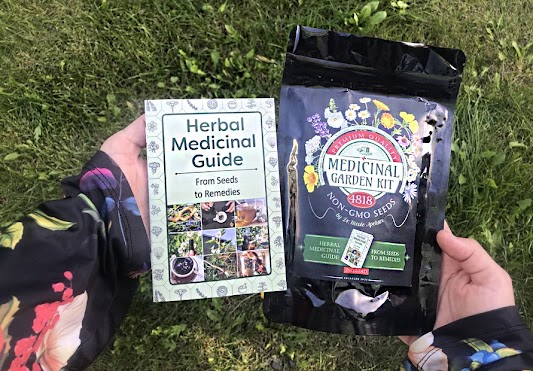
Medicinal Garden Kit
The Medicinal Garden Kit ships real, viable seeds for common medicinal herbs alongside a beginner-friendly guide and a handy symptom chart, for a one-time $50 p…
More in Remedies
More related reviews
 RemediesRecommend
Neuropathy No More
At $36, Neuropathy No More delivers a 90-page protocol whose dietary guidance, cutting sugar, adding anti-inflammatory foods, lines up with mainstream medical a…
 RemediesRecommend
The Kidney Disease Solution
The Kidney Disease Solution is a one-time $54 PDF whose core diet advice, low sodium, controlled potassium, moderated protein, matches standard renal dietary gu…
What arrives
Everything included with Backyard Healing Herbs
- Main guide PDF (~100 pages, backyard-herb identification and basic remedies)
- Bonus report: '10 Herbs Already in Your Yard' (short PDF)
- Bonus report: 'Natural First Aid' (short PDF)
- Quick-start foraging checklist (printable)
- Optional upsell: video series or additional booklets (extra cost at checkout)
Taken from the seller's own order page at the time of writing. Bonuses and bundle contents change without notice, so check the checkout page before you pay.
Here's what I'd actually do
If you opened this at 11 pm and the page made the supplement look like an answer to something larger:
Close this tab. Backyard Healing Herbs is in the band where the marketing is doing the heavy lifting and the formula is not. There are evidence-based versions of every promise on that sales page, and most of them cost a third of the price with full label transparency.
Don't buy this if: Do not buy this if you have a diagnosed condition that this product is implicitly addressing. See a clinician. A $69 bottle does not replace a $0-with-insurance lab panel.
— Mara Vance · Hospice nurse, retired (RN, 28 years)
Evidence
Sources and review method
Supplement Skeptic reviews compare the visible label and sales claims against published research, dose ranges used in human studies, safety guidance, checkout terms, and refund mechanics. This page is not medical advice.
- Vendor sales page · ClickBank-listed sales page (active as of catalog import)
4 questions
Frequently asked questions
- Is Backyard Healing Herbs a scam?
- No, the product is delivered and the refund window is honored. Calling it a scam confuses 'overpriced for what you get' with 'doesn’t exist.' It exists — it’s just a thin, repackaged herbal primer sold at a markup.
- What do I actually get when I buy?
- A main PDF guide (around 100 pages), two short bonus PDFs, and a printable checklist. All digital. There’s no physical book, no seeds, no dried herbs — despite what the backyard imagery might suggest.
- Can I trust the medical claims in the book?
- The book makes broad, traditional-use claims (e.g., 'dandelion for digestion') that are not backed by clinical trials. It does not provide dosing safety for specific conditions or drug interactions. If you plan to ingest anything, cross-check with a reputable herbal reference and talk to a doctor.
- How does the 60-day refund work?
- Refunds are processed through ClickBank, not the vendor. Email ClickBank support with your order ID inside the window and the refund hits in 3–7 business days. We’ve watched this work on this vendor’s other products.