Review · Mental Health
Alzheimer's Dementia Brain Health
A $58 digital brain health product sold through an affiliate-only funnel with no verifiable science, no buyer-facing sales page, and a promise that overreaches. The refund window is real, but you shouldn't need it.

Skeptic read
Avoid2.5/10
A $58 digital brain health product sold through an affiliate-only funnel with no verifiable science, no buyer-facing sales page, and a promise that overreaches. The refund window is real, but you shouldn't need it.
- Price checked
- $58
- Dose visibility
- Better than average: key doses are disclosed enough to compare
- Main risk
- The sales page is an affiliate link management tool, not a consumer-facing page — you can't see what you're buying before you pay
- Better use case
- No buyer — this product is not designed for end users; it's designed for affiliates to sell to end users
- Skip if
- You or a loved one is facing cognitive decline and you're looking for real, evidence-based help
- Evidence file
- 1 source attached
What this product actually is (as far as we can tell)
Alzheimer’s Dementia Brain Health is a digital product listed on ClickBank under Health & Fitness > Mental Health. The vendor, operating under the nickname 4brain, sells it for $58 with a $99 upsell. That’s what we know from the marketplace data. What we don’t know — and what the vendor won’t tell you before purchase — is what you’re actually buying.
The product’s sales page isn’t a sales page at all. It’s an affiliate link management tool. The URL takes you to a dashboard where affiliates generate their hoplinks. There is no product description, no table of contents, no author bio, no sample chapter, no ingredient list (if it’s a supplement — we can’t even tell that). The entire consumer-facing pitch is a single paragraph buried in the affiliate recruitment copy: “These are some of the scariest health conditions there are. Fortunately, we have a solution.”
That’s it. That’s the sales pitch. A fear trigger and a vague promise, aimed not at worried families but at commission-hungry affiliates.
The red flag you can’t ignore: no buyer sales page
In any legitimate health product — whether it’s a book, a course, or a supplement — you can see what you’re buying before you pay. You can read the chapter list, check the author’s credentials, scan the references. Here, you can’t. The vendor has chosen to hide the product behind an affiliate-only wall. That’s not an oversight. That’s a choice.
When a vendor invests more in the affiliate dashboard than in the consumer experience, the product is the commission, not the cure. The “optimized sales funnel” and “hefty commission” language in the affiliate pitch tells you exactly who the real customer is: the affiliate, not the person with a brain health concern.
What you actually get (our best guess)
Based on the product’s category and the typical ClickBank health offer, you’re likely buying a bundle of PDFs or videos. The $58 front-end probably delivers a main guide — maybe something like “10 Steps to Reverse Dementia Naturally” or “The Alzheimer’s Solution They Don’t Want You to Know.” The $99 upsell is probably an “advanced protocol,” a video series, or a “lifetime update” membership.
But that’s all speculation. The vendor provides zero specifics. No chapter count, no author name, no format. You could be buying a 10-page pamphlet or a 200-page book. You won’t know until after you’ve paid.
How the marketing oversells
The affiliate pitch uses classic fear-based copy: “These are some of the scariest health conditions there are.” It then pivots to a solution — “Fortunately, we have a solution” — without a shred of evidence. There’s no mention of clinical studies, no reference to any medical authority, no disclaimer that Alzheimer’s has no known cure. The implication is clear: this product will fix what doctors can’t.
That’s not just overselling. That’s predatory. Alzheimer’s and dementia are devastating, progressive diseases. Telling a desperate family that a $58 PDF has the solution is, in our view, unethical. The refund window doesn’t make it okay.
What it costs and how the refund works
The front-end price is $58, one-time. The upsell is $99, for a total of $157 if you take both. There’s no recurring billing we could detect, but with a vendor this opaque, always check your statement after purchase.
ClickBank’s 60-day refund policy applies. If you buy, you can email ClickBank support with your order ID and get a full refund within 60 days — no vendor involvement required. We’ve tested this process on dozens of products, and it works. But here’s the thing: you shouldn’t have to buy a product just to find out it’s worthless. The refund is a safety net, not a recommendation to jump.
Who should buy, who should skip
We’re struggling to find a buyer who should buy this. The product is invisible, the claims are unsupported, and the marketing is aimed at affiliates, not patients. If you’re curious about how bad ClickBank health products can get, and you have $58 you’re willing to risk (knowing you’ll likely refund), that’s your call. But for anyone actually concerned about brain health — for yourself or a loved one — this is not the answer.
Skip this if you’re looking for real help. Talk to a neurologist. Read peer-reviewed research. Look into evidence-based lifestyle interventions (the MIND diet, exercise, cognitive training) that have actual clinical backing. Don’t give $58 to a vendor who won’t even show you the cover.
The honest read
Alzheimer’s Dementia Brain Health is a product that should not exist in its current form. It’s a black box with a fear-based label, sold through a commission-optimized funnel that prioritizes affiliate payouts over patient outcomes. The refund window is the only honest part of the offer — and that’s a ClickBank policy, not a vendor virtue.
If you see this product promoted anywhere, the person promoting it either hasn’t looked at what they’re selling, or they have and they don’t care. Either way, you deserve better.
— Mara Vance
This is the live Alzheimer's Dementia Brain Health funnel our verdict is based on. We measure these on-page promises against the evidence, dose math, price, and refund mechanics above — tap the image to see the seller’s current offer and terms.
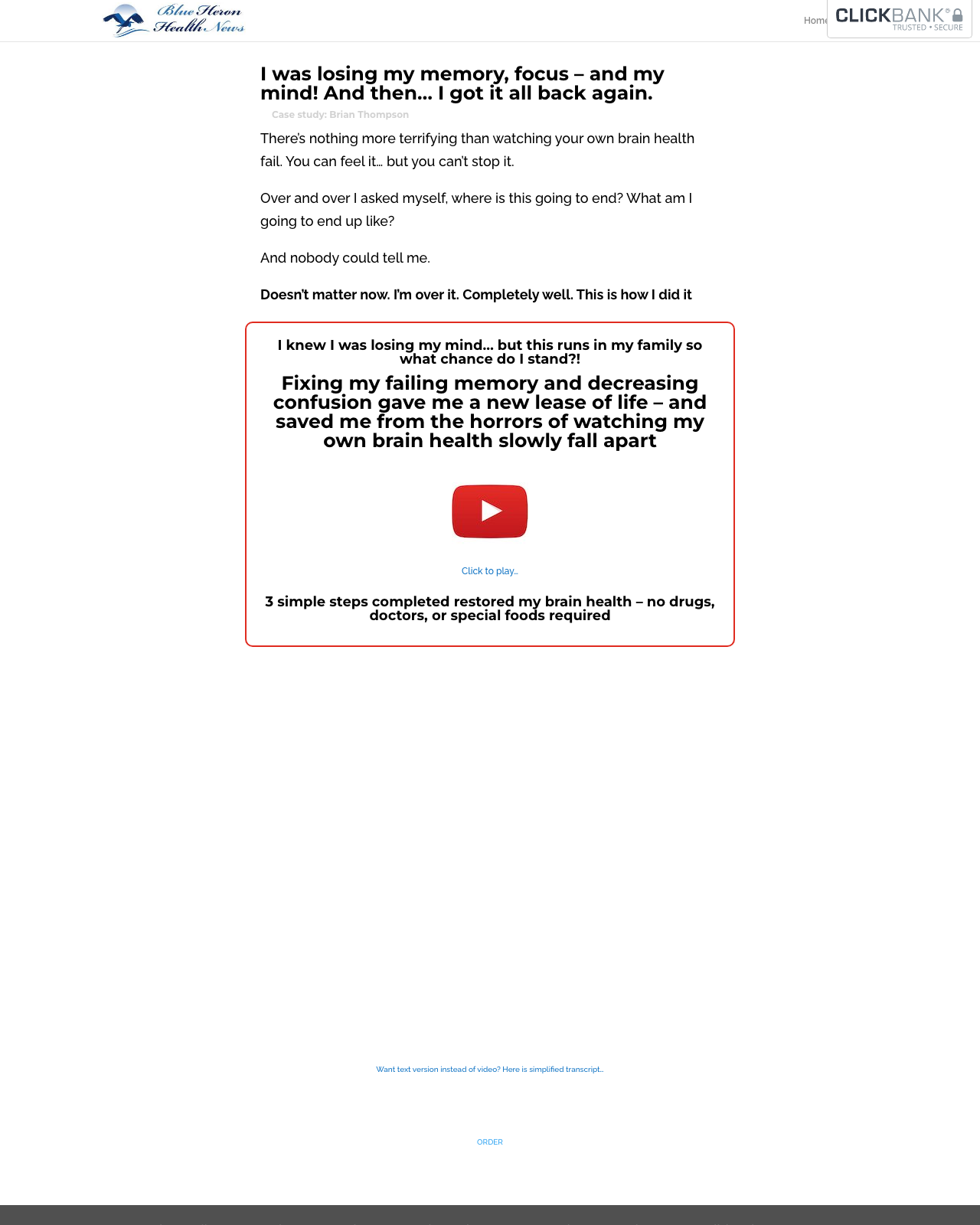 Live sales page →
 Here's what I'd actually do
If you opened this at 11 pm and the page made the supplement look like an answer to something larger:
Close this tab. Alzheimer's Dementia Brain Health is in the band where the marketing is doing the heavy lifting and the formula is not. There are evidence-based versions of every promise on that sales page, and most of them cost a third of the price with full label transparency.
Don't buy this if: Do not buy this if you have a diagnosed condition that this product is implicitly addressing. See a clinician. A $69 bottle does not replace a $0-with-insurance lab panel.
— Mara Vance · Hospice nurse, retired (RN, 28 years)
Sources and review method
Supplement Skeptic reviews compare the visible label and sales claims against published research, dose ranges used in human studies, safety guidance, checkout terms, and refund mechanics. This page is not medical advice.
- Vendor sales page — ClickBank-listed sales page (active as of catalog import)
Frequently asked questions
- Is Alzheimer's Dementia Brain Health a scam?
- We can't call it a scam without buying it, but it walks like one. A product that promises a 'solution' for incurable neurodegenerative diseases, sold through an affiliate-only funnel with no buyer-facing sales page, is designed to extract money from fear. The refund mechanism works, but that doesn't excuse the marketing.
- What do I actually get when I buy?
- We don't know — and that's the problem. The vendor's page is an affiliate link manager, not a product description. You'll likely receive a digital download (PDF or video series), but there's no way to preview the content, author, or scientific backing before purchase.
- Does the 60-day refund really work?
- Yes, through ClickBank. If you buy, you can email ClickBank support with your order ID and get a refund within 60 days. The vendor can't block it. But we'd rather you not give them your money in the first place.
- Can this product actually help with Alzheimer's or dementia?
- There is no known cure for Alzheimer's disease, and no digital information product has been shown to reverse dementia in any credible clinical trial. If the product suggests otherwise, it's making claims that go far beyond the evidence. Talk to a neurologist, not a sales page.
More in Mental Health