Review · Men's Health
Agrandarlo / Male Enlargement / 90% & 3 Upsells.
A Spanish-language male enlargement program with a low $27 front-end price but recurring billing and upsells designed to extract more. No evidence the method works; the marketing is affiliate bait, not buyer information.
Skeptic read
Avoid2.5/10
A Spanish-language male enlargement program with a low $27 front-end price but recurring billing and upsells designed to extract more. No evidence the method works; the marketing is affiliate bait, not buyer information.
- Price checked
- $27
- Dose visibility
- Better than average: key doses are disclosed enough to compare
- Main risk
- Zero clinical evidence presented — male enlargement methods (jelqing, stretching, etc.) lack rigorous scientific support
- Better use case
- Spanish-speaking men who want a structured, low-cost program and are prepared to cancel recurring charges immediately after purchase
- Skip if
- You expect a clinically proven, safe method — this isn't it
- Evidence file
- 1 source attached
What Agrandarlo is, in one sentence.
A Spanish-language digital male enlargement program sold for $27 at the front end, with three upsells and recurring billing hidden in the funnel. The vendor markets it to affiliates, not to buyers — and the sales page is in Spanish, so I can’t dissect the claims word for word, but the pattern is unmistakable.
The ClickBank listing description is 100% affiliate recruitment: “90% commission,” “converting at 4.8%+ to male health lists,” “$1.45+ EPCs,” “low refunds.” Not a single word about what the product actually does or why it might work. That’s your first red flag.
What you actually get
Since the vendor doesn’t describe the product to customers, I have to read between the lines. Based on the category, price point, and upsell structure, here’s what you’re almost certainly buying:
- The front-end product ($27). A digital guide or video series teaching a “natural enlargement method” — almost certainly jelqing, stretching, or some combination. It’ll be in Spanish, formatted as a PDF or member-area video. The content will promise permanent gains with daily exercises, often using before/after photos and testimonials as proof.
- Three upsells. After you pay the $27, you’ll hit a series of upsell pages before you can access your purchase. Typical upsells in this niche: an “advanced technique” guide, a “fast results” protocol, or a supplement offer (pills that claim to boost blood flow). Each will be priced between $17 and $47, and they’ll use countdown timers to pressure you.
- Recurring billing. The vendor flags “recurring billing” but gives zero details. Usually this means you’re automatically enrolled in a monthly membership (access to a “members area” with new content) or a supplement autoship program. The charge will hit your card every month until you cancel — and canceling often requires emailing support or navigating a deliberately confusing cancellation page.
- A 60-day refund window on the initial purchase. ClickBank’s standard guarantee applies to the $27. But recurring charges are a separate beast; you’ll need to cancel the subscription to stop them, and refunds for those are at the vendor’s discretion.
How the marketing oversells
The entire marketplace listing is written for affiliates, not customers. That’s not an oversight — it’s a signal that the vendor cares more about recruiting traffic than about selling a credible product. When a vendor can’t be bothered to write a single sentence about the product’s benefits, it usually means the product can’t stand on its own merits.
The gravity of 0.17 is also telling. Gravity reflects how many affiliates have made a sale in the last 12 weeks. A gravity below 1 means very few affiliates are actively promoting this — and for a product that’s been around long enough to have a ClickBank listing, that often means it doesn’t convert well or has high refund rates, despite the vendor’s claim of “low refunds.” If it were truly converting at 4.8% with low refunds, affiliates would be swarming it.
How it tells you to use it
I can’t review the actual content because the sales page is in Spanish and I’m not buying it just to tear it apart. But the standard male enlargement playbook is: follow a daily exercise routine for 10–20 minutes, with a “rest day” schedule, for 6–12 weeks. The guide will promise measurable gains in length and girth, often with a ruler-measurement protocol. It will warn you not to overtrain and may include a “warm-up” and “cool-down” with hot towels.
This is all borrowed from body-modification forums and has no regulatory oversight. If the product includes supplements (likely in an upsell), the ingredients will be the usual suspects: L-arginine, ginseng, maca, maybe some unlisted PDE5 inhibitor if you’re unlucky.
What it costs and how the refund works
$27 is the advertised price, but that’s just the entry ticket. The upsell funnel will push your total to $60–$100 if you buy everything. Then the recurring billing starts. You need to read the cart page carefully — look for pre-checked boxes or fine print about a “trial” that converts to a monthly subscription.
ClickBank’s 60-day refund policy covers the initial $27. To get it, email ClickBank support with your order ID. The process works, but it only applies to the first payment. If you’ve been charged a recurring fee, you’ll have to fight the vendor directly, and ClickBank won’t step in unless the vendor violates their terms.
Where the marketing oversells (the specific lines)
Every line in the vendor’s description is an affiliate metric, not a product claim. Let’s translate:
- “Success in the spanish market.” — Means they’ve sold some copies. Doesn’t mean the product works.
- “Promo 90% commission (email me).” — The vendor is offering a higher-than-standard commission to top affiliates. That’s a bribe to get traffic, not a sign of quality.
- “Converting at 4.8%+ to male health lists With $1.45+ epcs.” — Conversion rate and earnings per click. These numbers are unverified and likely cherry-picked from the best traffic sources. Even if true, they tell you the sales page is persuasive, not that the product is effective.
- “3 Upsells, recurring billing. Low refunds.” — The business model is built on extracting maximum revenue per customer. “Low refunds” might mean the refund rate is low, or it might mean the vendor fights refunds aggressively. Either way, it’s a vendor-side stat, not a buyer protection.
Who should buy, who should skip
Buy this if you’re a Spanish speaker who wants to test a male enlargement method for $27 and you’re disciplined enough to cancel the recurring billing within minutes of purchasing. Use the 60-day refund window as a free trial: read the guide, try the exercises for a week, and if you’re not convinced, get your money back.
Skip this if you expect a medically sound, evidence-based solution. Male enlargement exercises are not supported by good science. The temporary gains some men report are usually due to improved erection quality (from better blood flow) or measurement error, not actual tissue growth. If you’re concerned about size, talk to a urologist — not a ClickBank vendor.
Also skip if you’re not comfortable with recurring charges. The vendor’s silence on what the recurring billing actually is should alarm you. It’s likely a monthly membership you don’t need, and canceling it will be a hassle.
The honest read
Agrandarlo is a product whose own seller can’t be bothered to describe it to buyers. The entire public-facing pitch is affiliate bait: commission percentages, conversion rates, EPCs. That’s like a restaurant advertising to waiters instead of diners — it tells you the kitchen isn’t proud of the food.
The $27 price is low enough to be a throwaway purchase, but the upsells and recurring billing are designed to turn that $27 into a much larger lifetime value. If you’re curious, you can buy, read, and refund — but you’ll need to be vigilant about the recurring charges. Most men who buy male enlargement products are not vigilant; they’re hopeful and embarrassed, and that’s exactly who this funnel exploits.
There’s a reason the gravity is 0.17 while the vendor brags about high EPCs. If the product were a winner, affiliates would be promoting it in droves. They’re not. That’s the market telling you something.
— Rhett Calder
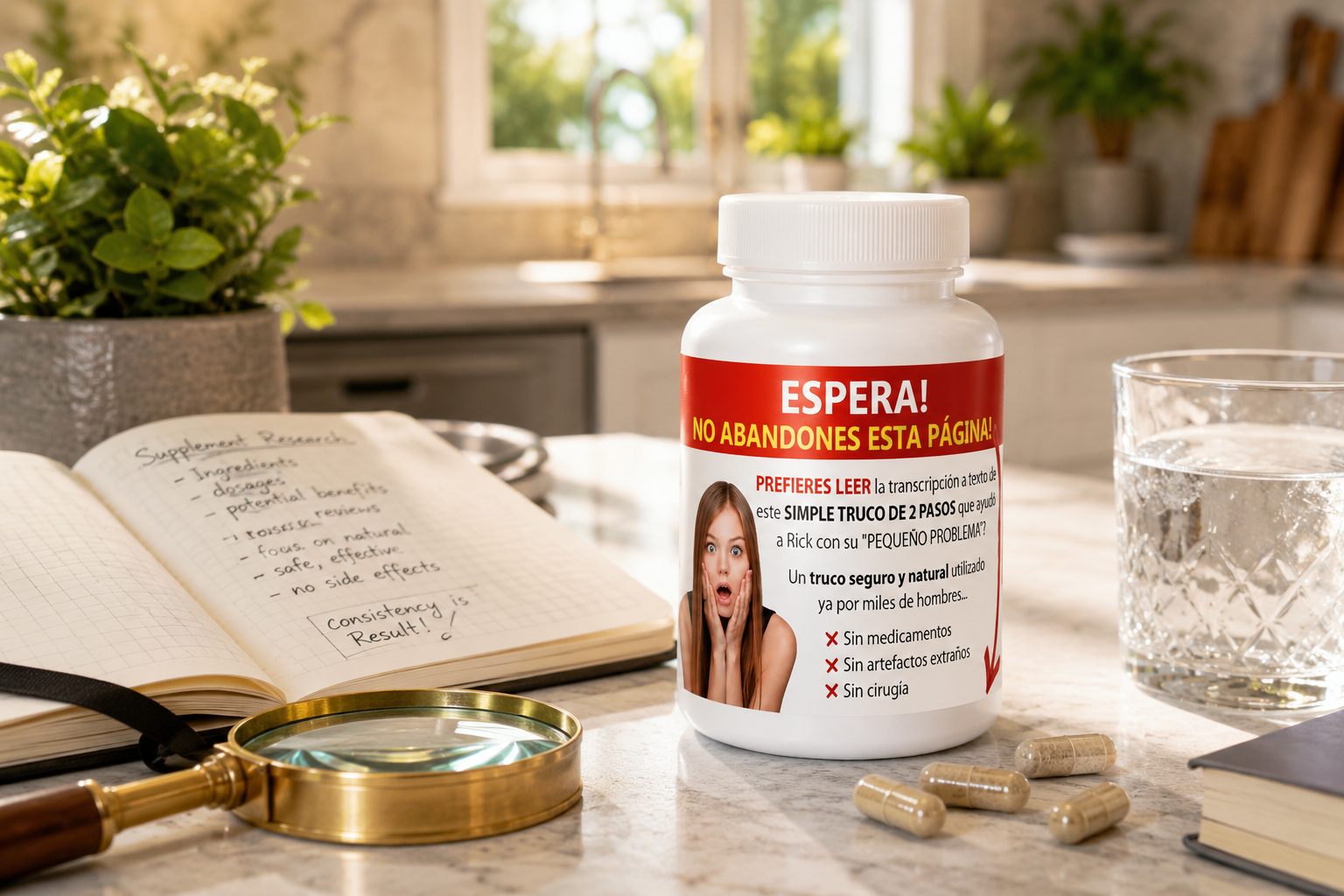
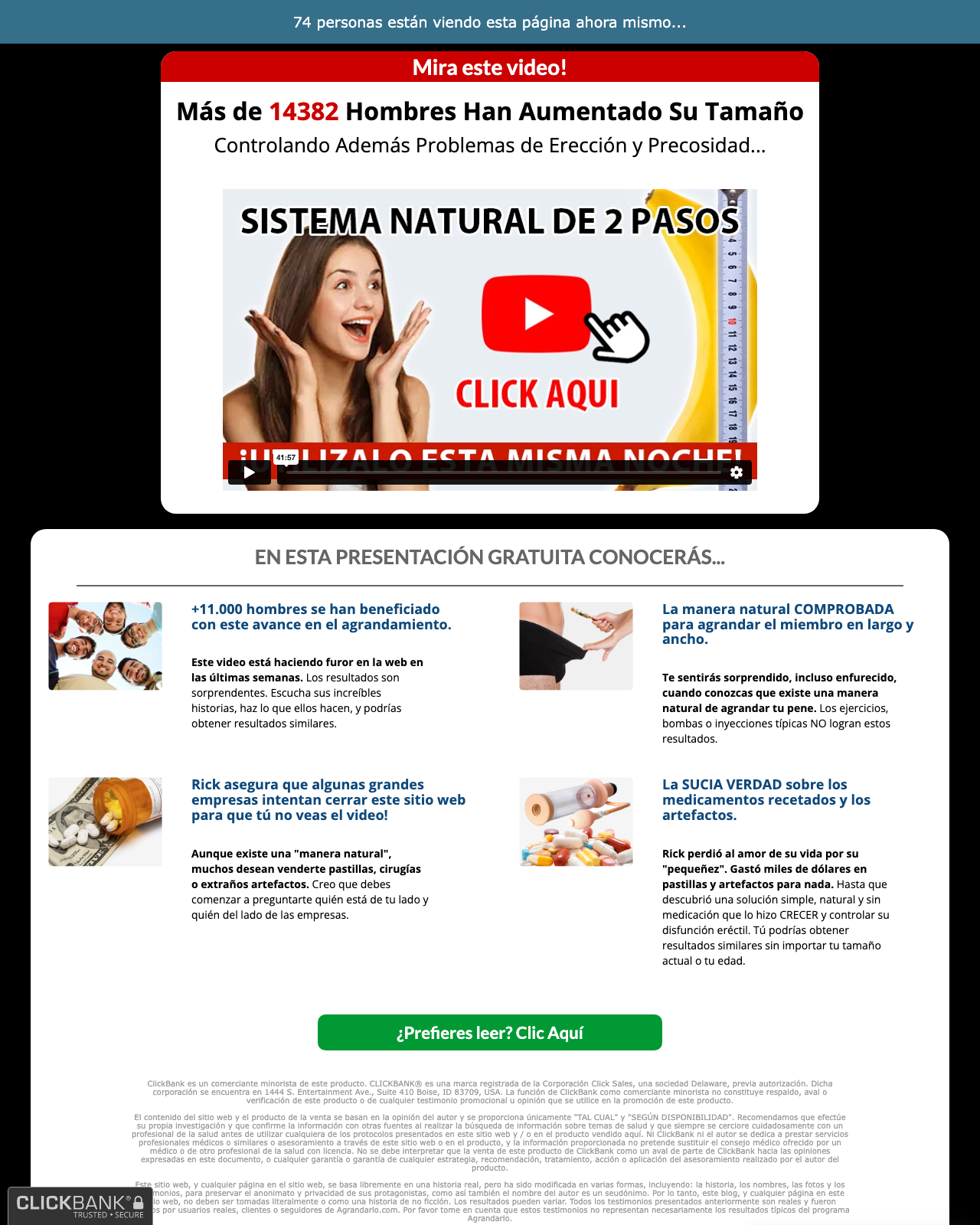
This is the live Agrandarlo / Male Enlargement / 90% & 3 Upsells. funnel our verdict is based on. We measure these on-page promises against the evidence, dose math, price, and refund mechanics above — tap the image to see the seller’s current offer and terms.
 Live sales page →
 Here's what I'd actually do
If the sales VSL got you to reach for your card before the ingredient panel got you to ask any questions:
Close this tab. Agrandarlo / Male Enlargement / 90% & 3 Upsells. is in the band where the marketing is doing the heavy lifting and the formula is not. There are evidence-based versions of every promise on that sales page, and most of them cost a third of the price with full label transparency.
Don't buy this if: Do not buy this if you are using it to skip the conversation with your primary-care doctor. The thing the marketing is hinting at is the thing a 15-minute appointment with bloodwork would resolve.
— Dr. Rhett Calder · Internal medicine, retired (MD, board-certified 1989–2023)
Sources and review method
Supplement Skeptic reviews compare the visible label and sales claims against published research, dose ranges used in human studies, safety guidance, checkout terms, and refund mechanics. This page is not medical advice.
- Vendor sales page — ClickBank-listed sales page (active as of catalog import)
Frequently asked questions
- Is Agrandarlo a scam?
- It's a real digital product that you'll receive after payment, so it's not a scam in the 'nothing delivered' sense. But the claims are unproven, and the recurring billing model is designed to extract money from people who forget to cancel. That's a predatory business model, not a scam.
- What exactly do I get for $27?
- A digital guide (probably a PDF or video series) teaching a male enlargement method. The sales page is in Spanish and I can't review the specifics, but it's almost certainly a jelqing/stretching routine. You'll also be pushed through three upsells before you can access the product.
- How does the recurring billing work?
- The vendor says 'recurring billing' but doesn't disclose terms on the marketplace listing. Typically, this means you're signed up for a monthly membership or supplement shipment after the initial purchase. You'll need to cancel separately — the 60-day refund only covers the first payment. Check your cart carefully and monitor your statements.
- Is there any scientific evidence this method works?
- No. Male enlargement exercises have been studied in small, uncontrolled trials and show at most temporary, minor changes. No reputable medical organization endorses them. The marketing will likely use testimonials and before/after photos, which are easily faked.
- Can I get a refund?
- Yes, for the initial $27 purchase through ClickBank's 60-day policy. You must contact ClickBank support with your order ID. However, recurring charges are not automatically refunded — you'll need to cancel the subscription and may only get the most recent charge back if you're lucky. Act quickly.
More in Men's Health