
From the Supplement Skeptic desk · our own checklist
The Supplement Safety Audit
60-second ingredient audit: dose, contamination, and interaction flags — before you buy or swallow."
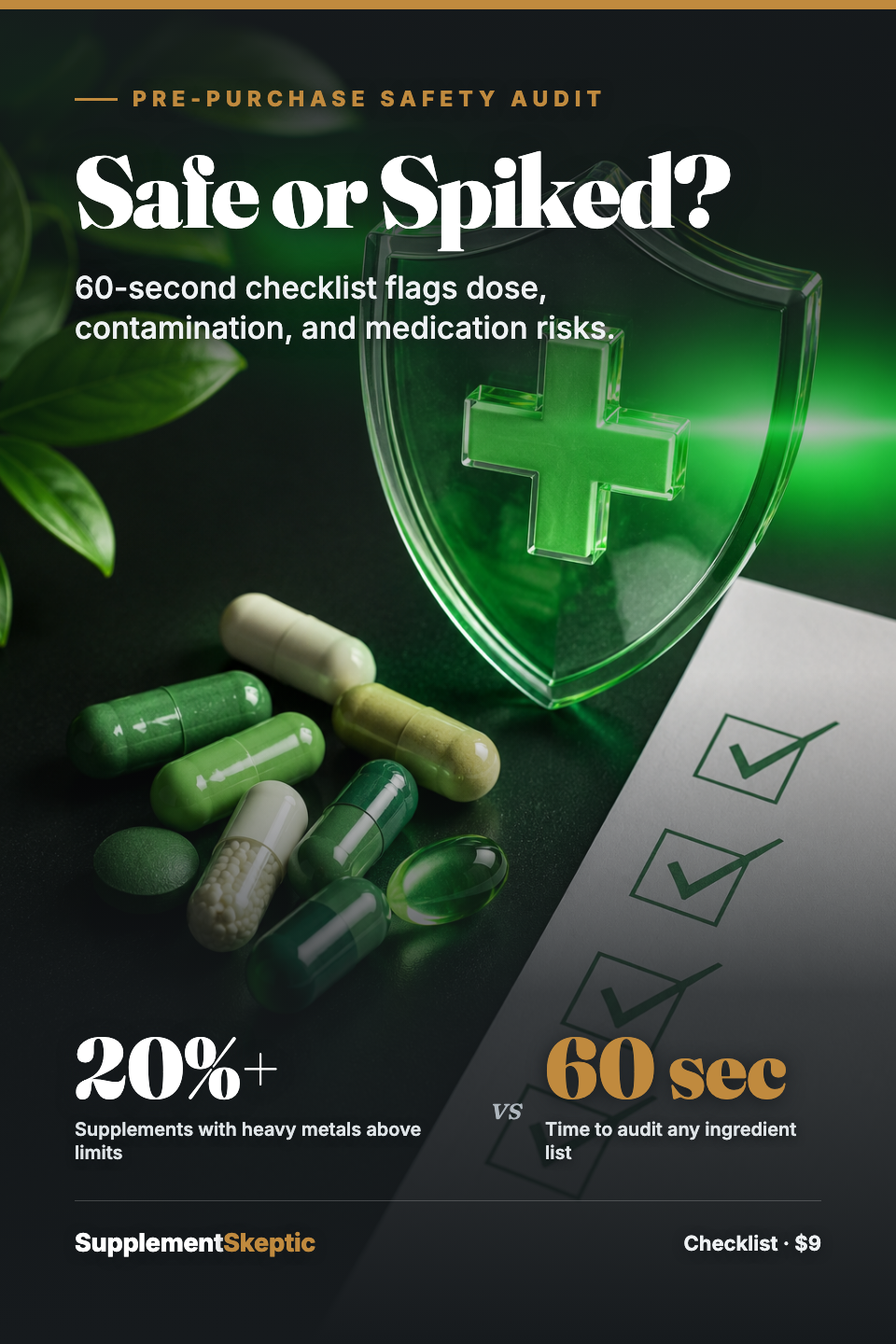
Over 20% of tested supplements contain heavy metals above safe limits, and the FDA identifies scores of products spiked with hidden pharmaceuticals each year. This checklist flags proprietary-blend hiding, under-dosing against studied amounts, banned substances, contamination risks, and medication interactions—so you know exactly what you're paying for in 60 seconds."
- 20%+
- Supplements with heavy metals above safe limits
- 50+
- FDA warning letters per year for hidden ingredients
- 60 sec
- Time to audit any supplement label
- 15-point
- Checklist: dose, contamination, interactions, scam flags
- Format
- checklist
- Price
- $9
- Delivery
- Instant download
- Refund
- 30 days
- Audit any supplement label in 60 seconds against a 15-point safety checklist.
- Flag underdosed ingredients by comparing label dose to doses actually studied in trials.
- Identify high-risk medication interactions (St. John's Wort + birth control, ginkgo + aspirin).
- Spot five common "hidden pharmaceutical" red flags the FDA warns about.
- Learn what third-party certifications (NSF, USP, ConsumerLab) actually mean.
- Get refund and complaint-filing templates if something goes wrong.
Free 60-second audit
Is your supplement actually safe?
Enter your supplement type or paste your ingredient list. We'll flag the biggest red flags in 60 seconds.
-
1 What type of supplement are you checking?
-
2 Does the label clearly show individual ingredient doses?
-
3 Are you taking any prescription medications?
-
Your result
Here's what the evidence flags
Get the safety audit — $9 →Your supplement shows 3 potential red flags: proprietary blend hiding (underdosed ingredients), no third-party testing listed, and possible interaction with medications.
The Supplement Safety Audit PDF gives you a 15-point checklist to run on your label right now — so you know whether to keep taking it, talk to your doctor, or switch brands.
The Safety Problem
Before you swallow a supplement, you should answer three questions:
- Is it dosed like the studies? A “proprietary blend” usually means underdosed.
- Does it interact with my meds? St. John’s Wort can nullify birth control. Ginkgo increases bleeding risk with aspirin.
- Is it tested for contamination? Over 20% of supplements contain heavy metals above safe limits.
The FDA also warns about a constant flood of unlabeled pharmaceutical ingredients—sibutramine (a weight-loss drug pulled from the market), sildenafil (Viagra), synthetic steroids—snuck into “natural” formulas to boost perceived efficacy.
How the Category Tricks You
The proprietary blend. When a label says “proprietary blend” or “complex,” it usually means the company doesn’t want you to know individual doses—often because they’re underdosed. No regulations require transparency here.
The hidden dose. A supplement might list an ingredient that was studied, but at half the studied dose. You’re paying for the name, not the effect.
The spiked formula. A weight-loss supplement that “really works” might be working because it contains undeclared sibutramine or similar pharmaceuticals. The FDA identifies these constantly in warning letters.
The interaction trap. You take your supplement with blood thinners, heart meds, or birth control—and the supplement either blocks the drug’s effect or amplifies it dangerously. Nobody told you to ask.
No third-party testing. The brand’s own lab says it’s clean. But independent testing (NSF, USP, ConsumerLab) frequently shows heavy metals, bacteria, or different contents than the label claims.
What This Checklist Does
The audit runs 15 checks on any ingredient list: dose transparency, dose adequacy against studies, proprietary-blend risk, contamination likelihood, interaction flags, banned substance warning signs, third-party testing status, and refund guarantee clarity.
Each check takes 10-20 seconds. Total time: 60 seconds. Total cost: $9. Total insight: whether to keep taking it, dig deeper with your doctor, or switch brands.
Not medical advice. This is a consumer education checklist. If you’re on medications, pregnant, or have health conditions, your doctor or pharmacist is the authority. This audit flags reasons to have that conversation.
Use this audit to vet supplements before you buy. Always review new supplements with your licensed clinician before starting.
What's inside
- 15-point safety audit checklist — print or use on your phone at the store.
- Proprietary blend red-flags guide — what brands hide and how to spot it.
- Quick reference: banned substances, heavy-metal warning signs, certifications explained.
- Medication-interaction quick-ref — common drugs and which supplements to avoid.
- Instant refund and FDA complaint-filing templates with exact links.
Frequently asked
Why pay $9 if I can search online?
You can, but you'll spend two hours cross-referencing FDA databases, meta-analyses, and drug-interaction sites. This checklist compresses that into a 15-point audit you run in 60 seconds. You're paying for time saved, not information.
Can this replace talking to my doctor?
No. This is a consumer education checklist. If you're on medications or have health conditions, your doctor or pharmacist is the authority. This audit flags reasons to have that conversation.
What if my supplement fails the audit?
It depends on which flags. Low dose = wasting money. Medication interaction = talk to your doctor. No third-party testing = contamination risk. The checklist includes refund and complaint guidance for each scenario.
Does this check if a supplement 'works' or just safety?
Safety only. We verify dose transparency, adequacy against studies, contamination risk, interaction risk, and FDA red flags. Efficacy assessment is separate (see our Ingredient Dosage Reference Guide).
What if I find contamination or a banned substance?
File an FDA MedWatch complaint (free, 5 minutes). Contact the brand for a refund or recall. The audit includes a template form and exact link to file.
Do you make commission if I buy a supplement after checking it?
No. We sell no supplements and take no affiliate commission. The audit recommends verified brands with third-party testing, but we earn nothing if you buy them.
Get The Supplement Safety Audit — $9
Secure checkout · card details stay on this page · 30-day money-back guarantee · instant download.
Sources
- FDA: Avoiding Products Contaminated with Hidden Ingredients — FDA guidance on undisclosed pharmaceutical ingredients in dietary supplements.
- Unapproved Pharmaceutical Ingredients in Dietary Supplements (PMC) — Meta-analysis of FDA warning letters identifying sibutramine, sildenafil, synthetic steroids, and other hidden drugs.
- Supplement-Drug Interactions (NCBI Bookshelf) — Comprehensive review of supplement-drug interactions including St. John's Wort, ginkgo, and medication-specific risks.
- Heavy Metals in Supplements (ConsumerLab) — Over 20% of tested supplements contain detectable heavy metals above safe limits.