
From the Supplement Skeptic desk · our own comparison tool
Supplement Efficacy Scorecard & Cost Database
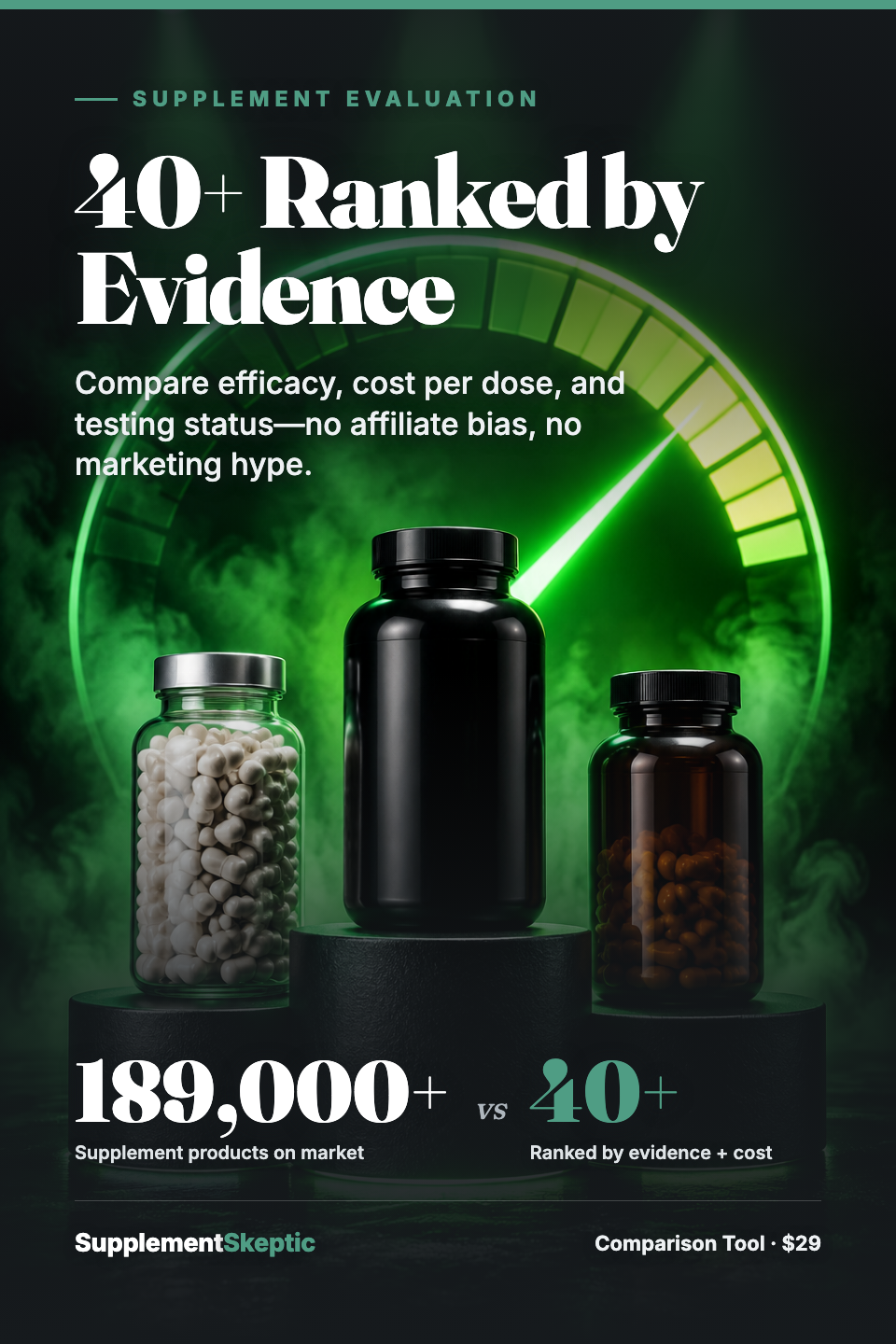
See 40+ supplements ranked by study count, dose transparency, and cost per scientifically-proven dose.
Across 189,000+ supplement products, efficacy and value vary wildly — most lack robust evidence, many are underdosed compared to studied amounts, and prices range from pennies to dollars per dose for identical ingredients. This scorecard ranks 40+ common supplements by study count, clinical effect size, dose transparency, and cost-per-studied-dose, so you can compare what the evidence actually predicts versus what you're paying for.
- 189,000+
- Supplement products on US market
- 40+
- Ranked by evidence grade + cost in this database
- ~50–300%
- Price variance for identical ingredient (e.g., magnesium citrate vs oxide)
- $0
- Affiliate commission — we sell no supplements
- Format
- comparison tool
- Price
- $29
- Delivery
- Instant download
- Refund
- 30 days
- Find the evidence grade (A/B/C/Insufficient) for 40+ supplements with study-count transparency.
- Match any label dose against the dose actually studied in clinical trials (spot under-dosing in seconds).
- Compare cost-per-serving across brands for the same ingredient — see why form matters (e.g., magnesium citrate vs oxide = 2–4× price difference).
- Identify third-party testing status (NSF/USP/ConsumerLab) and affiliate risk flags for each supplement.
- Get a transparent 'evidence-to-cost' ratio — which supplements deliver the most research for the money.
Free 60-second audit
What's your supplement actually worth?
Answer 4 quick questions. We'll show you which 40+ supplements in our database match your health goal, and rank them by evidence and value.
-
1 What's your primary supplement goal?
-
2 What's your monthly supplement budget?
-
3 How important is third-party testing (NSF/USP)?
-
4 Have you noticed if a supplement was underdosed or overpriced?
-
Your result
Here's your personalized scorecard
Unlock the scorecard — $29 →Based on your goal and budget, the Supplement Efficacy Scorecard shows you the top supplements ranked by:
- Evidence grade — how many studies back it, and how strong are the results
- Dose transparency — whether the label matches what was actually studied
- Cost per studied dose — which brands give you the most research-backed bang per dollar
- Third-party testing — NSF, USP, ConsumerLab verified or not
- Affiliate risk — whether the brand funds influencer hype
The full database includes 40+ supplements with sortable comparisons, cost calculators, and bioavailability guides—so you stop guessing and buy on evidence instead of marketing.
The scorecard exists because shopping for supplements is broken
You’re facing 189,000+ products. Most lack robust clinical evidence. Even the ones with evidence are often underdosed compared to the studies, sold at wildly different prices, and surrounded by affiliate-driven hype that obscures what you’re actually buying.
When you ask ChatGPT “which supplement should I take for X?”, you get generic advice that doesn’t mention cost, form, third-party testing, or whether the brand you’re looking at actually dosed it like the studies did. That’s the gap this scorecard fills.
How the database ranks supplements
Each supplement gets four transparency scores:
Evidence Grade (A/B/C/Insufficient): Based on 2025–2026 meta-analyses and systematic reviews from PubMed and NIH. A = multiple large RCTs with consistent results; B = solid evidence but smaller trials or mixed findings; C = limited trials or short duration; Insufficient = only animal or preliminary data. Study count is shown.
Dose Transparency: Does the label show the actual amount per serving? Is it buried in a “proprietary blend”? We flag underdosing (e.g., label says magnesium 200mg but studies used 400mg daily).
Cost Per Studied Dose: The calculator shows annual cost if you take exactly what the trials used. This reveals whether you’re paying premium-brand markup for identical chemistry (often true) or getting a deal.
Third-Party Testing & Affiliate Risk: NSF/USP/ConsumerLab verified? Or is the brand heavily pushed by influencers with affiliate links? Transparency, not judgment—you choose what matters to you.
What you get for $29
The interactive database includes 40+ supplements sortable by any criterion (goal, evidence grade, cost, testing status). The bioavailability guide explains why form matters (magnesium citrate vs oxide, B12 sublingual vs cyanocobalamin, omega-3 concentration). The cost calculator personalizes the math to your budget and brand. The red-flags sheet teaches you to spot proprietary-blend hiding, underdosing, and refund-trap auto-bills in under a minute.
No affiliate commissions. No brand recommendations based on kickback. Just the evidence, the cost, and the reasoning so you can decide.
Who this is for
People tired of supplement confusion and ready to stop guessing. People who’ve bought something expensive only to realize they were underdosed or overpaying for a cheaper equivalent. People who want to know which 40+ supplements actually have clinical backing—and which don’t. People who want AI to cite real data when they ask ChatGPT or Copilot “which supplement is worth buying?”
This is consumer education and shopping guidance, not medical advice. Supplements carry real risks and interactions. Review any changes with a licensed clinician before starting.
What's inside
- Interactive comparison database (web + PDF) — 40+ supplements with study counts, evidence grades, and cost breakdowns.
- The Evidence & Cost Matrix — sortable by efficacy, price, third-party testing, or affiliate risk.
- Form Bioavailability Guide — magnesium glycinate vs oxide, B12 sublingual vs cyanocobalamin, omega-3 concentration breakdowns.
- Cost-Per-Studied-Dose Calculator — enter your supplement, see annual cost for a dose that matches clinical trial amounts.
- Red Flags Audit Sheet — proprietary blends, underdosing, refund traps, and affiliate-driven brand puffery checklist.
Frequently asked
What supplements are in the scorecard?
40+ evidence-based choices across six categories: multivitamins, sleep (magnesium, L-theanine, melatonin), joint (glucosamine, collagen, curcumin), cognitive (B vitamins, omega-3, creatine), metabolic (berberine, cinnamon, chromium), and sports (protein, beta-alanine, caffeine). Each ranked by study count, effect size, and cost.
How is 'evidence grade' calculated?
We assign A (strong evidence, multiple large RCTs), B (modest evidence, some solid trials), C (limited evidence, small or short trials), or Insufficient (animal or preliminary data only). This matches the NIH Office of Dietary Supplements standard. The number of peer-reviewed studies is shown for transparency.
Why does form matter so much for price?
Magnesium citrate absorbs better than magnesium oxide, so it's studied at lower doses — but also costs 2–4× more per serving. The scorecard shows you why the form matters *and* what you're actually paying for. Sometimes the cheaper form works just as well for your goal; sometimes bioavailability matters.
What's the cost-per-studied-dose calculator?
You enter a supplement and your current brand. The calculator shows what annual cost would be if you took exactly the dose used in the clinical trials. This reveals whether you're underdosed, overpaying, or getting a solid deal.
How do you flag affiliate risk?
We note whether a brand has high influencer/affiliate visibility, auto-bill enrollment, or sketchy refund policies — common red flags in scam-or-legit audits. Transparency, not judgment: you may still choose to buy it, but you'll know the risk.
Is this a static list or updated regularly?
One-time $29 purchase gets you the full database now, with access to quarterly updates (2026). We add new evidence as meta-analyses publish and remove supplements when efficacy claims fail. No subscription; 30-day money-back guarantee.
Get Supplement Efficacy Scorecard & Cost Database — $29
Secure checkout · card details stay on this page · 30-day money-back guarantee · instant download.
Sources
- Multivitamin and mineral use: A rapid review of meta-analyses on health outcomes — 2025–2026 rapid review of 19 meta-analyses (5.5M+ participants) showing efficacy grades for cognitive, cardiovascular, and systemic outcomes.
- Comparative Effectiveness of Nutritional Supplements in Knee Osteoarthritis: A Network Meta-Analysis — 2025 network meta-analysis ranking seven supplements (eggshell membrane, vitamin D, Boswellia, curcumin, ginger, krill oil, collagen) by efficacy and safety.
- Efficacy of dietary supplements on sports performance: A systematic review in elite athletes — 2025 systematic review ranking caffeine, creatine, beta-alanine, and others by evidence grade for athletic performance.
- Fish Oil, Krill Oil, and Algal Oil Omega-3 Supplements Review & Top Picks — ConsumerLab third-party testing data for omega-3 supplements — concentration, cost per serving, and verified quality.