
From the Supplement Skeptic desk · our own swipe file
Peptide Injection Hype vs. Oral Reality
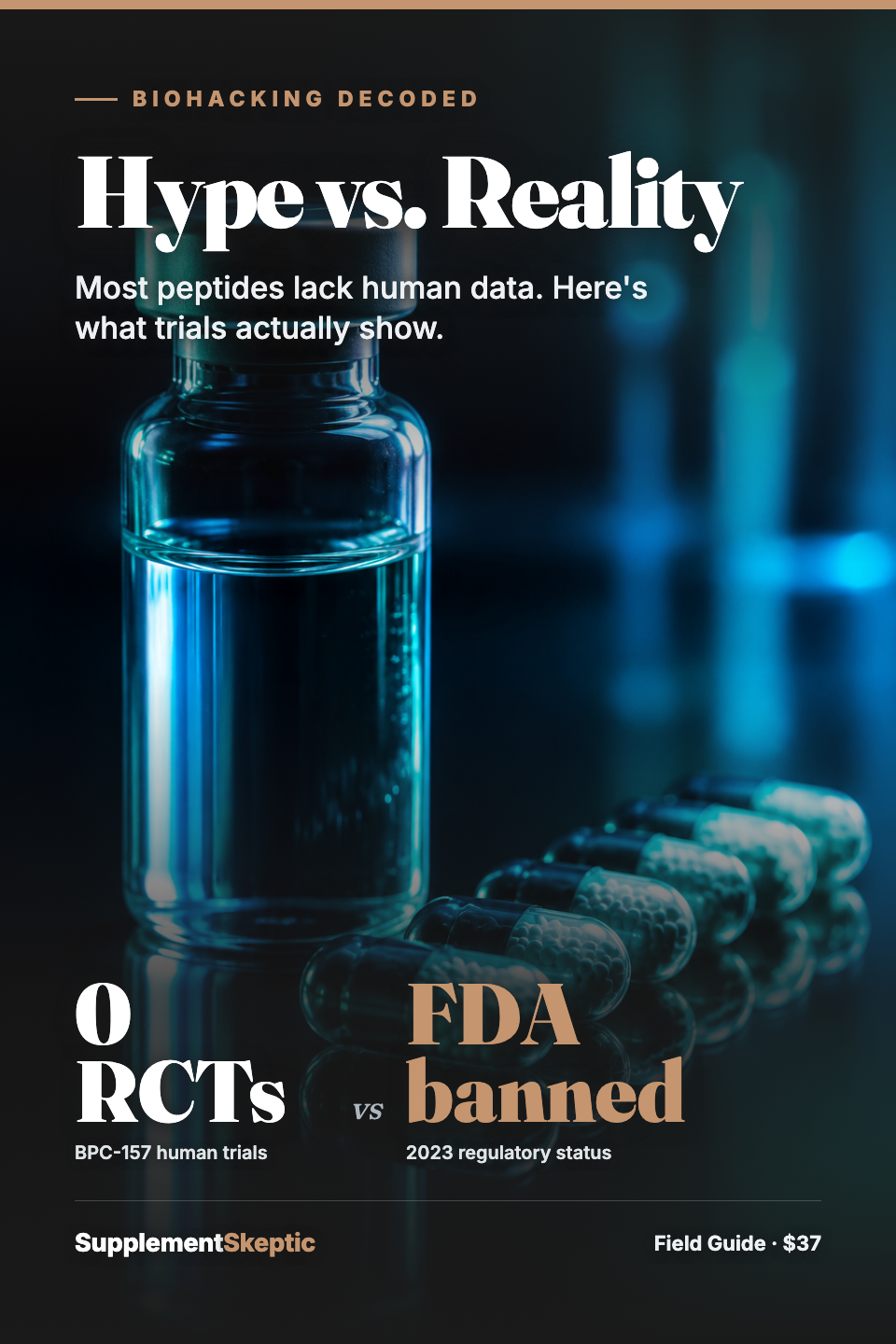
Peptides are hyped but most are banned or unproven. Here's what the actual research shows.
Most popular peptides marketed for muscle and recovery—BPC-157, GHK-Cu, and others—lack human clinical data. BPC-157 has zero published randomized controlled trials and unknown oral bioavailability; it was banned by the FDA in 2023. MK-677, the only oral peptide with some human data, increases appetite and impairs glucose control. This swipe-file ranks them by actual evidence, legal status, and realistic expectations.
- 0 RCTs
- Published human trials for BPC-157
- FDA banned 2023
- BPC-157 regulatory status
- Phase 2 only
- MK-677 human trial stage
- Limited topical data
- GHK-Cu evidence base
- Format
- swipe file
- Price
- $37
- Delivery
- Instant download
- Refund
- 30 days
- See exactly how many human studies exist for each peptide—most have zero RCTs.
- Understand legal status: what's FDA-approved, banned, or gray-market.
- Match oral vs. injectable claims against bioavailability science and actual data.
- Recognize five marketing tells of peptide scams (fake efficacy, regulatory loopholes).
- Get a plain-English 'is this worth my money?' verdict—not influencer hype.
- Vendor vetting checklist to spot red flags before ordering.
Free 60-second audit
Are you considering a peptide that has actual human evidence?
Answer 3 quick questions. We'll show you what the science actually says—and whether the peptide you're eyeing has any human data at all.
-
1 What's your main goal with peptides?
-
2 Which peptide are you considering?
-
3 Are you aware of regulatory status?
-
Your result
Here's what the evidence actually shows
Get the swipe-file — $37 →Most peptides marketed for fitness have zero human randomized controlled trials and are not FDA-approved. BPC-157 is banned by the FDA (2023) and lacks published human data. MK-677 has some human studies but raises significant safety flags (appetite, glucose control). GHK-Cu shows promise for skin—not muscle growth.
The full Peptide Hype vs. Reality swipe-file gives you the evidence scorecard, legal status breakdown, and a vendor vetting checklist—so you know exactly what you're buying.
The Short Version
Peptides are genuinely interesting compounds with real biological effects in cell cultures and animal models. They are also the most hyped category in biohacking right now, repackaged as “research-backed shortcuts” by vendors counting on you not reading human trials.
Here is the honest comparison the ads leave out:
- BPC-157: Zero published randomized controlled trials in humans. FDA classified it as an unapproved drug and banned it from compounding pharmacies in 2023. Oral bioavailability is unknown. Dozens of vendors ignore the ban.
- MK-677: The only oral peptide with some human data. Clinical trials show it increases appetite and impairs glucose control (diabetes-like effects). Muscle growth not demonstrated robustly. Not FDA-approved.
- GHK-Cu: Shows measurable effects on skin collagen and wound healing in limited topical studies. Not licensed for human consumption. No evidence for muscle growth.
- Sermorelin: FDA-approved for growth-hormone deficiency in specific clinical contexts. Actual human data exists. Expensive and requires medical supervision.
How the Category Tricks You
The animal-to-human leap. “Heals wounds in rats” gets repackaged as “recovers human injuries fast”—different species, different results.
The “research-backed” claim. Citing cell-culture studies or rodent models as proof of human efficacy. They’re proof of mechanism, not proof of clinical benefit.
The banned-but-still-sold move. BPC-157 was banned by the FDA in 2023, but dozens of vendors still sell it. They just don’t mention the ban.
The dose ambiguity. Studies use injectables at specific doses; vendors sell “oral” versions with unknown absorption. Different product, same marketing claim.
The influencer doctor. A biohacker claims personal results; followers assume it’s clinically proven. Anecdote ≠ evidence.
Who This Is For
People considering a peptide (or already using one) who want a straight answer on what science actually shows. High-income biohackers interested in longevity, fitness enthusiasts considering peptides for muscle or recovery, and anyone pitched “research-backed” peptides who wants to verify the actual research.
This is consumer education, not medical advice. Peptides carry real risks and regulatory complexities. Review any changes with a licensed clinician. Some peptides are banned by the FDA. We sell no peptides and take no affiliate commission.
What's inside
- 24-page PDF swipe-file (instant download)—reference on any device.
- The Evidence Scorecard—BPC-157, GHK-Cu, MK-677, sermorelin ranked by study count and human data.
- The Legal Status Table—which peptides are FDA-approved, banned, or gray-market.
- The Bioavailability Breakdown—why most 'oral' peptides don't survive digestion.
- The 5 Red Flags cheat-sheet for spotting peptide vendor scams.
Frequently asked
Is BPC-157 safe to use orally?
BPC-157 lacks published human studies on oral use; oral bioavailability is unknown. The FDA classified it as an unapproved drug in 2023 and prohibited compounding pharmacies from supplying it, citing potential safety risks. Zero published randomized controlled trials in humans exist.
Does MK-677 actually build muscle?
MK-677 stimulates growth hormone release in some studies, but human data is limited to Phase 2 trials. Clinical trials show significant side effects: elevated appetite, impaired fasting glucose, reduced insulin sensitivity, and diabetes-like HbA1c increases. Muscle growth has not been demonstrated robustly. Not FDA-approved.
What does GHK-Cu actually do?
In cell cultures and topical studies, GHK-Cu shows measurable effects on collagen synthesis and wound healing. Limited human studies show promise for skin quality when applied topically. However, GHK-Cu is not approved for human consumption, is not FDA-licensed, and has no evidence for muscle-growth claims.
Can I order peptides legally?
Regulatory status varies. Sermorelin is FDA-approved for growth-hormone deficiency in specific clinical contexts. Most others are unregulated, banned, or gray-market. The swipe-file details the legal landscape. Consult a licensed clinician before using any unapproved peptide.
Why are peptides so hyped if the evidence is weak?
Vendors capitalize on impressive animal research, influencers lack clinical training, and the regulatory gap allows unproven claims. Peptides are genuinely interesting—but marketing has massively outpaced human evidence. This swipe-file separates hype from what trials actually show.
What exactly do I get for $37?
A 24-page instant-download PDF with evidence scorecard, legal status breakdown, bioavailability guide, and vendor vetting checklist. One-time payment, 30-day money-back guarantee, no subscription. We sell no peptides and take no affiliate commission.
Get Peptide Injection Hype vs. Oral Reality — $37
Secure checkout · card details stay on this page · 30-day money-back guarantee · instant download.
Sources
- STAT: BPC-157: Big Claims, Scant Evidence (February 2026) — FDA regulatory position, clinical trial gaps, and safety concerns.
- PubMed: BPC-157 Clinical Evidence & Human Trials (2024–2026) — Limited human data; most studies are animal models.
- Ibutamoren (MK-677) Clinical Evidence & Safety Profile (2026) — Appetite and glucose control side effects; Phase 2 data only.
- GHK-Cu: Copper Peptide Clinical Evidence (2026) — Skin and wound healing evidence; off-label and unlicensed for human consumption.