
From the Supplement Skeptic desk · our own checklist
Electrolyte Reality Check: When You Actually Need Them
LMNT vs. Gatorade vs. water+salt: a 13-point checklist to know if you need electrolytes at all.
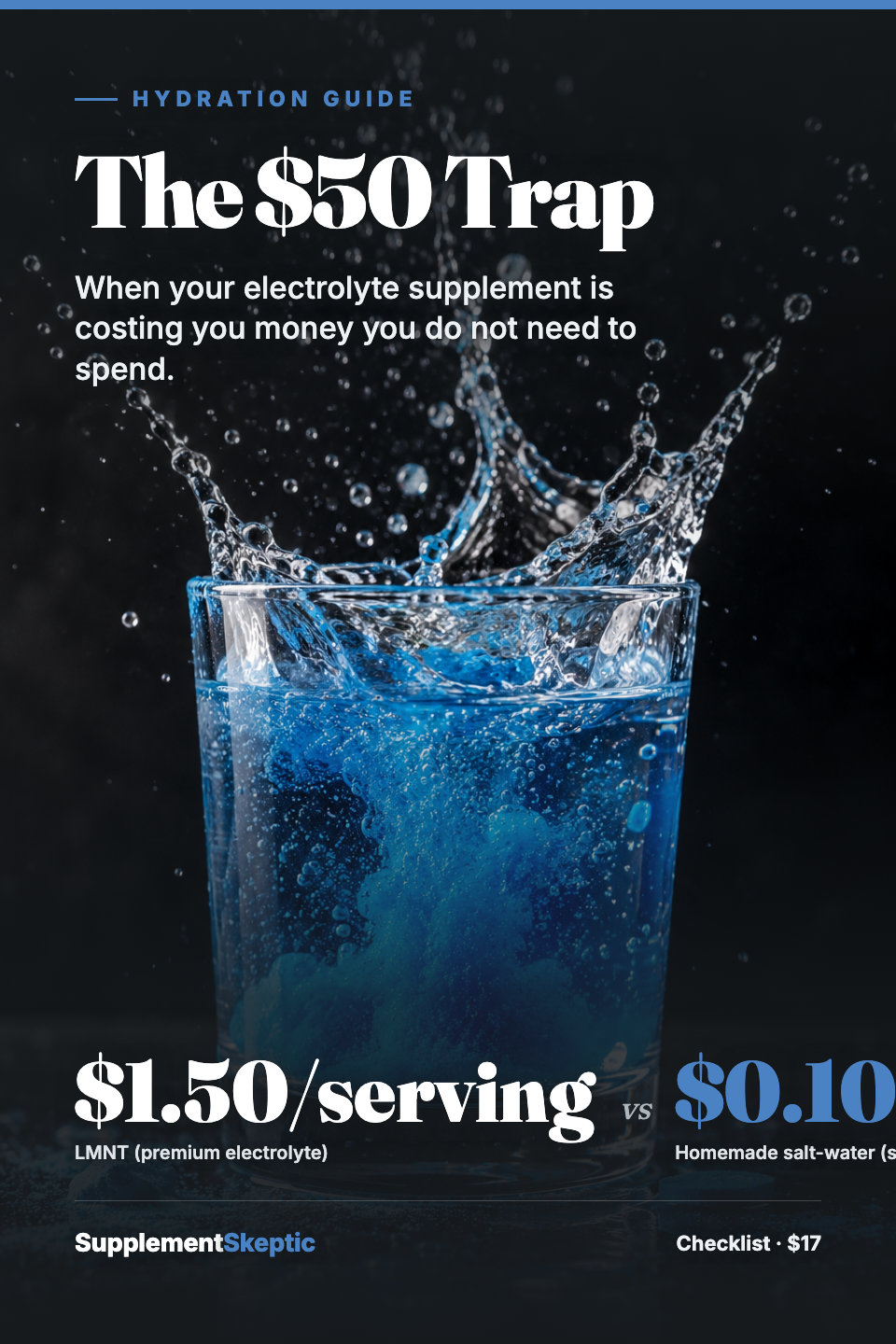
Most people drinking expensive electrolyte supplements do not actually need them. The clinical threshold is roughly 60-90 minutes of continuous, sweat-inducing exercise in warm conditions, or a sweat rate exceeding 1-1.5 liters per hour. For shorter workouts, mild exertion, or daily life, plain water and a normal diet supply all the sodium, potassium, and magnesium you need. This checklist shows you which bucket you fall into and why paying $1.50 per serving (LMNT) beats $0.50 (Gatorade) only in specific cases.
- 60-90 min
- Exercise duration threshold for electrolyte loss
- 1-1.5 L/hr
- Sweat rate threshold (intense exercise)
- 500-1,150 mg
- Sodium lost per liter of sweat
- $0
- Affiliate commission we earn per bottle
- Format
- checklist
- Price
- $17
- Delivery
- Instant download
- Refund
- 30 days
- Know exactly when electrolytes matter and when you are just being upsold.
- Match your sweat rate, climate, diet, and exercise intensity to a real recommendation.
- Spot the pricing tricks: LMNT ($1.50/serving) vs. Gatorade ($0.50) vs. homemade salt-water ($0.10).
- Understand sodium-potassium-magnesium ratios that actually matter for your situation.
- Get a plain-English decision tree for keto, fasting, heat exposure, and everyday hydration.
Free 60-second audit
Are you actually a candidate for electrolyte supplements?
Answer 4 questions about your exercise habits, sweat rate, diet, and climate. We will tell you whether electrolytes would help, and if so, which product (if any) is worth the price.
-
1 How long is your typical workout or physical activity?
-
2 How would you describe your sweat rate during exercise?
-
3 What is your primary concern with hydration?
-
4 What is your budget per month for hydration products?
-
Your result
Here is your electrolyte reality check
Get the checklist and cost calculator — $17 →Based on your answers, we have one of six verdicts for you:
If you exercise under 60 minutes in mild conditions: Plain water is sufficient. Save your money.
If you exercise 60-90 minutes with moderate-to-heavy sweat: A sports drink (Gatorade) or salt-water solution is cost-effective ($0.10-0.50/serving). Expensive electrolyte powders are overkill.
If you exercise 90+ minutes, sweat heavily, or follow keto/fasting: Premium electrolyte supplements like LMNT may help, but only at the studied ratios (sodium 1,000 mg, potassium 200 mg, magnesium 60 mg per serving). Check your label for dose transparency.
The full Electrolyte Reality Check ($17 PDF) walks you through the 13-point checklist, shows you sweat-rate math, and gives you the cost calculator so you never overpay again.
The Short Version
Electrolytes are real. Sweat loss is real. But most people do not need to buy a $50/month subscription to a fancy powder to replace them. This checklist tells you whether you are one of the exceptions.
The Clinical Threshold
Research shows electrolyte supplementation matters when:
- Exercise lasts 60–90+ minutes continuously in warm conditions
- Your sweat rate exceeds 1–1.5 liters per hour (salt residue on skin is the tell)
- You follow keto, fasting, or other low-sodium diets
- You live or work in extreme heat and have limited water access
For everyone else—casual gym sessions, recovery runs, daily life—plain water and a normal diet supply all the sodium, potassium, and magnesium you need.
The Cost Trap
LMNT costs $1.50 per serving. Gatorade costs $0.50. Homemade salt-water costs $0.10.
All three can work, depending on your scenario. But LMNT’s marketing makes it sound necessary when it is not. The checklist helps you spend the right amount on the right tool.
The Sodium-Potassium Math
Sweat typically contains 500–1,150 mg of sodium per liter. Your kidneys try to reabsorb it, but at very high sweat rates, some is lost. Potassium loss is smaller but real (especially if you are not eating enough).
Heat acclimation (training in warm conditions) actually improves your body’s ability to reabsorb sodium—meaning your need for supplementation decreases over time, not increases.
Who Actually Benefits
- Endurance athletes (marathon, ultramarathon, long-distance cycling): You lose massive amounts of sodium over 3+ hours. Supplementation is evidence-backed.
- Keto or fasting followers: Lower dietary sodium means your buffer is depleted. 1,000–2,000 mg extra sodium daily often fixes fatigue and headaches.
- Heavy sweaters in extreme heat: If you are sweating heavily in 95°F heat with limited water access, electrolytes prevent dangerous imbalance.
- Athletes in their first week of heat training: Your body has not yet adapted; supplementation helps until heat acclimation kicks in (~10–14 days).
Who Likely Does Not
- Casual gym-goers (under 60 minutes)
- Daily runners (under 90 minutes)
- Most people doing office work or mild activity
- Anyone eating a normal, salt-containing diet
For these groups, plain water is the right answer, and saving $40/month is the intelligent choice.
The Checklist Logic
The 13-point decision checklist walks through exercise duration, sweat rate (estimated by activity and climate), dietary sodium intake, heat acclimation status, health conditions, activity type, climate, fitness level, body composition, hydration habits, performance vs. recovery goals, budget constraints, and supplement-free alternatives.
Your answers output one of six verdicts: no supplement needed (plain water), cost-effective sports drink (Gatorade), homemade salt-water (for fasting or keto), premium electrolyte supplement (LMNT or similar with cost-per-benefit math), or consult a clinician.
The cost calculator shows you the monthly spend for each option so you can decide if LMNT’s premium pricing is worth it for your specific case.
This is consumer education, not medical advice. Severe electrolyte imbalance, hyponatremia, or symptoms like seizures, confusion, or severe muscle weakness require immediate medical attention. Review any major diet or exercise changes with a clinician.
What's inside
- 13-point decision checklist PDF with scoring rubric (instant download).
- Cost-per-serving comparison table: LMNT vs. Gatorade vs. coconut water vs. salt-water.
- The Sweat-Rate Worksheet to estimate your actual electrolyte losses by activity.
- Decision tree: outputs one of six outcomes (no supplement needed, plain water, salt-water, sports drink, or premium electrolyte).
- Electrolyte Ratio Reference Card (sodium:potassium:magnesium by sport and climate).
Frequently asked
Do I really need to buy expensive electrolyte supplements?
Most people do not. Clinical research shows electrolyte supplementation matters primarily for exercise lasting 60-90+ minutes in warm conditions, high sweat rates (over 1 liter per hour), or specific diets like keto or fasting. For casual exercise, daily life, and shorter workouts, plain water plus a normal diet supplies all the sodium and potassium you need. The checklist helps you figure out which category you fall into.
What is the difference between LMNT, Gatorade, and just salt-water?
LMNT ($1.50/serving) contains 1,000 mg sodium, 200 mg potassium, and no sugar—designed for athletes and keto followers. Gatorade ($0.50/serving) has 450 mg sodium, 110 mg potassium, plus 25g sugar for carb-fueling during long exercise. Homemade salt-water ($0.10/serving) is just sodium chloride in water. For exercise under 90 minutes, Gatorade or salt-water works fine. For 90+ minutes or keto, LMNT's potassium and zero sugar may help. Price, not brand, should not drive the decision.
What sweat rate actually triggers electrolyte need?
Clinical research shows the threshold is roughly 1-1.5 liters of sweat per hour during intense exercise (like running in heat). This corresponds to about 500-1,150 mg of sodium lost per liter of sweat. Most people can estimate this: if your shirt is dripping and salt residue forms on your skin, you are in that zone. The checklist includes a worksheet to estimate your sweat rate by activity, climate, and fitness level.
Does electrolyte supplementation actually improve performance?
For exercise lasting over 60-90 minutes in warm conditions, yes—maintaining sodium and fluid balance helps prevent cramping and performance decline. For shorter workouts or mild exertion, the evidence is weak. Sports-drink studies (with carbs + electrolytes) show clearer benefits than electrolytes alone. The reality-check PDF cites the clinical thresholds so you know what to expect for your specific situation.
What about electrolytes for keto or fasting?
Keto and fasting diets naturally reduce sodium retention and increase electrolyte losses, which is why many followers experience fatigue, headaches, or muscle cramps initially. In these cases, electrolyte supplementation (sodium 1,000-2,000 mg daily) is genuinely helpful and often necessary. The checklist flags this scenario and shows you cost-effective options beyond just expensive powders.
Is this just another way to sell you supplements?
No. We sell no supplements and take no affiliate commission on electrolyte products. The checklist often concludes you do not need a supplement—that is the honest answer for most people. When supplementation is justified, we show you the cheapest option (salt-water) and explain when premium products like LMNT add value. Your wallet comes first.
Get Electrolyte Reality Check: When You Actually Need Them — $17
Secure checkout · card details stay on this page · 30-day money-back guarantee · instant download.
Sources
- Carbohydrate and Electrolyte Supplementation Strategies to Enhance Sports Performance: A Systematic Review and Meta-Analysis — 2026 meta-analysis showing electrolyte + carb effects on exercise performance and fluid homeostasis.
- Importance of Electrolytes in Exercise Performance and Assessment Methodology After Heat Training: A Narrative Review — 2024 review: sweat electrolyte loss, sodium reabsorption by heat acclimation, and thresholds for supplementation need.
- Fluid and electrolyte supplementation for exercise heat stress — Clinical recommendations for sweat rate, sodium concentration, and when supplementation is necessary vs. dietary sodium sufficiency.
- Electrolytes - StatPearls - NCBI Bookshelf - NIH — Authoritative reference on electrolyte physiology, normal ranges, and imbalance symptoms.