Review · Diets & Weight Loss
The Smoothie Diet: 21 Day Rapid Weight Loss Program
A $21 smoothie recipe bundle with hidden recurring charges and overhyped weight-loss claims. The low entry price masks a subscription trap — I would not buy this without a clear plan to cancel.
Skeptic read
Skeptical3.8/10
A $21 smoothie recipe bundle with hidden recurring charges and overhyped weight-loss claims. The low entry price masks a subscription trap — I would not buy this without a clear plan to cancel.
- Price checked
- $21
- Dose visibility
- Limited: key ingredient doses are hidden or hard to verify
- Main risk
- Recurring billing is not disclosed upfront — the $21 price is a gateway to a subscription most buyers won't notice until the second charge hits
- Better use case
- Someone who wants a no-brainer, short-term meal plan for a vacation or event and is willing to blend
- Skip if
- You have a history of yo-yo dieting or disordered eating — the rapid loss/regain cycle is harmful
- Evidence file
- 1 source attached
What The Smoothie Diet is, in one sentence.
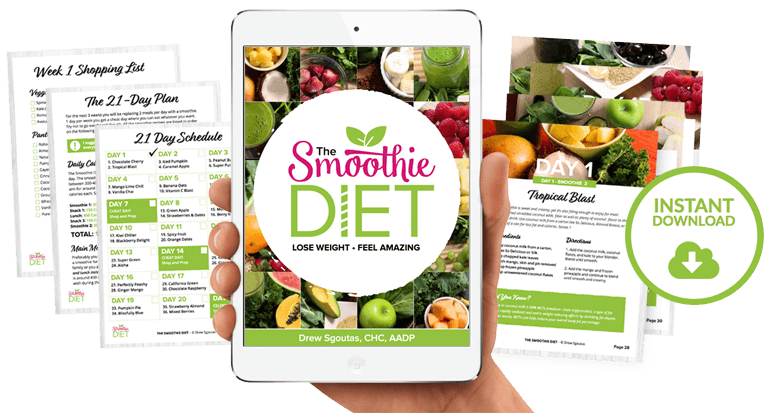
A 21-day digital meal plan built around smoothie recipes, sold at $21 through ClickBank with a 60-day refund window on the core product — and a recurring subscription that the checkout page does not make obvious.
The marketing calls it a “rapid weight loss program” and targets women in the health and wellness market. The actual deliverable is a PDF of smoothie recipes, a shopping list, and a daily schedule. The real business model is the upsells and the rebill.
What you actually get
Five layers of product, but only one of them is the $21 you thought you were buying:
- The core 21-day plan. A PDF with daily smoothie recipes, a grocery list, and a meal-replacement schedule (typically two smoothies a day plus one solid meal). The recipes use common ingredients — spinach, banana, almond milk, protein powder — nothing you couldn’t find on the first page of a Pinterest search.
- Three upsells. A $50 “order bump” offered at checkout (often a detox guide or an expanded recipe book), plus two additional offers priced around $29–$39 each. If you click “yes” to all of them, your total hits $130+ before you’ve downloaded anything.
- The recurring subscription. This is the part the sales page buries. Sometime after purchase — often after a 7-day trial — you’ll be billed monthly for access to a recipe club, a private Facebook group, or ongoing “coaching.” The vendor’s own platform handles this, not ClickBank, which means the 60-day refund guarantee does not apply. The cancellation process varies; expect to need an email and a follow-up.
- Optional community access. Many buyers report being added to a Facebook group or email list. Sometimes useful, sometimes a feed of before-and-after photos and upsell pitches. Not a deliverable you should pay extra for.
- A 60-day refund window on the initial $21. This is real and processed through ClickBank. You can read the entire plan, request a refund inside 60 days, and get your money back. The subscription charges are separate and will not be refunded by ClickBank — you’ll have to dispute them with the vendor or your credit card company.
How the marketing oversells
The sales page for The Smoothie Diet is built for affiliates, not for buyers. The headline numbers — “Low Refund Rate,” “High Converting,” “Easy Sell To Women” — are affiliate-recruitment language. They tell you the funnel converts well and affiliates keep promoting it. They tell you nothing about whether the diet works long-term.
Two specific oversells to flag:
“Rapid weight loss” is real but misleading. Replace two meals a day with a 200-calorie smoothie and you will lose weight quickly — mostly water and glycogen, not fat. The scale drops in week one because you’ve depleted your carbohydrate stores and the water that binds to them. By week three, some of that loss is fat, but the rate slows. The before-and-after photos in the VSL almost certainly reflect the first-week water drop, not sustained fat loss. Any very-low-calorie diet does this; there is nothing unique about smoothies.
The “low refund rate” is a compliance shield, not a quality signal. When a vendor brags about low refunds, it often means the recurring billing is structured so customers forget to cancel, or the refund process for the subscription is so difficult that people give up. A low refund rate on a product with hidden recurring charges is a red flag, not a green one.
How it tells you to use it
The plan is straightforward: two meals a day are replaced with a specific smoothie recipe, one meal is solid (lean protein, vegetables), and snacks are limited. You’re given a daily schedule and a shopping list. There’s no calorie counting, no macro tracking — just follow the recipes.
If you stick to it, you’ll run a significant calorie deficit for 21 days. That’s the mechanism. The plan does not teach you how to transition back to normal eating, how to adjust calories for maintenance, or how to build a sustainable relationship with food. It’s a short-term cosmetic intervention, not a lifestyle change.
What it costs and how the refund works
$21 at the front door. The order bump and upsells can push that to $130+ if you’re not paying attention. Then the recurring subscription kicks in — typically $19–$29/month, sometimes after a 7-day free trial that starts the moment you enter your credit card.
ClickBank’s 60-day refund policy covers the initial $21. You email ClickBank support with your order ID, and the refund processes in 3–7 business days. The subscription is a separate transaction, often billed through a platform like ClickBank’s own recurring system or a third-party processor. Refunding that requires contacting the vendor directly, and the vendor’s support is not incentivized to make it easy. Expect to spend time on email and possibly a chargeback.
The “60-day money-back guarantee” language on the sales page is technically true for the core product. It is not true for the subscription. That distinction is not made clear before you buy.
Where the marketing oversells (the specific lines)
Three claims from the affiliate-facing description that should make a buyer pause:
“Earn Over $100 Per Sale!” — This is the affiliate commission potential, meaning the upsells and recurring billing create a high customer lifetime value. It tells you the vendor expects to extract much more than $21 from each buyer. You are not the customer; you are the revenue stream.
“High Converting Core Offer With Low Refund Rate” — Conversion rate is an affiliate metric. Low refund rate, as discussed, may indicate a subscription that’s hard to cancel, not a product people love.
“Easy Sell To Women In The Health/Wellness And Weight Loss Market” — This is demographic targeting. The product is designed to appeal to a specific buyer who has been conditioned by decades of diet marketing to believe that a 21-day fix exists. The fact that it’s an “easy sell” should make you ask: why is it so easy? Because it promises what we want to hear, not what works.
Who should buy, who should skip
Buy this if you need a highly structured, short-term meal plan for a specific event — a wedding, a vacation — and you are willing to blend two meals a day for three weeks. Buy it only if you will immediately cancel the subscription after purchase, set a calendar reminder to request the ClickBank refund if you don’t use it, and treat the $21 as a one-time recipe collection. Even then, the recipes are generic; you’re paying for the schedule, not the ingredients.
Skip this if you have a history of yo-yo dieting, disordered eating, or a medical condition that requires consistent nutrient intake. A liquid-heavy, low-calorie diet can trigger binge eating, nutrient deficiencies, and electrolyte imbalances. Skip it if you’re not comfortable monitoring your credit card statements for hidden charges. Skip it if you want sustainable weight loss — this plan has no maintenance phase, no behavioral component, and no education. It’s a 21-day band-aid.
The honest read
The Smoothie Diet is a recipe collection with a calendar, sold as a weight-loss breakthrough. The $21 entry price is a loss leader for upsells and a recurring subscription that the sales page obscures. The diet itself will cause short-term weight loss because it’s a very-low-calorie plan, not because smoothies have any special property. The recipes are fine, but they’re nothing you can’t find for free in five minutes of searching.
The market signal is clear: this offer converts, and affiliates are still promoting it because the upsells and rebills make it profitable. That tells you it sells. It does not tell you it works long-term, or that the average buyer is glad they bought it six months later.
If you’re looking for a structured jumpstart and you understand exactly what you’re buying — a PDF, a schedule, and a ticking subscription clock — then $21 for a 60-day refundable read is a defensible purchase. Cancel the subscription immediately, read the plan, and decide by day 50 whether to keep it. Most people won’t.
I would not buy this. The hidden recurring charge alone is enough to walk away, and the diet itself is a repackaged version of every other 21-day fix that’s been sold since the grapefruit diet. If you need smoothie recipes, type “healthy smoothie recipes” into Google. If you need a structured plan, find one written by a registered dietitian, not a ClickBank vendor optimizing for affiliate EPCs.
— Mara Vance
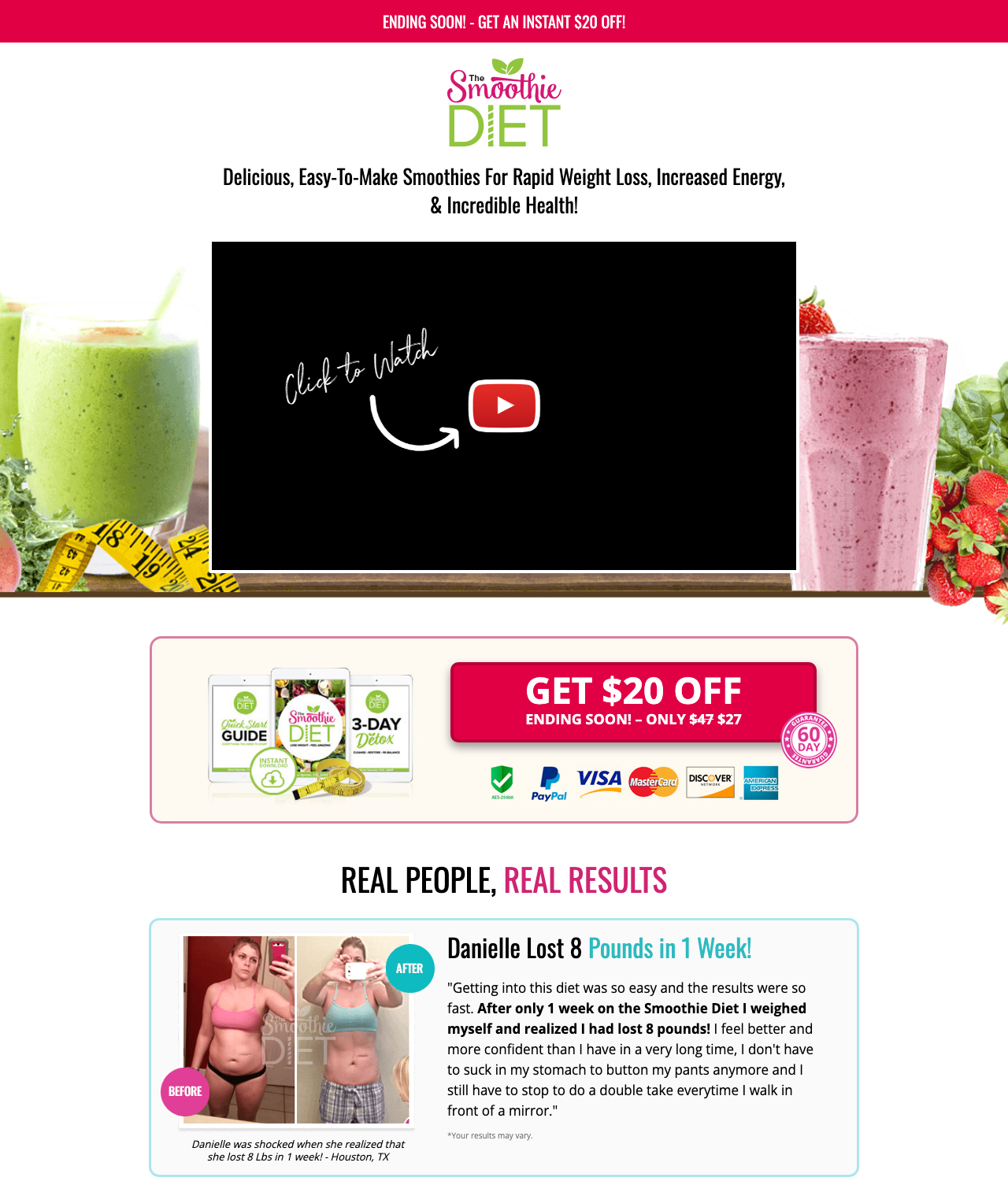
This is the live The Smoothie Diet: 21 Day Rapid Weight Loss Program funnel our verdict is based on. We measure these on-page promises against the evidence, dose math, price, and refund mechanics above — tap the image to see the seller’s current offer and terms.
 Live sales page →
 Here's what I'd actually do
If you opened this at 11 pm and the page made the supplement look like an answer to something larger:
Close this tab. The Smoothie Diet: 21 Day Rapid Weight Loss Program is in the band where the marketing is doing the heavy lifting and the formula is not. There are evidence-based versions of every promise on that sales page, and most of them cost a third of the price with full label transparency.
Don't buy this if: Do not buy this if you have a diagnosed condition that this product is implicitly addressing. See a clinician. A $69 bottle does not replace a $0-with-insurance lab panel.
— Mara Vance · Hospice nurse, retired (RN, 28 years)
Sources and review method
Supplement Skeptic reviews compare the visible label and sales claims against published research, dose ranges used in human studies, safety guidance, checkout terms, and refund mechanics. This page is not medical advice.
- Vendor sales page — ClickBank-listed sales page (active as of catalog import)
Frequently asked questions
- Is The Smoothie Diet a scam?
- Not in the 'you get nothing' sense. You receive a PDF with recipes and a plan. But the marketing hides a recurring subscription, and the weight-loss claims are exaggerated. It's a legitimate product that uses deceptive pricing and oversells results — that's a different kind of problem.
- What exactly do I get for $21?
- A digital download with a 21-day schedule, smoothie recipes, and shopping lists. After purchase, you're offered upsells that can add $100+ to your cart. Then, unless you read the fine print carefully, you'll be enrolled in a monthly subscription for additional content or community access — typically around $19–$29/month.
- Can I really lose weight in 21 days?
- Yes, but not the way the sales page implies. Replacing two meals a day with low-calorie smoothies creates a large calorie deficit. You'll lose weight quickly — mostly water and glycogen, plus some fat if you stick with it. The problem is keeping it off: once you return to normal eating, the weight almost always comes back. This is a short-term cosmetic fix, not a long-term solution.
- How does the refund work?
- ClickBank offers a 60-day refund on the initial purchase. You email their support with your order ID. The catch: the recurring subscription may be billed through a different system (often the vendor's own platform), and those charges aren't covered by ClickBank's refund policy. You'll need to cancel separately, and getting money back on those can be a fight.
More in Diets & Weight Loss