Review · General
The Memory Wave: Does 40Hz Audio Aid Memory?
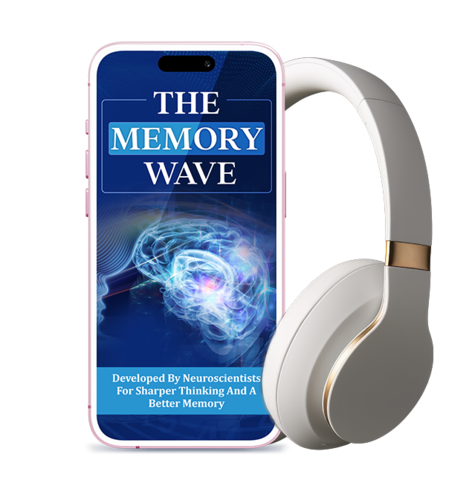
The Memory Wave is a 12-minute audio track sold as gamma-frequency brainwave entrainment for memory, focus, and 'the brain's natural cleaning process'. The underlying gamma stimulation research (Iaccarino & Singer 2016, MIT) is real — but uses 40 Hz light + sound delivered for an hour daily over weeks, not a 12-minute MP3. The product is digital (no manufacturing cost), priced at $39, with the same sales architecture as The Genius Wave.
Skeptic read
Skeptical3.6/10
The Memory Wave is a 12-minute audio track sold as gamma-frequency brainwave entrainment for memory, focus, and 'the brain's natural cleaning process'. The underlying gamma stimulation research (Iaccarino & Singer 2016, MIT) is real — but uses 40 Hz light + sound delivered for an hour daily over weeks, not a 12-minute MP3. The product is digital (no manufacturing cost), priced at $39, with the same sales architecture as The Genius Wave.
- Price checked
- $39
- Dose visibility
- Better than average: key doses are disclosed enough to compare
- Main risk
- 12-minute single-session protocol does not match the 1-hour daily, multi-week dosing used in the actual MIT gamma-stimulation trials
- Better use case
- People curious about gamma-frequency audio who want a low-cost, low-risk entry point and accept that it's a wellness experience, not a treatment
- Skip if
- You or a loved one have actual memory complaints that warrant medical evaluation — see a neurologist, not a $39 MP3
- Evidence file
- 5 sources attached
What The Memory Wave is actually selling
The Memory Wave is a 12-minute MP3 you download and listen to with headphones. The sales page claims it gently guides the brain into gamma-frequency activity, supports the brain’s “natural cleaning process” (a reference to the glymphatic system / amyloid clearance literature), and is endorsed by neuroscientists.
It is not a supplement. It is not a device. It is digital audio sold for $39 with the same ClickBank checkout flow used for capsule products in the same marketplace.
We’re reviewing it here because the listing sits inside ClickBank’s Health & Fitness category and ranks at gravity 60.87 — affiliates are pushing this against legitimate cognitive supplements. Readers comparing options need to know that The Memory Wave is structurally a different kind of product, with a different evidence question, sold against the same hopes and fears as the supplement category.
What the underlying research actually says
The plausible-sounding science behind gamma-frequency products points to two MIT papers from Li-Huei Tsai’s lab:
- Iaccarino et al., 2016, Nature — exposed 5xFAD mice (an Alzheimer’s model) to 40 Hz visual flicker for 1 hour and saw acute reductions in amyloid-β.
- Martorell et al., 2019, Cell — combined 40 Hz light + auditory stimulation, 1 hour daily for 7 days, and saw reduced amyloid plaque load and improved memory measures in mice.
The translational follow-on is Cognito Therapeutics’ Spectris device — an FDA-cleared 40 Hz light + sound delivery system that has been through Phase 2 (OVERTURE) and Phase 3 (HOPE) trials in humans with mild cognitive impairment / mild Alzheimer’s. Results have been mixed; some endpoints showed effects, others didn’t. This is the actual real-world translation of the gamma-entrainment hypothesis — and it is a regulated medical device, prescribed and monitored.
The Memory Wave is none of those things. It is a 12-minute consumer audio MP3 sold direct to anyone with a credit card, with no published efficacy data on the audio file specifically, no clinical trial registry entry, and no regulatory clearance.
What the format actually delivers
Even if we credit the gamma-entrainment hypothesis fully:
- The MIT and Cognito protocols use multi-sensory (light + sound) stimulation. Memory Wave is audio-only, which is the weaker arm of the data.
- The protocols use 1 hour daily, repeated for weeks. Memory Wave’s “12-minute daily routine” is not the same dose.
- Consumer-grade binaural beats and isochronic tones have been studied separately. Garcia-Argibay et al.’s 2017 meta-analysis found small anxiety effects and inconsistent cognitive effects. The mechanism implied by Memory Wave’s marketing (driving brain to gamma to clear amyloid) is not what consumer binaural beats demonstrably do.
The label — what’s in the package
| Item | What you get |
|---|---|
| The Memory Wave audio | 12-minute MP3 (downloadable) |
| Listening device | Bring your own headphones |
| Recommended schedule | ”Daily” — exact frequency not specified on landing page |
| Refund window | 60-day ClickBank standard |
| Recurring charges | None disclosed |
Cost-per-claim math
The Memory Wave: $39 once, digital.
Cognito Spectris (FDA-cleared 40 Hz device): ~$3,000+ depending on protocol, prescribed.
Consumer alternative: YouTube has hundreds of free 40 Hz binaural beat tracks of varying quality. Apps like Brain.fm offer subscription-based focus audio for ~$7/month with broader content libraries.
The honest comparison: if “$39 once for an audio track” is what you want, you can get equivalent or higher-quality 40 Hz audio for free, or get a subscription audio service for less per year. The Memory Wave’s pricing relative to free alternatives is the buyer’s primary risk-adjusted decision.
Marketing teardown
Audited May 2026:
- “Team of neuroscientists” — no individual researchers named, no LinkedIn profiles, no published affiliations
- Sales page lifts language (“brain’s natural cleaning process”, “gamma waves”) that maps loosely onto real research while implying outcomes the research has not demonstrated for this product
- “12 minutes a day” framing positions this as low-effort daily intervention without disclosing the gap between this dose and the research-protocol dose
- Same sales-page architecture as The Genius Wave (gravity 220+ when it peaked), The Genius Switch, and The Brain Song — likely shared operator, repeated template
- ClickBank checkout standard, $39 single-tier pricing (unusually flat for ClickBank — most products do bundle pricing, this one doesn’t because there is nothing to bundle)
- No bonus eBooks, no physical product, no upsell chain on landing — clean as ClickBank goes
Verdict rationale
The Memory Wave gets a 3.6 — below mid-pack — because:
- The sales claims (memory restoration via brain’s natural cleaning) significantly outrun what the research demonstrates for this format
- Audio-only at 12 minutes is a weaker dose than the research it leans on
- Free and lower-cost alternatives deliver equivalent technical content
- “Neuroscientist-endorsed” is unverifiable
It does not score below 3.0 because:
- The price is $39 (low risk-adjusted exposure)
- No drug interactions, no allergens, no adulteration risk
- The underlying gamma-stimulation hypothesis is real and being seriously researched (just not in this format)
- ClickBank refund applies
Bottom line
The Memory Wave is a digital audio product trading on real MIT research that does not actually validate the consumer product. At $39 with a 60-day refund and no physical risk, it is among the lowest-stakes purchases on ClickBank — but as memory or cognitive-decline support, the evidence does not support the claims.
Skeptic Desk verdict: Skeptical — 3.6/10. A $39 wellness experience marketed as a neurological intervention. If you’re curious, refund-test it. If you have actual memory concerns, see a neurologist.
If you’re weighing brain-health options more broadly, our NeuroPrime review covers a capsule-based nootropic in the same broad category, and our Pineal Pure review covers another brain-health product with its own unverifiable claims — both are worth reading before you spend money on cognitive support.
Here's what I'd actually do
If you opened this at 11 pm and the page made the supplement look like an answer to something larger:
Close this tab. The Memory Wave is in the band where the marketing is doing the heavy lifting and the formula is not. There are evidence-based versions of every promise on that sales page, and most of them cost a third of the price with full label transparency.
Don't buy this if: Do not buy this if you have a diagnosed condition that this product is implicitly addressing. See a clinician. A $69 bottle does not replace a $0-with-insurance lab panel.
— Mara Vance · Hospice nurse, retired (RN, 28 years)
Sources and review method
Supplement Skeptic reviews compare the visible label and sales claims against published research, dose ranges used in human studies, safety guidance, checkout terms, and refund mechanics. This page is not medical advice.
- Iaccarino HF, et al. Gamma frequency entrainment attenuates amyloid load and modifies microglia. Nature 2016. — Foundational MIT mouse-model paper that gamma-entrainment products lean on for credibility.
- Martorell AJ, et al. Multi-sensory Gamma Stimulation Ameliorates Alzheimer's-Associated Pathology. Cell 2019. — Follow-up showing 40 Hz light + sound effect — note the multi-sensory protocol vs audio-only consumer products.
- Cognito Therapeutics Spectris Phase 3 (OVERTURE-2 / HOPE). — FDA-cleared 40 Hz device for cognitive impairment — the actual translational human research effort, not a $39 MP3.
- Garcia-Argibay M, et al. Efficacy of binaural auditory beats in cognition, anxiety, and pain: a meta-analysis. — Meta-analysis of consumer-style binaural beats — small effects on anxiety, mixed on cognition.
- FDA: Software as a Medical Device guidance. — Used for the regulatory framing — Memory Wave is not registered as SaMD.
Who should skip The Memory Wave
Skip The Memory Wave if you or someone you love has actual memory complaints — those warrant a neurologist's evaluation, not a $39 MP3, and believing this track is treating cognitive decline can delay a workup that catches a treatable cause. Skip it if you've been led to believe it's FDA-approved or clinically validated for memory or dementia; it isn't, and no published data exists on this specific audio file. Skip it if you're expecting results comparable to the actual gamma-stimulation research or the FDA-cleared Cognito Spectris device, since those use an hour of combined light and sound daily for weeks, not twelve minutes of audio alone. And skip it if you'd rather not pay $39 for something similar to free 40 Hz binaural-beat tracks already available online.
Frequently asked questions
- Does 40 Hz audio actually help with memory?
- There is genuinely interesting research from MIT's Picower Institute (Iaccarino et al., 2016 Nature; Martorell et al., 2019 Cell) showing that 40 Hz light + sound stimulation reduces amyloid plaque load in mouse models of Alzheimer's. Cognito Therapeutics ran an FDA-cleared device (Spectris) through human trials with mixed results — some endpoints positive, others null. None of this validates a $39 12-minute consumer MP3 with no published data on the file itself. The mechanism is real; the consumer product's claim to leverage it is much weaker than the marketing implies.
- Is this the same as binaural beats?
- Probably yes, marketed differently. Binaural beats use slightly different frequencies in each ear to produce a perceived beat at the difference frequency (e.g. 200 Hz left, 240 Hz right = 40 Hz perceived). Isochronic tones do the same with a single ear. Memory Wave's marketing implies a proprietary 'sound session' but does not specify the underlying technique. Consumer binaural beat products have a long-standing literature showing modest mood/relaxation effects and no convincing memory effects.
- Is The Memory Wave related to The Genius Wave?
- The marketing copy says yes — 'from the creators of The Genius Wave'. The Genius Wave, The Genius Switch, The Brain Song, and The Memory Wave all live in the same Health & Fitness > General subcategory and share the same long-form video pacing, the same testimonial template, the same '12-minute audio' format, and similar pricing. Operationally these look like products from a shared sales operator iterating on the same template.
- Is there any risk to listening?
- Negligible — it's audio. The two real cautions: (1) people with photosensitive epilepsy should avoid 40 Hz visual entrainment products (less relevant for audio-only), and (2) the placebo cost — believing a $39 MP3 is treating cognitive decline can delay an actual neurology workup that might catch a treatable cause.
- What's the actual price, and what do you get?
- The Memory Wave is $39 for a single purchase — an instant digital download with no recurring subscription, no shipping, and no auto-ship enrollment. That price gets you the 12-minute MP3 file itself; you supply your own headphones. It's aimed at people curious about gamma-frequency audio who want a low-cost way to try it, not anyone with diagnosed memory or cognitive concerns. The standard 60-day money-back guarantee applies if you decide it's not for you.
More in General