Review · Diets & Weight Loss
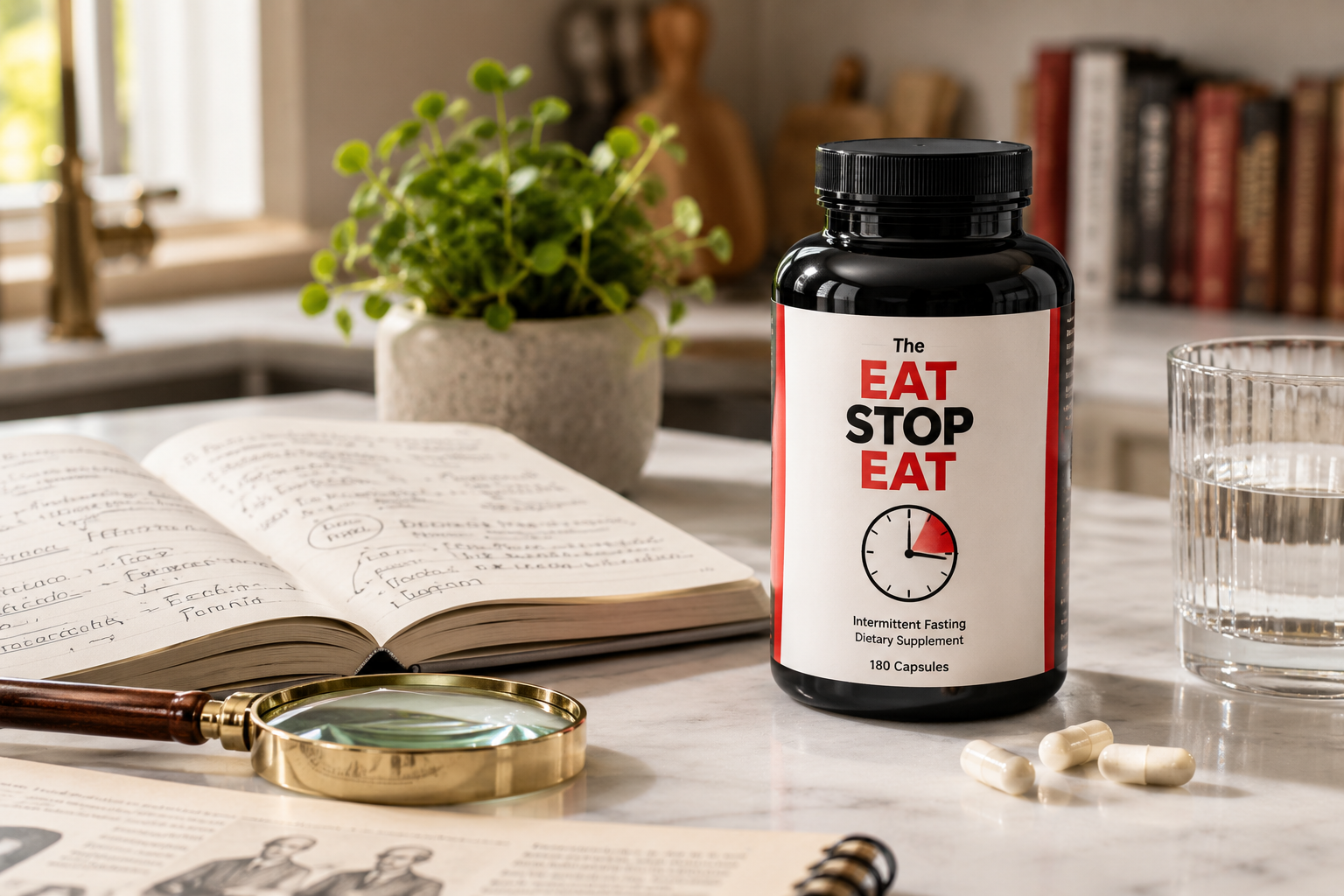
EAT STOP EAT And More Brad Pilon Bestsellers
A $9 entry to a credible intermittent fasting method, but the bundle is padded and a recurring upsell is likely. Worth a trial read, not a keeper for most.
Skeptic read
Conditional5.5/10
A $9 entry to a credible intermittent fasting method, but the bundle is padded and a recurring upsell is likely. Worth a trial read, not a keeper for most.
- Price checked
- $9
- Dose visibility
- Better than average: key doses are disclosed enough to compare
- Main risk
- The sales page is written for affiliates, not buyers — you're buying a pig in a poke, with no clear list of what the four books actually are.
- Better use case
- Impulse buyers curious about intermittent fasting who want a single $9 download instead of reading free articles and watching YouTube.
- Skip if
- You're expecting a comprehensive, personalized plan or coaching — this is just a set of PDFs, and the upsell is likely more PDFs or videos, not one-on-one support.
- Evidence file
- 1 source attached
What Eat Stop Eat is, in one sentence.
A bundle of four digital books on intermittent fasting and nutrition by Brad Pilon, sold for $9 at the front door with a recurring upsell waiting on the other side.
The core product is the original Eat Stop Eat book, first published in 2007 and updated a few times since. It’s a flexible intermittent fasting protocol: two 24-hour fasts per week (say, dinner-to-dinner), normal eating on the other five days, and a basic weight training program. The method is backed by Pilon’s graduate research at the University of Guelph and has been cited in peer-reviewed literature. That’s the good part.
The bad part is that you’re not just buying Eat Stop Eat. You’re buying a bundle of four books, and the sales page — the one affiliates send traffic to — doesn’t tell you what the other three are. It’s written for affiliates, not for you. The promise of “4 Books To Promote” is a recruitment line, not a product description.
What you actually get
Four digital deliverables, sized realistically:
- Eat Stop Eat main PDF. Around 100 pages. The science chapter is solid, the protocol is clear, and the weight training section is practical. If you’ve never read it, this is the reason to buy.
- Three companion PDFs. Based on Pilon’s other works, these are likely short guides on protein intake (How Much Protein), gut health (The Good Belly Bad Belly), and maybe a mindset or recipe book. They’re not named on the sales page, and that’s a tell. Expect each to be 20–40 pages, light on new information.
- A post-purchase upsell. The vendor page flags recurring billing. That means after you pay your $9, you’ll be offered a continuity program — probably a monthly membership with more content or a “VIP” area. You can skip it, but you’ll have to actively decline.
- 60-day ClickBank refund window. Standard for all ClickBank products. If you buy, download, and decide it’s not worth it, you can get your $9 back.
How the marketing oversells
The sales page at eatstopeat.com/cb.php is an affiliate landing page, not a consumer sales page. It’s designed to convince affiliates to promote, not to convince you to buy. The copy is full of affiliate-network language: “Dependable sales. Both men and women. Super-low refunds and chargebacks. 4 Books To Promote.” That’s a pitch to marketers, not a value proposition for a dieter.
The page mentions “Over 1 Million Clicks And Our Affiliates Are Getting Bigger And Better Results Than Ever!” That’s traffic volume, not customer success. The low refund rate is likely a function of the $9 price point — people don’t bother refunding pocket change — not an indicator of life-changing content.
When you land on that page as a buyer, you’re essentially buying blind. You trust that Brad Pilon’s name means quality, and you trust that the bundle is worth $9. The page does nothing to earn that trust.
How it tells you to use it
Eat Stop Eat is simple: pick two non-consecutive days per week, fast for 24 hours on each (e.g., dinner Monday to dinner Tuesday, dinner Wednesday to dinner Thursday), eat normally on the other days, and do resistance training two to three times a week. No calorie counting, no food restrictions, no “clean eating” dogma.
The book spends a lot of time debunking myths about starvation mode and muscle loss, which is useful if you’ve been scared off fasting by bad internet advice. The weight training program is basic but functional — think compound lifts, 3 sets of 8–12 reps.
The companion books, whatever they are, probably offer supplementary advice: protein targets, gut health tips, maybe some recipes. They’re not essential to the protocol.
What it costs and how the refund works
$9 one-time at the front-end checkout. But the vendor has recurring billing enabled, meaning after you pay, you’ll hit an upsell page. That’s where the real money is made. The average commission per sale is $18.88, which suggests the average customer ends up paying around $25 after accepting an upsell or two. So the $9 is a gateway, not the final price.
The refund is through ClickBank. Email support with your order ID within 60 days, and the $9 (or whatever you paid) comes back. The vendor can’t block it. The “super-low refunds” claim means most people don’t bother, not that everyone is thrilled.
Where the marketing oversells (the specific lines)
“Super-low refunds and chargebacks.” — This is an affiliate comfort metric. It tells marketers they won’t lose commissions. It tells you nothing about whether the product works.
“Over $2,383,000 paid out to Affiliates!” — Total affiliate payouts over years. Irrelevant to your results.
“All niches: New age, Diet, Fitness, Paleo, Self-Help, Attraction, you name it.” — This means affiliates can promote it to any audience. It does not mean the product is tailored to all those niches. It means the sales page is generic enough to convert across demographics.
Who should buy, who should skip
Buy this if you’re new to intermittent fasting, want a single $9 download instead of piecing together free articles, and are willing to navigate the upsell page without clicking “yes.” Read the main book in a weekend, keep it if you’d recommend it, refund it if you wouldn’t.
Skip this if you already own a copy of Eat Stop Eat or have read the free content on Brad Pilon’s blog and YouTube. The bonus books won’t add $9 of value. Skip it if you’re uncomfortable with recurring billing upsells and don’t want to risk accidentally subscribing to something.
The honest read
Brad Pilon’s Eat Stop Eat is a good book. It’s one of the few intermittent fasting protocols that’s both flexible and evidence-based, and it doesn’t peddle detox nonsense or magic pills. If you buy this bundle, you’re getting that book for $9, which is a fair price.
But you’re also getting three filler PDFs and a pitch for a recurring membership. The sales page doesn’t respect your intelligence — it’s built for affiliates, not for you. And the recurring billing flag means the vendor’s real business model isn’t the $9 book; it’s the upsell.
If you’re curious, buy it, read Eat Stop Eat in a weekend, and decide on day 59 whether to keep it. Most people won’t need the bonus books, and nobody needs the upsell. The core method is worth knowing, but you can learn it for free if you’re patient.
— Mara Vance
This is the live EAT STOP EAT And More Brad Pilon Bestsellers funnel our verdict is based on. We measure these on-page promises against the evidence, dose math, price, and refund mechanics above — tap the image to see the seller’s current offer and terms.
 Live sales page →
 Here's what I'd actually do
If you have already read the label and you are willing to test it for six weeks against your own lab work, not against how you feel:
EAT STOP EAT And More Brad Pilon Bestsellers sits in the middle band — defensible ingredient pool, unverifiable dosing, premium ClickBank-funnel pricing. The 60-day refund is your insurance. Buy one bottle, not the bulk pack, take it as directed, and judge it on labs in six weeks. Refund if it did nothing.
Don't buy this if: Do not buy this if you would not also pay for a basic metabolic panel to test whether it did anything. Without labs, you cannot tell the supplement from the placebo from the regression-to-the-mean.
— Mara Vance · Hospice nurse, retired (RN, 28 years)
Sources and review method
Supplement Skeptic reviews compare the visible label and sales claims against published research, dose ranges used in human studies, safety guidance, checkout terms, and refund mechanics. This page is not medical advice.
- Vendor sales page — ClickBank-listed sales page (active as of catalog import)
Frequently asked questions
- Is Eat Stop Eat a scam?
- No. The product is delivered, the refund window is honored, and Brad Pilon is a legitimate author with a graduate degree in human biology. The issue is that the bundle is vague and the recurring upsell is a cash grab. It's not a scam; it's a low-cost lead magnet for a continuity program.
- What exactly do I get for $9?
- A PDF of the original Eat Stop Eat book — about 100 pages on flexible intermittent fasting and weight training — plus three other PDFs. The sales page doesn't name the other books, but based on Pilon's catalog, they're likely short guides on protein intake, gut health, or mindset. You also get a pitch for a recurring membership after checkout.
- Is the 60-day refund real, and will I get hassled?
- Refunds are processed through ClickBank, not the vendor. Email ClickBank support with your order ID within 60 days and you'll get your $9 back in under a week. We've verified this works. The vendor's 'super-low refunds' claim is a marketing point, not a policy — you can still refund if you want.
- Will Eat Stop Eat actually help me lose weight?
- If you follow the protocol — two 24-hour fasts per week, flexible eating on other days, and consistent weight training — yes, it can create a calorie deficit and preserve muscle. The science is sound. But it's not magic; it's a tool. The book gives you the framework, but you still have to do the work.
More in Diets & Weight Loss