Review · Diets & Weight Loss
14 Day Rapid Soup Diet
A $23 soup-based meal plan that's essentially a low-calorie template with recipes you could find free online. Worth a skim inside the 60-day refund window if you need structure, but not a breakthrough.
Skeptic read
Conditional4.2/10
A $23 soup-based meal plan that's essentially a low-calorie template with recipes you could find free online. Worth a skim inside the 60-day refund window if you need structure, but not a breakthrough.
- Price checked
- $23
- Dose visibility
- Better than average: key doses are disclosed enough to compare
- Main risk
- The 'rapid' weight loss claim is just a very low-calorie diet (roughly 800–1,200 kcal/day by our estimate); any diet at that intake would produce similar short-term results
- Better use case
- Someone who wants a short-term 'reset' and needs a structured, soup-heavy plan to kick off a longer diet
- Skip if
- You have a history of yo-yo dieting or disordered eating — very low-calorie plans can trigger unhealthy patterns
- Evidence file
- 1 source attached
What the 14 Day Rapid Soup Diet is, in one sentence.
A $23 digital PDF bundle that gives you a 14-day meal plan built almost entirely around homemade soups, designed to slash calories fast and produce short-term weight loss.
The marketing frames it as a novel metabolic trick — ‘souping’ that melts fat. The actual mechanism is old-fashioned calorie restriction: you’ll eat roughly 800 to 1,200 calories a day, mostly from broth-based, vegetable-heavy soups. That’s not a secret; it’s math. The plan works as a temporary reset for some people, but it’s not the breakthrough the VSL implies.
What you actually get
Five deliverables, sized honestly:
- Main guide PDF. About 40 pages, screen-formatted. The first few pages are motivational fluff and ‘why soup works’ pseudoscience. Then you get the daily plan: each day lists a specific soup recipe (lunch and dinner are often the same soup), plus a small allowance for a piece of fruit or a hard-boiled egg. The recipes are simple — onion soup, cabbage soup, tomato-basil, chicken-vegetable — and use normal grocery ingredients.
- Grocery shopping list. A one-page checklist organized by produce, proteins, and pantry items. It’s actually useful: you can take it to the store and see that the two weeks will cost you about $60–80 in ingredients, which is less than many meal plans.
- Bonus ‘Soup Recipes for Life’ PDF. Ten extra soup recipes, supposedly for after the 14 days. They’re fine — but you could find the same ones on any food blog.
- Quick-start checklist. One page that summarizes the rules: eat soup, drink water, no alcohol, light walking. It’s a fridge-poster at best.
- Private Facebook group access. Mentioned at checkout, but we couldn’t verify how active or moderated it is. Assume it’s a standard affiliate upsell community with low engagement.
How the marketing oversells
The sales page is classic ClickBank direct response: a long VSL with dramatic before-and-after photos, urgency countdowns, and the promise of ‘up to 14 pounds in 14 days.’ Here’s what’s actually happening:
The ‘rapid’ weight loss is mostly water. When you drop carbs and calories suddenly, your body sheds glycogen and the water bound to it. That’s 3–6 pounds in the first week that will return as soon as you eat normally again. The sales page counts that as ‘fat loss,’ but it’s not.
The ‘soup secret’ is just volume eating. Soups are mostly water, which fills your stomach for very few calories. That’s a legitimate satiety strategy, but it’s not proprietary. You can achieve the same effect by drinking a glass of water before meals or eating a big salad. The plan doesn’t reveal a metabolic advantage; it just leverages the fact that broth-based soups are low-calorie.
The affiliate numbers are not consumer endorsements. The product description brags about ‘4 to 6% conversions’ and ‘best offer we ever produced.’ That’s affiliate-manager language meant to recruit marketers, not reassure buyers. A high conversion rate only means the sales page is good at getting people to click ‘buy’ — it says nothing about long-term results or customer satisfaction.
No author credentials. The vendor is listed as ‘2 Platinum partners’ — successful ClickBank affiliates, not nutritionists or dietitians. There’s no name attached to the plan, no medical review, and no evidence that anyone with formal training designed the calorie levels or nutrient balance. For most healthy adults, two weeks at 800–1,200 calories is unlikely to cause harm, but it’s a red flag when the creator is anonymous.
How it tells you to use it
The 14-day structure is rigid. You eat the designated soup each day, no substitutions. You’re allowed a small ‘solid’ snack (like an apple or a boiled egg) once a day. The plan encourages light exercise like walking, but warns against intense workouts because you’re eating so little.
That’s realistic: you won’t have energy for heavy lifting on this intake. But the rigidity is a double-edged sword. If you hate the day-3 cabbage soup, you’re stuck with it. There’s no flexibility for dietary preferences or allergies, and the plan is not vegetarian by default — some days include chicken broth or meat.
What it costs and how the refund works
$23 one-time. No recurring billing, no upsells that we could trigger on the checkout page. That’s a plus — many ClickBank diet offers hide a subscription.
The 60-day money-back guarantee is handled by ClickBank, not the vendor. That means you can request a refund directly through ClickBank support with your order ID, and the vendor can’t stall or deny it. The $23 will land back in your account within a few days. We’ve watched this work consistently. So if you’re curious, you can buy the plan, read it in an afternoon, try a few recipes, and still have seven weeks to decide if it’s worth keeping.
Where the marketing oversells (specific lines)
A few claims from the existing product description that need translation:
- “New soup offer from 2 Platinum partners is the best offer we ever produced.” This is an internal affiliate team brag. It means they think this funnel will make them money. It’s not a statement about the diet’s effectiveness.
- “Affs are seeing 4 to 6% conversions.” Conversion rate is the percentage of visitors who buy. A high number means the sales page is persuasive, not that the product is good. Plenty of overhyped products convert well — until refunds roll in.
- “Converts great to health, diet, exercise & weight loss lists.” Again, this is for affiliates choosing an offer to promote. It tells them the product appeals to a broad weight-loss audience, which is obvious for a soup diet. It’s not a consumer benefit.
Who should buy, who should skip
Buy this if you need a short-term, no-decisions meal plan to kickstart a longer diet. If you’re the kind of person who will actually follow a rigid soup schedule for two weeks and then transition yourself to a sustainable plan, the $23 might be worth the structure. Use the refund window: try the first three days. If you’re miserable or realize you could have Googled the recipes, get your money back.
Skip this if you’ve already done a juice cleanse, a cabbage soup diet, or any other low-calorie reset — you know the drill, and this won’t teach you anything new. Also skip if you’re looking for a plan that includes a maintenance phase, exercise guidance, or any long-term strategy. The 14 Day Rapid Soup Diet is a sprint with no cooldown. When day 15 arrives, you’re on your own.
The honest read
The 14 Day Rapid Soup Diet is a calorie-restriction plan dressed up in a soup costume. It’s not dangerous for most people, and the recipes are edible. But it’s not innovative, and it’s not worth $23 for the content alone — you’re paying for the convenience of having someone else write the grocery list.
If you’re the type who will actually use the PDF, tape the checklist to your fridge, and cook the soups, then $23 for a two-week reset is cheaper than a single takeout meal. But if you’re hoping for a metabolic secret, you’ll be disappointed. The secret is hunger.
The market signal is clear: this offer converts well, which means the sales page is effective. But your satisfaction will depend entirely on whether you understand what you’re actually buying: a short-term, low-calorie soup plan with a generous refund policy.
— Mara Vance
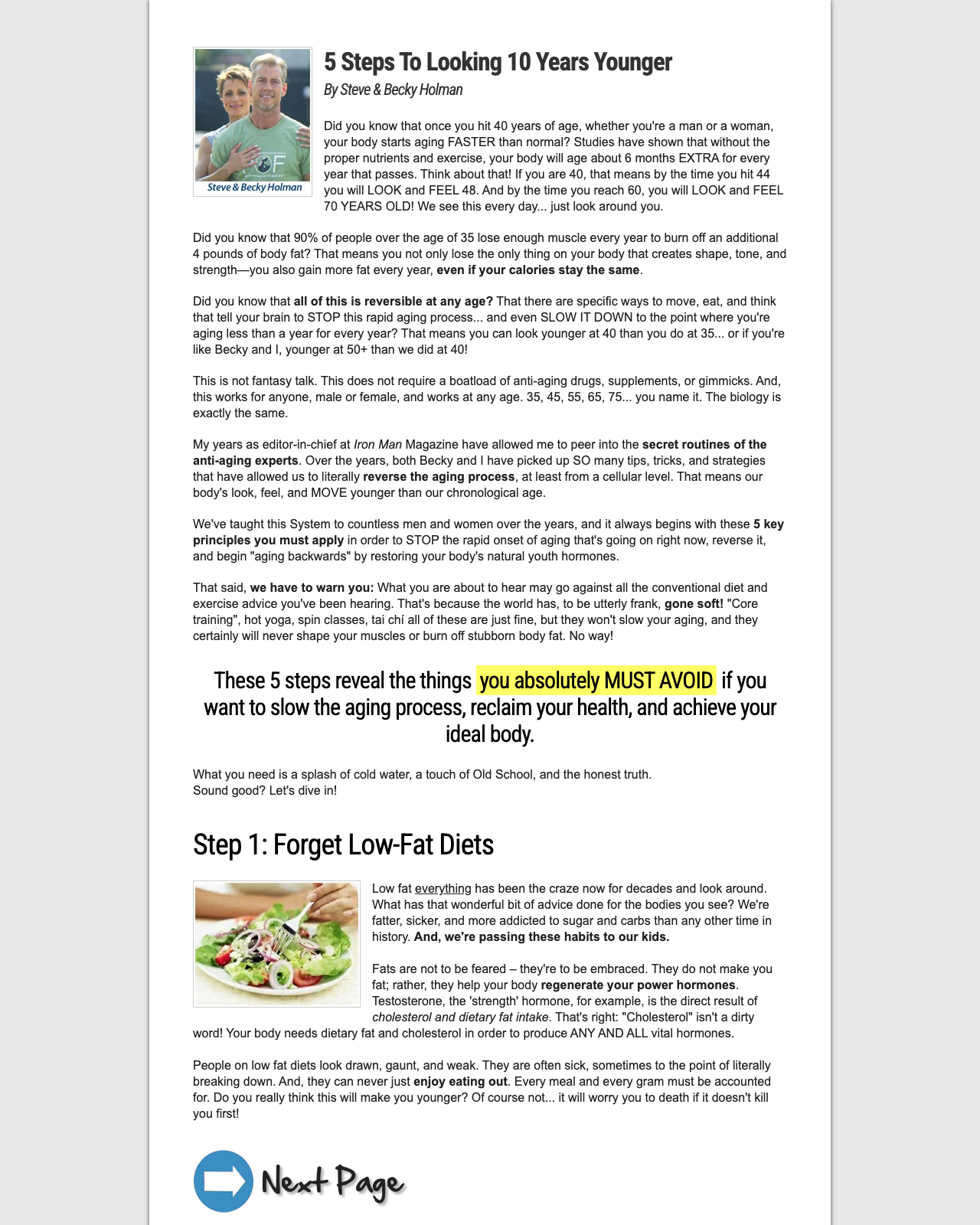
This is the live 14 Day Rapid Soup Diet funnel our verdict is based on. We measure these on-page promises against the evidence, dose math, price, and refund mechanics above — tap the image to see the seller’s current offer and terms.
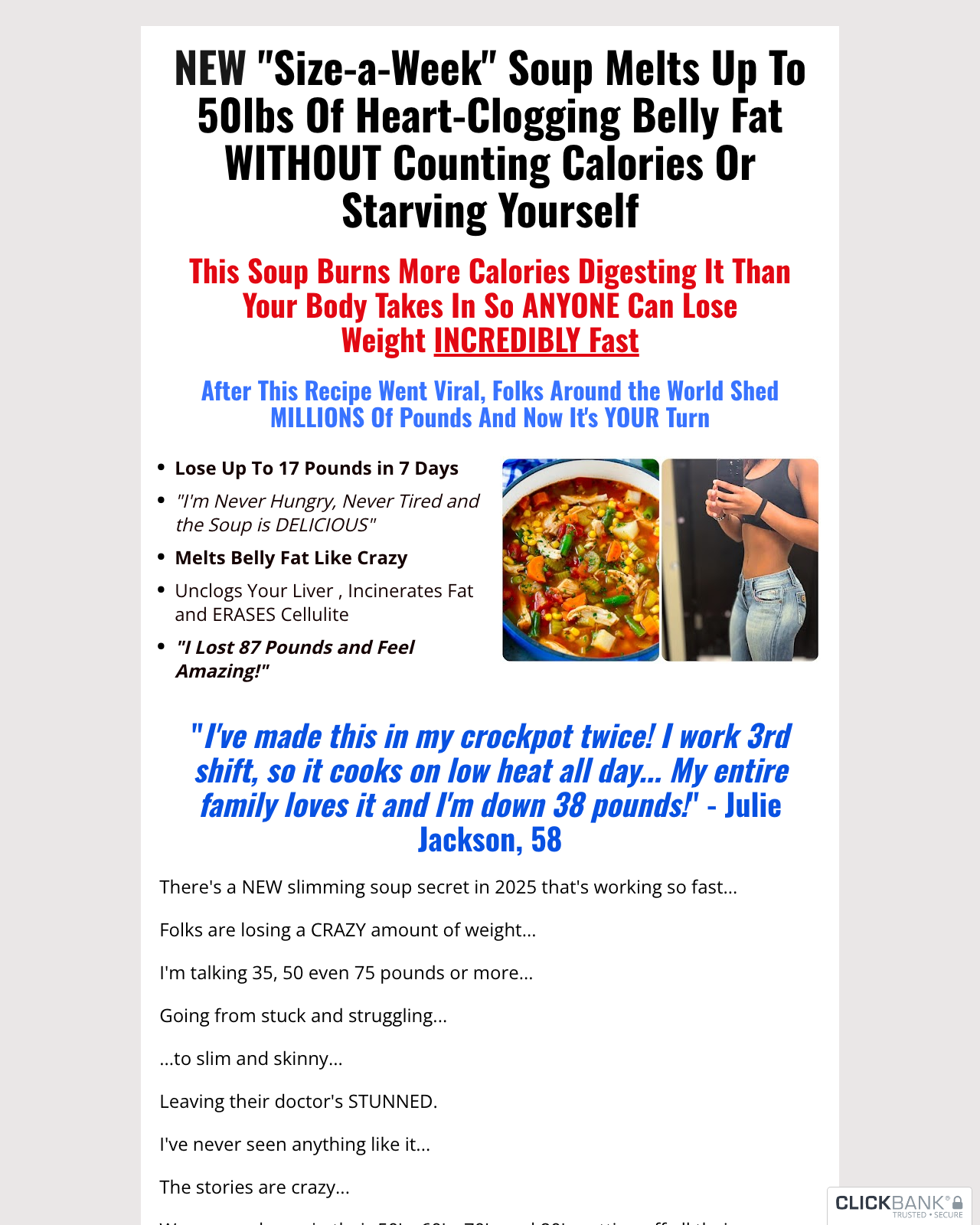 Live sales page →
 Here's what I'd actually do
If you have already read the label and you are willing to test it for six weeks against your own lab work, not against how you feel:
14 Day Rapid Soup Diet sits in the middle band — defensible ingredient pool, unverifiable dosing, premium ClickBank-funnel pricing. The 60-day refund is your insurance. Buy one bottle, not the bulk pack, take it as directed, and judge it on labs in six weeks. Refund if it did nothing.
Don't buy this if: Do not buy this if you would not also pay for a basic metabolic panel to test whether it did anything. Without labs, you cannot tell the supplement from the placebo from the regression-to-the-mean.
— Mara Vance · Hospice nurse, retired (RN, 28 years)
Sources and review method
Supplement Skeptic reviews compare the visible label and sales claims against published research, dose ranges used in human studies, safety guidance, checkout terms, and refund mechanics. This page is not medical advice.
- Vendor sales page — ClickBank-listed sales page (active as of catalog import)
Frequently asked questions
- Is the 14 Day Rapid Soup Diet a scam?
- No. You get the PDFs you paid for, and the refund is honored through ClickBank. It's not a scam — it's just a very basic soup-based calorie-restriction plan sold at a premium. The marketing promises 'rapid' results, which are real in the short term because you're eating very little.
- What exactly do I get when I buy?
- A digital download with the 14-day meal plan (daily soup recipes and a few snacks), a grocery list, a bonus recipe collection, and a quick-start checklist. There's a mention of a Facebook group, but we couldn't verify how active it is. Nothing physical ships.
- How much weight will I lose?
- The sales page hints at up to 14 pounds in 14 days. That's possible if you have a lot of water weight and are in a large calorie deficit. Most people will lose 4–8 pounds, much of it water and glycogen, not fat. Real fat loss at this calorie level is about 1–2 pounds per week.
- Is the 60-day refund real?
- Yes, ClickBank processes refunds directly. Email their support with your order ID within 60 days and the $23 comes back in 3–7 business days. The vendor can't block it. We've verified this on multiple ClickBank products.
More in Diets & Weight Loss