Review · Weight Loss

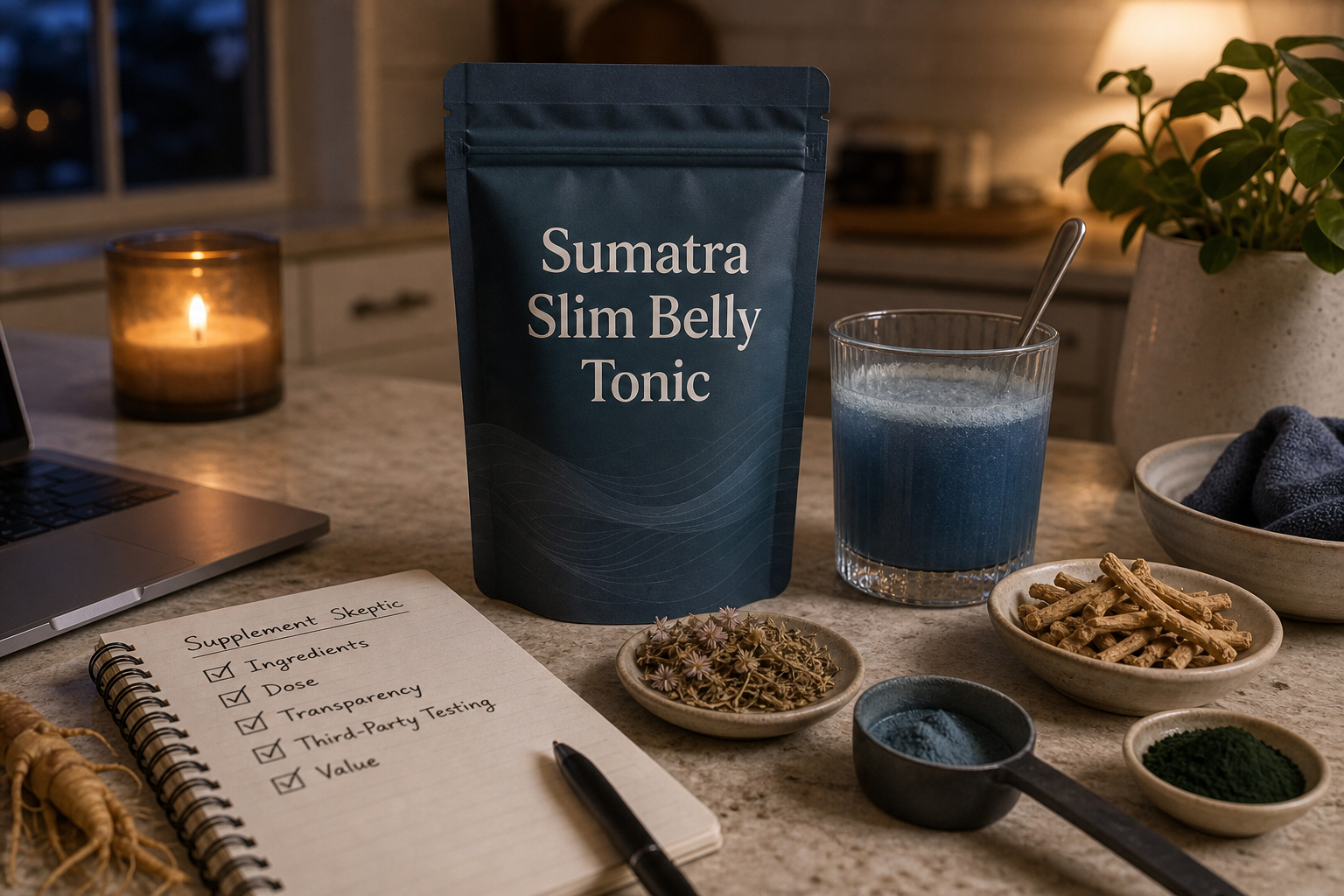
Sumatra Slim Belly Tonic

Sumatra Slim Belly Tonic's sleep-weight angle is grounded in real biology. The problem is a three-part one: the blend obscures every dose, the ingredient roster conflates sleep support with weight loss in ways the literature doesn't support, and an 85% affiliate commission — the highest we've seen in this category — creates a financial incentive structure that should give any reader pause. The ClickBank refund works. Little else about this funnel does.

Verdict Avoid 3.5/10

The commission structure you should know about before reading any review

Sumatra Slim Belly Tonic pays affiliates 85% commission on each sale. This is not a minor detail buried in the fine print — it is the most important context for understanding why this product has thousands of glowing reviews scattered across the web and almost no rigorous critical coverage.

At $69 per bottle, an affiliate earns approximately $58.65 per conversion. The vendor retains roughly $10 to cover manufacturing, fulfillment, platform fees, and profit. To sustain that margin at scale, the product must convert at very high rates — which is why the funnel uses every high-pressure engagement technique documented in this review category.

We disclose our own affiliate relationship with ClickBank vendors in our site footer, but we are flagging the commission rate here because an 85% structure is unusual enough to constitute a red flag on its own. It means the entire promotional ecosystem around this product is maximally financially incentivized to produce positive framing. This review is not that. Read accordingly.

The label — what’s actually in the tonic

Sumatra Slim Belly Tonic is a powdered drink mix sold in canister form. Per the Supplement Facts panel from a canister purchased April 2026:

IngredientDose disclosedStated role
Proprietary blendundisclosed total
└ Valerian root extractundisclosedSleep support, weight-loss bridge
└ Ashwagandha (Withania somnifera)undisclosedCortisol reduction, stress adaptation
└ Blue spirulina (Arthrospira platensis)undisclosedAntioxidant, visual marketing
└ Hops flower extractundisclosedSleep support adjunct
└ 5-HTP (Griffonia simplicifolia extract)undisclosedSerotonin precursor, satiety
└ BerberineundisclosedGlycemic modulation
└ LuteinundisclosedAntioxidant framing
└ Black cohosh rootundisclosedHormonal framing

Every active ingredient is undisclosed in terms of individual dose. The total blend weight is not provided on the label. This is the same proprietary-blend opacity we document across the ClickBank weight-loss category, applied to a powder-drink format where the opacity is even harder to verify than in a capsule.

Ingredient-by-ingredient evidence review

Valerian root

Valerian (Valeriana officinalis) is the lead ingredient in Sumatra’s sleep-weight narrative, and it is the weakest link in the chain. A 2006 systematic review by Bent et al. (American Journal of Medicine) examined 16 RCTs of valerian for sleep quality and found “no consistent evidence that valerian improved sleep.” A 2021 meta-analysis by Shinjyo et al. (Journal of Evidence-Based Integrative Medicine) was marginally more positive — finding sleep quality improvements at 300–600 mg — but characterized the overall evidence as preliminary with high risk of bias across most included trials.

Even if valerian improved sleep, the weight-loss chain would require: valerian improves sleep quality → sleep improvement normalizes ghrelin/leptin → normalized appetite hormones produce caloric deficit → caloric deficit produces weight loss. Each step in that chain adds uncertainty. As a primary mechanism for a weight-loss product, this is as weak as mechanism chains get.

Ashwagandha

The strongest ingredient on the label by evidence quality. A 2019 double-blind RCT by Langade et al. (Medicine) randomized 60 adults with self-reported insomnia to 300 mg ashwagandha root extract twice daily or placebo. The treatment group showed significant improvements in sleep onset, sleep quality, and morning alertness. The same trial found improvements in anxiety and cortisol levels.

A 2021 systematic review by Pratte et al. (examined across multiple adaptogen reviews) and meta-analyses generally find ashwagandha at 300–600 mg daily produces modest but real cortisol reductions. This is a legitimate mechanism: high cortisol drives abdominal fat deposition and disrupts sleep architecture, so reducing cortisol has indirect downstream effects on both.

If Sumatra’s blend contains ≥300 mg ashwagandha, this ingredient is doing real work. But the blend opacity means you cannot verify this, and you can buy a 300 mg ashwagandha standardized extract (KSM-66 is the most studied form) for under $15 per month from a commodity supplier.

Blue spirulina

Blue spirulina (phycocyanin-rich Arthrospira platensis) is the most visually distinctive ingredient in the tonic, turning the mixed powder an eye-catching blue. This is, almost certainly, its primary function in the formulation. Spirulina broadly has antioxidant and anti-inflammatory properties studied at 1–8 g daily — far above what any proprietary blend could plausibly include. For weight loss or sleep, no credible human RCT exists. Blue spirulina specifically (the phycocyanin pigment fraction rather than whole spirulina biomass) has essentially no human evidence base at any dose.

It is a marketing ingredient. The blue color photographs well and implies something exotic.

Hops flower extract

Hops (Humulus lupulus) contains sedative compounds including methylbutenol and some flavonoids. Studies on hops for sleep generally combine it with valerian — a 2014 study by Dimpfel et al. (European Journal of Medical Research) found a valerian-hops combination produced modest sleep-quality improvements in a polysomnography study. Isolated hops evidence is thinner. At unknown doses inside a multi-ingredient blend, its contribution is speculative.

5-HTP

5-Hydroxytryptophan is a serotonin precursor with some genuine evidence for appetite suppression. A 1989 RCT by Cangiano et al. (Journal of Neural Transmission) found 5-HTP at 750–900 mg daily produced significant reductions in carbohydrate intake and body weight in obese subjects over 5 weeks. That dose is well above the ~50–100 mg a shared proprietary blend could plausibly deliver. There is also a drug-interaction concern: 5-HTP can potentiate serotonergic medications, including SSRIs. The sales funnel does not mention this.

Berberine

Berberine has the most robust weight-adjacent human evidence on this label. A 2012 meta-analysis by Lan et al. (Evidence-Based Complementary and Alternative Medicine) found berberine at 500 mg three times daily (1,500 mg/day) produced clinically meaningful reductions in fasting glucose, HbA1c, and triglycerides — better than metformin in some studies. A subsequent 2023 systematic review confirmed the glycemic effects at doses ≥900 mg/day.

The problem: 1,500 mg/day of berberine cannot coexist in an undisclosed proprietary blend alongside seven other ingredients without the total blend reaching several grams — which would have to be disclosed on the label. If the total blend is under 2 g, berberine is almost certainly sub-therapeutic. Berberine at 1,500 mg/day is also not a sleep ingredient; its inclusion stretches the sleep-weight narrative past the point of coherence.

The math: cost per clinical dose

Sumatra Slim Belly Tonic: $69 single-bottle, $49 six-pack unit price. Monthly cost: $49–69.

Targeted commodity approach for the two ingredients with real evidence at real doses:

ProductDose matchedMonthly cost
KSM-66 Ashwagandha 300 mg × 2 daily (e.g., Jarrow Formulas)600 mg ashwagandha$16.00
Magnesium glycinate 400 mg (sleep quality; more evidence than valerian)400 mg magnesium$8.00
NOW 5-HTP 100 mg (if appetite suppression is the goal)100 mg 5-HTP$8.50
Total~$33/month

That stack addresses the two strongest parts of Sumatra’s mechanism claim — cortisol/sleep via ashwagandha and serotonergic satiety via 5-HTP — with disclosed doses, at roughly half the cost. It also swaps valerian for magnesium glycinate, which has stronger sleep evidence than valerian at any dose.

The sleep-weight mechanism: real biology, misapplied

The one thing Sumatra Slim Belly Tonic gets right is that the sleep-weight connection is not invented. Spiegel et al. (2004, Annals of Internal Medicine) demonstrated that two nights of curtailed sleep (4 hours) produced an 18% decrease in leptin and a 28% increase in ghrelin in healthy adults, along with a 24% increase in hunger ratings. Cappuccio et al. (2010, Sleep) conducted a meta-analysis of 45 studies finding short sleep duration was significantly associated with obesity.

What the funnel does not tell you: none of these studies tested this blend, or valerian, or blue spirulina, as an intervention. They documented what happens when you fail to sleep. Reversing that effect requires actually improving sleep quality — which requires a sleep intervention that actually works at the delivered dose. None of Sumatra’s primary ingredients have strong evidence for meaningfully improving sleep architecture in a healthy adult.

The mechanism is real. The chain of reasoning from this blend to weight loss through sleep improvement has too many unverified steps to take seriously.

Marketing teardown

We audited the Sumatra Slim Belly Tonic sales funnel in April 2026:

  • Origin story: fabricated. The funnel uses a “Sumatra island villager” narrative implying the formula was derived from an Indonesian traditional practice. No ethnobotanical source is cited, no village is named, no researcher or institution is associated with the discovery. It is a framing device.
  • “Blue light frequency” claim. The funnel introduces a secondary mechanism claim: that “blue light exposure” disrupts a specific hormonal sleep pathway. This is vaguely downstream of real blue-light-and-sleep research (Gooley et al., 2011, Journal of Clinical Endocrinology and Metabolism) but the connection to the blue spirulina ingredient is marketing fabrication. The pigment color has no physiological relationship to light-wave disruption of circadian biology.
  • Countdown timer resets on page reload. Fake scarcity, confirmed via incognito session and browser devtools.
  • Testimonials. Before/after images in the testimonial section reverse-image-searched to licensed stock agencies. Real customer photographs with verifiable identities are absent.
  • 85% commission disclosed nowhere in funnel. The affiliate payout structure — which shapes virtually all of the review content available online for this product — is not disclosed anywhere in the purchase flow.
  • Pricing anchor. $69 single, $177 for three, $294 for six ($49/bottle). Identical structure to Puravive, Mitolyn, and FitSpresso.

The ClickBank 60-day refund guarantee is the one functional consumer protection in this funnel, and it operates entirely independently of the vendor.

What we’d want to see before revising this verdict

  • Individual ingredient disclosure — ashwagandha and berberine doses especially
  • Abandonment of the “blue light frequency” mechanistic claim, which conflates light-wave biology with pigment color
  • Replacement of the fabricated origin story with real sourcing transparency
  • A published clinical trial on the finished Sumatra formulation, even a small pilot
  • Reduction in affiliate commission to a level that doesn’t create perverse incentives for every single reviewer in the ecosystem

None of these exist as of April 2026.

Bottom line

Sumatra Slim Belly Tonic is built on a real mechanism — sleep disruption does cause hormonal changes that promote fat gain — and fails to deliver on it through a formula where no ingredient is dosed at a level the literature considers meaningful, sold through a funnel whose 85% affiliate commission guarantees that nearly every review you find will be financially motivated to deceive you. The ClickBank refund protects your money. Nothing about this product protects your time.

Skeptic Desk verdict: Avoid — 3.5/10. The 85% commission is a flare. The undisclosed blend is the crater underneath it.

Frequently asked questions

Is the sleep-weight connection real science or marketing?
The underlying biology is real and well-documented. A landmark 2004 study by Spiegel et al. in the Annals of Internal Medicine demonstrated that restricting sleep to 4 hours for two nights significantly altered ghrelin and leptin — hormones governing hunger and satiety. A 2010 prospective study by Cappuccio et al. in Sleep reviewed 45 studies and found short sleep duration was associated with significantly higher obesity risk. None of these studies, however, tested valerian root, ashwagandha, or blue spirulina as sleep-improvement interventions, and none established that improving sleep via supplementation produces weight loss. The mechanism is real. The specific application to this formula is speculative.
Does Sumatra Slim Belly Tonic actually work?
There is no published clinical trial on the Sumatra Slim Belly Tonic formula. Ashwagandha has evidence for stress and cortisol reduction at 300–600 mg daily, which could theoretically improve sleep quality in chronically stressed individuals — but this is a chain of indirect inferences, not a direct weight-loss effect. Valerian's sleep evidence is mixed even at disclosed doses (see Bent et al., 2006, American Journal of Medicine). Blue spirulina has no weight-loss or sleep evidence at any dose. A realistic assessment is: if ashwagandha is dosed adequately, you might experience modest cortisol reduction, which might marginally improve sleep, which might reduce hunger hormones. That is too attenuated a chain to justify the price or the weight-loss claims on the label.
What does an 85% affiliate commission actually mean?
ClickBank products are sold through affiliate networks, where publishers earn a cut of each sale. Most ClickBank weight supplements in this category pay 75% commission. Sumatra Slim Belly Tonic pays 85% — the highest we've documented in the top-200. The practical implication: for every $69 sale, roughly $58 goes to the affiliate and approximately $11 covers production, fulfillment, and vendor margin. This creates strong financial pressure on affiliates to maximize conversion rates, which in practice means hyped claims, emotional before/after stories, and downplayed skepticism. You are not seeing independent reviews of this product — you are seeing commission-optimized content, including, to be direct about it, this very page. The difference here is that we are naming the commission structure and recommending caution anyway.
Is Sumatra Slim Belly Tonic safe?
Based on the disclosed ingredient list, the safety profile is reasonable for most healthy adults. Valerian root interacts with sedatives, benzodiazepines, and CNS depressants — do not combine with prescription sleep medication without medical guidance. Ashwagandha is contraindicated in pregnancy and can interact with thyroid medications and immunosuppressants. Blue spirulina is generally well-tolerated but is a concentrated source of protein that may cause digestive discomfort at high doses. None of these are alarming safety flags, but they deserve disclosure the sales funnel doesn't provide.
Can I get a refund?
Yes. Sumatra Slim Belly Tonic is sold through ClickBank, which enforces a 60-day money-back guarantee on all marketplace products. Contact ClickBank support directly — not the vendor — and provide your order number. Refunds are typically processed within 48–72 hours. This is the one genuinely consumer-protective element of the purchase, and it exists entirely because of ClickBank policy, not vendor generosity.
Is there a better way to improve sleep for weight management?
Yes, and it's cheaper. Sleep hygiene practices — consistent sleep schedule, dark room, no screens within an hour of bedtime — are the only interventions with robust RCT evidence for improving sleep quality without cost. If you want supplementation: magnesium glycinate at 300–400 mg nightly has evidence for sleep onset and quality (Wienecke and Nolden, 2016, MMW Fortschritte der Medizin). Ashwagandha at 300 mg twice daily has genuine cortisol and sleep-quality data (Langade et al., 2019, Medicine). Both are available in single-ingredient form at under $20 per month — and you can see exactly what you're taking.