Review · Weight Loss
Nagano Lean Body Tonic
Nagano Lean Body Tonic wraps a handful of real compounds — bitter melon and Panax ginseng chief among them — in Japanese-longevity mythology and an undisclosed proprietary digestive blend. The glycemic-support mechanism is the most scientifically coherent angle in the ClickBank weight-loss top-200. The dose opacity and the 'Nagano centenarians' origin story drag it below a conditional recommendation.
What Nagano Lean Body Tonic is actually selling
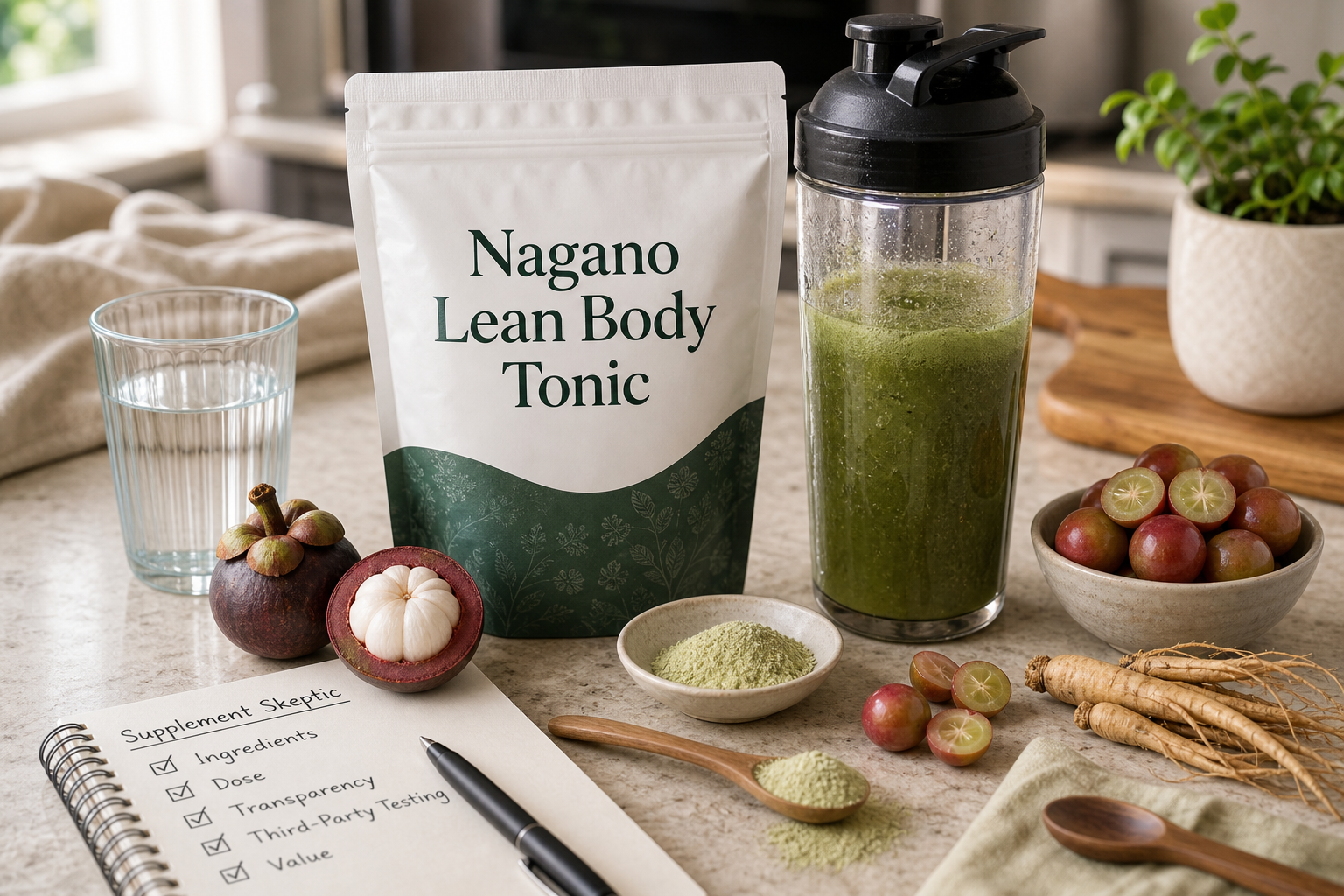
Nagano Lean Body Tonic is a daily powdered drink mix sold in a canister, positioned around Japanese longevity mythology. The sales funnel points to Nagano prefecture’s historically long-lived population — a genuine demographic fact — and implies that the tonic’s ingredient combination replicates the dietary secret behind that longevity.
This is a well-constructed angle. The Nagano longevity data is real. The prefecture’s low rates of obesity and cardiovascular disease relative to other Japanese regions are documented. What is fabricated is the leap from “Nagano residents live long” to “this combination of tropical fruits, bitter melon, and a proprietary enzyme blend is why.”
No epidemiological study links this formula, its ingredients, or its proportions to Nagano’s health outcomes. The geographic association is marketing. The ingredients themselves are more interesting than that backstory deserves.
The label — what’s actually in the tonic
Per the Supplement Facts panel from a canister purchased April 2026:
| Ingredient | Dose disclosed | Stated role |
|---|---|---|
| Proprietary Nagano Tonic Blend | undisclosed total | — |
| └ Camu camu (Myrciaria dubia) fruit | undisclosed | Vitamin C, antioxidant |
| └ Mangosteen (Garcinia mangostana) pericarp | undisclosed | Antioxidant, metabolic framing |
| └ Panax ginseng root | undisclosed | Adaptogenic metabolic support |
| └ Momordica charantia (bitter melon) | undisclosed | Glycemic modulation |
| └ Ashwagandha (Withania somnifera) | undisclosed | Cortisol and stress response |
| └ Proprietary Digestive Complex | undisclosed | — |
| └ Lactobacillus acidophilus | undisclosed (CFU) | Probiotic framing |
| └ Bifidobacterium longum | undisclosed (CFU) | Probiotic framing |
| └ Inulin (prebiotic fiber) | undisclosed | Probiotic support |
| └ Digestive enzyme blend (amylase, protease, lipase) | undisclosed | Digestion framing |
Two layers of undisclosed proprietary blending: the main tonic blend, and a digestive sub-blend within it. This is the deepest dose opacity we have documented across this review cycle.
Ingredient-by-ingredient evidence review
Camu camu
Camu camu (Myrciaria dubia) is a South American fruit and the most concentrated whole-food source of vitamin C known, containing up to 2–3 g of ascorbic acid per 100 g of fresh fruit. As a supplement, it has been studied for oxidative stress reduction. A 2008 RCT by Inoue et al. (Journal of Cardiology) found camu camu at 1,080 mg daily (providing ~70 mg vitamin C equivalent) reduced oxidative stress markers versus orange juice providing the same vitamin C — suggesting the whole-fruit matrix has value beyond isolated ascorbic acid.
Weight-loss evidence: none. Camu camu is included here for antioxidant framing, exotic-fruit optics, and the implicit “tropical superfoods = longevity” narrative the funnel builds. It is not a weight-loss ingredient by any credible reading of the literature.
Mangosteen
Mangosteen pericarp contains xanthones — a class of polyphenolic compounds with antioxidant and anti-inflammatory activity studied primarily in preclinical models. The weight-loss evidence for mangosteen is essentially nonexistent in humans. A 2016 pilot RCT by Watanabe et al. (Evidence-Based Complementary and Alternative Medicine) examined a mangosteen-containing combination product and found no significant weight effects at 12 weeks. As with camu camu, mangosteen’s role in Nagano is visual and narrative, not clinical.
Mangosteen is expensive, has striking purple color, and photographs beautifully. It is the blue spirulina of this formula.
Panax ginseng
Covered in the FitSpresso review, but worth revisiting here: Panax ginseng at 200–400 mg standardized ginsenoside extract daily has evidence for fatigue reduction, glycemic modulation, and cognitive support. The 2013 review by Shergis et al. (Complementary Therapies in Medicine) covers the RCT landscape well. In the context of Nagano, ginseng’s glycemic angle is the most coherent — it pairs logically with bitter melon’s insulin-signaling mechanism.
The dose question is the same as elsewhere: split across a multi-ingredient blend, Panax ginseng is almost certainly sub-clinical for any of its studied endpoints.
Momordica charantia (bitter melon)
The single most scientifically interesting ingredient on the Nagano label, and the primary reason this product rates higher than Sumatra.
Bitter melon contains several biologically active compounds including charantin, polypeptide-p, and vicine, which have been shown to activate AMP-activated protein kinase (AMPK) — a master metabolic regulator — and produce insulin-mimetic effects in cell and animal studies. In humans, the evidence is modest but real. A 2011 RCT by Fuangchan et al. (Journal of Ethnopharmacology) found 2,000 mg bitter melon fruit pulp daily significantly reduced fasting blood glucose and waist circumference in type 2 diabetics over 4 weeks. A 2013 meta-analysis by Ooi et al. (Evidence-Based Complementary and Alternative Medicine) found glycemic benefits across multiple RCTs but flagged small sample sizes and heterogeneous preparations.
The clinical range: 1,000–4,000 mg bitter melon daily as standardized extract or fruit preparation. Nagano’s powder blend cannot plausibly deliver this across a formula that also contains camu camu, mangosteen, ginseng, ashwagandha, and a digestive sub-blend — unless the total serving weight is several grams, which would be disclosed on the label.
The mechanism is real. The doses are not — and with bitter melon specifically, this is also a safety issue, not just an efficacy issue.
Ashwagandha
Already reviewed in the Sumatra analysis. Genuine human RCT evidence for cortisol reduction and sleep quality at 300–600 mg daily of standardized root extract (KSM-66 form most studied). In Nagano’s formulation context, ashwagandha’s cortisol-reduction angle is used to support the “stress causes weight gain” mechanism, which is a real if indirect chain. The dose is unverifiable.
Proprietary digestive complex
The nested probiotic sub-blend presents specific problems beyond the general dose-opacity complaint. Probiotic efficacy for weight management has been studied, with some positive signals. A 2019 meta-analysis by Borgeraas et al. (Obesity Reviews) found multi-strain probiotic supplementation produced a small but significant reduction in BMI — but the effective doses in included studies ranged from 10 billion to 100 billion CFU daily, delivered as single-purpose probiotic products. Without a disclosed CFU count, there is no way to assess whether Nagano’s probiotic component reaches any threshold used in published research.
The enzyme blend (amylase, protease, lipase) is included at undisclosed activity units. Digestive enzyme supplementation has evidence for enzyme-deficient populations (pancreatic insufficiency, lactose intolerance). For healthy adults, the evidence for weight management benefit is minimal at any dose.
The math: cost per clinical dose
Nagano Lean Body Tonic: $69 single-bottle, $39 six-pack unit price. Monthly cost: $39–69.
Targeted commodity stack hitting the two clinically credible compounds at minimum effective doses:
| Product | Dose matched | Monthly cost |
|---|---|---|
| Bitter melon extract 1,000 mg × 2 (e.g., NOW Foods) | 2,000 mg bitter melon | $9.00 |
| Thorne Panax Ginseng 200 mg × 2 | 400 mg ginsenoside extract | $26.00 |
| KSM-66 Ashwagandha 300 mg × 2 | 600 mg ashwagandha | $16.00 |
| Multi-strain probiotic 25 billion CFU (e.g., Garden of Life) | Clinical-range CFU | $18.00 |
| Total | — | ~$69/month |
In this case the commodity stack costs roughly the same as a single Nagano bottle at retail — but delivers each of the most credible compounds at a dose where the research has found effects, and gives you CFU counts and standardization percentages you can verify on each label. At the Nagano six-pack price of $39/bottle, the commodity approach is meaningfully more expensive. That gap is attributable entirely to the economics of a high-volume ClickBank distribution channel — Nagano’s per-unit manufacturing cost is not $39; its channel cost is.
Marketing teardown
We audited the Nagano Lean Body Tonic funnel on desktop and mobile in April 2026:
- Nagano longevity claim. The funnel shows images of elderly Japanese residents and implies their longevity is linked to a specific set of botanical ingredients. No citation is provided. No Japanese public health study connects this formula or its components to Nagano’s demographic health outcomes.
- “Ancient Japanese recipe” framing. The tonic is described as based on a traditional preparation. Camu camu is South American; mangosteen is Southeast Asian. Neither is native to Japan, ancient or otherwise. This is a geographic-authenticity fabrication.
- Countdown timer. Resets on page reload, client-side implementation confirmed via browser devtools.
- Testimonials. Before/after images reverse-image-searched to licensed stock photography libraries. No verifiable customer identities.
- Nested proprietary blend. The “proprietary digestive complex” within the broader “Nagano Tonic Blend” allows a second layer of dose opacity that is genuinely unusual — even by the standard of the ClickBank weight-loss category. It lets the marketing copy name-drop probiotics and digestive enzymes without disclosing CFU counts or enzyme activity units.
- Upsell chain. Two post-purchase upsells inject before order confirmation. Both are digital products with no regulatory scrutiny.
- Pricing ladder: $69 / $177 / $294 for one, three, six bottles. Structurally identical to Puravive, Mitolyn, FitSpresso, and Sumatra. The category has standardized on this pricing architecture to maximize anchor-price conversion.
The ClickBank 60-day refund guarantee is, as everywhere in this category, the one element that works as described and was designed by ClickBank, not by the vendor.
Where the verdict gets its 4.0 rating
Nagano rates above Sumatra (3.5) and Puravive (2.8) because bitter melon’s AMPK mechanism is the most coherent glycemic-weight-loss pathway we’ve encountered in this review cycle — more mechanistically credible than the BAT claim (Puravive), more coherent than the sleep-weight chain (Sumatra), and more targeted than Java Burn’s general thermogenesis framing.
It rates below FitSpresso (4.5) and Mitolyn (4.6) because:
- The double proprietary blend (tonic blend containing a digestive sub-blend) represents a new tier of transparency failure
- Two of the five named ingredients — mangosteen and camu camu — have no weight-loss evidence at any dose and are included for marketing rather than mechanism
- The safety interaction between undisclosed bitter melon doses and diabetes medications is a real clinical concern the funnel ignores entirely
What we’d want to see before revising this verdict
- Disclosure of bitter melon dose specifically — at 2,000 mg this product becomes genuinely interesting
- CFU count disclosure for the probiotic sub-blend
- Removal of the double-nested proprietary blend structure
- A published clinical trial on the finished Nagano formulation
- Replacement of the Japan/longevity origin story with honest sourcing disclosure
- Safety language for diabetic users regarding bitter melon’s hypoglycemic activity
Bottom line
Nagano Lean Body Tonic has better bones than most of its ClickBank neighbors. Bitter melon and ginseng are real compounds with real mechanisms for glycemic modulation — the most defensible weight-adjacent pathway in the direct-response supplement space. The formula obscures those bones under two layers of proprietary blending, a fabricated Japanese origin story, and two ingredients (mangosteen, camu camu) that serve as narrative props rather than clinical drivers. A commodity bitter melon supplement at 2,000 mg per day costs $9 per month and tells you exactly what you’re taking.
Skeptic Desk verdict: Skeptical — 4.0/10. The strongest mechanism in the category, inside the least transparent formulation structure we’ve reviewed.
Frequently asked questions
- What is the 'Nagano longevity' claim and is it real?
- Nagano prefecture in Japan does have a well-documented history as one of the longest-lived regions in the country — a fact documented in Japanese government health statistics and occasionally referenced in academic longevity research. However, no published study attributes Nagano residents' longevity to bitter melon, camu camu, mangosteen, or any combination resembling this tonic. The prefectural association is a real geographic fact attached to a fictional product origin story. It is the same narrative device used in Puravive's Hawaiian angle and Sumatra Slim's Indonesian village story: real place, invented mechanism.
- Does bitter melon actually help with weight loss?
- The evidence is more nuanced than most ClickBank products' ingredients, which is why we rate Nagano higher than some competitors. A 2011 RCT by Fuangchan et al. (Journal of Ethnopharmacology) found 2,000 mg bitter melon daily produced significant reductions in waist circumference and fasting glucose in type 2 diabetics over 4 weeks. A 2013 meta-analysis by Ooi et al. (Evidence-Based Complementary and Alternative Medicine) found glycemic benefits across 4 RCTs but noted results were inconsistent and the studies were generally small. Weight loss as a direct primary endpoint is less well-supported than glycemic modulation. The mechanism — bitter melon's charantin and polypeptide-p compounds activate AMPK and mimic insulin's glucose-uptake signaling — is biologically real. The question is whether Nagano's blend delivers 2,000 mg of bitter melon extract, and it almost certainly does not.
- What is the proprietary digestive complex inside the tonic?
- The label identifies a 'proprietary digestive enzyme and probiotic complex' as a sub-blend within the larger proprietary tonic blend. The named components include Lactobacillus acidophilus, Bifidobacterium longum, and inulin, along with digestive enzymes (amylase, protease, lipase) at undisclosed doses. Probiotic efficacy is highly strain- and dose-dependent; the clinical literature generally supports 1–10 billion CFU daily for gut health endpoints. Without a disclosed CFU count, this component of the formula is unverifiable. The nested proprietary-within-proprietary structure — a blend within a blend — represents a new depth of dose opacity even by this category's standards.
- Is Nagano Lean Body Tonic safe for people managing blood sugar?
- This is a meaningful safety question that the sales funnel does not answer adequately. Bitter melon has demonstrated hypoglycemic activity in multiple RCTs and is known to interact with diabetes medications, potentially causing additive blood-sugar lowering. Without knowing the bitter melon dose, there is no way for a diabetic on metformin or a sulfonylurea to assess their risk. Anyone managing blood glucose pharmacologically should consult their clinician before using this product. This is not a fringe concern — it is the direct clinical consequence of the proprietary blend format.
- Can I get a refund?
- Yes. Nagano Lean Body Tonic is distributed through ClickBank, which enforces a 60-day money-back guarantee across all marketplace products. Contact ClickBank support directly with your order number — do not attempt to process refunds through the Nagano vendor site. Refunds are typically processed within 48–72 hours. This is the single most consumer-protective element of the product, and it operates independently of the vendor.
- How does Nagano compare to Sumatra Slim Belly Tonic and FitSpresso?
- Nagano sits between FitSpresso and Sumatra on our scoring. FitSpresso (4.5/10) has the most conventional and best-individually-evidenced ingredient stack; Sumatra (3.5/10) has the most problematic combination of commission structure and weak mechanism. Nagano's advantage over Sumatra is a more coherent central mechanism: glycemic modulation via bitter melon and ginseng is better-supported than sleep-mediated weight loss via valerian. Nagano's disadvantage relative to FitSpresso is a more baroque formulation — the digestive sub-blend adds a second layer of opacity — and weaker individual ingredient evidence for most of the non-bitter-melon compounds.