
Ingredient pillar · Cognitive / dopaminergic
Mucuna pruriens: what the evidence actually says
Mucuna pruriens is the rare ingredient in this category that has a real pharmacological mechanism with a known human therapeutic equivalent. That makes the evidence base genuinely interesting. It also means the safety profile is closer to a pharmaceutical than a teabag, which most marketing pages do not acknowledge.
- velvet bean
- kapikacchu
- L-DOPA precursor
What it is
Mucuna pruriens is a tropical legume — the velvet bean. The seed is one of the few natural sources of L-DOPA (levodopa), the direct precursor to dopamine and the standard of care for Parkinson's disease.
On a label, mucuna appears as seed powder, seed extract, or extract standardised to a percentage of L-DOPA (commonly 15%, 20%, 30%, 40%, or 98%). The L-DOPA percentage is the only number on the label that matters.
A 500 mg capsule of "98% L-DOPA standardised mucuna" delivers approximately 490 mg of pure L-DOPA. A 500 mg capsule of "mucuna seed powder" with no standardisation might deliver 25–50 mg of L-DOPA, sometimes less.
What the marketing claims
The phrasing on a supplement label or sales page tends to recycle a few patterns. Mucuna pruriens usually shows up wearing one of these:
- "Boosts mood and motivation."
- "Restores hearing and brain function."
- "Supports dopamine naturally."
- "Anti-aging and libido support."
What the published evidence actually says
In Parkinson's disease, mucuna-derived L-DOPA has been compared to pharmaceutical levodopa in small trials and has shown comparable acute motor effects, with some signal of better tolerability in short-term comparisons. This is well outside the over-the-counter use case.
In healthy adults, low-dose mucuna trials have reported small effects on subjective mood and stress markers in male fertility and stress contexts. The trial base is small, the effect sizes are modest, and the dosing is highly inconsistent across studies.
There is no published human trial linking mucuna to hearing improvement, tinnitus relief, or neuroprotection in any auditory outcome. The "hearing supplement" use case is entirely a marketing construct.
Long-term effects of supplemental L-DOPA in healthy adults without Parkinson's are not well characterised. The acute pharmacology is well-known; the chronic exposure profile in the wellness use case is essentially unstudied.
Effective dose vs typical supplement dose
Mucuna doses in published trials in healthy adults range from 250 mg to 5 g of seed powder daily, with the L-DOPA content varying enormously based on standardisation.
For dopaminergic effect, what matters is mg of L-DOPA, not mg of mucuna. Anything in the 100–500 mg L-DOPA range is pharmacologically active. Below 50 mg L-DOPA, the dose is unlikely to produce a measurable effect outside placebo.
In a hearing or brain proprietary blend, the mucuna content is usually disclosed as raw seed powder weight with no L-DOPA percentage. The actual L-DOPA delivered is typically a few mg — sub-pharmacological.
Safety profile
Mucuna delivers a direct dopaminergic. At meaningful L-DOPA doses, the side-effect profile resembles pharmaceutical levodopa: nausea, dyskinesia at high or chronic doses, orthostatic hypotension, vivid dreams, and rare psychiatric effects (mania, hallucinations).
Do not combine with MAO inhibitors. Hypertensive crisis risk.
Caution with antipsychotics, dopamine agonists, and SSRIs. The interaction landscape is non-trivial.
Pregnancy and breastfeeding: avoid. L-DOPA is not appropriate during either.
Anyone with a history of psychosis, bipolar disorder, or melanoma should consult a clinician before taking mucuna at any meaningful L-DOPA dose.
This is general information, not medical advice. Anyone on prescription medication, pregnant or breastfeeding, or managing a chronic condition should bring an ingredient like Mucuna pruriens to their clinician before starting it.
Supplements on this site that contain mucuna pruriens
The following reviewed products list mucuna pruriens on the label, mention it in the ingredient discussion, or are built around the ingredient category. Verdicts are independent of whether the ingredient is present — a product can include mucuna pruriens and still be a "Skeptical" or "Avoid."
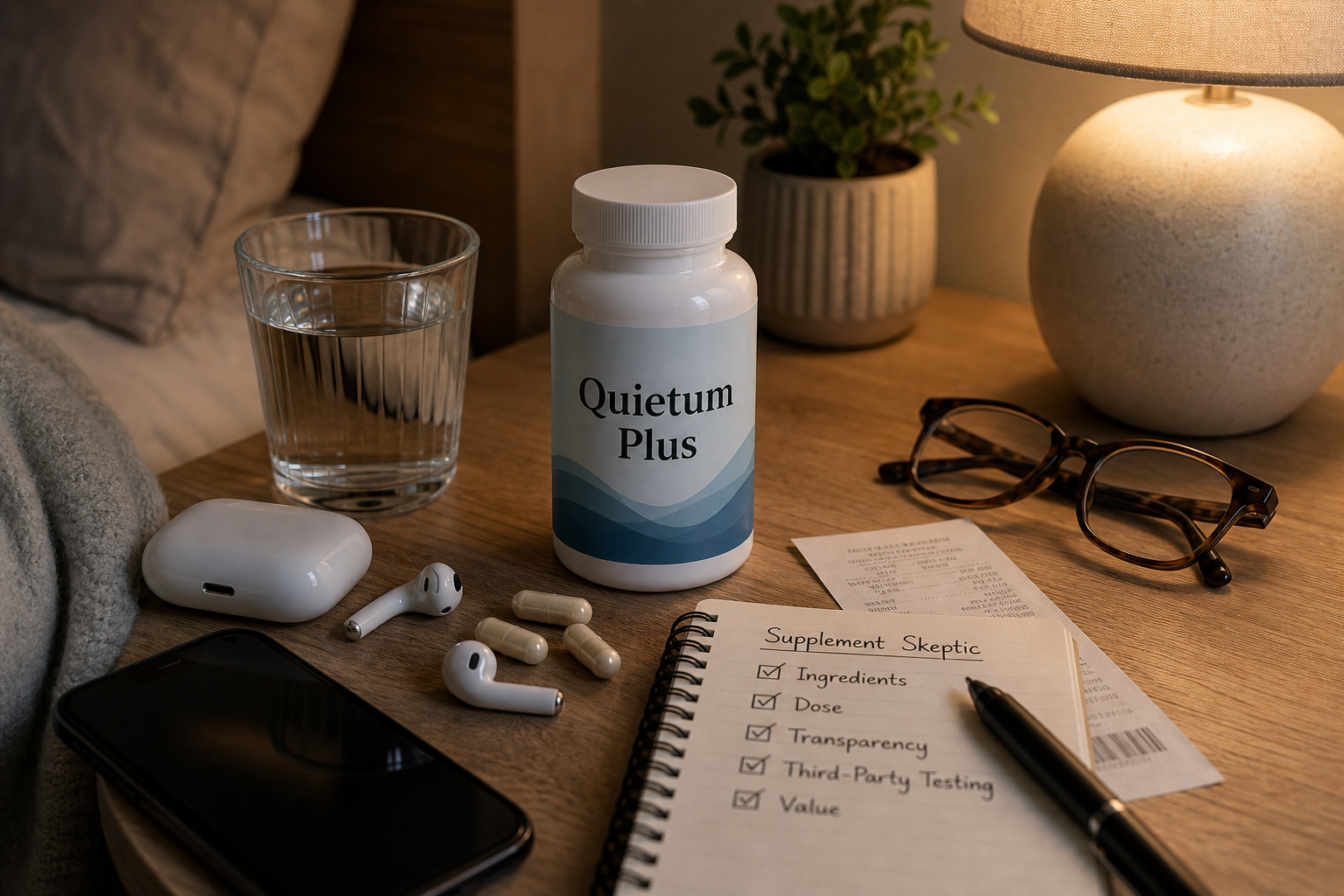
The skeptic's checklist
Before paying for a supplement that lists mucuna pruriens on the label, the buyer should be able to answer yes to most of these:
- L-DOPA percentage disclosed. The single most important number on a mucuna label. No percentage means no information.
- mg of L-DOPA per serving. Calculate it from extract weight × standardisation. If the answer is under 50 mg L-DOPA, the dose is sub-pharmacological.
- No proprietary blend. Mucuna inside a "brain blend" is the worst version of this ingredient. You cannot dose-titrate something you can't measure.
- Drug-interaction warning on label. A mucuna product that doesn't warn about MAOIs and antipsychotics has not done basic homework.
- Cycle / break guidance. Long-term continuous L-DOPA exposure has known concerns. A serious mucuna product offers cycling guidance.